
Why Do Dogs Bury Bones and Toys? What It Means and What to Do About Digging
By Cal Hewitt · Published
Training
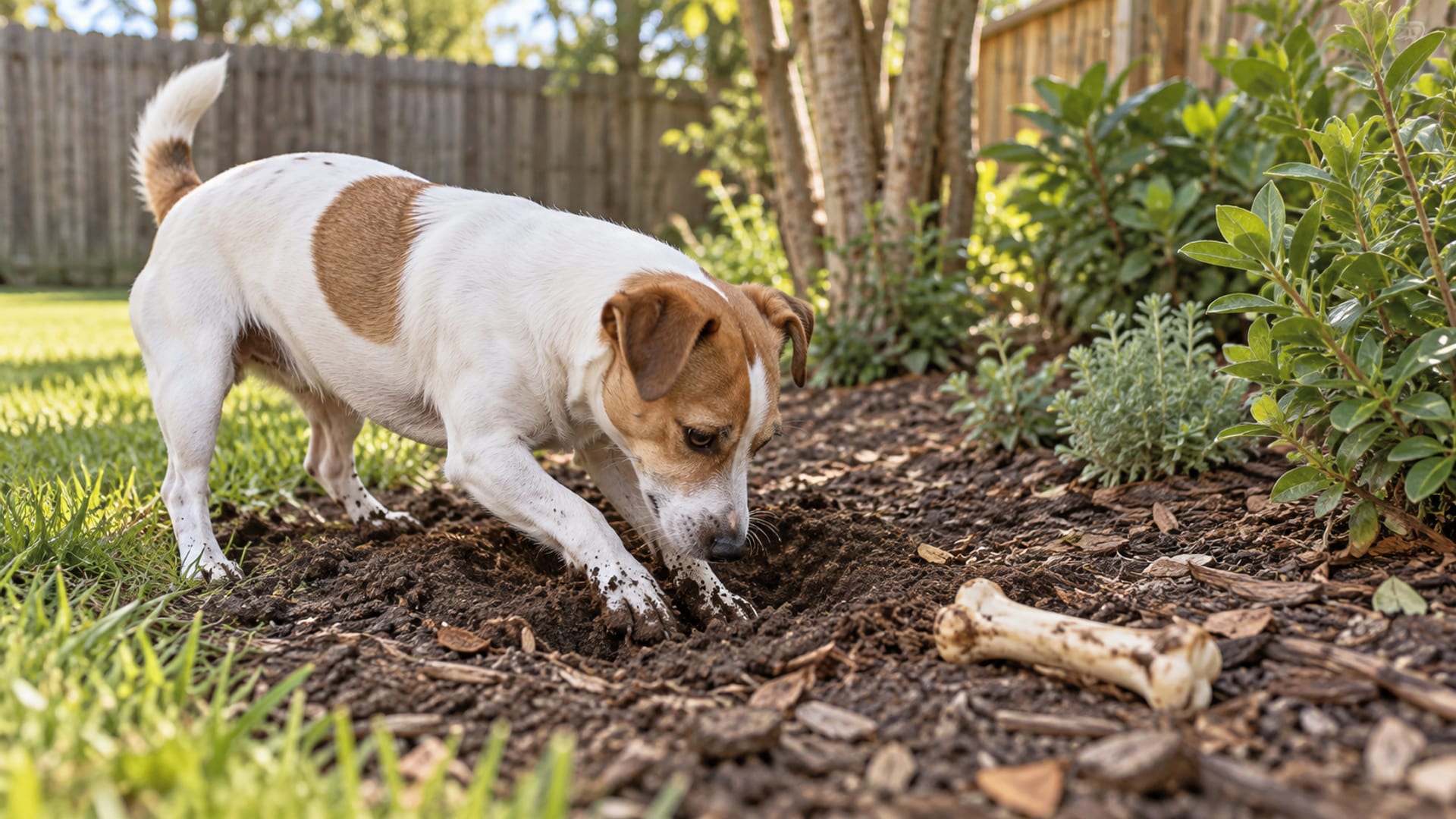
Dogs bury bones, treats and toys because they are caching something they prize, which means storing it for later. The same habit shows up indoors when a dog tucks a treat under a couch cushion or carries a toy to a bed. Burying is usually normal, and it does not mean your dog is hungry. Digging can also come from play, boredom, heat, prey smells, escape attempts or worry. Watch for freezing, hard staring, growling, snapping, injury, a sudden change, or digging that happens mainly when your dog is alone. A buried bone is not automatically safe to eat, so manage prized chews, give your dog plenty to do, and set up a safe place to dig.
Key takeaways
Tap a card to bring it forward.
- Burying is caching, which is storing a prized bone, treat or toy for later, and dogs do it indoors too.
- A well-fed dog can still bury things, so burying alone does not mean your dog is hungry.
- Burying is not the same as guarding. Freezing, hard staring, growling, snapping or biting when you approach are the guarding signs.
- A buried bone is not automatically safe to eat. Cooked bones splinter and raw bones can carry bacteria.
- Reward your dog for using a digging spot you set up. Never punish digging.
- Call a vet for a sudden change, injury or a swallowed object, and a qualified behavior professional for guarding.
Why does my dog bury bones, treats and toys?
If you just watched your dog carry a bone across the yard and push it into a hole with their nose, you saw a dog doing something very old. VCA Animal Hospitals describes burying as caching. The explanation it gives comes from canine ancestry: food was scarce, wild canids protected their food from competitors, and they saved extra for later. That is a theory about where the habit comes from. It does not prove your dog is worried about running out of food, or that your dog is planning anything.
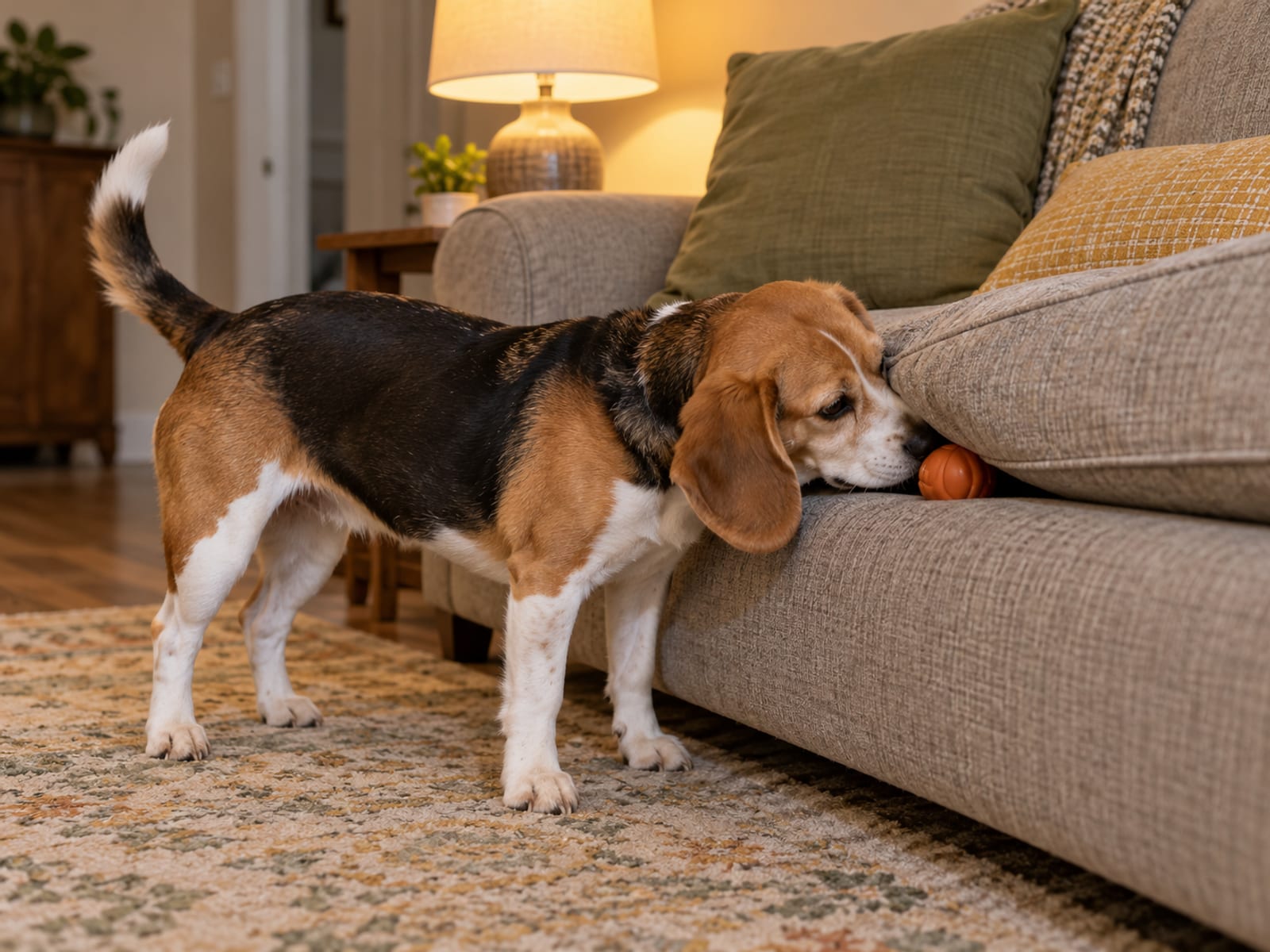
The same VCA page says pet dogs may bury kibble, toys and other objects even though their meals come on time. So, a dog with a full bowl can still cache. A dog may come back for the item later, or never come back for it. A dog may also pick a couch cushion, a blanket, a pile of laundry or your bed as a stand-in for soil.
Is burying normal, or is something wrong?
Burying bones, food, toys and other prized objects is generally described as normal when it causes no injury, no major destruction, no distress and no conflict. If your dog buries a chew, seems relaxed, and lets the household go on as usual, you are most likely looking at ordinary caching.
Some limits are worth knowing. Burying does not show that your dog is underfed, and feeding more or less will not reliably stop it. Puppies and high-energy dogs are more likely to dig because they lack stimulation, according to VCA's guide to destructive digging. A new behavior in an older dog deserves a closer look, especially if other things have changed too. In homes with more than one dog, UC Davis says dogs may protect their resources and may retrieve treats only when they feel safe, so caching can change in when and where it happens. That does not make burying a sign of guarding all by itself.
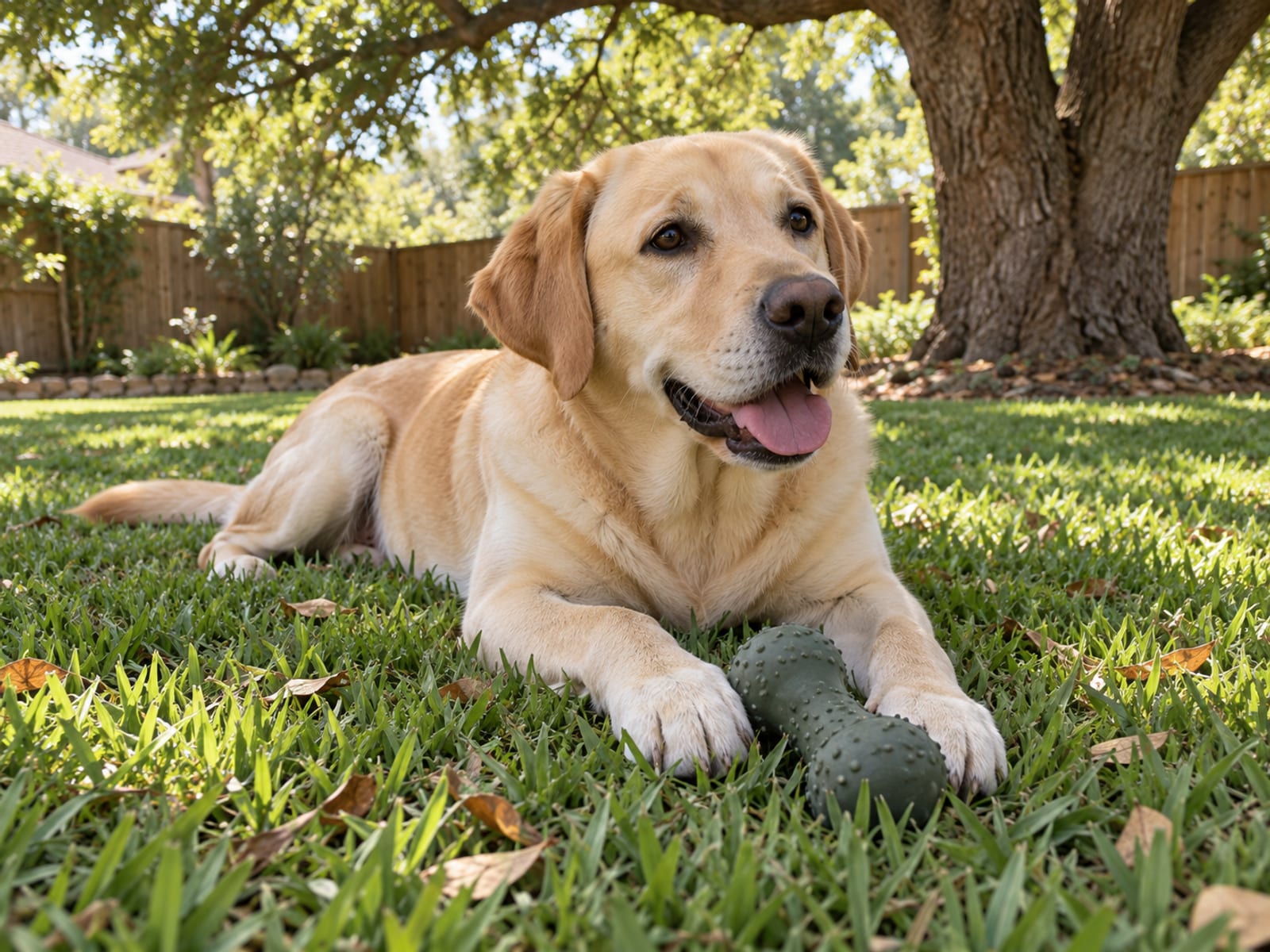
Why do dogs cache, and do they remember where?
Start with the honest framing: the ancestral story is the leading explanation, and it is an explanation, not a measurement of one dog's motive. Two 2023 studies help with the memory question, and each has limits.
A PLOS One study of dogs and wolves looked at cache retrieval. Both dogs and wolves found caches they had watched being hidden more successfully and more quickly than caches they had not watched. Performance fell as the number of caches went up. The authors noted that the sample was small. So, the finding supports the idea that dogs can find food they saw hidden, and it does not mean every dog remembers every buried item.
An Animals study analyzed 704 owner-recorded videos from 88 participants over five weeks. Burying was coded when a dog tried to cover a dental chew in soil, furniture or bedding. The study looked at how dogs engaged with the chew and what owners thought of it. It did not look at why dogs bury, and it does not say how common burying is across all dogs.
Does burying mean my dog is guarding it?
No. Burying and guarding are two separate things to watch for. AVSAB, the veterinary behavior society, lists the guarding signs as freezing, hard staring, eating faster, growling, showing teeth, snapping or biting when someone approaches. If you see none of those, your dog is most likely caching, not guarding.
If you do see them, how you respond matters. Do not take the item by force, and do not keep testing your dog by walking up again and again. AVSAB warns that repeated removal can teach a dog that people are competitors, which makes guarding worse. Keep children away from a dog that is eating or chewing anything. To see what relaxed and tense look like, read our guide to dog body language. If guarding shows up, stop trying to take things yourself and bring in a qualified professional, which I cover below.
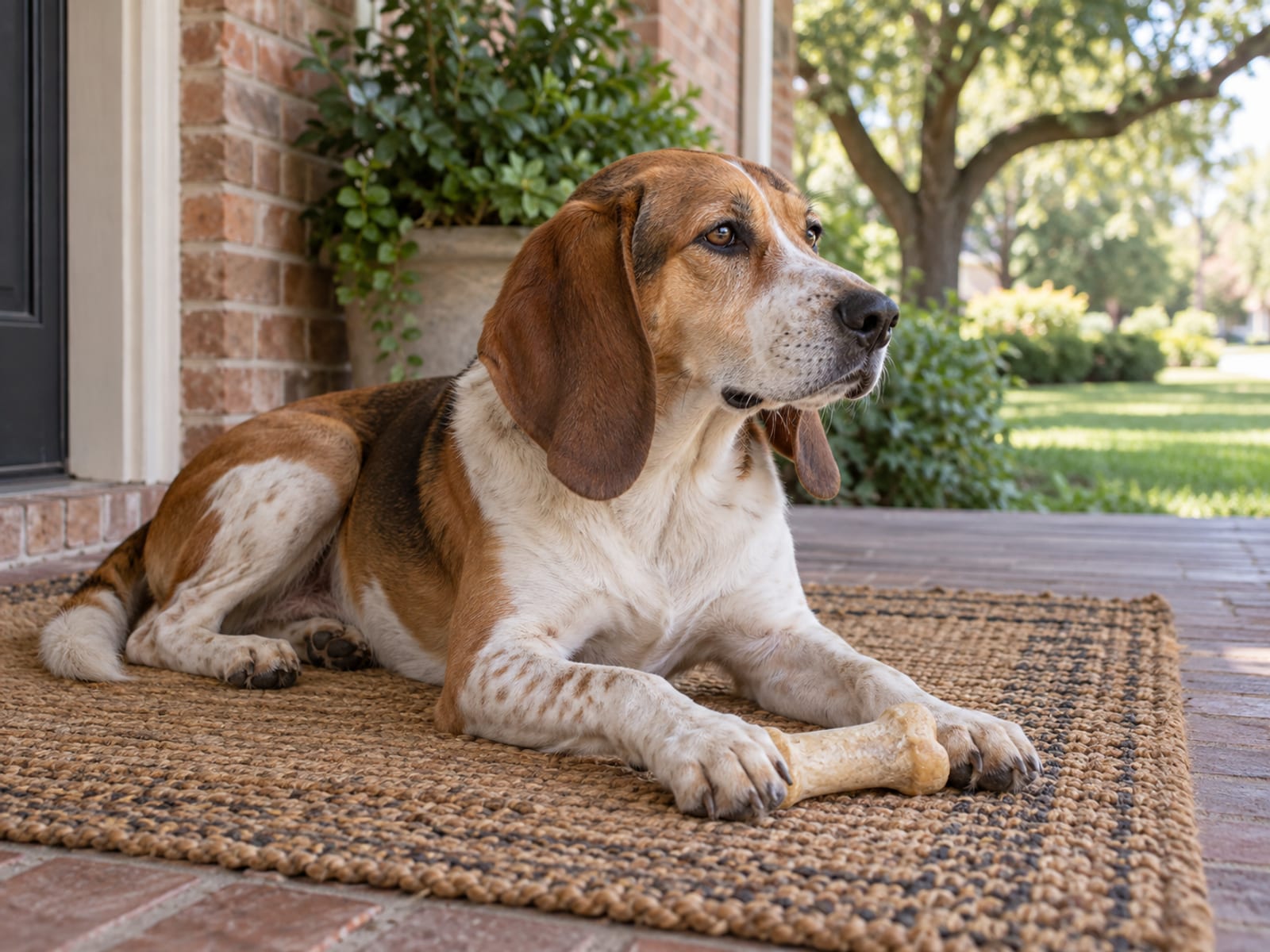
Is a buried bone safe to eat?
Not automatically, and that is the part I would act on first. A bone that has been in the dirt is not clean just because your dog dug it back up.
- Cooked bones are brittle and can splinter. VCA says fragments can cause choking, mouth or throat injury, intestinal blockage, constipation or a hole in the gut.
- Raw bones can carry *E. coli*, *Salmonella* and *Listeria*, and they can fracture teeth or cause blockage. Raw does not mean risk-free.
- Rawhide and edible chews in large pieces can cause choking or a blockage, according to the ASPCA. Throw out small, worn or broken pieces.
- Toys with detached pieces, sharp edges or damaged seams should go in the trash. Our guide to indestructible dog toys covers choosing toys that hold up.
If you want the detail on specific bones, read our entries on beef bones and chicken bones. If your dog swallowed a cooked bone, a large fragment, a piece of rawhide or a damaged object, call your veterinarian or an emergency vet now and ask what to do. Do not try to treat it at home, and do not make your dog vomit.
Why is my dog digging up the yard?
Digging does not always mean burying. UC Davis suggests asking when, where and under what conditions your dog digs, because the answer points to the cause. Common reasons include:
- Burying or retrieving a chew or toy.
- Play and curiosity. Digging can simply feel good.
- Boredom and too little stimulation, especially in puppies and high-energy dogs.
- Cooling off. A dog may dig a cool hollow in hot weather.
- Prey smells. Tunnels and animal odors can draw a dog in.
- Escape. Digging along a fence or gate is a different problem from digging in a flower bed.
- Nesting.
- Anxiety-related digging, including separation distress.
Terriers may dig because of inherited prey-related tendencies, and northern breeds may dig cooling holes. Whatever the dog, your own dog's pattern is the answer.
If the digging happens mostly when you are out, and comes with pacing, whining or damage near doors or windows, read about separation anxiety in dogs. If your dog is swallowing soil or stones while digging, see why dogs eat rocks.
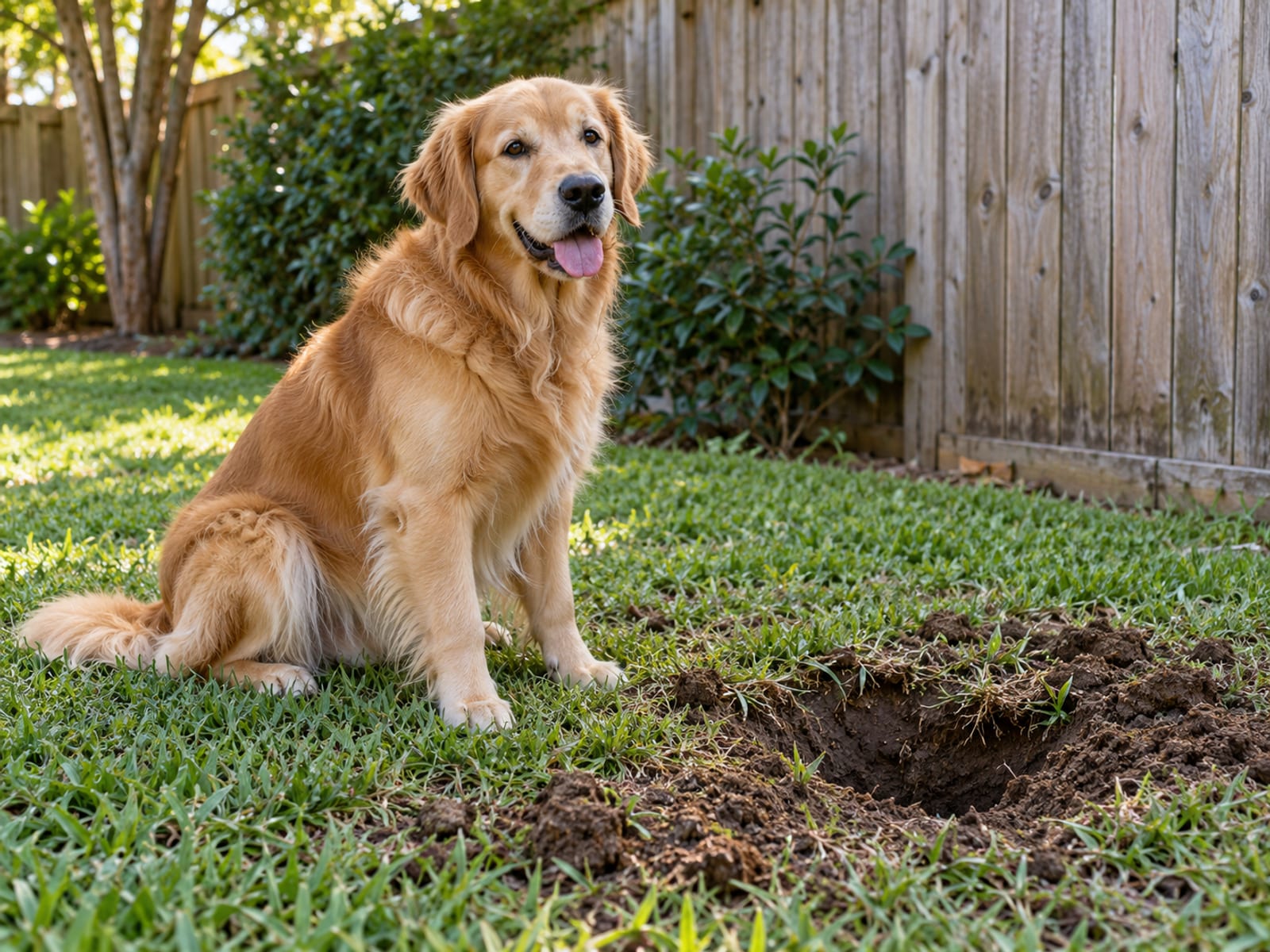
What can I do today about digging, and what does progress look like?
You can start this afternoon. These steps follow UC Davis, VCA, the AKC and AVSAB.
- Supervise outdoor time while you change the pattern.
- Take unsafe bones, damaged toys and edible chews out of the yard.
- Make one spot a digging area, with a safe diggable material such as sand.
- Make that spot worth your dog's time with rewards and approved toys. Bury non-food items there only if they are safe and you are watching.
- Reward your dog each time they choose that spot.
- When your dog digs somewhere else, interrupt calmly and steer them to the digging area.
- Add walks, sniffing time, play, training and food puzzles. Our guide on how much exercise a dog needs can help you judge the amount.
- Rotate toys so not everything is out at once.
- Fence off flower beds and any hazardous areas.
- On hot days, give shade, water and a cool place to rest, or bring your dog inside.
Do not use physical punishment, aversive collars, booby traps, or punishment after the fact. UC Davis says not to punish digging, and AVSAB's humane training statement says aversive methods should not be used. For the reward-based approach in general, see positive reinforcement dog training and our list of dog training mistakes. If your dog seems to ignore redirection, training a stubborn dog covers calm redirection, and puppy training tips covers supervision for young dogs.
Progress looks like safer choices, easier redirection, fewer damaged areas, healthy paws and no escalation around prized items. I can't give you a number of days or a success rate, and nobody else can honestly give you one either. If your dog's paws look raw, sore or bleeding after digging, have them checked; our guide on why a dog might be limping and signs of a healthy dog can help you decide what you are seeing.
How do I stop my dog from hiding food indoors without causing guarding?
Indoor hiding is the same caching habit, so the fix is to manage access and keep things calm.
- Block the couch, beds and laundry areas when you can't watch your dog.
- Offer food toys and approved chews in one controlled spot.
- Give prized items when your dog can enjoy them without competition from people or other pets. In a home with several dogs, separate them for high-value chews.
- Remove spoiled or unsafe food while your dog is in another room, without chasing or grabbing.
- Trade only when your dog is comfortable and the swap is better than what they have.
- Teach your dog's name, coming when called, and "drop" in low-pressure moments first, before you ever use those skills around a high-value item.
- Never take food away just to prove a point.
If your dog freezes, stares, eats faster, growls, shows teeth, snaps or bites, stop trying to remove things yourself and call a professional.
When should I call a vet or a behavior professional, and how do I choose one?
Call a veterinarian for a sudden behavior change, an injury, a swallowed dangerous object, signs of illness, or a dog you think may be in pain or anxious. Find one in our veterinarian directory. Call a qualified behavior professional for guarding, compulsive patterns, severe anxiety, or behavior that does not improve with management. Constant digging, an inability to stop, or digging that injures your dog are reasons to have your dog evaluated. They are not something I can diagnose for you.
These credentials are the ones you will see, and what each means:
- CPDT-KA: CCPDT certifies trainers who passed a full knowledge exam and have at least 300 hours of dog-training experience.
- CPDT-KSA: the same, plus a skills assessment.
- CBCC-KA: for behavior consultants who work with complex cases.
- IAABC ADT and CDBC: IAABC lists Accredited Dog Trainers and Certified Dog Behavior Consultants, and CDBC applicants have three or more years of experience with complex cases.
- DACVB: a veterinary behavior specialist, listed in the ACVB directory. This is the right category when your dog needs a medical look alongside behavior help.
CCPDT notes that dog training has no general licensing requirement in the United States, so the letters after a name matter, and you can verify them in the issuing group's directory. When you call a trainer, ask:
- What credential do you hold, and can I verify it?
- What methods do you use for guarding and digging?
- Do you use shock, prong, choke, leash corrections, intimidation or physical punishment?
- How do you handle a dog with a bite history?
- When do you refer to a veterinarian or veterinary behaviorist?
Walk away from anyone who promises a guaranteed result, calls your dog spiteful without meeting them, insists on punishment, or tells you to force an item out of your dog's mouth. You can browse trainers and behavior professionals in our directory.
Questions dog owners ask about burying
Do dogs remember where they bury their bones?
Often, yes, when they watched the item being hidden. In the 2023 PLOS One study, dogs and wolves found caches they had seen hidden better and faster than ones they had not, and they did worse as the number of caches grew. The sample was small, so it does not describe every dog.
Should I let my dog bury treats?
Safety comes first. A buried edible chew is not automatically safe, because dirt and time do not make a bone, rawhide or chew clean, and damaged pieces can choke or block. If you allow burying at all, keep it to safe, non-food items in the digging area while you watch, and give edible chews only where you can pick up what is left.
Should I punish my dog for digging?
No. Punishment, including after the fact, does not teach a dog where to dig and can add stress. Use supervision, calm redirection and rewards for using the digging area.
Does my dog bury things because I am not feeding enough?
No. VCA says dogs with regular meals may still bury kibble, toys and other objects, so burying alone does not show hunger. If your dog's weight or appetite has changed, that is a question for your vet.
Your next step
Pick up any cooked bones, damaged toys and chew scraps from the yard today, and set up one digging spot with a few rewards. Then watch your dog for a few days. If you see guarding signs, a sudden change or hurt paws, call your vet or a qualified behavior professional instead of working through it alone.
Sources
- American College of Veterinary Behaviorists: ACVB directory
- American Veterinary Society of Animal Behavior: AVSAB's humane training statement
- American Veterinary Society of Animal Behavior: AVSAB
- ASPCA: ASPCA
- Certification Council for Professional Dog Trainers: CCPDT
- IAABC: IAABC
- journals.plos.org: PLOS One study of dogs and wolves
- PubMed Central: Animals study
- UC Davis School of Veterinary Medicine: UC Davis
- VCA Animal Hospitals: VCA Animal Hospitals
- VCA Animal Hospitals: VCA's guide to destructive digging
- VCA Animal Hospitals: VCA