

Why Is My Dog Limping? What to Do Now and When to See a Vet
By Cal Hewitt · Published , updated
Health
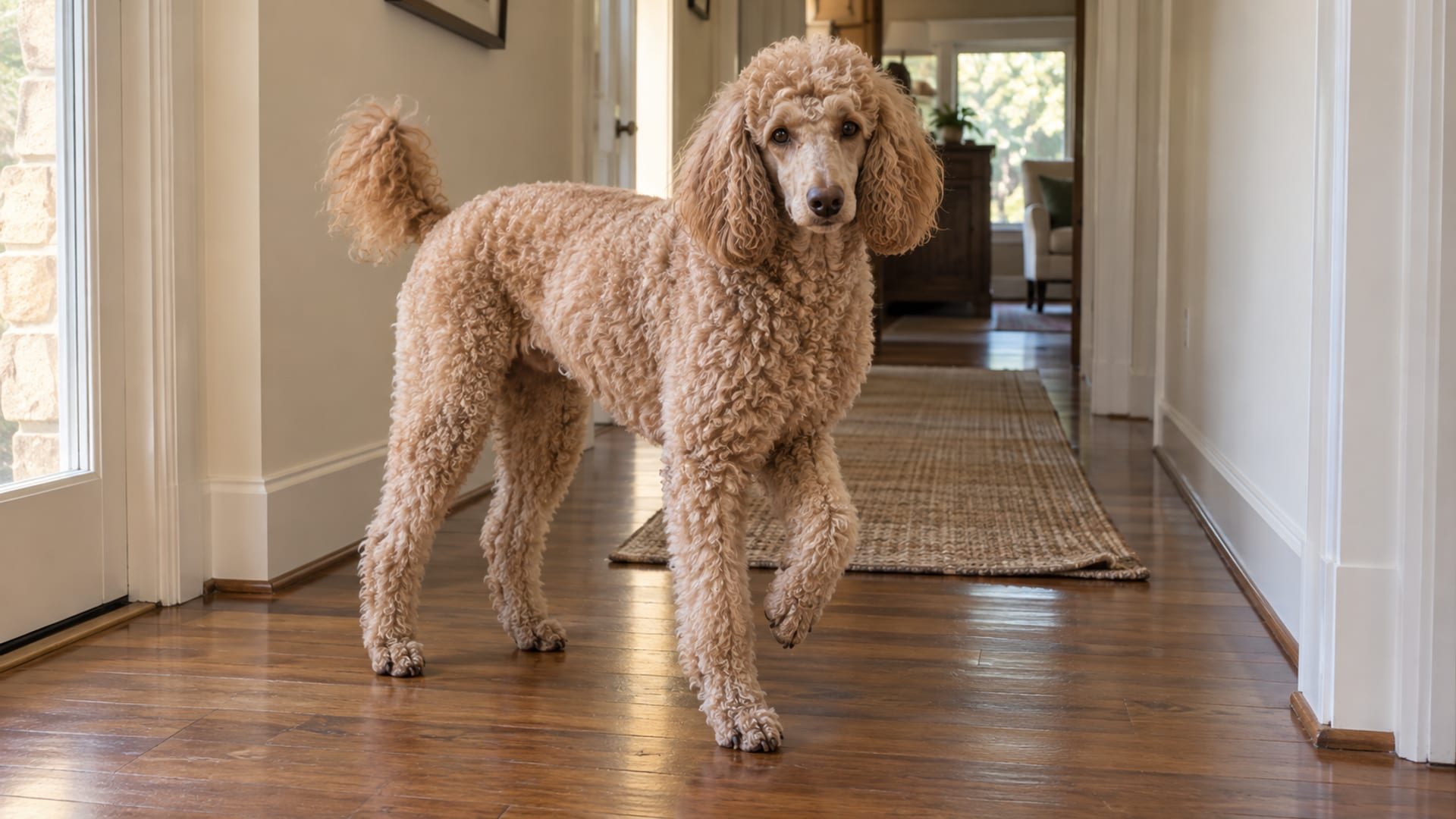
A limp is a sign of pain or dysfunction, not a diagnosis. Go to an emergency veterinarian now if your dog cannot stand or walk without help, has an obvious fracture or deformity, is bleeding heavily, or started limping after major trauma such as being hit by a car. If your dog can stand and walk but the limp does not settle quickly, call your veterinarian. Until then, keep your dog quiet, stop running and jumping, check the paw only if your dog is safe to handle, and do not give ibuprofen, naproxen, acetaminophen, or aspirin unless a veterinarian tells you to.
Key takeaways
Tap a card to bring it forward.
- Can't stand or walk without help, an obvious break or deformity, heavy bleeding, or a limp after major trauma: go to an emergency vet now.
- A sudden limp that has not settled in about an hour deserves a call to a vet, per VCA's urgent care guidance.
- Any limp that lasts more than 24 hours needs a veterinary visit, per VCA's first-aid guidance.
- Keep your dog quiet and leashed; no running, jumping, or stairs while you wait.
- Never give human pain relievers (ibuprofen, naproxen, acetaminophen, aspirin) unless a vet directs it.
- A dog that isn't crying can still be hurting, so watch how the leg is used, not how loud your dog is.
I'm Cal, and I'm not a veterinarian. Everything below comes from named veterinary sources, and I'll tell you which one said what so you can judge it yourself. If you're reading this with a dog holding up a leg beside you, start with the first section and go in order.
Is it an emergency? The signs that mean go now
According to VCA's urgent care guidance and the Merck Veterinary Manual's emergency guidance, go to an emergency veterinarian today if your dog has any of these:
- Can't stand or walk without your help.
- An obvious fracture, dislocation, or a leg sitting at a wrong angle.
- Major trauma, such as being hit by a car or falling from a height.
- Severe or uncontrolled bleeding.
- An open wound with bone showing.
- Severe pain, collapse, trouble breathing, or other signs that the whole body is in trouble.
- A leg that suddenly can't be used at all, with severe pain or swelling that is getting bigger fast.
If one of those fits, stop reading and go. Call ahead if you can and ask how to move your dog safely, since a dog in that much pain may bite.
If none of those fit, you probably have a little time to watch and check. The next few sections cover how long is reasonable.
What to do in the first hour: rest, no running, and no human pain medicine
The first hour is about keeping things from getting worse. Put your dog somewhere small and quiet with good footing, like a room with a rug instead of a slick floor. Take bathroom breaks on a short leash. No off-leash yard time, no ball, no stairs if you can carry a smaller dog safely, and no jumping on or off the couch. VCA's first-aid page recommends restricting activity for a mild limp while you observe.
While your dog rests, write down when the limp started, what happened just before, and which leg it is. If your dog will walk a few steps calmly, a short phone video can help your veterinarian see what you saw.
The one thing not to reach for is your medicine cabinet. The ASPCA says ibuprofen, naproxen, acetaminophen, and aspirin can cause life-threatening symptoms in pets. I cover why in the pain medicine section below, but for now, the answer is no unless a veterinarian specifically tells you otherwise.
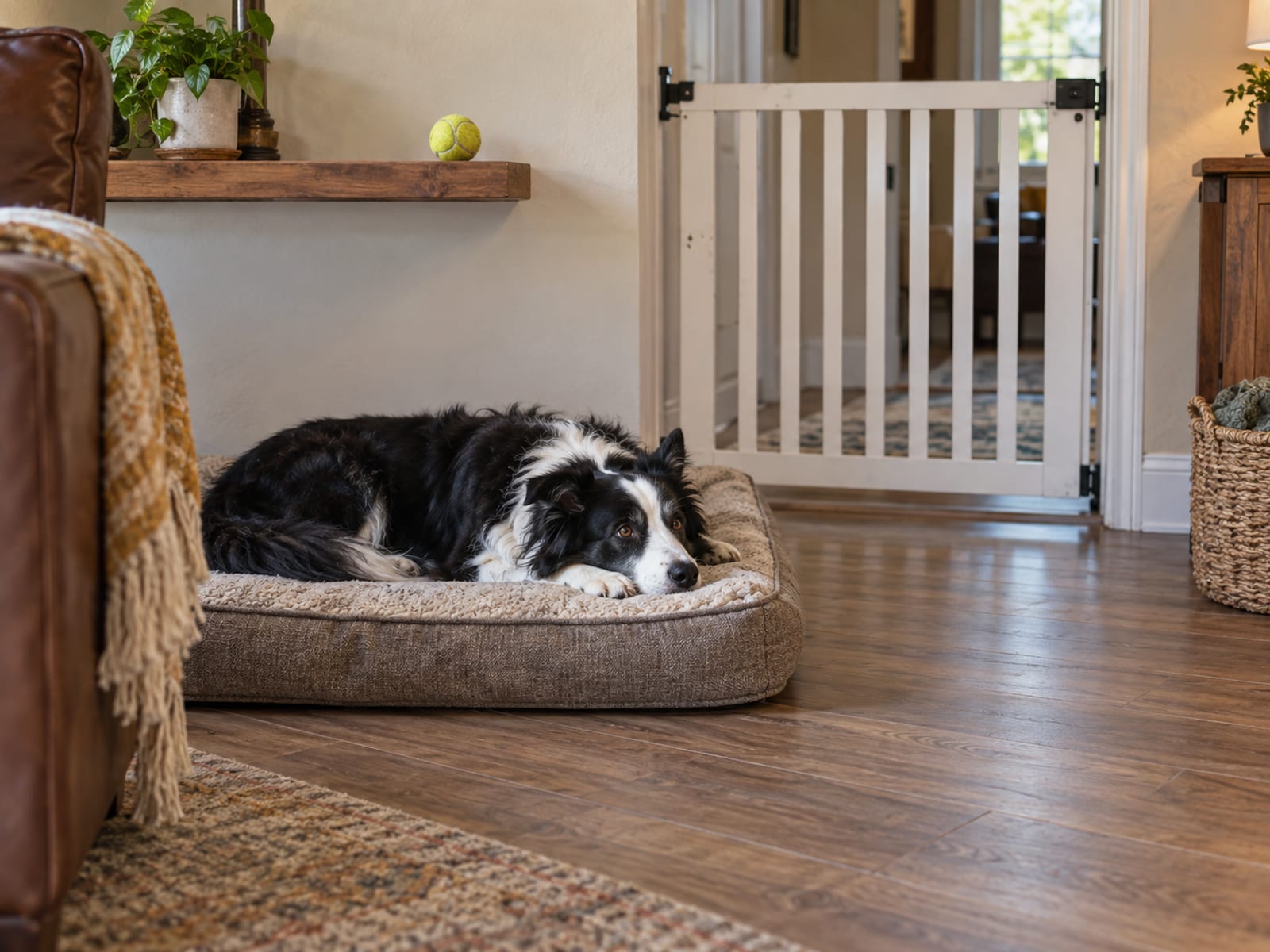
Checking the paw safely, without forcing joints or getting bitten
A lot of sudden limps start at the paw, so it's worth a careful look, but only if your dog is calm and safe to handle. Here's the order VCA's first-aid guidance suggests:
- Watch your dog walk a few steps on a non-slip surface. Don't make your dog run or exercise.
- Figure out which leg: front or back, right or left.
- Start at the toes.
- Look between the toes for thorns, splinters, grass awns (the pointed seed heads of some grasses), redness, or dampness.
- Check each pad for cuts, punctures, or anything stuck in it.
- Look at each nail for a break, bleeding, or a problem where the nail meets the toe.
- Compare the sore leg with the other one for swelling, heat, or anything that looks different.
Two rules matter more than the checklist. First, don't bend or straighten joints to see what hurts. VCA warns that moving a broken or dislocated bone can add pain and make the injury worse. Second, stop the moment your dog shows pain, growls, snaps, or tries to pull away. Dogs in pain can bite, including dogs that have never bitten anyone. If you need a second adult to steady your dog, keep both of your faces and hands away from the mouth, and if handling isn't safe, ask the veterinary hospital how to bring your dog in.
A normal-looking paw is useful to know, but it doesn't rule out a problem higher up the leg. Treat it as one piece of information for the vet.
When to call the vet today or within 24 hours
This is the question most people are really asking: can I wait until morning? VCA's guidance sorts it into three tiers.
Get urgent veterinary care the same day when a sudden limp does not go away within about an hour, when your dog can walk but is clearly painful or isn't using the leg normally, or when swelling, heat, or pain keeps going. That one-hour line comes from VCA's urgent care guidance. For puppies, VCA's puppy guidance says a puppy that still isn't putting pressure on the sore leg after 30 minutes of quiet rest needs veterinary help.
Book a visit promptly, generally within a day, when the limp lasts more than 24 hours, keeps coming back, or slowly gets worse. The same goes for a dog that's stiff, slow to get up, or less active than usual, or one with other signs like eating less, fever, weakness, or a limp that moves from one leg to another. VCA's first-aid page sets the 24-hour mark for persistent lameness.
Rest and watch briefly only when the limp is mild, there was no trauma, and none of the emergency signs apply. Rest doesn't replace an exam when your dog won't put weight on the leg, is in obvious pain, or is getting worse.
A lot of owners notice their dog limping but still playing, or limping without a sound. The AAHA points out that dogs often hide pain, and that limping, stiffness, reluctance to move, and posture changes can all be pain signs on their own. So, use how your dog is moving and how long it lasts as your guide, not whether your dog cries. If you're unsure how your dog normally looks and acts, our page on signs of a healthy dog is a good baseline, and dog body language covers posture changes that can go with pain.
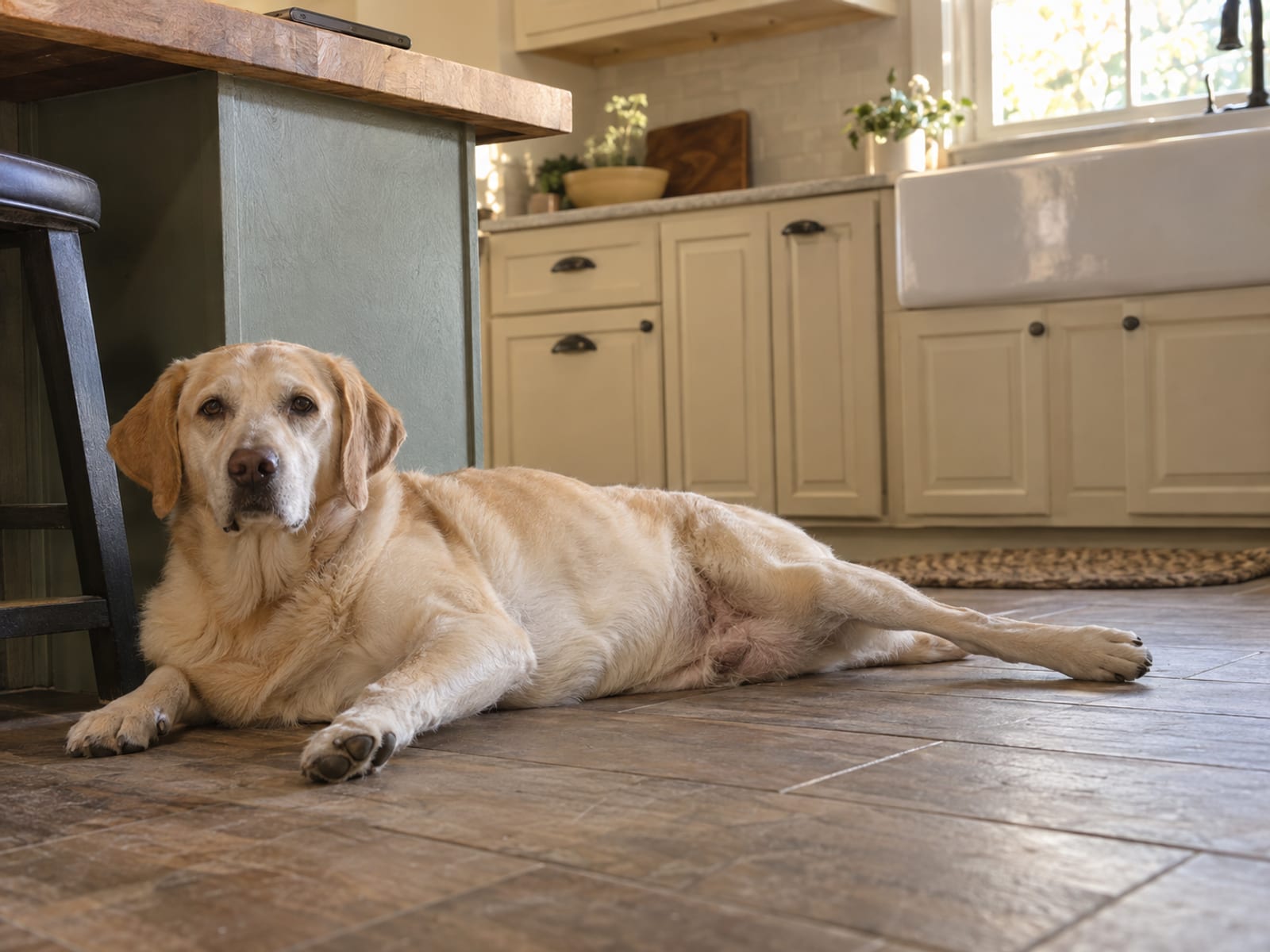
Sudden limping: the common kinds of causes
Timing narrows the list, but it can't name the cause. The Merck Veterinary Manual calls lameness "a sign of illness, not a specific disease," and a limp can come from the paw, skin, nails, bones, joints, muscles, tendons, ligaments, nerves, or an illness affecting the whole body.
When a limp comes on suddenly, VCA and Merck describe these kinds of causes:
- A cut, puncture, burn, or something stuck in a paw pad.
- A torn or broken nail.
- An insect sting or bite.
- An infection in a toe or foot.
- A sprain, strain, or injury to a tendon or muscle.
- A fracture or dislocation.
- A sudden flare of cruciate ligament disease (the knee ligament often called the dog's ACL).
- Trauma from a fall, a collision, or a vehicle.
A limp after running or rough play is easy to write off as a sprain, but ligament, joint, fracture, and nerve problems can look much the same, and a fracture doesn't always show swelling or an odd angle. That's why the time limits above matter more than your best guess about the cause.
Gradual or recurring limping, including arthritis and tick-borne disease
Some limps creep in over weeks, or come and go. A dog might limp after a nap, then walk it off. That on-and-off pattern is common with conditions Merck's joint disorders guidance and the American College of Veterinary Surgeons (ACVS) describe, including:
- Cranial cruciate ligament wear or a tear, which ACVS calls a common orthopedic problem in dogs.
- A luxating patella, where the kneecap slips out of place.
- Hip or elbow dysplasia.
- Osteoarthritis and other long-term tendon or joint disease.
- Bone tumors, including osteosarcoma, which are a particular concern in large and giant breeds.
- Tick-borne disease.
On that last one: Lyme disease can cause lameness that shifts from leg to leg or comes and goes. A limp alone doesn't prove Lyme disease, though. If your dog has had ticks, tell your vet, and see our page on ticks and Lyme disease in dogs for removal and prevention.
None of these can be sorted out at home. A limp that keeps coming back is exactly the kind to book with your vet within a day.
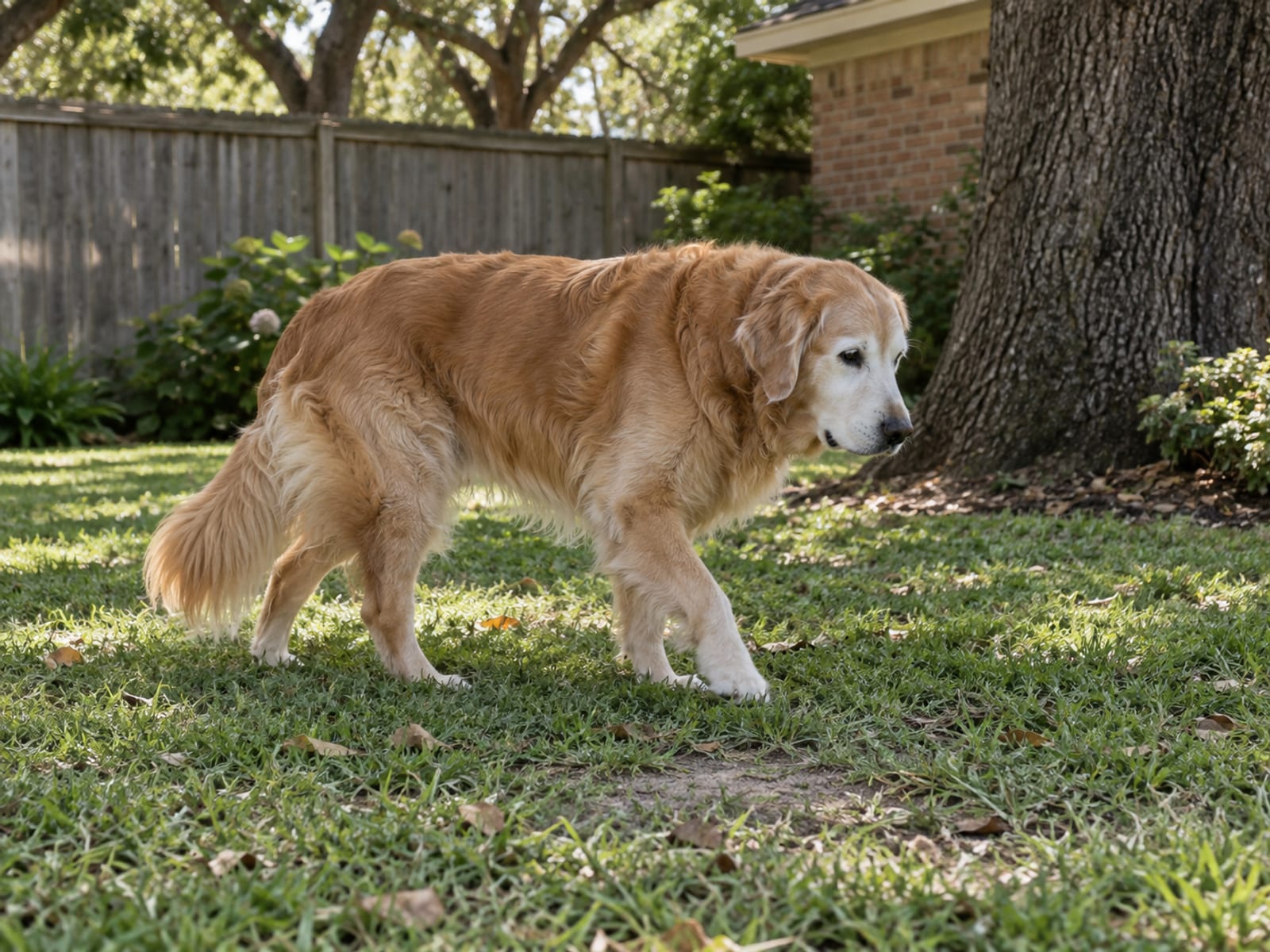
Puppies and older dogs
Puppies are still growing, and their growth plates (the soft zones near the ends of the bones) are easier to injure. VCA's puppy guidance names injury and growth-related problems as the main groups of causes, including panosteitis (a painful bone inflammation in young dogs) and luxating patella. Get prompt or emergency advice if your puppy isn't putting pressure on the leg after about 30 minutes of quiet rest, or has extreme pain, bleeding that won't stop, an obvious fracture or dislocation, trouble breathing, vomiting, weakness, or swelling.
Older dogs do get more arthritis and joint wear, but a limp shouldn't automatically be blamed on age. The AAHA lists limping, stiffness when getting up, reluctance to move, and lower activity as possible pain signs, and arthritis pain is something a vet can help manage. A slow limp in an older dog can also come from ligament, joint, nerve, infection, or bone disease. Our senior dog care page covers everyday mobility, but a new or changing limp still needs a vet's eyes.
Pain medicine: why human pain relievers are dangerous and what the vet can give
This is the question I'd most want you to get right. The ASPCA says ibuprofen, naproxen, acetaminophen, and aspirin can cause life-threatening symptoms in pets. Pet Poison Helpline says ibuprofen, naproxen, and acetaminophen can be toxic to dogs and that human pain medicines shouldn't be given unless a veterinarian prescribes them. Reported harms include stomach and gut injury or ulcers, kidney failure, and liver failure, depending on the drug and how much was taken. A small tablet isn't a safe tablet.
If your dog has already swallowed one of these, contact your veterinarian or an animal poison-control service right away. The AVMA's 2025 first-aid brochure advises giving no medication unless a veterinarian or poison-control center directs it, and that includes making your dog vomit.
There are pain options made for dogs. Veterinarians may use canine-specific nonsteroidal anti-inflammatory drugs (NSAIDs) and other classes of pain relievers, chosen after an exam and after considering your dog's kidneys, liver, other medicines, and the likely problem. Use the drug and amount your vet gives you, exactly as directed. At home, your part is rest, a quiet space, leash-only breaks, and a careful paw check.

What the vet will check, treatment including cruciate surgery, and what it may cost
According to Merck's guide to the lameness exam, your vet will start with the history, so bring your notes and video. Then they'll watch your dog stand and walk, examine all four legs, and feel the bones, joints, and soft tissue for swelling, pain, looseness, range of motion, and muscle loss. A nerve exam may be part of it.
Imaging depends on what the exam finds. X-rays look at bones and joints. Ultrasound can help with some soft-tissue injuries. CT and MRI are usually done at referral hospitals for certain bone, joint, spine, or soft-tissue problems. Your dog may need sedation or anesthesia if the exam or imaging would hurt too much while awake.
Treatment depends on the cause. According to Merck, it may include activity restriction, wound or nail care, pain medicine prescribed by the vet, rehabilitation, surgery, or treating an underlying disease. Your vet builds the plan for your dog.
For cruciate ligament disease, ACVS says surgery is typically the best treatment because it permanently controls the knee's instability, though the choice still depends on the individual dog. Common procedures include extracapsular stabilization, TPLO, and other bone-cutting (osteotomy) techniques.
Cost is where published numbers vary most. These are the dated U.S. examples for cruciate surgery:
Tap or hover a row to highlight it.
| Source | Reported range | Notes |
|---|---|---|
| SourcePetMD | Reported rangeAbout $1,500 to $7,000 or more | NotesBroad U.S. range, updated November 12, 2025; an estimate, not a quote |
| SourceOakdale Veterinary Group | Reported range$4,950 to $6,950 | NotesOne practice's published example; local prices and what's included vary |
For an exam, X-rays, or an emergency visit, the most useful number is the one you get by calling the hospital and asking for an estimate before or during the visit. Prices depend on where you live, the hospital, and what your dog turns out to need.
Questions owners ask about a limping dog
What should I do if my dog is limping?
Check for emergency signs first: can't stand or walk without help, an obvious break, heavy bleeding, or major trauma mean go to an emergency vet now. Otherwise, keep your dog quiet and leashed, check the paw only if it's safe, give no human pain medicine, and call a vet if the limp hasn't settled in about an hour (VCA).
My dog tore off a paw pad. What should I do?
A pad injury is one of the common sudden causes of limping. If it's bleeding heavily or won't stop, that's an emergency per VCA's urgent care guidance, so go now. For a smaller pad injury, keep your dog still and call your vet the same day, since a painful limp or one that hasn't settled in an hour warrants care.
Why does my dog limp sometimes and not other times?
A limp that comes and goes can be linked to cruciate ligament disease, a luxating patella, dysplasia, arthritis, or tick-borne disease such as Lyme, according to Merck and ACVS. The pattern can't tell you which one it is. A limp that recurs is a reason to book a vet visit within about a day.
How long will a dog limp with a sprained leg?
Recovery time depends on the injury, and a limp that looks like a sprain can also be a ligament tear, fracture, or nerve problem. The clearest time limit comes from VCA's first-aid page says a limp lasting more than 24 hours needs veterinary care.
The next step
If your dog meets any emergency sign, find an emergency veterinarian near you and go now. If your dog can walk but the limp hasn't cleared in about an hour, or has lasted more than a day, call your regular vet or find one in our veterinarian directory. Bring your notes on when it started, which leg, and what happened before, plus a short video if you have one. Keep your dog resting until then, and keep the human pain relievers out of reach.
Sources
- American Animal Hospital Association: AAHA
- American College of Veterinary Surgeons: American College of Veterinary Surgeons (ACVS)
- American Veterinary Medical Association: AVMA's 2025 first-aid brochure
- ASPCA: ASPCA
- Merck Veterinary Manual: Merck Veterinary Manual's emergency guidance
- Merck Veterinary Manual: Merck Veterinary Manual
- Merck Veterinary Manual: Merck's guide to the lameness exam
- Merck Veterinary Manual: Merck's joint disorders guidance
- oakdaleveterinarygroup.com: Oakdale Veterinary Group
- Pet Poison Helpline: Pet Poison Helpline
- PetMD: PetMD
- VCA Animal Hospitals: VCA's first-aid page
- VCA Animal Hospitals: VCA's puppy guidance
- VCA Animal Hospitals: VCA's urgent care guidance