

Dog Paw Problems: When to See the Vet, What to Do Now and What to Avoid
By Cal Hewitt · Published
Health
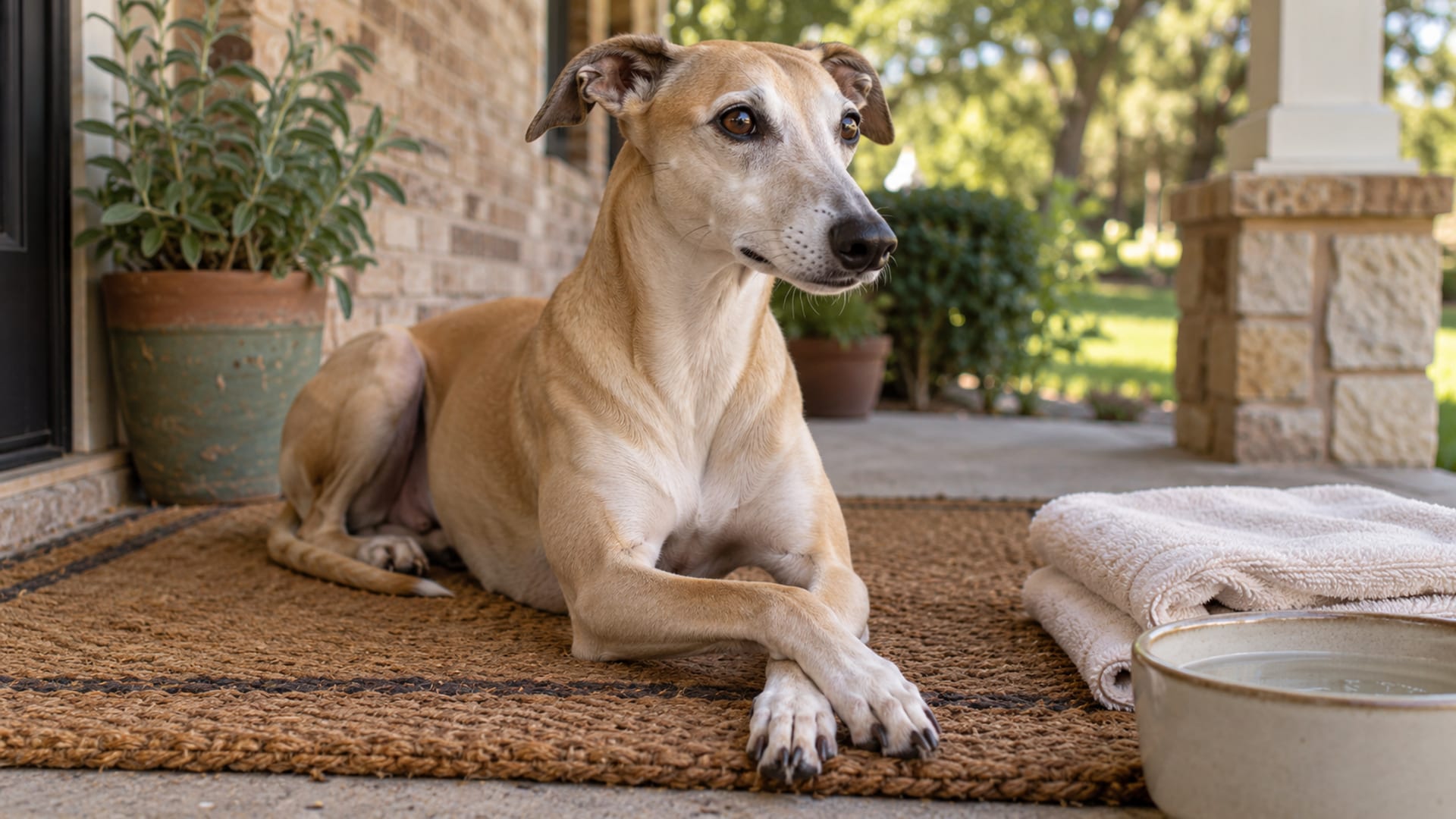
Dog paw problems can mean anything from a cracked pad or broken nail to allergies, yeast or bacterial overgrowth, a foreign object, a burn, or a painful bump between the toes. If your dog has a deep cut, bleeding that won't stop, a burn, a swollen toe, pus, or can't put weight on the paw, contact a veterinarian today. For a minor surface irritation, move your dog off the irritating surface, gently rinse the paw with clean water, dry it, stop the licking, and arrange veterinary advice if it doesn't improve. Don't use human lotion, hydrogen peroxide, alcohol, or an unknown cream. How a paw looks can't tell you the cause, so when you're unsure, call the clinic.
Key takeaways
Tap a card to bring it forward.
- A deep cut, bleeding that won't stop, a burn, a swollen toe, pus, or a dog who can't bear weight means a vet visit today.
- For a minor irritation, move your dog off the surface, rinse with clean water, dry the paw well, and stop the licking.
- Don't put human hand lotion, hydrogen peroxide, alcohol, harsh disinfectants, leftover medication, or an unknown cream on a paw.
- Never pull out a deeply embedded thorn, grass awn, or splinter. A vet needs to remove it.
- Redness and odor alone don't identify yeast, allergy, or infection. Only an exam and testing do.
- A 2025 national average for a dog emergency exam was $135, with a range of $107 to $246, before any tests or treatment.
Do I see the vet today, call soon, or care for it at home?
When you're looking at a licked, red or bleeding paw, the first job is sorting how fast it needs help. I'd sort it this way, with signs drawn from AVMA first-aid guidance and VCA Animal Hospitals.
Contact a veterinarian today for any of these:
- A deep cut, gaping wound, puncture, or visible deeper tissue
- Bleeding that keeps going after firm direct pressure
- A burn, blister, loose pad flap, or ulcerated pad
- A deeply embedded thorn, grass awn, splinter, glass, or other object
- A swollen toe, or swelling that is growing fast
- A pus-filled bump, colored discharge, foul odor, or redness that is getting worse
- Sudden, severe limping or no weight on the paw
- A broken nail that reaches the quick, especially if it bleeds or hurts
- A paw injury after major trauma
- Licking or chewing you can't interrupt, or pain that doesn't settle
- A bandage that is wet, tight, slipped, smelly, or paired with swollen toes
If the paw is lightly red or has a small surface irritation and your dog is walking normally, you can start the steps in the next section while you arrange advice. Call the clinic if it doesn't improve. Whether your dog is still eating doesn't tell you how badly the paw is hurt, so don't use appetite to decide that it's minor.
For bleeding, AVMA says to press a clean cloth or towel firmly over the wound for at least three minutes. If blood soaks through, add more layers without taking off the first one, and go to a veterinary hospital for severe bleeding. Try not to lift the cloth to check, because that can restart the bleeding.
Number of paws matters too. One paw, especially with sudden limping, points toward an injury or a foreign object. Several paws with itching, staining, or skin trouble that keeps coming back point toward a broader skin problem, and that calls for a vet visit you schedule rather than a dash to the emergency clinic, unless one of the signs above shows up.
What do I do right now for a sore paw?
Keep your dog calm and don't force a painful exam. If your dog might bite from pain, stop and call the vet instead. Then work through these steps, which follow AVMA, VCA, AAHA and ASPCA:
- Look at the top of the paw, the underside, the spaces between the toes, and the nails.
- Remove only loose surface debris. Don't dig.
- Gently rinse dirt or irritants off with clean water.
- Dry the paw carefully, especially between the toes.
- Keep your dog off hot pavement, sharp ground, salt, and treated surfaces.
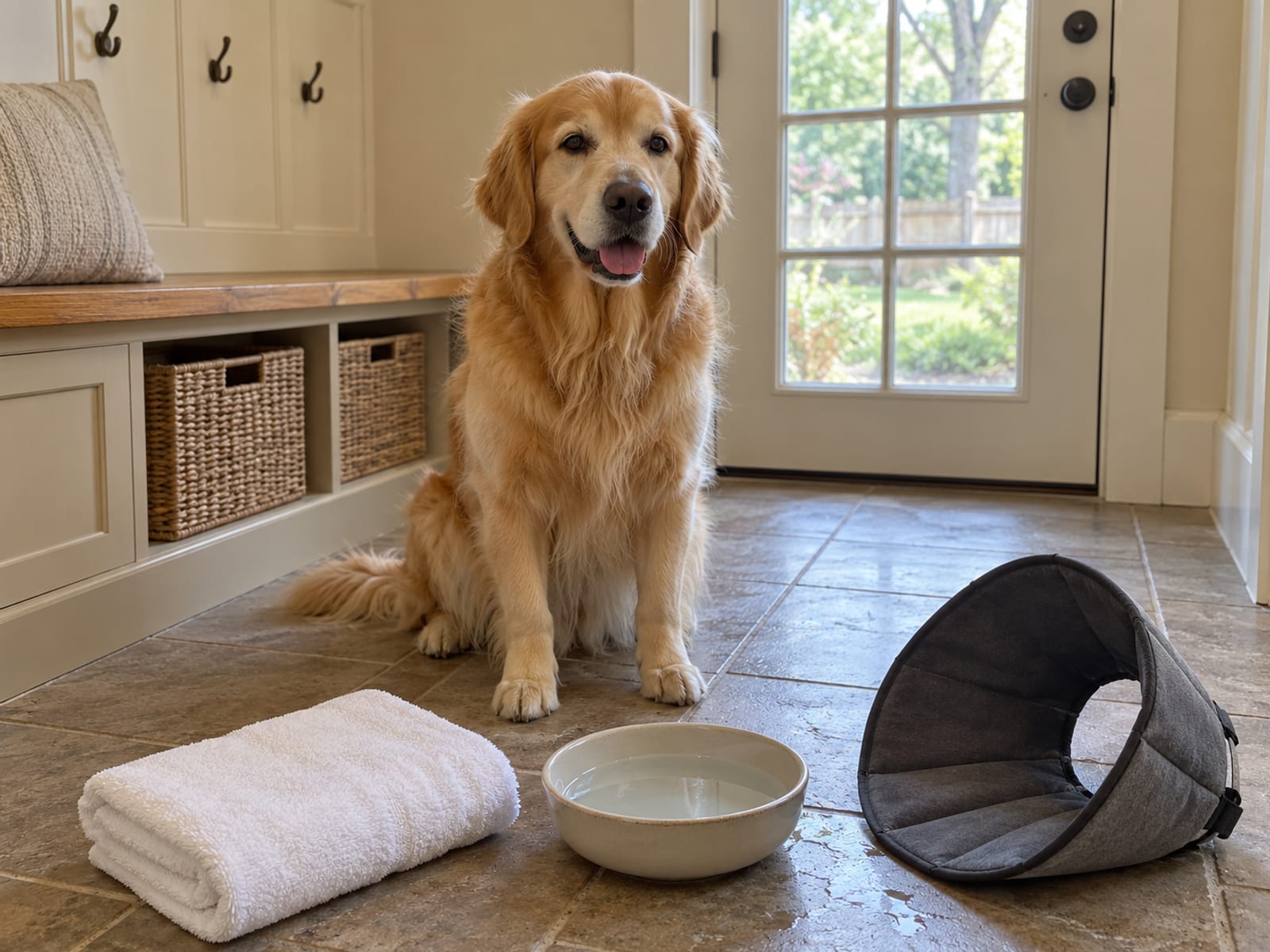
- Stop the licking. A properly fitted recovery collar can do it if you need one.
- Use a loose covering only if your vet advises it and only if it will stay clean, dry and not too tight.
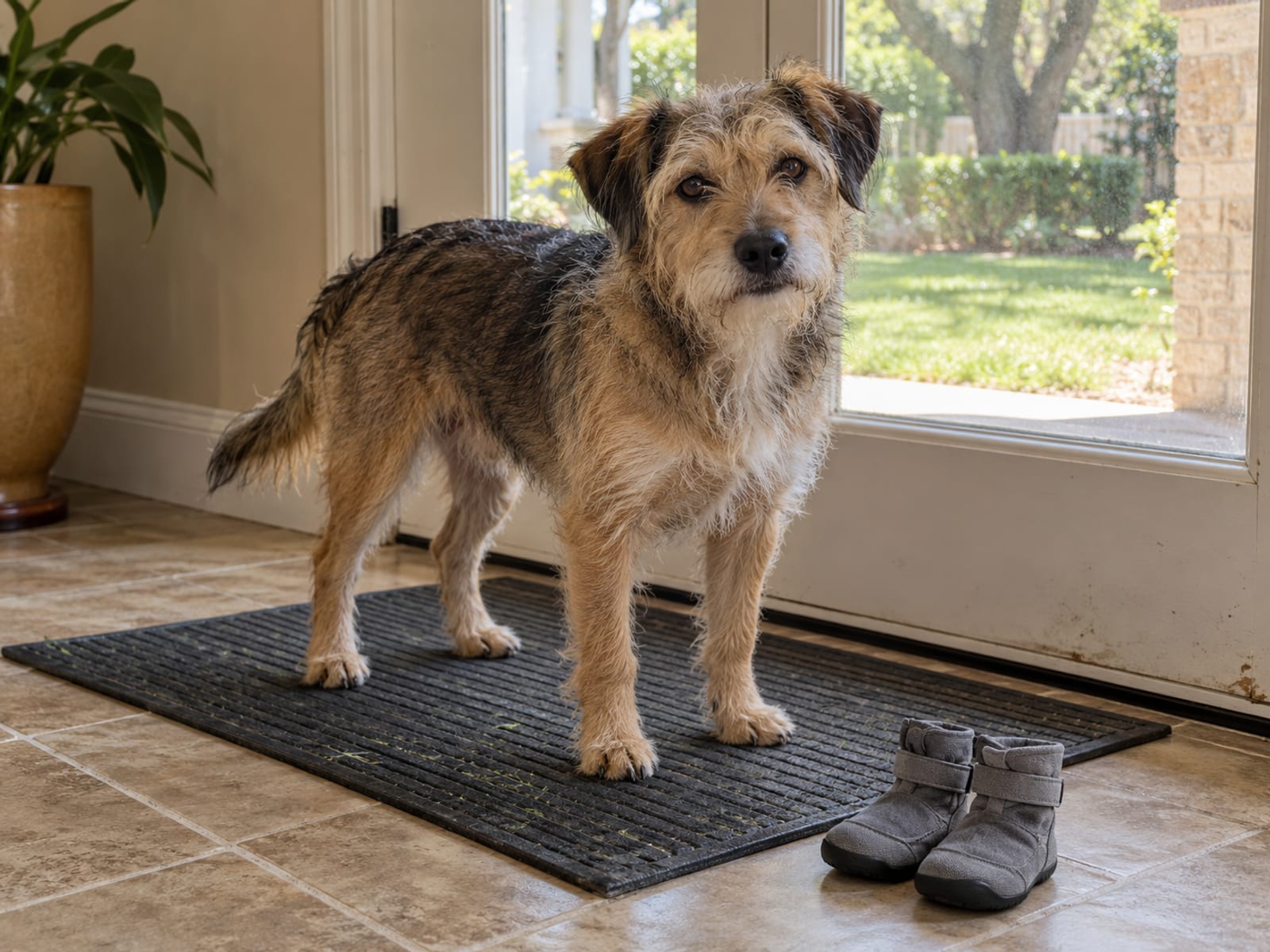
- If you use booties, introduce them gradually indoors and watch for rubbing, pressure, moisture, or discomfort.
- Take a photo, and write down changes in walking, licking, swelling, odor, or discharge so you can show the vet.
Licking matters here because repeated licking can damage the skin and keep the inflammation going. For a suspected burn, AAHA says to move your dog off the hot surface and rinse gently with cool water. Don't use ice or very cold water, and don't wait on a serious burn.
What should I never put on a paw, and why not pull out a deep object?
It's tempting to reach for whatever is in the bathroom cabinet. Please don't. Skip these:
- Hydrogen peroxide. AVMA specifically says not to use it on wounds.
- Alcohol, harsh disinfectants, or unknown chemicals
- Human hand moisturizer. The ASPCA advises avoiding it because it can soften pads and raise the risk of injury.
- Leftover prescription medication
- Any cream or ointment, unless a veterinarian tells you to use it
- A tight wrap, or a wet or dirty bandage left on
Don't try to pull out a deeply embedded grass awn, thorn, or splinter either. AVMA says that if there's a foreign object in a wound, don't try to remove it. A deep object may need a vet to find and remove it, and pulling can leave part of it behind or make the wound worse. Take your dog in, and keep the paw as still as you can on the way.
Why does my dog lick or chew its paws, and is it one paw or all four?
Persistent licking usually has a physical reason. Allergy, contact irritation, yeast or bacterial overgrowth, pain, a foreign body, a burn, a nail injury, parasites, and self-trauma are all on the list. Boredom or stress can play a part, but only after the physical causes have been looked at.
The pattern can guide how fast you act, but it can't give a diagnosis:
- Allergy: Licking is often constant and may involve several paws. Cornell describes dogs with atopic dermatitis as licking and chewing their feet, sometimes with hair loss, redness, and brown staining from saliva. Allergies can tie to environmental allergens, fleas, or food, and a secondary bacterial or yeast infection can pile on.
- Infection: Yeast or bacteria can cause redness, swelling, odor, discharge, hair loss, nodules, or licking that won't quit. A vet uses cytology to look for bacteria, yeast, inflammatory cells, and some parasites.
- Pain: Licking leans toward pain when one paw is involved, your dog limps, holds the foot up, reacts when you touch it, or the paw has a cut, burn, foreign body, broken nail, swollen toe, or bump between the toes.
- Stress or boredom: Banfield's Spanish-language handout on lick granuloma describes a cycle where licking causes irritation and the irritation drives more licking.
The American College of Veterinary Dermatology lists constant licking, chewing, biting, and scratching of the feet as a reason to talk about dermatology evaluation, especially if it isn't getting better. If the licking comes with swelling, hair loss, odor, or infections that keep returning, book a visit. Our guide to dog allergies covers the itch side in more detail.
Why are my dog's paws red, swollen, or smelly, and where does yeast fit?
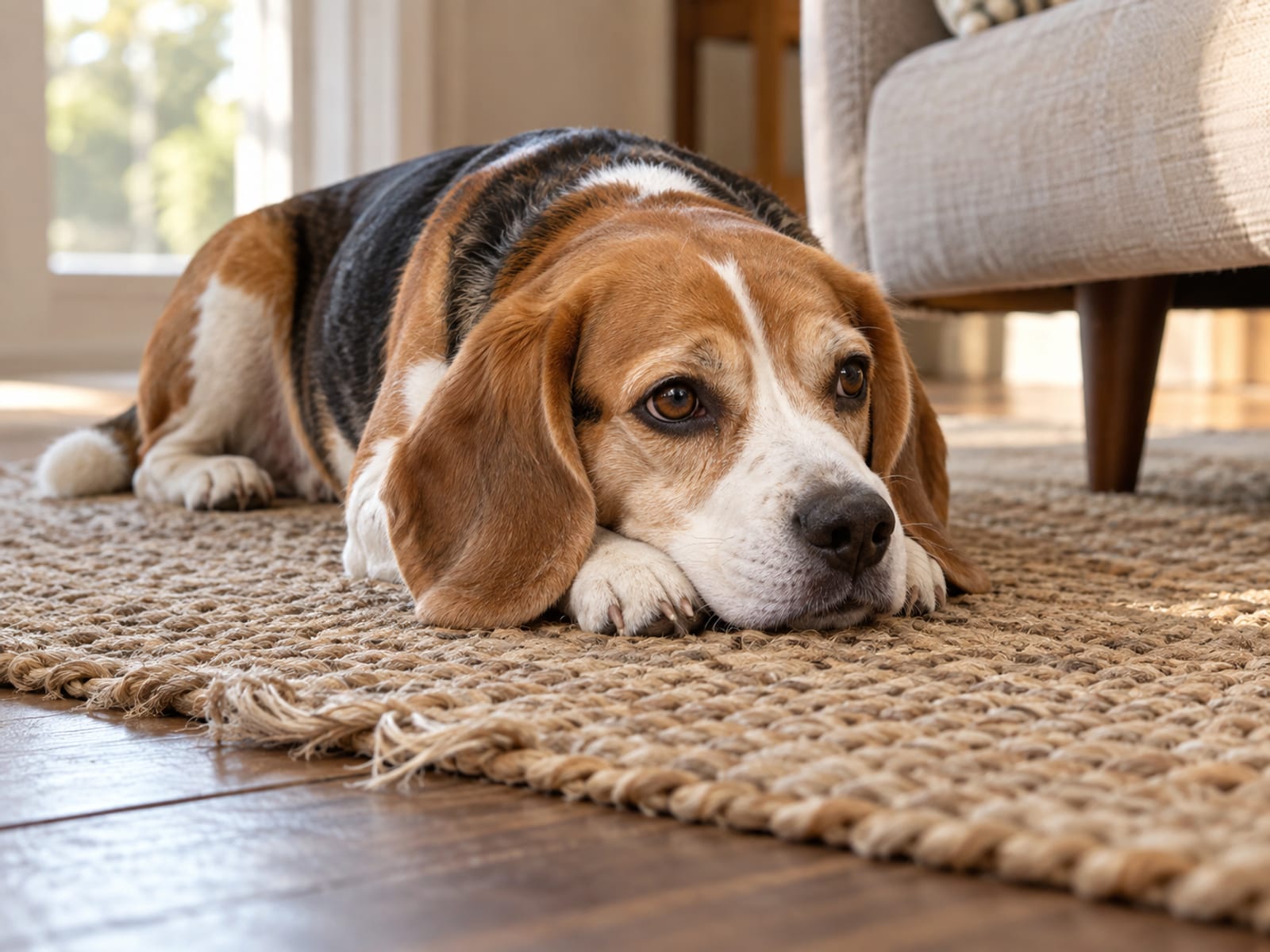
Redness, swelling, odor, hair loss and discharge are nonspecific signs. VCA describes infectious pododermatitis as often red and swollen, sometimes with nodules, ulcers, hair loss, or pus. Allergic pododermatitis often causes itch and inflammation, especially on the tops of the paws, while contact irritation can affect the undersides.
So, a red, smelly paw could be allergy, contact irritation, bacteria, yeast, trauma, a burn, parasites, or immune-mediated disease, and a corn-chip smell alone doesn't prove yeast. A vet sorts it out with an exam and, often, cytology. Our page on yeast infections in dogs goes deeper on that cause. For your purposes today, rinse off surface irritants, dry between the toes, keep your dog from licking, and call the clinic if the redness comes with swelling, pain, discharge, odor, hair loss, limping, or licking that won't stop.
Why are my dog's pads cracked, dry, thick, or crusty?
Cold, salt, chemical de-icers, rough surfaces, too much exercise, and heat can all irritate or crack pads. The ASPCA suggests asking your veterinarian about a pad moisturizer and avoiding human hand moisturizer.
Thick, crusty pads are a different question. Merck Veterinary Manual says footpad hyperkeratosis can cause horns, fissures, secondary infection, pain, and lameness. VCA also lists immune-mediated disease and other skin disorders among causes of thickened or crusty footpads, and Merck describes a rare metabolic liver condition with crusted, ulcerated footpad lesions. If the pads are thick, hard, cracked, or crusty, your dog needs a veterinary look, and our article on hyperkeratosis in dogs explains that condition. A cracked pad that is bleeding, ulcerated, or making your dog limp belongs on the go-today list.
What about cuts, burns, foreign objects, broken nails, and the bump between the toes?
Each of these has its own go-today trigger, so they're split out below, drawing on VCA, VCA on broken nails and Merck.
Cuts and punctures. Sharp debris can cut or puncture a pad. Apply firm pressure for bleeding, and get to a vet for a deep, gaping, or puncture wound.
Burns. Hot pavement, concrete, sand, metal, and other surfaces can cause redness, blisters, discoloration, licking, and limping. Move your dog off the surface and rinse with cool water. A burn, blister, or loose pad flap needs veterinary care.
Foreign bodies. Grass awns, thorns, splinters, and other objects can get into a paw. Merck says foreign-body lesions are often a single spot and commonly affect a front foot. A deep object stays put until a vet takes it out.
Broken or overgrown nails. A torn nail can expose the quick, which brings significant pain and bleeding. Overgrown nails can catch, tear, or curl into the pad. A broken nail into the quick, especially if it bleeds or hurts, is a same-day visit.
The bump between the toes. A red, painful bump there is often called an interdigital cyst, but Merck says these are usually interdigital furuncles, deep pus-forming skin lesions, not true cysts. They can be 1 to 2 cm across. Allergy, friction, conformation, embedded hair, bacteria, parasites, and foreign material may all contribute. A pus-filled bump, a swollen toe, or a bump that keeps coming back needs a vet.
For a paw that's been licked raw, it's worth knowing that this kind of self-trauma on a paw differs from moist skin lesions elsewhere on the body, which our page on hot spots on dogs covers.
How do hot pavement, winter salt, and cold hurt paws, and how do I prevent it?
Summer first. AAHA, updated June 12, 2026, says hot pavement, sidewalks, sand, and metal can burn paw pads quickly. A few numbers help:
Tap or hover a row to highlight it.
| Figure | What it means | Source |
|---|---|---|
| Figure40 to 60°F hotter than the air | What it meansSurfaces in the sun can run far above the air temperature | SourceAAHA, updated June 12, 2026 |
| FigureAbout 135°F asphalt on an 86°F day | What it meansHot enough to burn paws in about 60 seconds | SourceAAHA, updated June 12, 2026 |
Test a surface with the back of your hand before you walk on it, walk during cooler hours, and choose shade or grass when you can.
In winter, salt, chemical de-icers, snow, and ice can irritate and crack paws. The ASPCA, in a January 22, 2026 article, notes that de-icers can irritate paws and cause illness if swallowed, and that "pet safe" isn't a universal labeling guarantee. Wash and dry paws after walks, and keep paw hair from collecting ice balls or chemical residue without close shaving in winter. If your dog licked de-icer and seems unwell, call your vet or poison control.
A few habits keep trouble down year-round:
- Check pads, toe spaces, nails, and the top of the paw after walks.
- Pull out glass, burrs, thorns, gum, tape, snow, and ice from the surface of the paw.
- Keep nails at a safe length, and check dewclaws too.
- Build up hiking, running, and long walks gradually.
- Use well-fitted booties when they suit the situation, introduced gradually.
- Keep the yard and home free of sharp debris.
- Ask your vet about a moisturizer for dry or cracked pads.
- Get repeated licking, recurring bumps, or repeat infections checked.
Your regular groomer can handle routine nail and paw-hair upkeep, but a painful, swollen, infected, burned, or bleeding paw needs a vet.
What does the vet check, what does treatment involve, and what might it cost?
A vet usually starts with your dog's history and a physical exam. Expect questions about how many paws are affected, when it started, the season, what surfaces your dog walks on, diet, past treatment, and any skin or ear signs. Depending on what they find, the vet may run:
- Cytology, to look at inflammatory cells, bacteria, and yeast
- Skin scrapings or hair plucks, for mites such as Demodex
- Bacterial culture and susceptibility testing
- Fungal testing, where it's indicated
- Allergy evaluation, such as a veterinarian-directed elimination diet or environmental allergy testing
- Biopsy, for unusual, recurring, immune-mediated, tumor-related, or unclear lesions
- Imaging or surgical exploration, for a foreign body, deep injury, or structural problem
Treatment depends on the cause. By class, it can include wound cleaning, bandaging, foreign-body removal, nail repair, topical antiseptic or antimicrobial care, oral antimicrobial or antifungal medication, anti-inflammatory or anti-itch medication classes, allergy management, parasite control, changes to your dog's environment, or surgery. Your vet picks the medicine and the amount, and I'd never give you a home dose. Merck notes that deep, multi-paw interdigital furunculosis can need several weeks of treatment, and that culture can guide which antimicrobial is chosen. Cornell lists topical therapies, anti-inflammatory medication classes, and allergen-specific immunotherapy as options for atopic dermatitis.
If the problem is constant foot licking, chewing, or scratching that isn't improving, ask whether a board-certified veterinary dermatologist makes sense. Primary care vets can refer you.
On cost, CareCredit reported a 2025 national average dog emergency exam of $135, with a range of $107 to $246.
Tap or hover a row to highlight it.
| Measure | Amount |
|---|---|
| MeasureNational average emergency exam | Amount$135 |
| MeasureLow end of the range | Amount$107 |
| MeasureHigh end of the range | Amount$246 |
That's the exam only. Tests, medication, bandaging, sedation, hospitalization, surgery, and specialist care add to the total, and a routine clinic, an urgent-care clinic and an emergency hospital charge differently. Ask the clinic for a written, itemized estimate that covers the exam, tests, sedation, bandaging, medication, follow-up, and any referral. Our page on pet insurance for dogs covers planning ahead for bills like this.
Questions people ask about dog paw problems
These are common questions, answered short.
What can you put on a dog's paw to help it heal?
For a minor surface irritation, clean water and careful drying are what's safe to do yourself. Don't use human lotion, hydrogen peroxide, alcohol, or any cream unless your vet directs it, and ask your vet about a moisturizer for dry pads.
What does pododermatitis look like in dogs?
Pododermatitis means inflammation of the paw. VCA describes the infectious form as often red and swollen, sometimes with nodules, ulcers, hair loss, or pus. Allergic forms often itch, especially on the tops of the paws, and looks alone can't separate one cause from another.
What do unhealthy dog paws look like?
Warning signs include cracked, thick, crusty, bleeding, or ulcerated pads, swelling, pus, odor, hair loss, blisters, a torn nail, or a dog who limps or licks the paw nonstop. Several of these mean a vet visit today, so check the go-today list near the top.
How can I soothe my dog's irritated paws?
Rinse with clean water, dry between the toes, keep your dog off hot, salty, icy, or sharp surfaces, and stop the licking with a properly fitted recovery collar if needed. If it isn't better soon, call your vet, because something other than surface irritation may be going on.
Should I use hydrogen peroxide?
No. AVMA says not to use hydrogen peroxide on wounds.
Are booties safe?
Well-fitted booties may protect paws from heat, salt, and rough ground. Introduce them gradually, and check for rubbing, pressure, moisture, or discomfort.
What's my next step if my dog's paw looks wrong?
Look at the list near the top. If anything on it matches, call a regular or emergency vet now, and find one through our directory of local veterinarians. If it looks like a minor irritation, rinse, dry, stop the licking, and watch the paw. Photograph it, write down what changes, and call if it isn't better soon. I can't diagnose your dog from here, and nobody can from a picture, but your vet can look at the paw and tell you what's going on. For a limp that goes beyond the paw, see why your dog might be limping.
Sources
- acvd.org: American College of Veterinary Dermatology
- American Animal Hospital Association: AAHA
- American Veterinary Medical Association: AVMA first-aid guidance
- ASPCA: ASPCA
- ASPCA: ASPCA
- banfield.com: lick granuloma
- CareCredit: CareCredit
- Cornell University College of Veterinary Medicine: dogs with atopic dermatitis
- Merck Veterinary Manual: Merck Veterinary Manual
- Merck Veterinary Manual: Merck
- VCA Animal Hospitals: VCA Animal Hospitals
- VCA Animal Hospitals: VCA on broken nails
- VCA Animal Hospitals: VCA
- VCA Animal Hospitals: VCA