

Hot Spots on Dogs: What to Do Tonight and When to See a Vet
By Cal Hewitt · Published , updated
Health
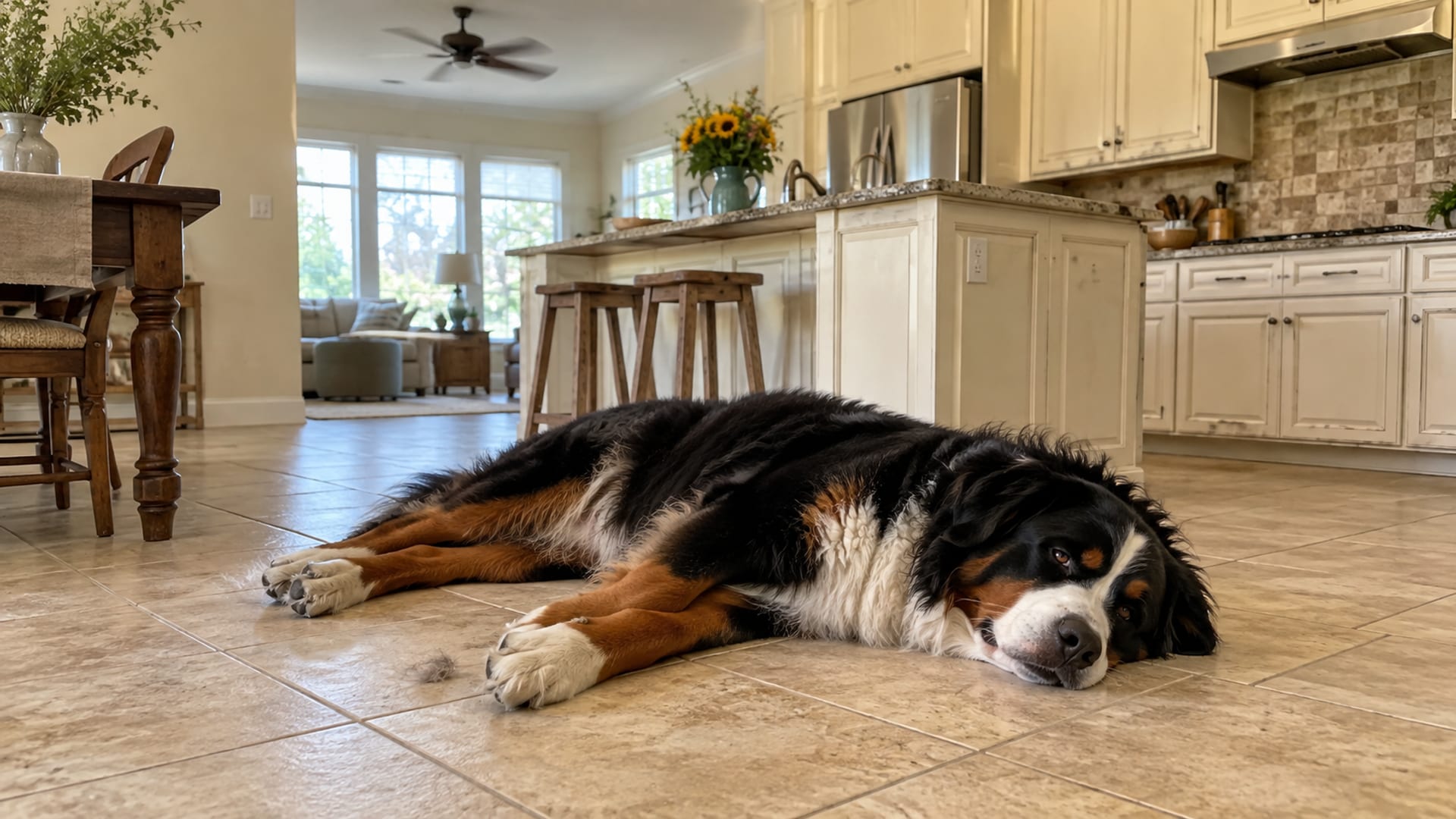
If your dog has a red, wet, raw patch that appeared fast and they won't leave it alone, it is most likely a hot spot, also called acute moist dermatitis or pyotraumatic dermatitis. Tonight, stop the licking, keep the area clean and dry, and never cut near the skin with scissors. Call your veterinarian promptly if the sore is painful, growing, oozing, more than about 24 hours old, or if your dog won't let you handle it safely. That timing comes from Cornell University College of Veterinary Medicine, which says a sore older than 24 hours is likely infected and needs veterinary care.
Key takeaways
Tap a card to bring it forward.
- A hot spot is a painful, itchy, moist skin sore that can appear within a few hours and grow as your dog licks, chews or scratches.
- Stopping the licking comes first; a properly fitted cone or recovery collar is the usual tool.
- For a small, new sore, Cornell describes gentle cleaning with mild soap or chlorhexidine and keeping it dry. No scissors on the lesion.
- Call a vet for pain, fast growth, pus, heat, swelling, a sore older than about 24 hours, or a dog you can't safely handle.
- Hot spots come back when the itch behind them, such as fleas, allergies or ear disease, isn't treated.
Finding one of these is unsettling. Your dog seemed fine this morning, and now a raw, shiny patch has shown up that they keep going after. The plan below puts the urgent decisions first, then the why, so you can act tonight and still get to the root of it.
What a hot spot is, and how fast it can appear and spread
A hot spot is a patch of red, inflamed skin that is painful and itchy. It is often wet or oozing, with hair loss, crusting, a bad smell and matted hair around the edges. The Merck Veterinary Manual classifies acute moist dermatitis as a surface pyoderma, which means a bacterial problem on the very top layer of the skin rather than deep inside it. Common places are the head, legs, hips and the area under or near the ears, but a hot spot can show up anywhere.
Speed is what catches owners off guard. VCA Animal Hospitals says some hot spots appear within a few hours. They grow because licking, chewing and scratching keep injuring the skin, which makes it itch more, which leads to more licking. VCA calls this the lick-itch-lick cycle. The AKC notes that owners sometimes mistake the first red area for an insect bite, then watch it ooze and spread. That's why I'd keep a close eye on any new red patch, even a small one.
If you speak Spanish or your vet's team does, the same condition goes by "dermatitis húmeda aguda," "dermatitis piotraumática" or simply "puntos calientes." A Spanish client sheet from Pine Animal Hospital uses the first term.
What usually sets off a hot spot
A hot spot starts with something that makes your dog itch, lick or chew one area. Veterinary sources, including Cornell, VCA and the AKC, list these triggers:
- Fleas and flea allergy dermatitis
- Environmental or food allergies
- Other parasites
- Ear infections or other skin infections
- Anal-sac disease, which often shows up as licking or chewing near the tail
- Contact with an irritating substance
- Moisture trapped in the coat after swimming, bathing or rain
- A dirty or matted coat, or thick, long hair
- Boredom or stress that leads to repetitive licking
- Pain in the area
Coat type matters a lot. Cornell says hot spots are common in dogs with long or thick coats and can follow a coat that wasn't dried all the way. Allergies matter too; the American Animal Hospital Association lists hot spots among the signs associated with dog allergies. If you suspect fleas or allergies, DogServ's guides to dog allergies and to getting rid of fleas on your dog and in your house go further on those causes.
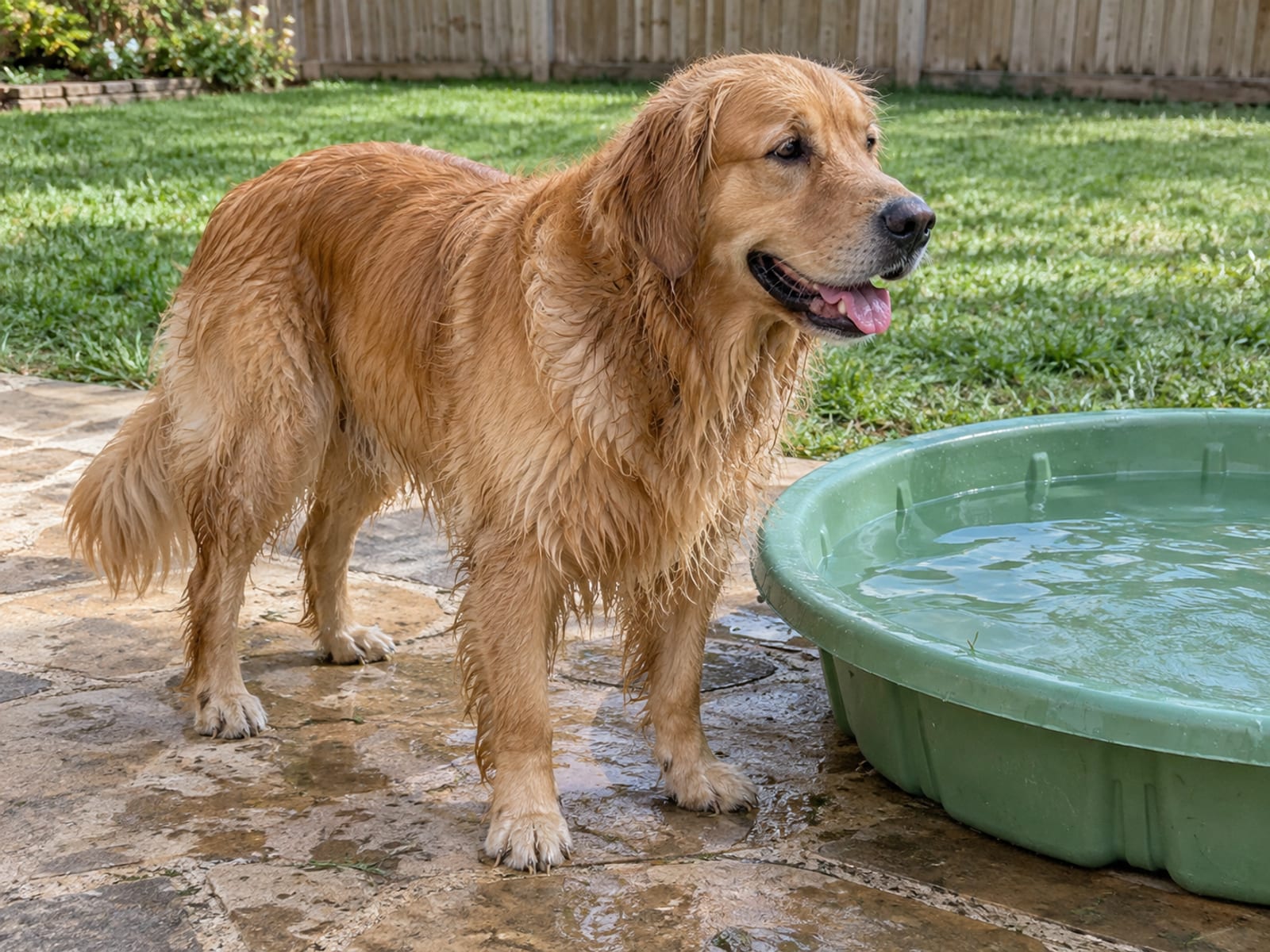
What you can do at home tonight: stop the licking, clip only if safe, clean and dry
Cornell's home-care advice is for a small, new sore that doesn't look obviously infected. If that describes what you're seeing, these are the steps veterinary sources describe.
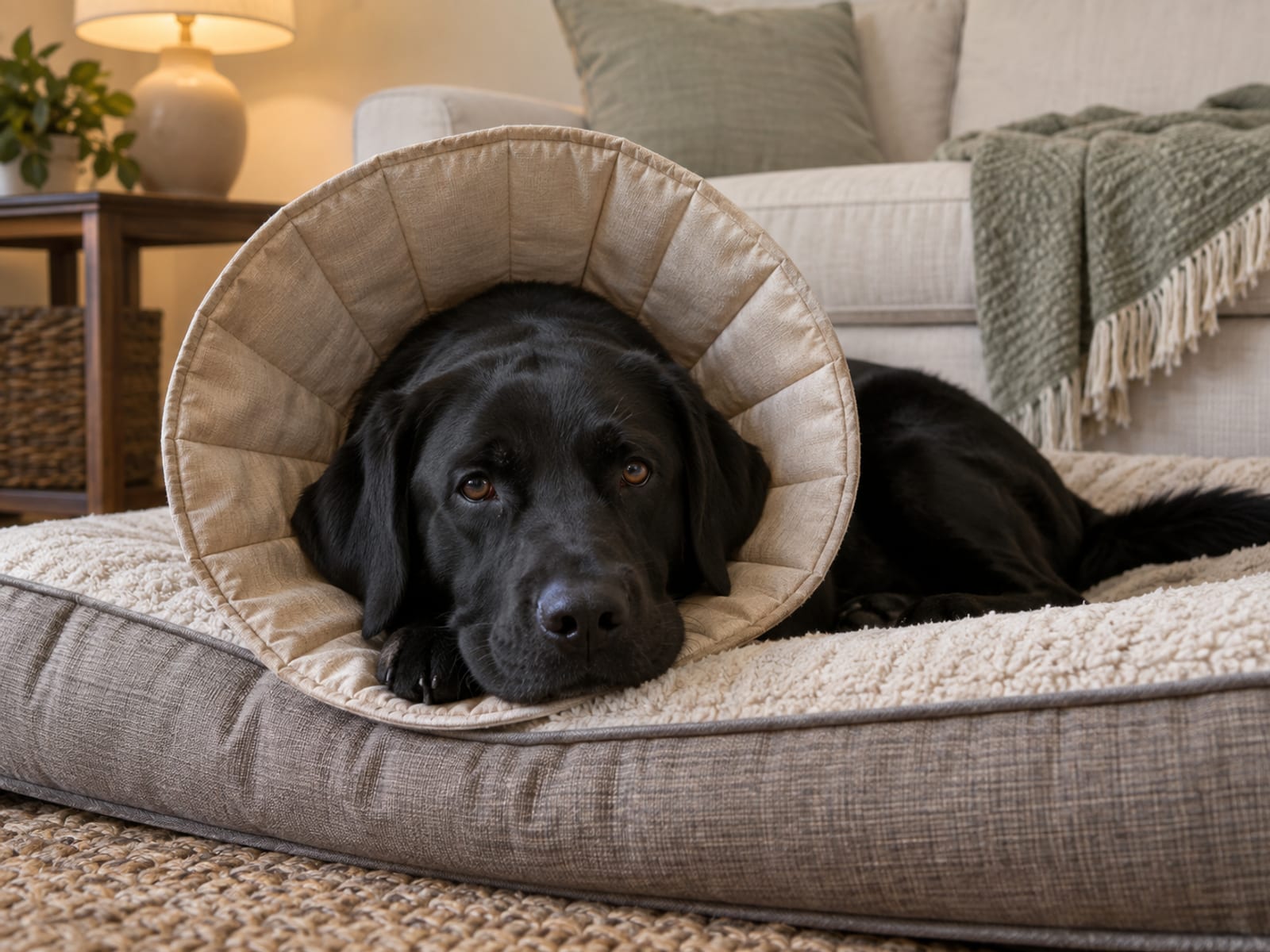
Stop the licking first. Every lick makes the sore worse. Cornell describes using an Elizabethan collar, the classic cone, or another recovery collar that actually keeps your dog from reaching the spot. Check that it fits so your dog can't get around it. If the sore is somewhere a cone can't protect, that's a reason to call your vet.
Expose the area only if you can do it safely. Trimming the hair around the sore lets air reach it and lets you clean it. VCA's first-aid page is clear that you should not use scissors, because the skin is easy to cut. Hot spots hurt, and a dog in pain may snap even if they never have before. If your dog pulls away, growls or tries to bite, stop. VCA notes that painful dogs may need professional clipping or sedation at the clinic. DogServ's guide to dog body language can help you read those stress and pain signals.
Clean it gently. Cornell describes cleaning the surface with a mild soap or chlorhexidine. Be gentle; you're removing ooze and debris, not scrubbing. If your vet has told you to use a specific cleanser, use that one.
Keep it dry. Moisture feeds a hot spot. Pat the area dry after cleaning, keep your dog out of water, and don't cover it with anything that holds moisture against the skin.
Then watch it. If it's smaller and drier by the next day, you're on the right track, but plan a vet visit anyway if you don't know what caused it. If it's bigger, wetter or more painful, don't keep trying at home.
What to keep off a hot spot
This is where a lot of online advice goes wrong. The veterinary pages I relied on support a mild cleanser or chlorhexidine, drying, and treatments a veterinarian chooses. They don't support a long list of kitchen or medicine-cabinet fixes. Based on those sources, this is what I'd keep off the sore unless your vet tells you otherwise:
- Scissors. VCA warns they can cut the skin.
- Tea tree oil and other essential oils. Don't apply them based on home-remedy advice.
- Hydrogen peroxide or rubbing alcohol as a casual wound cleaner.
- Zinc oxide and human creams, including antibiotic, steroid, numbing or "natural" creams, unless your veterinarian has directed that exact product for your dog and that spot.
The reasoning is simple. Your dog can lick off whatever you put on, and the sore might not be a hot spot at all. You may see vinegar and other home remedies shared online, including on social video. The sources in my research don't recommend vinegar for hot spots, so I'd leave it in the pantry and ask your vet what to use instead.
If your dog has already licked or swallowed a product, call your veterinarian or a pet poison hotline and use whatever amount and next step that professional gives you.
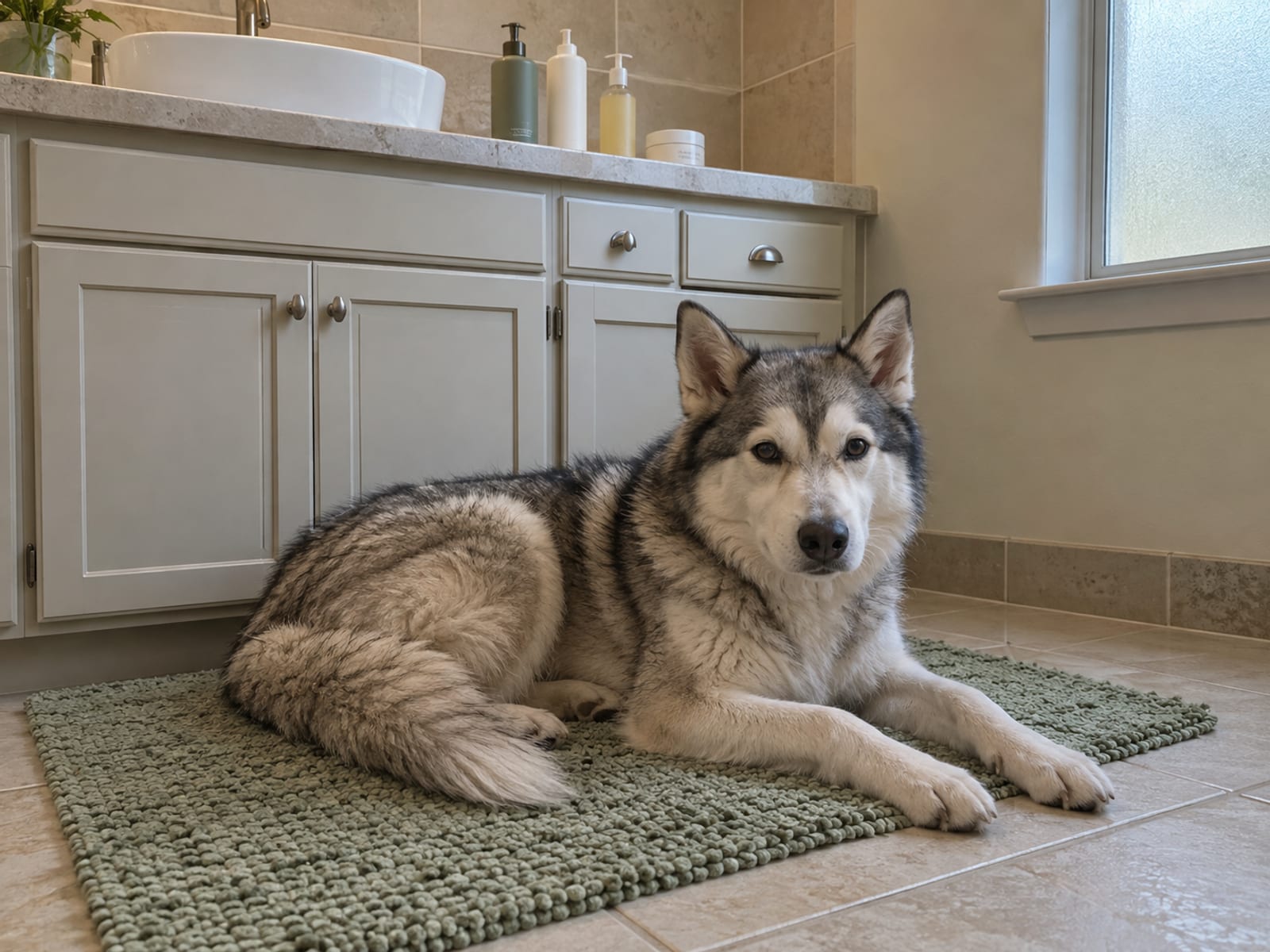
When a hot spot needs a veterinarian
Home care is for a small, fresh sore on a dog who lets you help. Call your vet promptly if any of these are true:
- The sore is getting bigger quickly.
- It's clearly painful, or your dog won't let you touch it.
- There's pus, a lot of discharge or a bad smell.
- The area is hot or swollen, or the sore looks deep.
- It's more than about 24 hours old. Cornell says infection is likely by then and veterinary care is in order.
- It's near the eye or another sensitive area.
- Your dog seems unwell, with fever, low energy or other signs of illness.
- Your dog has several sores, or hot spots keep coming back.
- It isn't improving with home care.
A dog who threatens to bite shouldn't be held down and clipped at home. That's not a failure on your part; it's exactly the case VCA describes, where the clinic may need to sedate the dog to clip and clean safely. If it's after hours and the sore is spreading fast or your dog seems sick, an emergency vet is the right call. DogServ's directory lists regular and emergency vets across the US.
There's also an honest limit in the sources worth knowing about. Cornell gives narrow home-care steps for a small, new sore, while the AKC recommends talking with your veterinarian. Both can be true. First aid tonight is fine for the right kind of sore, and a vet is still the person who can find out why it happened.
What the veterinarian will do
Expect a skin exam first. According to the AKC, VCA and the Merck Veterinary Manual, the vet may look at the ears and the rest of the skin, clip and clean the area, judge how deep any infection goes, and do a skin scrape or other tests if parasites or another condition are possible.
Treatment depends on what they find. It may include topical antiseptic or antimicrobial products, drying products, topical or oral antibiotics for a bacterial infection, and anti-inflammatory or anti-itch medication. The vet will also treat the trigger, such as fleas, allergies or ear disease. The Virginia Tech Veterinary Teaching Hospital reports that updated 2025 guidance on antimicrobial use named topical antimicrobial therapy as the treatment of choice for hot spots. That's guidance for veterinarians choosing a treatment, not a self-treatment instruction, so follow the plan and amounts your vet gives you.
On recovery, the AKC says many dogs improve quickly, and in many cases a hot spot resolves in three to seven days after treatment begins. If it isn't clearly better on that timeline, go back to your vet.
Other skin problems that can look like a hot spot
A red, raw or hairless patch can't be identified reliably by looks alone. The AKC warns that many skin conditions look similar. These are possibilities veterinary sources describe, not a diagnosis for your dog:
- Deep pyoderma, a more serious infection that reaches deeper layers of skin. Merck separates it from surface pyoderma, the group hot spots belong to.
- Ringworm, a contagious fungal infection that can cause circular hair loss, inflammation and crusting, according to the AKC.
- Mange, a mite infestation that can cause intense itching, hair loss and inflamed skin. A skin scrape helps check for mites.
- Skin tumors, which can become inflamed, ulcerated or bleed and be mistaken for a wound.
- Lick granuloma, also called acral lick dermatitis, a long-lasting thickened sore from constant licking, often on a leg.
This also answers the contagion question. The hot spot itself comes from self-trauma and bacteria on the skin surface, but some look-alikes, such as ringworm and mange, can spread. That's one more reason a vet should see a sore that doesn't behave like a simple hot spot.
Preventing the next one: parasite control, allergy care, grooming and drying
If your dog keeps getting hot spots, the itch that starts them probably isn't under control yet. Both the AKC and VCA say recurrence is common when the original trigger isn't addressed.
Some dogs are more prone. Cornell names Newfoundlands, German Shepherd Dogs and Golden Retrievers, and notes higher risk in dogs with drop ears or hairy coats. The AKC adds Saint Bernards, Labradors and Rottweilers. Long, thick or double coats hold moisture and hide sores until they're already large.
Prevention steps from Cornell, the AKC and VCA:
- Keep your dog on the flea and parasite prevention your vet recommends.
- Work with your vet on allergies and repeat skin or ear problems. DogServ's guide to cleaning your dog's ears safely covers when ear trouble needs a vet.
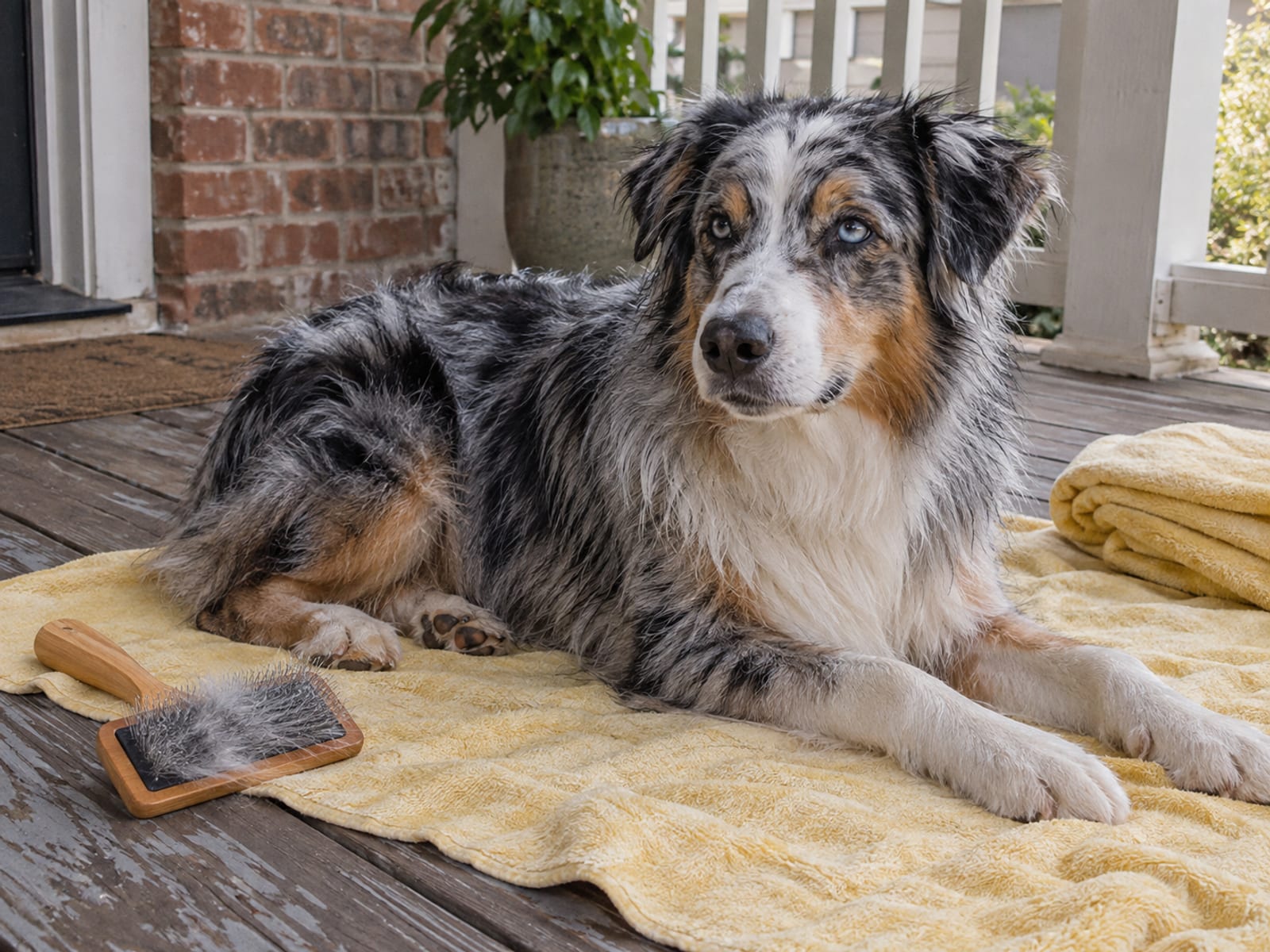
- Brush regularly and have mats removed safely.
- Dry the coat thoroughly after swimming, baths or rain. Rinse swimmers with clean water when it makes sense, then dry them well.
- Check ears, under the tail and any spot your dog keeps licking or rubbing.
- Consider seasonal grooming for dense-coated dogs.
- Give a bored or stressed dog more exercise and things to do, while still having the vet look for a medical cause.
- Keep nails trimmed so scratching does less damage.
- Keep a recovery cone on hand if your dog tends to reopen sores.
A groomer can help with coat care and mats, but a painful sore is a job for the vet, and no one should take scissors to the lesion itself.
What hot spot treatment may cost
Prices vary a lot by location and by how bad the sore is. The best figure in my research comes from VetCostGuide, in a guide published February 28, 2026 and updated June 6, 2026. It reported about $50 to $100 for a basic exam and about $75 to $350 for total treatment, depending on severity. That's a secondary estimate, not a survey of veterinary fees, so treat it as a rough national range and ask your clinic for a quote. Sedation, testing and repeat visits for recurring sores can push the total higher, which is one more reason to catch a hot spot early.
Questions dog owners ask about hot spots
These are the questions that come up most, answered from the veterinary sources above.
How do I treat my dog's hot spot?
For a small, new sore that doesn't look infected, Cornell describes stopping the licking with a cone, exposing the area so it can dry, cleaning gently with mild soap or chlorhexidine, and keeping it dry. Anything bigger, older or more painful needs a vet, who may add topical or oral medication.
Should I take my dog to the vet for a hot spot?
Yes, if it's painful, spreading, oozing, hot, swollen, older than about 24 hours, or if your dog won't let you touch it. Even a hot spot that heals at home is worth a vet visit if you don't know the trigger, because an untreated cause brings it back.
What can be mistaken for a hot spot?
Deep skin infection, ringworm, mange, skin tumors and lick granuloma can all look like a red, raw patch. Only an exam, sometimes with a skin scrape or other test, can tell them apart.
Are hot spots contagious?
The hot spot itself comes from your dog's own licking and scratching plus surface bacteria. Some conditions that look like hot spots, such as ringworm and mange, can spread, so have unclear sores checked.
Why does my dog keep getting hot spots?
Usually the itch that starts them hasn't been controlled. Fleas, allergies, ear disease, a thick coat that stays damp, or repetitive licking are common reasons, and your vet can help work out which one applies to your dog.
Your next step
Look at the sore right now. If it's small, fresh and your dog lets you help, put on a cone, clean it gently, keep it dry, and check it again in the morning. If it's painful, spreading, oozing, older than a day, or your dog won't let you near it, call your veterinarian today, or an emergency vet if it's after hours and getting worse. You can find vets and emergency vets near you in the DogServ directory. Once the sore is healing, ask your vet about the trigger, because that's what keeps the next one from starting.
Sources
- American Animal Hospital Association: American Animal Hospital Association
- American Kennel Club: AKC
- American Kennel Club: AKC
- Cornell University College of Veterinary Medicine: Cornell University College of Veterinary Medicine
- Merck Veterinary Manual: Merck Veterinary Manual
- pineanimalhospital.com: Pine Animal Hospital
- VCA Animal Hospitals: VCA Animal Hospitals
- VCA Animal Hospitals: VCA's first-aid page
- VCA Animal Hospitals: VCA
- vetcostguide.com: VetCostGuide
- vth.vetmed.vt.edu: Virginia Tech Veterinary Teaching Hospital