

Ringworm in Dogs: What It Looks Like, What to Do Today and How Long It Takes to Clear
By Cal Hewitt · Published , updated
Health

If your dog has a bald, scaly patch, call your vet, because it may be ringworm, a contagious fungal infection of the skin and hair. Ringworm can also cause broken hairs, crusting or acne-like bumps, often on the face, ear tips, feet or tail, but how a patch looks cannot confirm it. Until a vet sees your dog, keep close contact down, wash your hands after every touch, keep children and anyone with a weak immune system away from the dog, and start removing loose hair from the places your dog lies. If a person in your home gets a rash, that needs a medical visit too.
Key takeaways
Tap a card to bring it forward.
- Ringworm is a fungal infection of skin and hair, and it can spread to people, other pets and objects.
- A round, scaly, hairless patch is a reason to call a vet; it does not confirm a diagnosis.
- Today: less close contact, hand washing, children and vulnerable people kept back, loose hair removed.
- Vets confirm it with a Wood's lamp, microscope, fungal culture or PCR, and no single test settles every case.
- Treatment commonly takes 6 to 12 weeks, and cure is checked with testing, not just how the skin looks.
- Vacuum and wipe first, then disinfect; disinfectant alone does not clean up hair and debris.
Could this be ringworm? The short answer
I know how it feels to find a bare, crusty circle on your dog and immediately think about your kids, your couch and your other pets. Here is the calm version. Ringworm, which vets call dermatophytosis, is a superficial fungal infection of the skin, hair and sometimes the claws. The Merck Veterinary Manual names *Microsporum canis*, *Microsporum gypseum* and *Trichophyton mentagrophytes* as the fungi behind most cases in dogs.
A patch that looks like ringworm may not be. Allergies, mange, hot spots and bacterial skin infections can look much the same, so a vet has to make the call. What you can do right now is reduce the chance of it spreading while you wait for your appointment.
What to do today while you wait for the vet
Call your vet and say you have a suspicious patch and other people and pets at home. That helps the clinic plan the visit. If you need one, our vet directory can help you find a clinic.
Then work through this list.
- Cut back close contact. Skip the cuddles on the couch and in the bed for now. Keep the dog away from other pets.
- Protect children and vulnerable people. The CDC says anyone can get ringworm, and people with weakened immune systems have a higher risk of a more severe infection. Children younger than five and adults 65 and older are also more likely to get sick from germs that pass between animals and people, according to the CDC's pet risk guidance.
- Wear gloves and long sleeves when you handle the dog, and wash your hands with soap and running water afterward.
- Start removing hair. Loose hair and skin scales carry the fungus, so pick up hair from the floor, furniture, crate and car seat where your dog spends time.
- Keep a short list of who touched the dog. If someone develops a patch, you can tell their doctor.
Book a prompt vet visit, but you do not need to treat this as an emergency. Go to an emergency vet only if your dog seems truly sick, not for the patch alone.
Do not put human antifungal cream or any home remedy on your dog. Ask the vet what is safe.
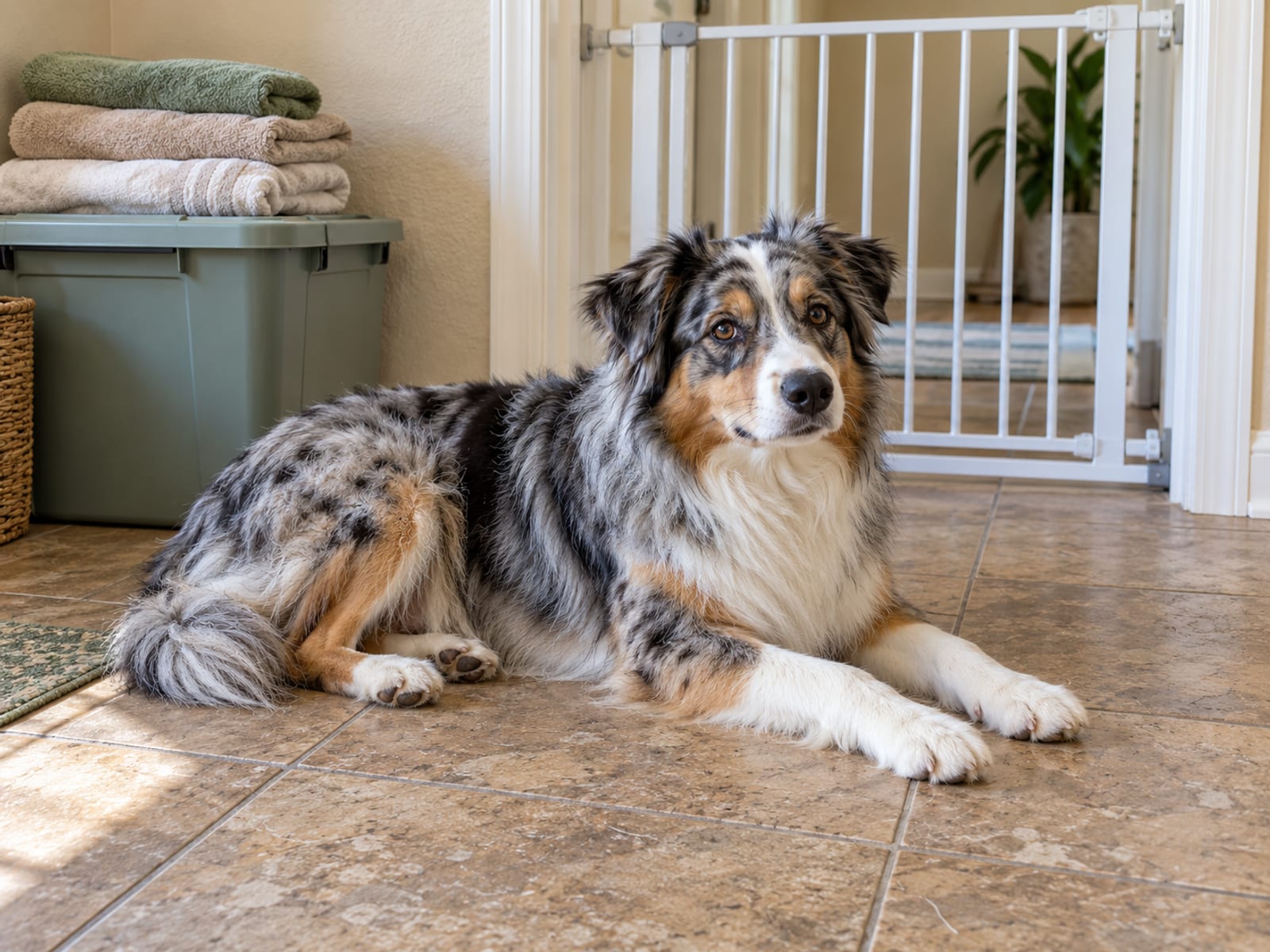
What ringworm looks like on a dog, and what else can look like it
Typical signs include bald or thinning patches, broken hairs, scaling, crusting, redness and acne-like bumps. Itching varies; some dogs scratch a lot and some barely notice. The face, ear tips, tail and feet are common spots, according to the Merck Veterinary Manual. When the claws are involved, they can turn rough, brittle or broken.
Many people expect a perfect ring. Real lesions vary, and a lesion's shape does not tell you the cause. These conditions can look similar:
- Demodicosis and sarcoptic mange, which are skin mite problems.
- Allergies, including flea allergy. Our dog allergies article covers itching and hair loss from that side, and our guide to getting rid of fleas helps if you suspect them.
- Hot spots, which are sudden, intensely irritated areas. See hot spots on dogs.
- Bacterial folliculitis and yeast disease.
Some dogs are more likely to catch it. Merck lists puppies and young dogs, dogs under stress, dogs that are ill or poorly nourished, free-roaming or hunting dogs, dogs in warm environments, and animals in crowded places such as shelters and kennels. Yorkshire Terriers may develop persistent or widespread disease.
Can your family and other pets catch it?
Yes, people and other pets can catch ringworm from an infected dog, and from hair, bedding, tools, furniture and surfaces the dog has touched. Contact does not guarantee infection. Skin injury, moisture and each person's or animal's health affect whether it takes hold.
Some dogs carry the fungus without visible lesions, according to VCA Animal Hospitals, so ask your vet whether your other pets should be checked too.
If a person gets a rash or patch, the CDC says to see a healthcare provider for testing, because ringworm looks like other skin and nail conditions. That person should follow their own clinician's advice and never use the dog's medication.

How vets confirm ringworm
Your vet may use several tests, and each has limits.
- Wood's lamp. An ultraviolet light that can make some infected hairs glow. Not every infection glows, so a dark result does not rule ringworm out.
- Microscopy. The vet looks at hair and scale under a microscope for fungal spores.
- Fungal culture. A sample grows on special medium, often dermatophyte test medium. Merck's dog-owner material calls culture the most accurate method. VCA says a culture can take up to three weeks.
- PCR. This finds fungal DNA in hair or crust and can be faster. It cannot tell live spores from dead ones, and it may not name the species.
- Biopsy. Used for nodular or unusual cases, not routine ones.
No one test is a perfect gold standard, so your vet may combine them.
What treatment involves and how long until your dog is cured
Veterinary treatment usually combines several steps, all directed by your vet. I will not give doses here; your vet sets the product and amount.
- Topical whole-coat therapy to disinfect the hair and cut down infectious material, such as lime sulfur, enilconazole or a chlorhexidine-miconazole shampoo.
- Oral antifungal medicine for active infection. Merck names itraconazole and terbinafine, and ketoconazole in some protocols. It says fluconazole does not work against these fungi and griseofulvin is no longer preferred in its professional guidance.
- Clipping, when your vet advises it, especially for widespread disease or contaminated hair. Clipping at home can injure the skin, so ask first.
- Monitoring and follow-up visits.
Merck reports that infection commonly takes 6 to 12 weeks to resolve. VCA says oral treatment usually lasts at least six weeks and may take longer. Plan for weeks, not days.
There are two kinds of cure. Clinical cure means the lesions are gone and no new ones appear. Mycological cure means the fungus itself is gone, which is supported by a negative fungal culture or PCR. Merck says one negative culture or PCR may support cure in specific situations, and VCA says two negative cultures in a row show treatment worked. Your dog can look great and still be contagious, so keep up the follow-up tests.
VCA reports a dog may stay contagious for about three weeks even with aggressive treatment. Ask your vet when normal contact with children and other pets is safe again.
Tap or hover a row to highlight it.
| Topic | Figure | Source |
|---|---|---|
| TopicTypical time for infection to resolve | Figure6 to 12 weeks | SourceMerck Veterinary Manual |
| TopicOral treatment length | FigureAt least 6 weeks, possibly longer | SourceVCA Animal Hospitals |
| TopicFungal culture result | FigureUp to 3 weeks in some cases | SourceVCA Animal Hospitals |
| TopicContagious period with aggressive treatment | FigureAbout 3 weeks | SourceVCA Animal Hospitals |
Cleaning the house, car and your dog's belongings
The good news is that Merck says the spores do not multiply in your home, and ordinary cleaning removes them. The work is mostly removing hair and debris. Disinfectant does not replace that step.
- Remove loose hair and debris from floors, furniture, crates and car surfaces.
- Vacuum and mop areas the dog uses. VCA suggests daily during treatment.
- Clean with detergent until surfaces are visibly clear, then apply a disinfectant labeled effective against dermatophytes or *Trichophyton*.
- Wash bedding, towels and washable toys in the washing machine. Merck says bleach is not needed for washable soft items.
- Shampoo or steam-clean carpets.
- Clean grooming tools after removing hair, and do not share them between animals.
Follow the label on every product and never mix cleaning products. Keeping the dog to rooms and car surfaces that are easy to clean makes the job smaller.
One caution about vacuums: AAHA infection-control guidance warns against vacuuming suspected ringworm contamination unless the vacuum has HEPA filtration. Vets recommend vacuuming as part of cleanup, so ask your vet which equipment they want you to use. The ASPCA adds that items you cannot disinfect thoroughly may need to be thrown away.
Tell your groomer, boarding facility or daycare about suspected or confirmed ringworm before you book, and ask about their policies. You can find them in our groomer directory and our directory of dog services.
What diagnosis and treatment may cost
I cannot give you a national total, because clinics price their exams, testing and medicine differently. Ask your local vet for a written estimate that covers the exam, testing, medicine, rechecks and cleaning supplies.
Here are dated laboratory fees to show how testing charges compare. These are lab charges, not the bill you will get.
- Cornell's 2025 fee schedule lists a fungal culture at $65 and a skin scraping at $38.
- UC Davis lists a dermatophyte PCR panel at $79 and a broader fungus panel at $123, as of September 2026.
The exam, sample collection, shipping, rechecks, medicine and cleaning supplies come on top of those numbers, and the total can be much higher.

When to call the vet
Call promptly if you see any of these:
- A suspicious patch that is new, spreading or not improving.
- A puppy, a senior dog or a dog that seems run down or unwell.
- Other pets or household members who have been in close contact.
- A rash or patch on a person. That person should see their own healthcare provider.
- Signs the skin is getting worse, such as more crusting, bumps or spreading hair loss.
If your dog is otherwise acting normal, a scheduled appointment in the next day or two is usually a fair plan. Use an emergency vet if your dog seems truly ill.
Questions owners ask about ringworm in dogs
Can I touch my dog if it has ringworm?
Yes, with care. Wear gloves and long sleeves, wash your hands with soap and running water afterward, and keep children and people with weakened immune systems from handling the dog until your vet says it is safe.
How did my dog get ringworm at home?
Dogs pick it up from direct contact with an infected animal or from contaminated hair, bedding, furniture or grooming tools. Exposure does not always cause infection, and some dogs carry the fungus with no visible signs, so a source is often hard to trace.
How long does ringworm take to treat in dogs?
Merck reports resolution commonly takes 6 to 12 weeks, and VCA says oral treatment usually lasts at least six weeks and may run longer. Your vet will use follow-up cultures or PCR to tell you when your dog is cured.
How can you prevent ringworm in dogs?
Keep a dog with suspected ringworm away from other pets, and remove hair and debris from the places it stays. Tell groomers, boarding facilities and daycares before you book. Healthy, well-fed dogs are less likely to develop it than dogs that are stressed, ill or in crowded settings.
The next step
If you have a patch you cannot explain, call your vet today, keep your hands clean and start picking up hair. You do not need to tear the house apart. You need a diagnosis, a treatment plan and a few weeks of steady cleaning. Find a clinic in our vet directory, and remember that I am not a vet, so your veterinarian makes the call on testing and treatment.
Sources
- American Animal Hospital Association: AAHA
- ASPCA: ASPCA
- cdc.gov: CDC's pet risk guidance
- cdc.gov: CDC
- cdc.gov: CDC
- Cornell University College of Veterinary Medicine: 2025 fee schedule
- Merck Veterinary Manual: Merck Veterinary Manual
- Merck Veterinary Manual: Merck Veterinary Manual
- UC Davis School of Veterinary Medicine: UC Davis
- VCA Animal Hospitals: VCA Animal Hospitals