

Yeast Infections in Dogs: Signs, Why They Keep Coming Back and When to See a Vet
By Cal Hewitt · Published , updated
Health

Most "yeast infections" in dogs are an overgrowth of *Malassezia pachydermatis*, a yeast that normally lives on canine skin. It can cause itching, redness, a musty odor, greasy or flaky skin, darkened or thickened skin, irritated paws, and ear problems that keep returning. The same signs can come from allergies, bacteria, parasites, seborrhea, or other skin disease, so odor alone cannot confirm yeast. A vet can examine the skin or ear and look at a tape or swab sample under a microscope, and treatment is directed by the vet, not mixed at home.
Key takeaways
Tap a card to bring it forward.
- Yeast is normally on a dog's skin. Trouble starts when it overgrows and inflames the skin.
- A musty or corn-chip smell does not prove yeast, because allergy, bacteria, mites and ringworm can look alike.
- Book a visit soon for odor, itch, redness or ear discharge that lasts or returns, and go the same day for severe ear pain, a head tilt, loss of balance, fast-spreading skin or a dog that seems ill.
- A vet confirms yeast with a tape, swab or impression sample read under a microscope.
- Yeast dermatitis is not contagious, and it usually returns when the underlying problem, often allergy, is not controlled.
- Apple cider vinegar, coconut oil and probiotics are not yeast treatments, so leave them out and follow your vet's plan.
Does your dog smell musty, have itchy red paws, greasy skin or a smelly ear?
I know the moment. You lean down to pet your dog and something smells like stale bread or corn chips, or you catch your dog chewing a paw for the third time today. It is easy to jump to the worst case. Here is the steadier version: this is a common skin and ear problem, vets see it all the time, and there is a clear way to sort it out.
The yeast involved, *Malassezia pachydermatis*, lives on healthy dogs. VCA Animal Hospitals describes yeast dermatitis as the point where that normal yeast increases abnormally and helps inflame the skin. Even healthy ears carry a small amount of it, as the Merck Veterinary Manual explains. So, finding yeast is not the same as finding disease. Signs and a microscope sample have to be read together.
What can you safely do today? Note where the smell is strongest, when it started, and whether it has happened before. Keep your dog from chewing or licking the spot if you can. Skip vinegar, oils and household mixtures on inflamed skin, paws or ears. Then call your vet. I am not a veterinarian, and this page is education, not a diagnosis.
When should you book a vet visit, and when is it urgent?
Book a visit soon if the odor, itching, redness, greasy or flaky skin, hair loss, darker or thicker skin, paw irritation, ear discharge or head shaking keeps going or keeps coming back. The ASPCA advises an exam as soon as you notice an abnormality in your dog's skin or hair, or when your dog starts to scratch, lick or bite an area excessively. Repeated or widespread signs deserve extra attention, because yeast often rides along with an allergy or another skin problem that needs its own care.
Some signs mean the same day. Go to a vet right away for severe ear pain, marked ear swelling, a head tilt or loss of balance, skin that is getting worse fast, or a dog that is lethargic or acting sick. If your regular vet is closed, use the emergency vet directory to find one open now. Most yeast problems are not emergencies, and a dog with a mild musty smell can wait for a regular appointment.
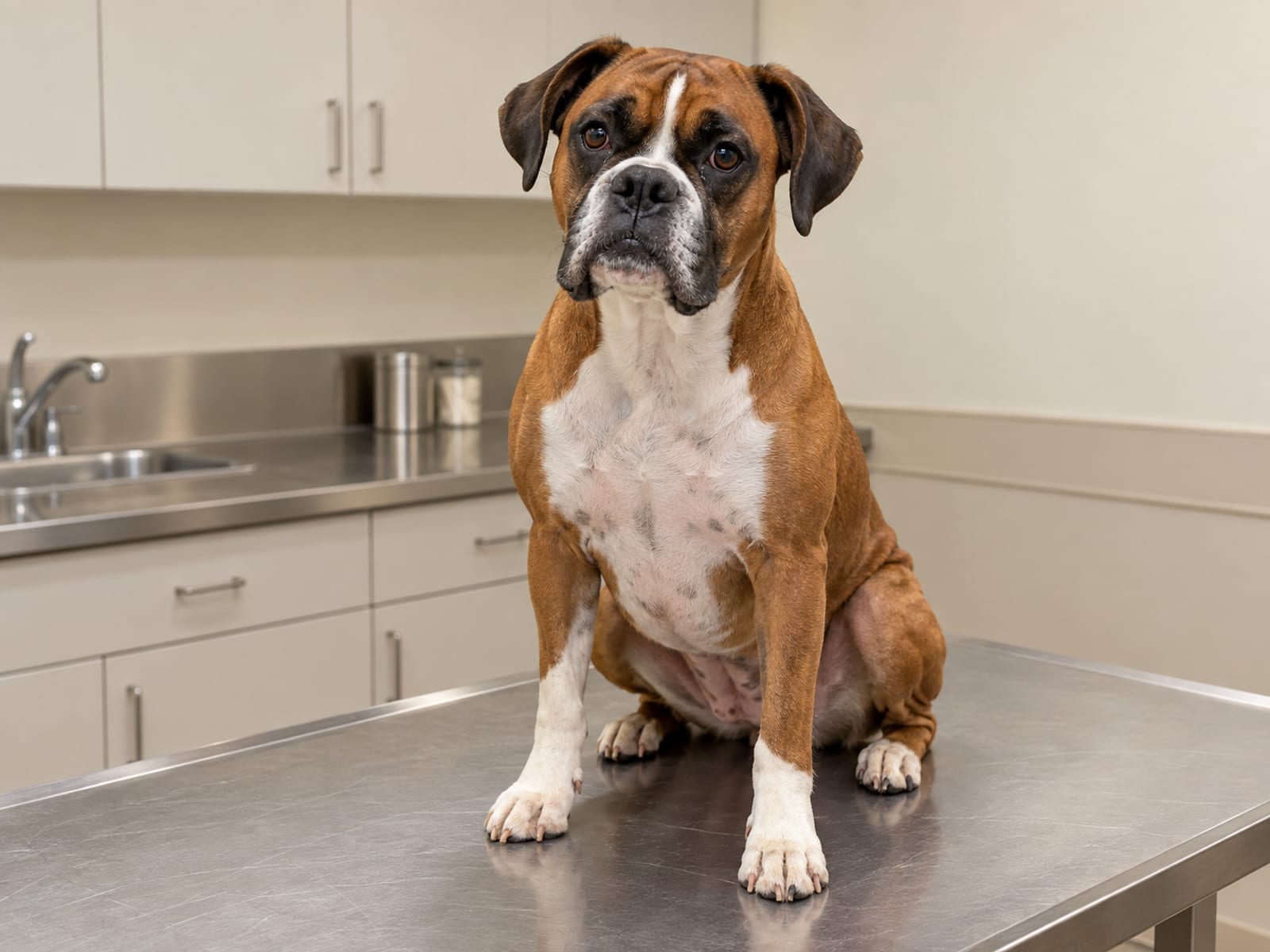
What does a yeast infection look like, and where does it show up?
Owners usually notice smell first. The odor is often described as musty, oily, bread-like or like corn chips, which is where the "Frito feet" nickname comes from. That nickname is a description, not a diagnosis. Along with the smell, VCA lists these signs:
- Itching, licking, chewing and scratching.
- Red or inflamed skin.
- Greasy, flaky, scaly or crusty skin.
- Darkened skin, called hyperpigmentation.
- Thickened skin, sometimes described as elephant-like.
- Hair loss from scratching or self-trauma.
- Red, irritated paws and skin between the toes, sometimes with brown staining around the nail beds.
Yeast likes warm, moist, oily places. The Spanish veterinary group AniCura and the Merck manual point to the paws and the spaces between the toes, skin folds, the groin, the armpits, the belly, the face, the skin around the anus, and the ears. In the ears, the signs are odor, extra wax or discharge, scratching, head shaking and ear problems that recur. Because the ear has its own risks, our dog ear infection guide covers ear-specific signs and treatment, and how to clean your dog's ears safely covers the limits of home care.
Why does yeast overgrow in the first place?
A healthy dog's skin keeps yeast in check. Something has to change for it to take over. VCA names increased skin oil, allergic skin disease, seborrhea, immune deficiency and immunosuppressive drugs as factors. The Merck manual describes secondary seborrhea as an underlying disease that can cause oiliness, scaling, crusting, skin infection, *Malassezia* infection and hair loss. UC Davis describes how a weakened skin barrier in allergic dogs makes them more likely to develop *Malassezia* dermatitis.
That is why I think of yeast as a signal more often than a stand-alone problem. The yeast is what you smell, but the reason it grew may be an allergy, oily skin, a skin-barrier problem, a medication, or sometimes a hormone disease that your vet may look into. Our dog allergies article covers the most common of those causes.
Is it yeast, allergy, bacteria, mites or ringworm?
These problems overlap, and that is exactly why a photo or a sniff test is not enough. Itchy, red, smelly skin can come from yeast, from allergies, from a bacterial skin infection, from parasites, from seborrhea or from ringworm. The Merck Veterinary Manual lists recurrent yeast infections as one feature that fits allergic skin disease, and yeast and bacteria often show up together.
Ringworm is a different fungal condition with different biology and a different management plan, and Merck covers how it is diagnosed. Read more in our ringworm in dogs article. Itchy, dirty ears can also come from mites, and our ear mites article explains that cause. Raw, wet, painful patches are a separate worry covered in hot spots on dogs.
So, how does a vet sort it out? Your vet examines the skin and ears and collects material with acetate tape, a cotton swab or an impression smear, and sometimes a skin scraping. The sample is stained and read under a microscope for yeast, bacteria and inflammation. The Louisiana SPCA describes this as cytology in its skin and ear services. Dogs with recurrent or unusual cases may need more testing aimed at the underlying problem. Ask whether cytology makes sense for your dog, and bring a note on your dog's diet, medications, bathing routine and past episodes.
What may treatment involve, and how long does it take?
Your vet decides the product, how often, and for how long. The categories, according to VCA and the Merck antifungal overview, look like this:
- Degreasing or keratolytic shampoos when the skin is very oily.
- Antifungal shampoos, wipes, mousses or sprays.
- Topical antifungal medicine for skin or ear disease that is in one area.
- Oral antifungals for severe, chronic or persistent cases, when topical care alone is not enough.
- Treatment of a confirmed secondary bacterial infection, if one is present.
- Care for itch and inflammation as your vet directs.
I am not going to give doses or a home plan, because those are your vet's call for your dog. Use the product and schedule your vet prescribes.
On timing, VCA says topical treatment may run for two to twelve weeks, and itching often starts to ease within about a week. Advanced or chronic cases often need topical and oral treatment together, and some need prolonged care. It is tempting to stop when the smell fades. Stopping early can leave yeast or the cause behind it unresolved, and the signs come back. Finish the course and go to the recheck.
Tap or hover a row to highlight it.
| What | Figure |
|---|---|
| WhatHow often topical treatment may be needed | FigureEvery 3 to 5 days |
| WhatHow long topical treatment may last | Figure2 to 12 weeks |
| WhatWhen itch often starts to ease | FigureWithin about 1 week |
Why does it keep coming back, and what manages the cause?
If your dog's yeast returns every few months, the yeast is probably not the real problem. It returns when whatever changed the skin environment is still active, such as allergic skin disease, seborrhea, an immune problem, an immunosuppressive medication or another chronic skin condition, as VCA and Merck describe. Bathing alone does not fix that.
Managing the cause can include allergy evaluation and control, a supervised elimination diet if the history points to food allergy, control of oily skin or seborrhea, a vet-directed routine for skin and ears, and a look at other disease such as a hormone problem when your dog's history supports it. No single maintenance routine fits every dog, so recurrent signs are a reason to go back and re-check, not to keep treating at home without an answer.
Do diet, apple cider vinegar, coconut oil or probiotics help?
This question comes up a lot, and the honest answer is that none of them is a yeast treatment.
A sugar-free or low-carbohydrate diet is not a proven cure for canine *Malassezia* dermatitis. The veterinary sources point to allergy, seborrhea, immune factors and other underlying disease as the causes, not sugar in the bowl. A diet trial can make sense when your vet suspects food allergy, and it works only when your vet designs it and reads the result. Our dog food allergies article explains how those trials go.
Apple cider vinegar and coconut oil are household items, not antifungal treatment for yeast dermatitis. Do not put them on inflamed skin, paws or ears, and do not mix home remedies. Anything put in an ear without an exam is a gamble.
Probiotics are supplements. Texas A&M explains that they do not treat other health issues, so they are not a treatment for a skin yeast infection. Our probiotics for dogs article goes through what they are for.
What might a visit cost?
Prices vary by city, clinic type and how severe the problem is, so treat these as dated examples and not quotes. CareCredit lists routine dog vet visits at $56 to $129 nationally, and an average of $234 for treating a canine yeast infection, both as of September 30, 2026. The Louisiana SPCA lists a $60 skin and ear consultation, $25 cytology and $20 to $25 ear cleaning as of January 1, 2026, and those prices leave out medication and taxes.
Medication, rechecks, bloodwork, sedation and a dermatology referral may add to the total. Ask the clinic for an estimate before you agree to a plan, and compare two or three local clinics with our vet directory.
Tap or hover a row to highlight it.
| Item | Example price | Date |
|---|---|---|
| ItemRoutine dog vet visit, national range | Example price$56 to $129 | DateCareCredit, September 30, 2026 |
| ItemSkin and ear consultation, Louisiana SPCA | Example price$60 | DateAs of January 1, 2026 |
| ItemCytology, Louisiana SPCA | Example price$25 | DateAs of January 1, 2026 |
| ItemEar cleaning, Louisiana SPCA | Example price$20 to $25 | DateAs of January 1, 2026 |
| ItemAverage cost to treat a canine yeast infection | Example price$234 | DateCareCredit, September 30, 2026 |
Questions owners ask about yeast infections in dogs
These are the questions owners ask most, answered short.
How do you get rid of a yeast infection in a dog?
You start with a vet exam and a skin or ear sample, then follow the treatment your vet picks, which may be medicated shampoo, wipes, topical antifungals or, for severe cases, oral antifungals. Finish the full course and go to the recheck. Expect to work on the underlying cause too, or it will likely return.
What foods should dogs avoid with a yeast infection?
There is no universal food list for yeast. Sugar is not established as the cause, and a diet change is not a yeast cure. If your vet suspects food allergy, they will set up a diet trial, and you should follow that plan and not guess.
Does my dog have a UTI or a yeast infection?
Odor and signs overlap across skin and ear problems, and a smell alone cannot tell you which one you are dealing with. A vet sample decides it. If your dog seems unwell, call your vet instead of waiting.
What can be mistaken for a yeast infection in dogs?
Allergies, bacterial skin infections, mites, seborrhea and ringworm can all cause itchy, red, smelly skin or ears. That is why a vet looks at a sample under a microscope before choosing treatment.
Is it contagious?
VCA states that *Malassezia* dermatitis is not contagious, so you do not need to separate your dog from other pets because of it. A different skin problem, like ringworm, can spread, which is another reason to get a proper diagnosis.
Your next step
Write down where the smell is, how long it has been there and whether it has happened before. Then call your vet and ask whether skin or ear cytology is right for your dog. Go the same day if you see severe ear pain, a head tilt, loss of balance, fast-spreading skin or a dog that seems ill. You can start with vets near you or emergency vets, and for DogServ questions you can always reach us through the contact page.
Quick check: dog yeast infections
Sources
- anicura.es: AniCura
- ASPCA: ASPCA
- CareCredit: CareCredit
- louisianaspca.org: skin and ear services
- Merck Veterinary Manual: Merck antifungal overview
- Merck Veterinary Manual: Merck Veterinary Manual
- Merck Veterinary Manual: Merck Veterinary Manual
- Merck Veterinary Manual: Merck
- Texas A&M College of Veterinary Medicine: Texas A&M
- UC Davis School of Veterinary Medicine: UC Davis
- VCA Animal Hospitals: VCA Animal Hospitals