
Hyperkeratosis in Dogs: Crusty Nose, Hard Paw Pads and When to See the Vet
By Cal Hewitt · Published , updated
Health
If the nose or pads are bleeding, cracked deep, sore, or your dog is limping, call a vet today. If your dog also has a fever, vomiting, diarrhea, trouble breathing, weight loss or neurologic changes, go to an emergency vet. Otherwise, here is the short answer. Hyperkeratosis in dogs means excess keratin has made the nose, paw pads, or both unusually thick, hard, dry, rough, or crusty. In an otherwise healthy older dog, nasal hyperkeratosis may be a nonpainful, age-related change. Pad buildup can start to hurt when it cracks, burns, ulcerates, or gets in the way of walking. Until you know the cause, keep the pads off hot, icy, salty, or rough surfaces and ask your vet about a suitable moisturizer. A photo or a description cannot name the cause, and what helps depends on whether the change is age-related, inherited, or caused by another condition.
Key takeaways
Tap a card to bring it forward.
- Bleeding, deep cracks, sores, limping, a sudden change, a young dog, or other signs of illness mean a vet visit now.
- A crusty nose in an older dog that is otherwise well may be painless and may need no treatment.
- Hard pads alone do not mean distemper.
- Do not cut or peel the buildup at home, and do not start zinc on your own.
- Ask your vet which moisturizer to use. Human hand lotion is not for pads.
- Ask the clinic for an itemized estimate before any testing.
When is a crusty nose or hard, cracked paw pad an emergency?
I would rather you call too early than too late. The Merck Veterinary Manual, Cornell, the ASPCA and VCA all point to the same kinds of warning signs.
Tap or hover a row to highlight it.
| What you see | What to do |
|---|---|
| What you seeSevere burn, significant trauma, exposed tissue, bleeding that will not stop, or a dog that cannot walk | What to doUrgent veterinary care now |
| What you seeCracks that bleed, deep fissures, pus, discharge, bad odor, marked redness or swelling, sores, blisters, loose flaps of skin, or discolored pads | What to doArrange prompt veterinary care |
| What you seeLimping, not wanting to walk, obvious pain, or licking, chewing or crying out when touched | What to doArrange prompt veterinary care |
| What you seeSudden onset or fast progression, a puppy or young adult, pale or missing pigment on the nose, erosions, sneezing, or nose wounds that do not heal | What to doArrange prompt veterinary care |
| What you seeCrust on the nose and pads plus skin lesions elsewhere on the body | What to doArrange prompt veterinary care |
| What you seeFever, breathing trouble, vomiting, diarrhea, neurologic changes, poor appetite, weight loss, lethargy, or trouble standing | What to doArrange prompt veterinary care, or emergency care if severe |
| What you seeA recent hot-surface, chemical, icy or sharp-object injury | What to doArrange prompt veterinary care |
| What you seeAn older dog, comfortable, with stable nasal fronds and no inflammation | What to doA routine appointment, sooner if you want confirmation or the change is growing |
Even in that last row, a routine visit is worth booking. Find a clinic in the vet directory, or the emergency vet directory if it cannot wait.
What does hyperkeratosis look like on the nose and paw pads?
Keratin is the tough protein in the outermost layer of skin. Hyperkeratosis is too much of it, either built up or made too fast.
On the nose, it affects the nasal planum, the hairless skin at the front. Merck describes frond-like extensions along the top of the nasal planum. The nose can look thick, dry, rough, crusted, or overgrown.
On the paws, it affects the pads. The extra material tends to show most around the pad margins, because normal walking wears down some keratin on the parts that carry weight. Pads can turn hard, dry, and cracked. Hairy-looking projections can appear. A dog may lick the feet, balk at walking, or limp once a crack, burn, ulcer, or infection develops.
Vets use a few terms for this. "Nasal" means the nose. "Digital" and "plantar" refer to the toes and the underside of the paw. "Nasodigital" means the nose and the pads are both involved. Vets and Clinics uses the same split. Other keratin disorders can also reach nail folds, haired skin, or several parts of the body. A crusty nose or thick pad is a description. It is not a diagnosis.
When does it not hurt, and when does it hurt?
Merck describes the common older-dog form of nasal hyperkeratosis as nonpainful, with no inflammatory lesions, and usually not needing treatment. Vets and Clinics says the idiopathic form (meaning no known cause) is especially common in older dogs that otherwise look healthy. If that matches your dog, you are likely looking at a cosmetic change.
Pads are different. Thick pads can be uncomfortable in some keratin disorders, and the trouble gets worse once there are cracks, burns, ulcers, or a secondary infection. So I judge urgency by pain, changes in how the dog walks, open wounds, and any other signs, not by how rough the surface looks. Senior Dog Care and Signs of a Healthy Dog can help you decide what else to watch.
What causes hyperkeratosis in dogs?
Several different problems can put extra keratin on a nose or pad. Merck, Cornell and Vets and Clinics describe these groups.
- Age-related, idiopathic change. The older-dog nasal form above.
- Inherited forms. Merck links hereditary nasal parakeratosis in Labrador Retrievers to a mutation in the SUV39H2 gene. Vets and Clinics says it is commonly first noticed between 6 and 12 months. Other inherited disorders can cause scale and a thick nose or pads.
- Zinc-responsive dermatosis. It can be genetic or nutritional. Merck describes crusting and pigment loss on the nose, with Northern breeds heavily predisposed and young adults often affected. A vet may use biopsy results and the response to zinc to sort it out. Zinc supplements are for your vet to direct, not something to start on your own.
- Autoimmune disease. Cornell describes pemphigus disorders and cutaneous lupus that can involve the nose and pads, with crusts, erosions, ulcers, redness, pigment loss, or sores elsewhere.
- Infection. Canine distemper can thicken the skin of the nose and footpads, and Vets and Clinics also lists leishmaniasis as a possible secondary cause.
- Liver-related skin disease. Merck describes hepatocutaneous syndrome, also called superficial necrolytic dermatitis, with crusting and footpad hyperkeratosis, often with lesions on haired skin. Dogs can also show weight loss, poor appetite, lethargy, or trouble standing or walking.
- Look-alikes and complications. Burns, salt or chemical exposure, rough ground, allergies, deep infection, interdigital disease, parasites, and tumors can cause pad or nose lesions that need their own workup. For licking and chewing at the feet, see Dog Allergies and Yeast Infection in Dogs.
A breed does not tell you the cause in any one dog.
Does a hard pad mean distemper? No, not by itself. Cornell says distemper can cause respiratory disease, fever, stomach and bowel illness, and thickened skin on the nose and footpads. Hard pads are one possible sign in a sick dog, so a dog that is otherwise well is not pointing to distemper on that sign alone. If your dog is also ill, read Distemper in Dogs and call the vet.
Merck also notes that a dry nasal planum should prompt an ear exam. If the ears are red, smelly or sore, see Dog Ear Infections.
How do vets find the cause?
It starts with questions and a hands-on exam. Expect questions about your dog's age, timing, pain, walking, diet, medications, vaccinations, exposures, and other signs.
From there, a vet may choose some of these, depending on what they see:
- A full skin and paw exam.
- Surface cytology, which looks at cells under a microscope, when infection or inflammation is suspected.
- A skin scrape or other sampling if parasites or infection are possible.
- A skin biopsy with histopathology, a lab reading of the tissue, for autoimmune disease, inherited keratin disorders, tumors, or lesions that are unclear.
- Bloodwork and a urinalysis.
- An abdominal ultrasound when liver disease or hepatocutaneous syndrome is a concern.
Cornell's dermatopathology service notes that biopsies from the nose or a pad can need local or general anesthesia, and that a secondary bacterial infection can muddy the result.
What makes a dog more comfortable?
The plan depends on the cause, and your vet sets it. For uncomplicated idiopathic hyperkeratosis, the care described by Merck and Vets and Clinics is long-term and aims to soften and control the excess keratin. It can include:
- Softening directed by your vet.
- Emollients and humectants chosen by your vet. Merck lists glycerin, hyaluronic acid, propylene glycol and urea among the emollient ingredients used in some inherited nasal parakeratosis cases. Those ingredients are not a universal prescription for every dog.
- Keratin-softening (keratinolytic) products.
- Trimming or removal of the excess by a vet, or under professional supervision.
- Less exposure to surfaces that damage the pads, and watching for cracks, infection, pain, and changes in walking.
When another disease is behind the buildup, treating that disease is the main job. That can involve immune, antibacterial, antifungal, or nutritional care, all directed by a vet. I give no doses here, and you should use only the product and amount your vet gives you.
Please do not cut or peel the material yourself. The keratin sits on top of living tissue, and trimming can injure it or open a crack. If the buildup bothers your dog, leave the trimming to the clinic or a professional working with your vet. A groomer can help with routine paw care, but ask your vet first about anything that looks like a keratin problem.
If your dog keeps licking or chewing the area, tell the vet so the paws can be checked for infection.
How do I protect the pads from heat, ice, salt and rough ground?
Pads cushion the feet, help protect bones and joints, and insulate against weather, the ASPCA says. Keep them from extra damage while the cause is sorted out.
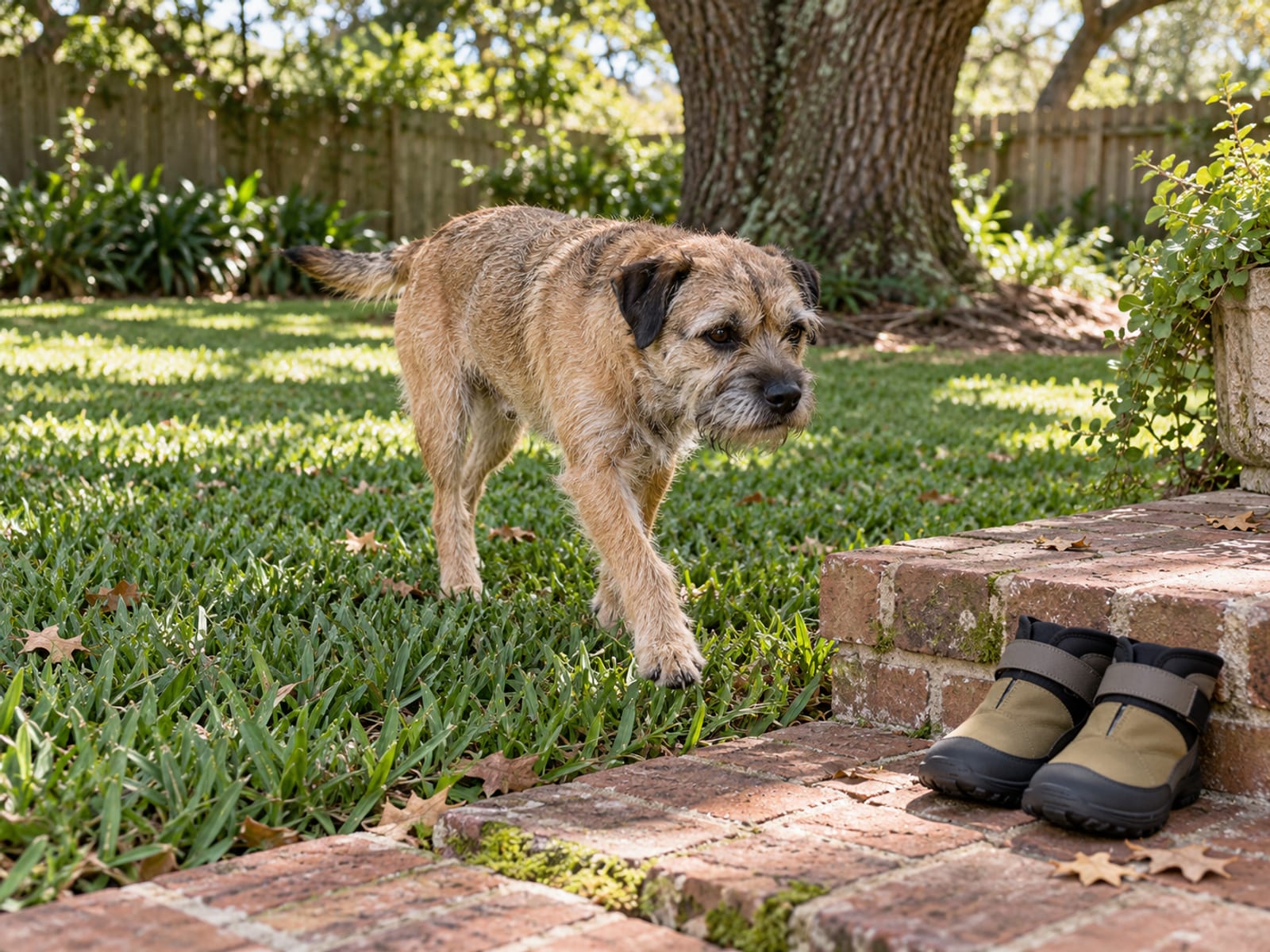
- Hot surfaces. AAHA says asphalt, concrete, sand and metal can get far hotter than the air. In its June 2026 guidance, asphalt can reach 135°F when the air is 86°F, and it can burn paws within about 60 seconds. Walk in cooler hours, pick shade or grass, and press the back of your hand to the surface for several seconds first. Booties, introduced gradually, are an option. The AVMA also advises avoiding hot surfaces such as asphalt.
- Ice, salt and chemicals. Check walking areas for glass, sharp objects, metal, salt, ice and deicers, and rinse the paws after salt or chemical exposure. AAHA's cold-weather page covers removing salt, ice and debris.
- A paw that touched something corrosive. VCA advises running water over it, then washing with mild soap and rinsing well.
- A burn. Move your dog off the surface and cool the paw with cool water, not ice water. For a serious burn or exposed tissue, call the vet.
Are petroleum jelly, coconut oil and paw balm safe on the pads?
This is what veterinarians advise, and what I would ask before you buy anything.
Petroleum jelly. The ASPCA mentions Vaseline as a barrier that may help protect pads from salt before a walk. In the same guidance, it tells owners to ask a vet for an appropriate moisturizer for cracked, dry pads. Petroleum jelly does not replace a vet visit for bleeding, burns, ulcers, exposed tissue, infection, or significant pain.
Coconut oil. Coconut oil is not an established treatment for hyperkeratosis in dogs, so I will not tell you it softens or clears this condition. Merck names emollient and humectant ingredients, not coconut oil. For general safety, read Coconut Oil for Dogs.
Paw balms. Use a product your vet picks or approves for your dog's condition. The veterinary references describe ingredient classes and do not back a brand, and I do not recommend one either. Human hand moisturizers are a bad fit: the ASPCA warns they can soften the pads and raise the risk of injury.
Ask your vet whether a product is safe if your dog licks it off.
What might an evaluation cost?
Prices vary by clinic and region, so treat these as dated examples.
Tap or hover a row to highlight it.
| Service | Example price | Source and date |
|---|---|---|
| ServiceFull exam | Example price$90 | Source and dateDallas Veterinary Clinic, December 2025 |
| ServiceFull blood panel | Example price$179 | Source and dateDallas Veterinary Clinic, December 2025 |
| ServiceSkin cytology | Example priceStarting at $45 | Source and dateDallas Veterinary Clinic, December 2025 |
| ServiceAbdominal ultrasound | Example priceStarting at $209 | Source and dateDallas Veterinary Clinic, December 2025 |
| ServiceInitial dermatology exam | Example price$205 | Source and dateLSU Veterinary Teaching Hospital, September 2026 |
| ServiceSkin cytology | Example price$30 | Source and dateLSU, September 2026 |
| ServiceSkin scrape | Example price$30 | Source and dateLSU, September 2026 |
| ServiceBiopsy including histopathology | Example price$281 | Source and dateLSU, September 2026 |
| ServiceBiopsy lab submission fee | Example price$85 per submission | Source and dateOhio State Dermatopathology Service, as of July 1, 2025 |
The Ohio State figure is a laboratory fee, not the full clinical cost. A referral visit, sedation, several biopsy sites, pathology, imaging and follow-up visits can all raise the total. Ask the clinic for an itemized estimate before testing starts, and ask which tests matter most for your dog's signs.
Questions owners ask about hyperkeratosis in dogs
How do you treat hyperkeratosis in dogs?
It depends on the cause. An older dog's nasal buildup with no pain may need no treatment, while other forms call for vet-directed softening, emollients, keratin-softening products, or controlled removal of the excess. If another disease is behind it, treating that disease comes first.
What is the best cream for hyperkeratosis in dogs?
I cannot name one, and I would be wary of anyone who does without seeing your dog. Ask your vet for a moisturizer that fits the cause, skip human hand lotion, and ask whether it is safe if your dog licks it.
What is the prognosis for a dog with hyperkeratosis?
An older dog's nasal buildup may need no treatment at all. Inherited and idiopathic forms are often managed for life rather than cured, and some secondary forms improve once the underlying condition is controlled. Merck says zinc-responsive disease can take weeks to months to respond, so ask your vet what to expect for your dog.
What makes a dog more likely to get hyperkeratosis?
Age is the most common factor, since the idiopathic nasal form shows up in older dogs. Inherited forms, such as hereditary nasal parakeratosis in Labrador Retrievers, tend to appear in young dogs. Zinc-responsive dermatosis, autoimmune disease, infection and liver disease can also be behind it.
Can I soak my dog's paws to soften the pads?
Soaking is one of the softening steps vets may direct, but the method and timing are your vet's call. A paw that is cracked, burned or infected needs an exam first.
What is the next step?
Look at the nose and all four pads in good light today, take a photo, and note when the change started. Check for cracks, bleeding, sores, redness, discharge, odor, or pigment loss, and watch how your dog walks. If any urgent sign from the list is there, call a vet now. If your dog is comfortable and older, book a routine visit so a professional can confirm what you are seeing, and ask for an itemized estimate if tests come up. In the meantime, keep the pads off hot, icy, salty and rough ground, and leave the keratin alone.
Sources
- American Animal Hospital Association: AAHA's cold-weather page
- American Animal Hospital Association: AAHA
- American Veterinary Medical Association: AVMA
- ASPCA: ASPCA
- Cornell University College of Veterinary Medicine: Cornell's dermatopathology service
- Cornell University College of Veterinary Medicine: Cornell
- Cornell University College of Veterinary Medicine: Cornell
- dallasvet.net: Dallas Veterinary Clinic
- dermpath.vet.osu.edu: Ohio State Dermatopathology Service
- lsu.edu: LSU Veterinary Teaching Hospital
- Merck Veterinary Manual: Merck Veterinary Manual
- VCA Animal Hospitals: VCA
- vetsandclinics.com: Vets and Clinics