
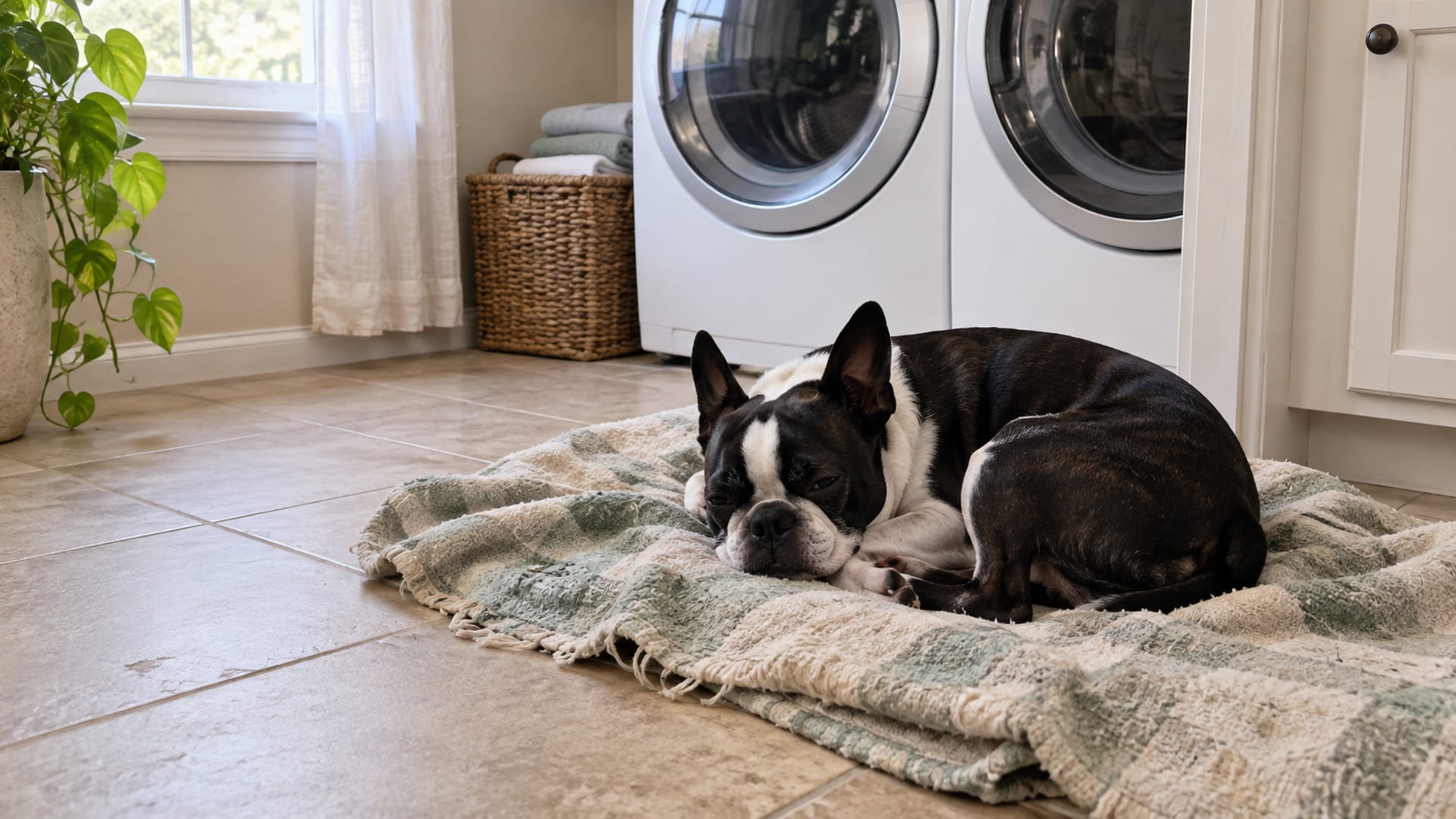
If your dog vomited once and is still bright, comfortable and keeping small sips of water down, you can usually watch at home for now. Call a vet today for repeated vomiting, weakness, or water that will not stay down. Go to an emergency clinic now for blood or coffee-ground material, retching that brings nothing up, a swollen or painful belly, or a possible toxin or swallowed object. Do not make your dog vomit or give any medicine unless a vet or poison control tells you to. For a possible poisoning, the ASPCA Animal Poison Control Center is at (888) 426-4435 and the Pet Poison Helpline is at (855) 764-7661.
Key takeaways
Tap a card to bring it forward.
- One vomit in a bright, comfortable dog can usually be watched; repeated vomiting, blood, weakness or water that will not stay down means calling a vet.
- Retching with nothing coming up, especially with a swollen belly, is an emergency: it can be bloat.
- White foam and yellow foam (often bile) are clues, not a diagnosis; how your dog acts matters more than the color.
- Veterinary sources give different food and water timing after a mild episode, so ask your own vet before fasting, especially for a puppy or a senior dog.
- Do not induce vomiting or give human stomach medicine unless a vet or poison control directs it.
Watch at home, call today, or go now?
The first thing you want to know is how much time you have. The veterinary sources agree on the signs that take a dog out of wait-and-see. Cornell's College of Veterinary Medicine says to see a vet if there is blood in the vomit or material that looks like coffee grounds, which is digested blood. The Merck Veterinary Manual's emergency triage guide lists retching without producing anything and a swollen belly as emergency signs.
Go to an emergency clinic now if you see any of these: blood or coffee grounds, repeated or nonstop vomiting, dry heaving, a swollen or painful belly, a chewed package or pills, a swallowed toy or bone, collapse, pale gums, trouble breathing, seizures, or water that comes straight back up.
Call your regular vet today for lethargy, vomiting that has gone on more than 24 hours, a fever, appetite loss, diarrhea along with the vomiting, or vomiting in a dog who already has an illness. The American Kennel Club lists repeated or persistent vomiting and a history of other illness among the reasons a vet should see your dog.
So, how many times can a dog throw up before it needs a vet? There is no single safe number. One isolated episode in a dog who is otherwise acting normal may be watched. Several episodes, or any of the signs above, move your dog to the phone call. Cornell adds that even once a week can point to disease if it keeps happening.
Was it vomiting, regurgitation or dry heaving?
What you just watched changes what happens next. The Merck Veterinary Manual describes vomiting as an active, forceful push of stomach or upper intestine contents, usually after drooling, retching and the belly tightening. What comes up is often partly digested.
Regurgitation is quiet. Food or fluid slides back up with no warning and no heaving, often undigested and sometimes in a tube shape because it came from the esophagus. The AKC's page on vomiting versus regurgitation notes it can come with coughing or breathing trouble. That points to a different set of problems, so tell your vet which one you saw.
Dry heaving is repeated retching that brings up nothing, or only a little foam. With a swollen or painful belly it can mean gastric dilatation-volvulus, the twisted stomach known as bloat. Do not wait on that one. Our guide to bloat in dogs explains the signs and what happens at the emergency hospital.
What the color and contents can and cannot tell you
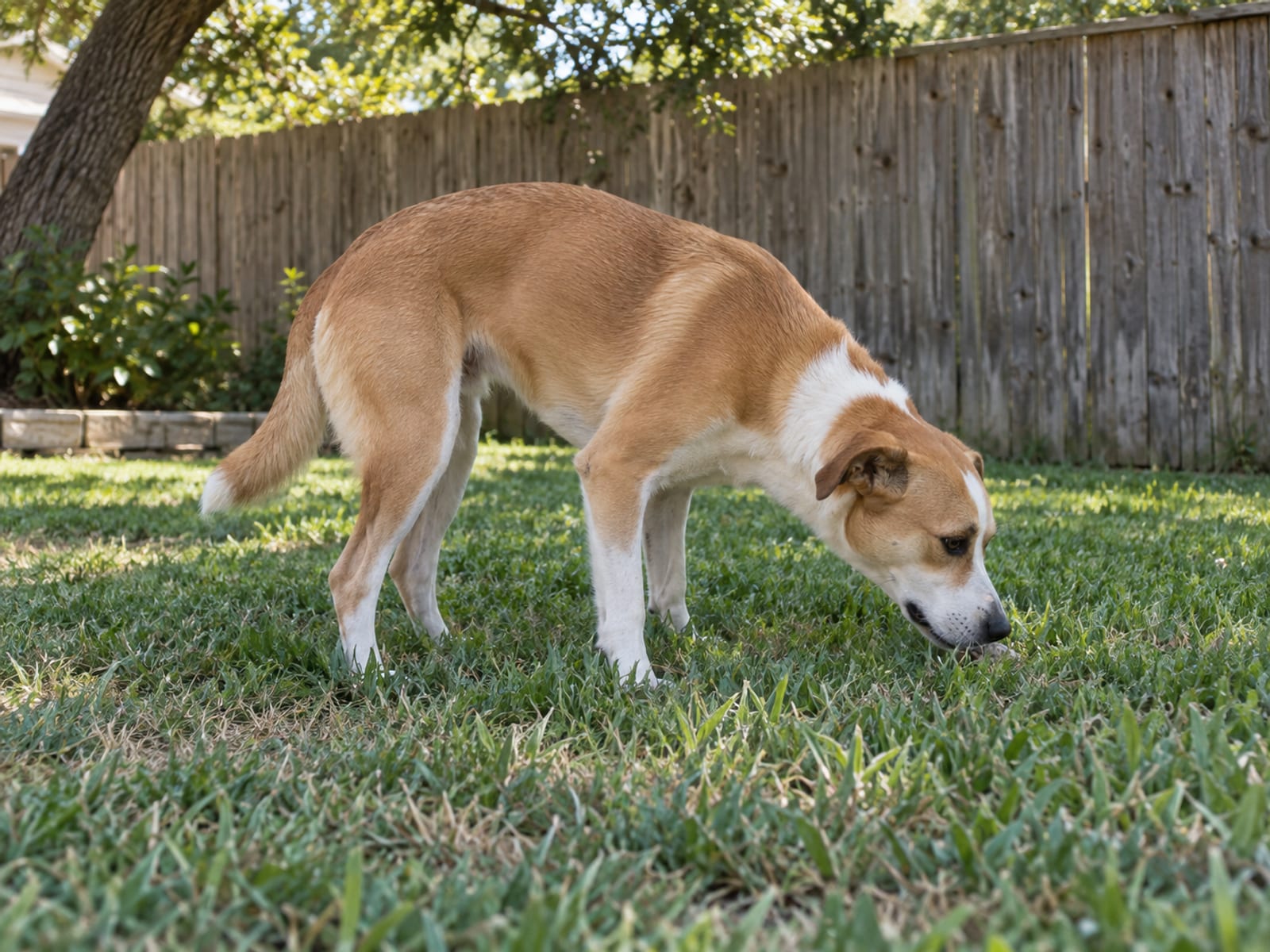
Most people look at the color first, which makes sense. Treat it as a clue for your vet, not an answer.
- White foam: often saliva mixed with stomach fluid. On its own it can be indigestion, but with pain, repeated retching or a swollen belly it can happen with bloat.
- Yellow foam or fluid: often bile, which can come up on an empty stomach. VCA Animal Hospitals notes yellow vomiting can also happen with gut disease.
- Undigested food: may mean your dog ate too fast, or that food is not leaving the stomach well, or that it was regurgitation.
- Grass: common, but the AKC says most dogs that eat grass do not vomit afterward, and nobody knows for sure why dogs eat it.
- Bright red, or brown and black like coffee grounds: can mean blood. That is a vet visit.
- Worms, fabric, toy pieces or bone: photograph it or bag it safely for your vet.
If the vomiting followed a particular food, the Can My Dog Eat lookup tells you whether that food is a known risk. It cannot tell you whether your dog is okay right now.
What to do in the next hour
The AVMA's pet first aid guide and Merck's emergency advice point to the same order:
- Put away food, garbage, medicines and anything your dog might chew.
- Watch and decide whether you saw vomiting, regurgitation or dry heaving.
- Check your dog for blood, weakness, pain, a swollen belly, pale gums or trouble breathing.
- Call your vet or an emergency clinic if any sign is there, and call ahead so they can prepare.
- If poison is possible, call your vet or a poison line right away and keep the package or label.
- Photograph the vomit, or bag any chewed material, if you can do it safely.
- Write down the time, how many episodes, what it looked like, what your dog ate, any medicines, and whether they are drinking, peeing and pooping.
People often ask what they can give a dog for vomiting. The honest answer is water and food timing from your vet, and nothing from your medicine cabinet. The AVMA says not to induce vomiting or give any medicine unless a veterinarian or poison control center tells you to. VCA's page on home remedies that can be dangerous warns that some human products can be toxic or make a blockage or poisoning worse.
Water, food and a bland diet after a mild episode
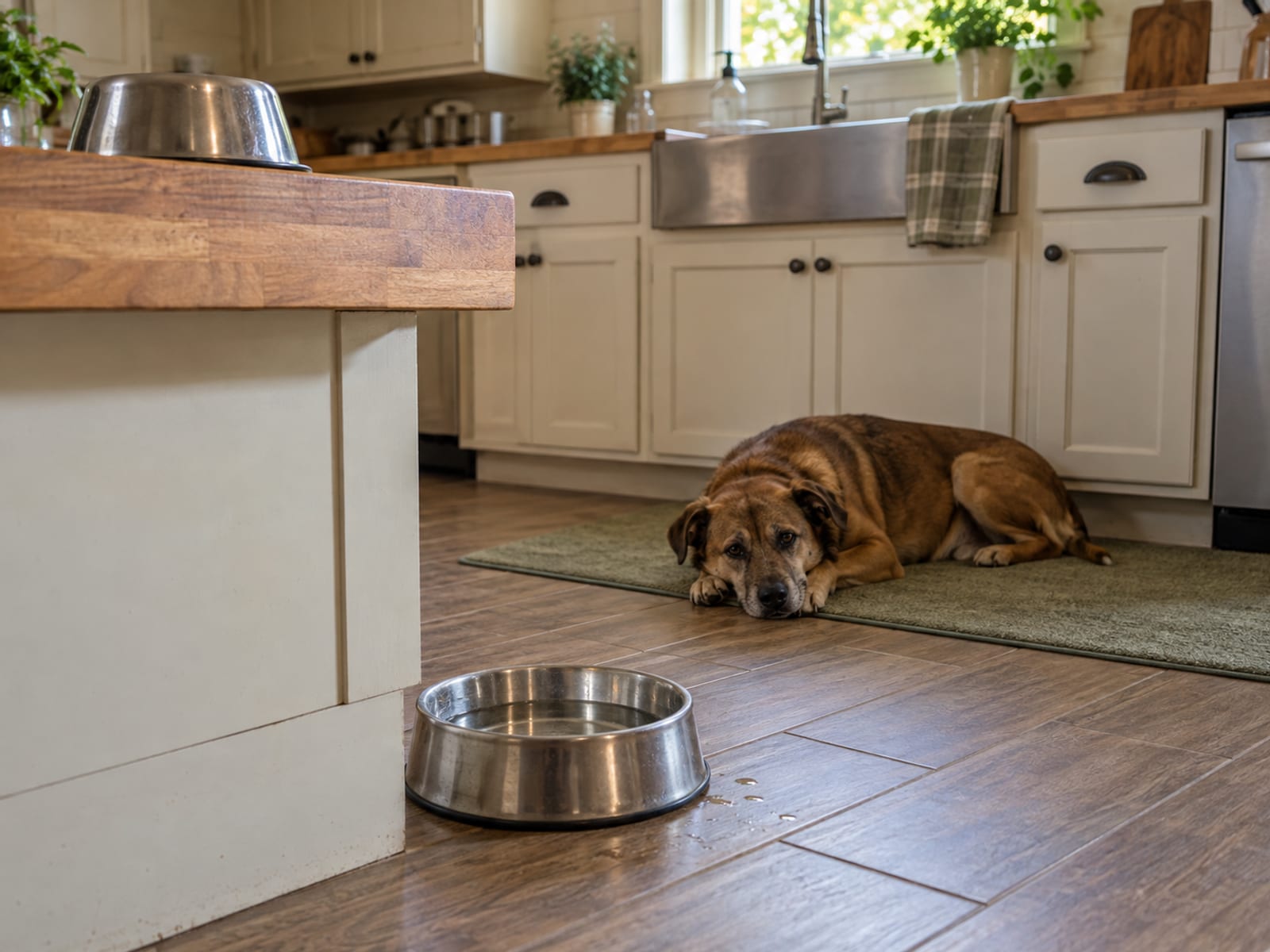
This part only applies to a dog who is bright, comfortable and drinking, with no blood, pain, swollen belly, possible toxin or swallowed object. You will find clinic pages online that tell you to fast a dog for 8 to 24 hours and give electrolytes. The veterinary sources in my research do not agree on one timing, so I would rather show you the difference than pick a number.
Cornell says an isolated episode may settle if you hold food, but not water, for 12 hours, then offer plain white rice and boiled chicken for two days. VCA's emergency first-aid handbook instead rests the stomach for 4 to 6 hours with no food or water, then offers small amounts of water and bland food every two hours. VCA's gastroenteritis page says food is often held for 12 to 24 hours during treatment, and that water should usually stay available to prevent dehydration.
Because they differ, a short call to your own vet is worth it before you fast your dog. When food comes back, keep portions small and mix normal food back in over several days. VCA's tummy trouble tips point out that homemade bland food is not nutritionally complete, so it is a short bridge, not a new diet. If water brings the vomiting back, or your dog will not drink, stop home care and call.
Puppies, older dogs and dogs with health problems
There is no one age or breed number for when to call, but some dogs deserve a lower bar for calling. Young puppies can dehydrate and weaken quickly, and VCA says to check with a vet before fasting a young puppy. It gives the same caution for senior dogs.
Deep-chested medium and large dogs have a higher risk of bloat, although any dog can get it, so dry heaving with a swollen belly in these dogs is an emergency. Dogs with diabetes, kidney or liver disease, pancreatitis or gut disease may need a vet sooner. If your dog has diabetes, our guide to diabetes in dogs explains why vomiting is a reason to call.

What the vet will do, and what it may cost
Your vet will ask questions and examine your dog, checking hydration, gums, the belly and the mouth. Expect questions about garbage, toxins, medicines, new foods, possible swallowed objects, how long this has gone on, and whether it looked like vomiting or regurgitation. Your notes and photos make that faster.
The Merck Veterinary Manual describes the tests that may follow: bloodwork, urine tests, X-rays, ultrasound and fecal tests, and sometimes endoscopy or surgery if a blockage is likely. Merck says X-rays suit most vomiting dogs because they can reveal something life-threatening like a swallowed object. Treatment follows the cause and may mean fluids, monitoring, a prescription diet, or medicine your vet prescribes.
Costs vary a lot by clinic and region, and these consumer estimates from 2025 and 2026 are not quotes:
Tap or hover a row to highlight it.
| Care | Typical range |
|---|---|
| CareEmergency exam for a mild vomiting case | Typical rangeAbout $100 to $250 |
| CareMild emergency visit with exam, medicine and home-care plan | Typical rangeAbout $150 to $500 |
| CareBloodwork | Typical rangeAbout $150 to $400 |
| CareAbdominal X-rays | Typical rangeAbout $150 to $350 |
| CareHospitalization | Typical rangeAbout $600 to $1,500 per night |
| CareForeign-body surgery at a teaching hospital | Typical rangeAbout $5,000 to $7,000 |
The surgery figure comes from a 2025 issue of Today's Veterinary Nurse. When it will not delay urgent care, ask the clinic for an estimate before tests that can wait.
Questions dog owners ask about vomiting
What can I give my dog for vomiting?
Nothing from your own medicine cabinet unless a vet tells you to. The AVMA says to give no medicine without a veterinarian's or poison control's direction, and water and food timing should come from your vet.
When should I worry about my dog throwing up?
Worry now about blood, dry heaving, a swollen belly, weakness, a possible toxin or a swallowed object. Call your vet today if vomiting repeats, lasts more than 24 hours, or comes with lethargy or diarrhea.
Why is my dog throwing up yellow foam in the morning?
Yellow foam is often bile, which can come up on an empty stomach. It can also happen with gut disease, so talk to your vet if it keeps happening or comes with other changes.
Can my dog drink water after vomiting?
Cornell keeps water available after a single mild episode, while one VCA handbook rests the stomach for 4 to 6 hours before small sips. If water keeps coming back up, call your vet.
Your next step
If your dog is showing any warning sign, the next step is the phone: your vet, an emergency clinic, or a poison line if something toxic is possible. If it was one episode and your dog is acting like themselves, keep an eye on them, write down what you saw, and ask your vet about food timing. When you need a vet or an emergency clinic near you, the DogServ directory lists clinics by city with their phone numbers and hours, so you can call before you drive.
Sources
- American Kennel Club: AKC's page on vomiting versus regurgitation
- American Kennel Club: American Kennel Club
- American Veterinary Medical Association: AVMA's pet first aid guide
- Cornell University College of Veterinary Medicine: Cornell's College of Veterinary Medicine
- Merck Veterinary Manual: Merck Veterinary Manual's emergency triage guide
- Merck Veterinary Manual: Merck Veterinary Manual
- todaysveterinarynurse.com: Today's Veterinary Nurse
- VCA Animal Hospitals: emergency first-aid handbook
- VCA Animal Hospitals: home remedies that can be dangerous
- VCA Animal Hospitals: tummy trouble tips
- VCA Animal Hospitals: VCA Animal Hospitals