
Dehydration in Dogs: Warning Signs, When It Is an Emergency and Safe Next Steps
By Cal Hewitt · Published
Health
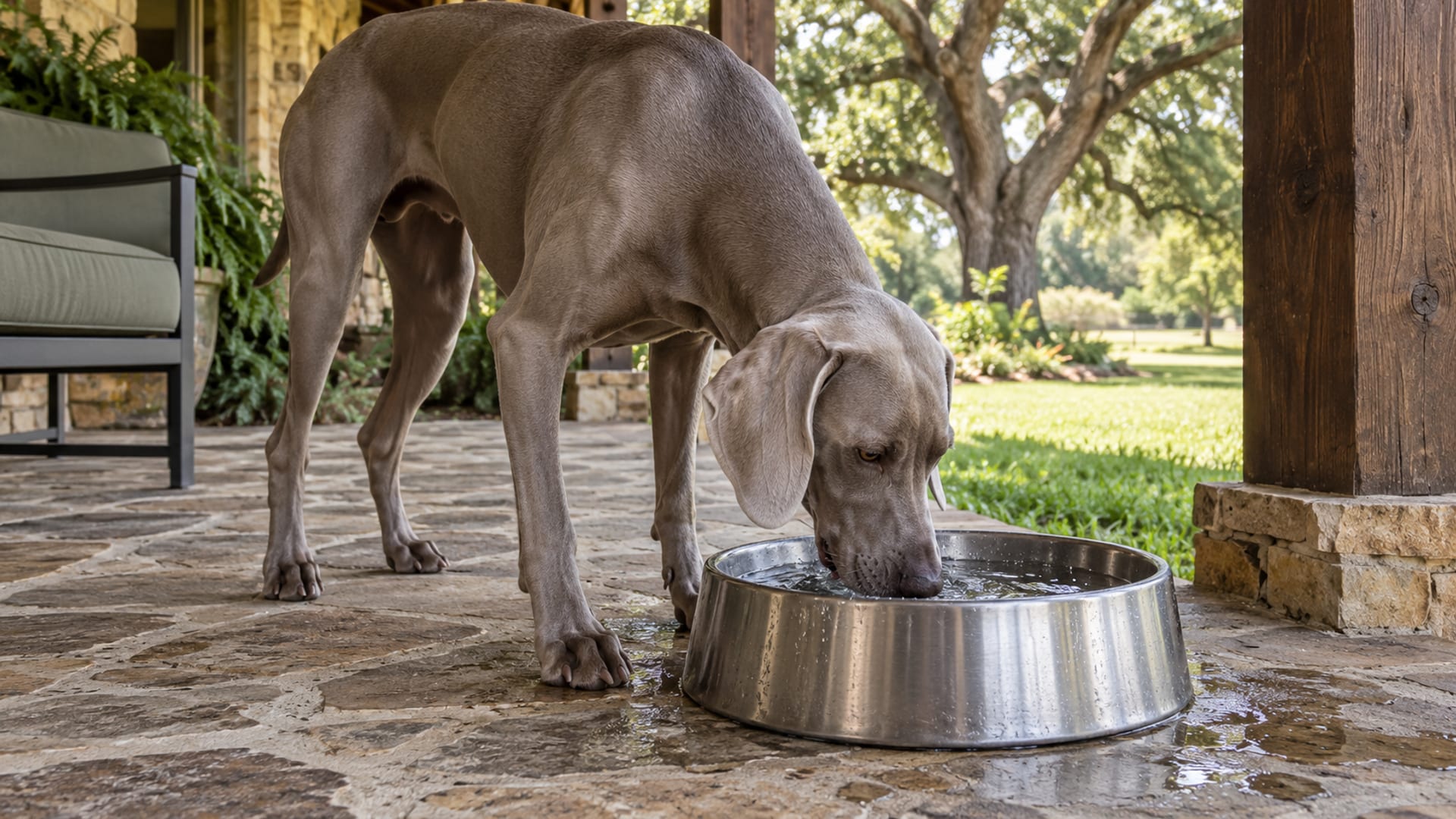
If your dog can't keep water down, is collapsing, is a puppy with vomiting or diarrhea that worries you, or shows heatstroke signs like heavy panting, weakness, confusion or collapse, call an emergency vet now. Dehydration in dogs means the dog is losing more fluid than it takes in.
Dry or sticky gums, unusual tiredness, thick saliva, sunken-looking eyes, less urine, vomiting, diarrhea and skin that returns slowly after a gentle lift can all be warning signs, but home checks can't settle the question. Offer fresh water only if your dog is alert and able to drink, and skip electrolyte drinks unless your vet says to use one.
Key takeaways
Tap a card to bring it forward.
- A dog that can't keep water down, collapses, shows heatstroke signs, or is a puppy with worrying vomiting or diarrhea needs an emergency vet now.
- Dehydration means fluid loss is greater than fluid intake, most often from vomiting, diarrhea, heat, fever or illness.
- Dry or sticky gums say more than a dry nose, but no home gum or skin check can rule dehydration in or out.
- AKC gives a general rule of at least 1 ounce of water per pound of body weight a day, and real needs vary by dog.
- Pedialyte, sports drinks and suero are for your vet to approve, and any product with xylitol is dangerous.
- Your vet picks the fluid route, under the skin or through an IV, after checking your dog.
When does dehydration mean an emergency vet right now?
Start with the dog in front of you, because the list below decides your next ten minutes. Go to the nearest emergency hospital, and call ahead if you can, for any of these, according to guidance from AVMA, Cornell and AKC:
- Your dog can't keep water down.
- Repeated vomiting or ongoing diarrhea, along with weakness or poor drinking.
- Collapse, confusion, severe weakness or trouble standing.
- Heatstroke signs: heavy panting, a lot of drooling, vomiting, diarrhea, weakness, confusion, seizures or collapse, or gums that look dry, sticky or an odd color.
- A puppy with worrying vomiting, diarrhea, tiredness or refusal to drink.
- Very dark urine, or no urine.
- Markedly dry or tacky gums along with other signs of illness.
- Any chance your dog swallowed something with xylitol.
If you think it's heatstroke, AVMA says to start cooling with room-temperature wet towels while you head to the closest veterinary hospital. It warns against a tub of cool or cold water, which can make things worse. Don't wait to see if your dog perks up. Cornell notes that heatstroke can injure the kidneys and cause clotting problems and shock, and organ damage can show up even after a dog seems to have cooled down.
Not sure which clinic to call? Our emergency vet directory lists hospitals near you, and the regular vet directory is the place to look for a prompt appointment when your dog is stable.
What is dehydration in dogs, and what causes it?
Dehydration is simple to define. A dog has lost more fluid than it has replaced, and the Merck Veterinary Manual and AKC both describe it that way. That can happen fast or slowly, and it often has a cause you can see.
The common causes are:
- Vomiting and diarrhea, which our guides to dog vomiting and dog diarrhea cover in more detail.
- Heat exposure, heavy panting and hard exercise.
- Fever and other illness.
- Not drinking enough, or not having clean water within reach.
- Kidney disease and diabetes, covered in our pages on kidney disease in dogs and diabetes in dogs.
- Some cancers and other whole-body illnesses.
- Eating less, especially in a dog that normally gets a good share of its water from canned food.
If your dog has stopped eating as well, our dog not eating page covers that side of it.
Some dogs are more at risk. Puppies, senior dogs, toy breeds, nursing mothers and dogs with kidney disease or diabetes tend to run into trouble faster, as do dogs already dealing with vomiting, diarrhea, fever or heat. For heatstroke in particular, Cornell lists flat-faced, elderly, overweight, thick-coated and dark-coated dogs, and dogs with breathing or heart problems, as higher risk.
What are the signs, and why can't gum and skin checks at home settle it?
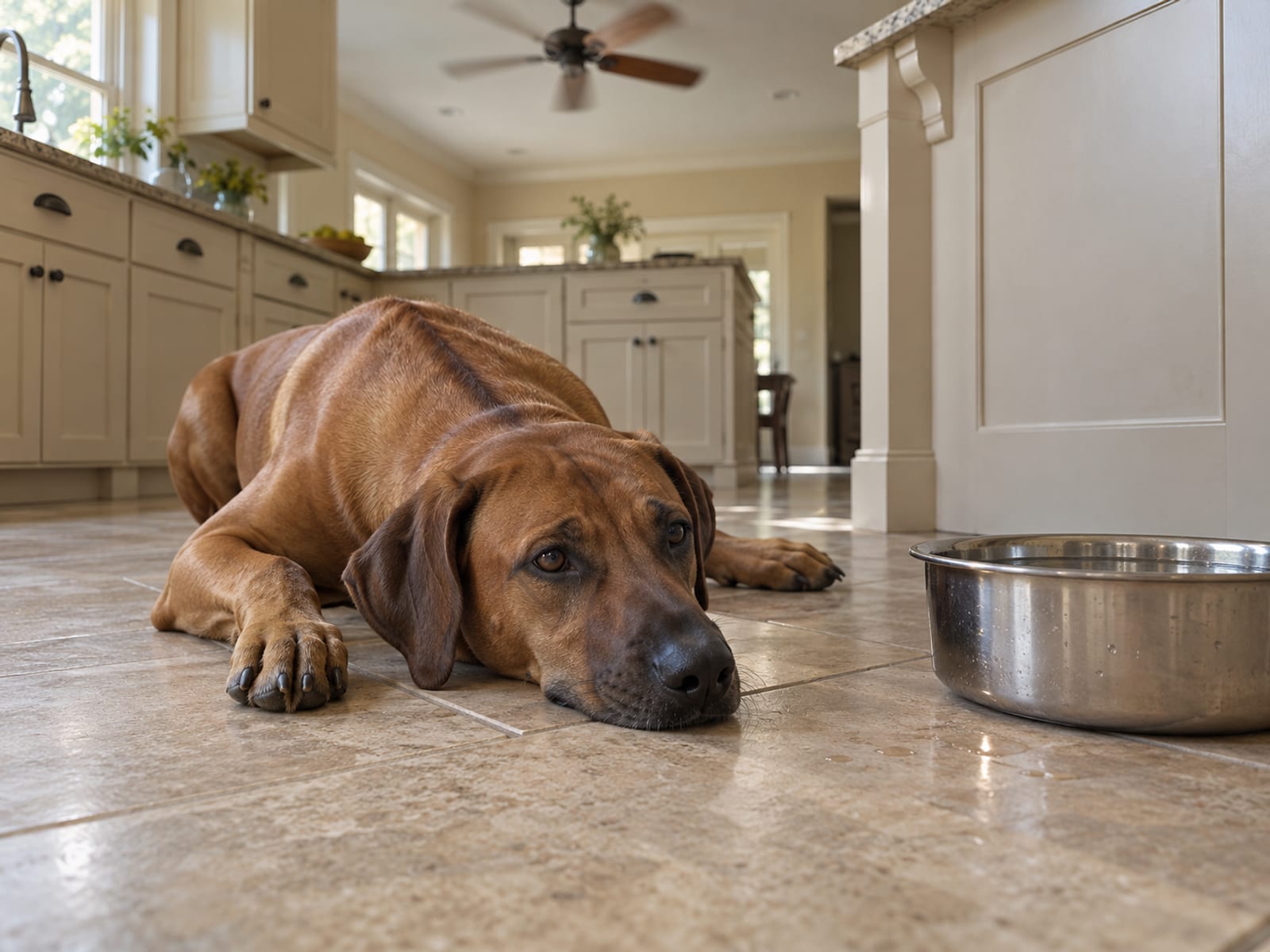
The signs to watch for are dry or sticky gums, sunken-looking eyes, thick saliva, low energy, loss of appetite, vomiting or diarrhea, panting, and less urine or darker urine. In severe illness or heatstroke you may also see weakness, confusion, collapse or gums that look an abnormal color.
Two quick checks are worth knowing, as long as you hold them loosely.
For the gums, lift your dog's lip and feel them. Moist, slippery gums are more reassuring, and dry or tacky ones are a concern. You can also press a gum briefly and watch how fast the pink color returns, but gum color and that return time can change with other problems too.
For the skin, gently lift a small fold between the shoulder blades and let go. Healthy skin usually snaps back. Skin that stays up or sinks slowly can point to fluid loss.
Now the limits, which matter as much as the checks. The Merck Veterinary Manual says these estimates are subjective. Skin and eye findings can mislead in senior or very thin dogs, very young dogs, dogs whose fluids are shifting quickly, and nauseated dogs with extra saliva. Loose skin folds in some breeds muddy the results too. A normal skin test never outweighs tiredness, vomiting, diarrhea, odd gums, heat exposure or a dog that won't drink. A normal home check also doesn't rule out early or mild dehydration.
A dry nose doesn't tell you much either. AKC says gum moisture and the full set of signs are more useful than nose moisture, so don't decide from the nose alone.
How much water does a dog need, and how can I encourage drinking?
AKC gives a general rule of at least one ounce of water per pound of body weight each day. Treat that as a starting point, not a prescription. Diet, weather, activity, age, size and health all change the number, and a dog on canned food may drink less because the food holds a lot of water.
- Keep clean, fresh water available.
- Offer water during and after time outdoors, and more often in hot weather.
- Watch how much your dog drinks and pees.
- Offer wet food if it suits your dog's condition.
- Try ice cubes if your dog likes them. Our page on whether dogs can have ice covers ordinary ice safety, and ice is not a stand-in for emergency care.
- AKC mentions flavoring water with bone broth. Any broth has to be free of onion, garlic, xylitol and extra salt, and it shouldn't delay a vet visit.
Don't force water into a dog that is weak, vomiting, confused or wobbly. If your vet tells you to give fluids by mouth with a syringe, follow that exact advice and nothing more.
Can I give Pedialyte, an electrolyte drink or suero?
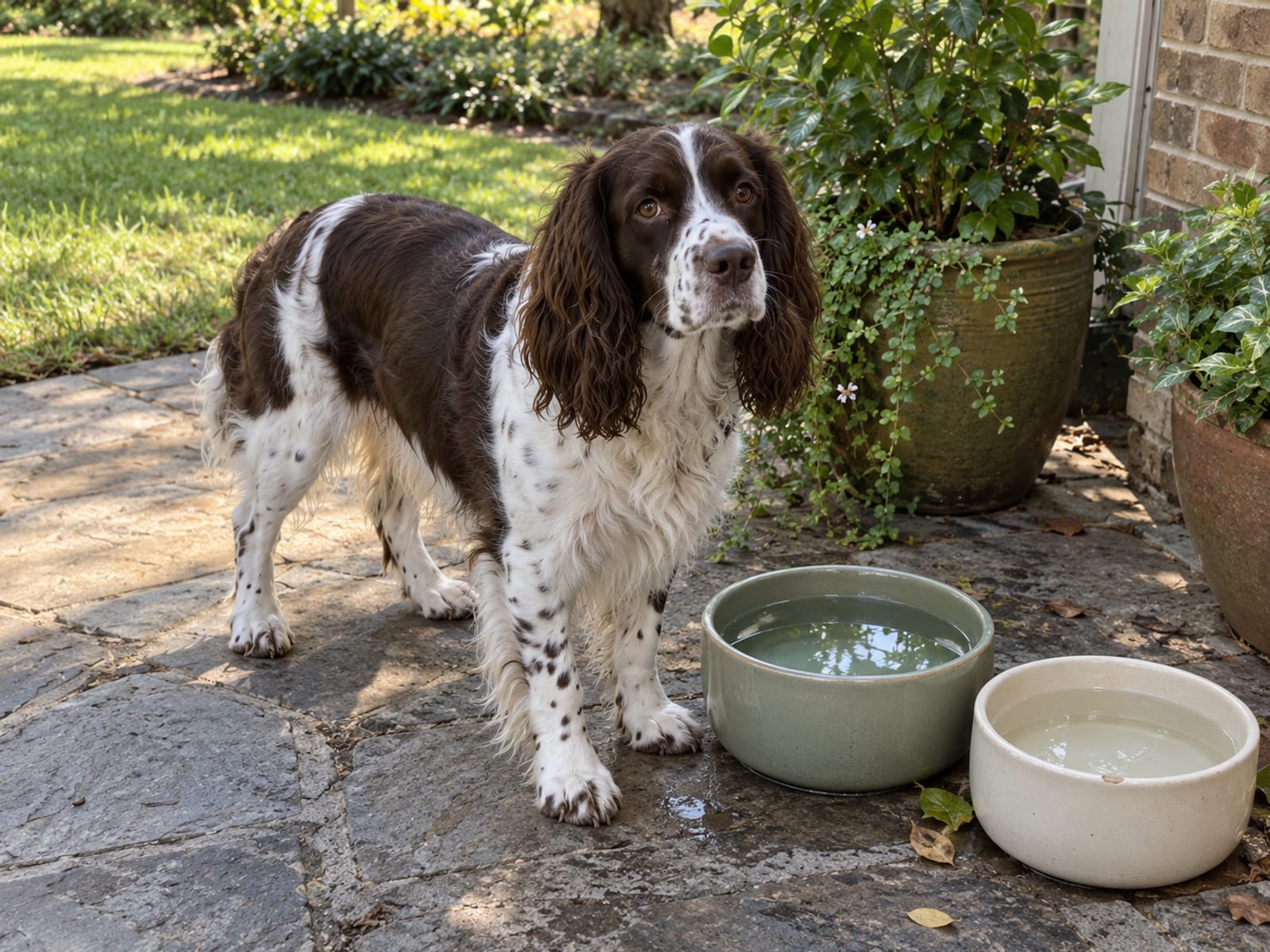
Ask your vet first, every time. Human electrolyte drinks aren't automatically safe for dogs. PetMD explains that Pedialyte is made for people, can carry sodium and sugar levels that don't suit a dog, and can make dehydration or an electrolyte imbalance worse in a dog that is vomiting. AKC brings up an electrolyte fluid like Pedialyte only for a dog that isn't vomiting, and only with veterinary guidance. The same goes for suero oral and sports drinks.
A vet may well recommend a fluid product for your dog after looking at the illness, hydration, electrolytes, organ function and whether your dog can drink. That is a different thing from treating a sick dog at home with a drink you picked yourself. When your vet names a product and an amount, use exactly that. This page won't give a home mix or dose, because the right answer depends on your dog.
Check every label for xylitol, which can also be listed as "birch sugar" or "wood sugar." The FDA says xylitol can cause a rapid, steep drop in a dog's blood sugar, with weakness, staggering, collapse, seizures and effects that can show up later. The ASPCA adds that it can injure the liver, and that too much salt can bring on vomiting, diarrhea, tremors and seizures. If your dog may have had xylitol, treat it as an emergency and call a vet or poison control right away.
Which dogs are at higher risk, and what about heat and car travel?
Heat is where dehydration and heatstroke overlap, and where things move fastest. Water is the first line of prevention, and these habits help most:
- Keep fresh water out at all times.
- Carry water and a bowl on walks, hikes and trips, and offer drinks often in heat and during exercise.
- Use shade, and skip the hottest part of the day.
- Cut back on hard exercise when it's hot or humid.
- Never leave a dog alone in a car.
Our heat safety for dog businesses page covers boarding, daycare, grooming and walks, and heat safety for dogs in Texas speaks to hot-climate conditions.
Puppies, seniors, toy breeds and nursing dogs deserve an earlier call to the vet when they're sick, and so do dogs with kidney, heart or hormone disease. A puppy with vomiting and diarrhea is especially urgent, and our page on parvo in puppies explains why. If your dog is drinking a lot more than usual, don't read that as a good sign. It can point to kidney disease or diabetes, so mention it to your vet. For a sense of what normal looks like, see signs of a healthy dog.
What will the vet do, and how fast will my dog recover?
At the clinic, your vet may check circulation, gum moisture and color, skin elasticity, eyes, temperature, urine output, mental state and weight. Depending on the history and exam, testing can include bloodwork, a urine test, an electrolyte check, blood pressure, an ECG or imaging.
Fluids come next. AAHA's 2024 fluid therapy guidelines say the route depends on how sick the dog is and whether it can take fluids by mouth or through a feeding tube. Options include IV fluids, fluids under the skin, fluids by mouth or tube, or a mix. AAHA also says the plan has to be matched to the dog and monitored, because too much fluid can cause dangerous overload. That is why you shouldn't pick a route or an amount at home.
Cost depends on a lot. CareCredit reports 2025 national averages, and they aren't a quote for dehydration:
Tap or hover a row to highlight it.
| Item | Figure | Source |
|---|---|---|
| ItemEmergency dog exam, average | Figure$135 | SourceCareCredit |
| ItemEmergency dog exam, range | Figure$107 to $246 | SourceCareCredit |
| ItemIV catheter and one bag of fluid, average | Figure$130 | SourceCareCredit |
Tests, medicine, monitoring, a hospital stay, your location and how sick your dog is all add to the total.
How quickly will your dog bounce back? There's no one number. Recovery depends on how much fluid was lost and how fast, the cause, circulation, electrolyte problems, organ function, whether vomiting or diarrhea continues, and whether heatstroke hurt any organs. After suspected heatstroke, see a vet even if your dog looks better.
Quick check: dehydration in dogs
Questions people ask about dehydration in dogs
These are the questions owners ask most, answered with a bit more detail than above.
What are the signs of dehydration in dogs?
Dry or sticky gums, thick saliva, sunken-looking eyes, low energy, less urine and slow skin return can all be warning signs. A dog may also be vomiting or have diarrhea. Home checks can't grade how dehydrated a dog is, so call your vet if you're worried.
How do I hydrate my dog fast?
The fastest safe route is a vet. Fluids under the skin or through an IV work faster and more reliably than anything at home, and your vet sets the route and amount. While you arrange care, offer fresh water only if your dog is alert and able to drink.
What can be mistaken for dehydration?
A dry nose is the usual one, and it doesn't prove dehydration. Loose skin folds, age, thinness and nausea can also make the skin check look off. Heavy drinking can look like a sign of health when it may point to kidney disease or diabetes, so mention it to your vet.
What foods help hydrate a dog?
Wet food holds a good deal of water and may help a dog that is eating, if it suits the dog's condition. Some dogs take ice cubes, and AKC mentions bone broth with no onion, garlic, xylitol or extra salt. None of these replace a vet visit when your dog can't keep fluids down.
How quickly do dogs recover from dehydration?
It depends on the cause and how severe it was. A dog that needed IV fluids may be in the hospital for a time, and your vet will recheck progress. Heatstroke can injure organs even after a dog seems better, so follow your vet's plan.
When should you take your dog to the vet for dehydration?
Go right away for collapse, heatstroke signs, vomiting that won't stop, no urine, very dark urine or a worrying puppy. Call your vet the same day if your dog is tired, drinking poorly or has ongoing vomiting or diarrhea, even without those signs.
What should I do next?
If anything in the first list fits your dog, stop reading and call an emergency vet. If your dog is stable, alert and drinking, keep fresh water out, watch drinking and urine closely, and call your regular vet for advice. I can't tell you your dog is fine from a distance, and a gum check or a skin pinch can't either. Use the emergency vet directory or the regular vet directory to find help near you, and bring along anything your dog may have eaten or drunk. I'm Cal, and my aim with this page is to get you to the right person quickly. Your vet takes it from there.
Sources
- American Animal Hospital Association: AAHA's 2024 fluid therapy guidelines
- American Kennel Club: AKC
- American Kennel Club: AKC
- American Veterinary Medical Association: AVMA
- ASPCA: ASPCA
- CareCredit: CareCredit
- Cornell University College of Veterinary Medicine: Cornell
- Merck Veterinary Manual: Merck Veterinary Manual
- PetMD: PetMD
- U.S. Food and Drug Administration: FDA
- VCA Animal Hospitals: VCA