

Heat Safety for Dogs in Texas: A Summer Guide for Walkers, Groomers, Daycare and Boarding
By Cal Hewitt · Published
Business guides
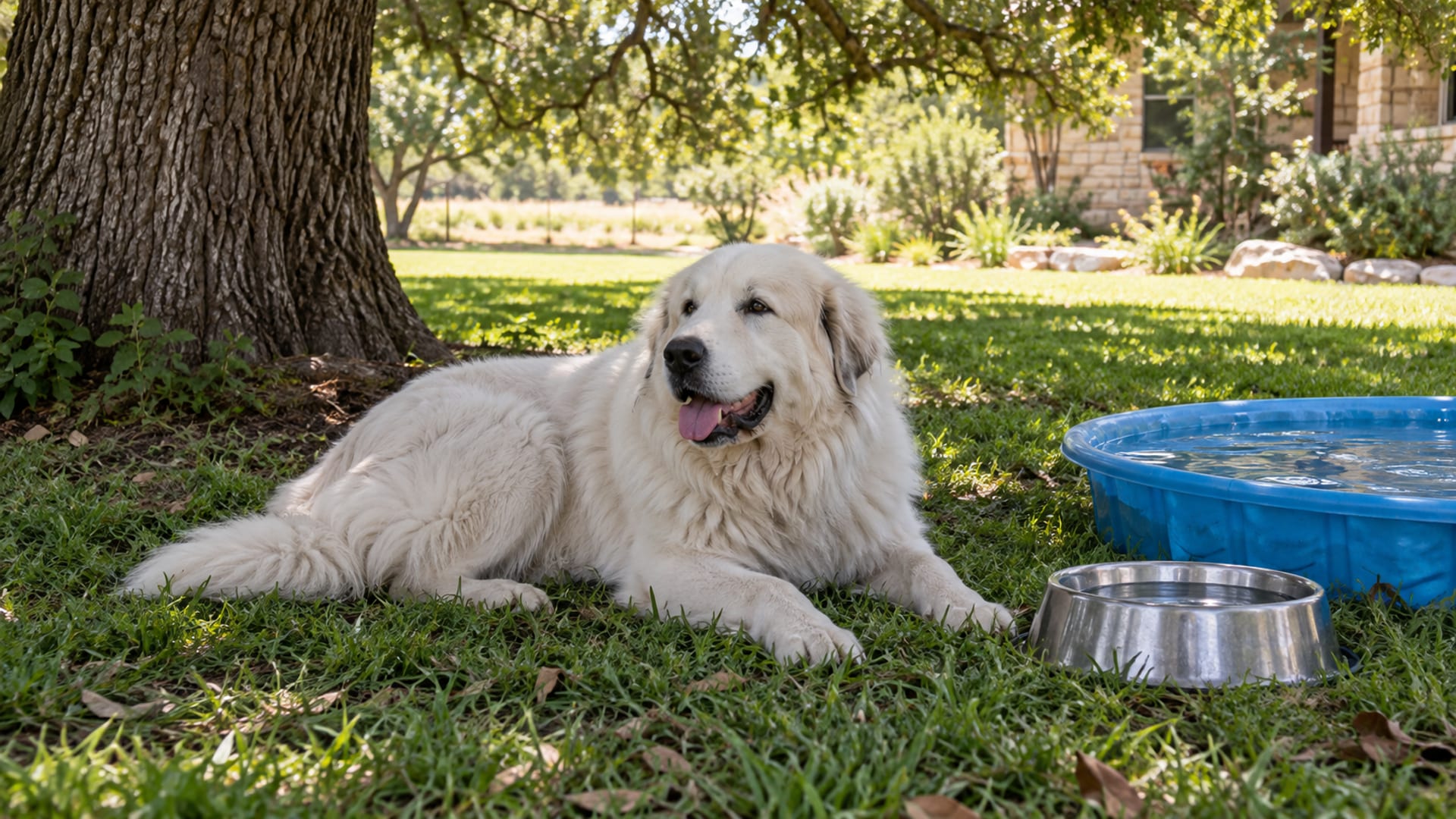
In Texas summer heat, schedule dog walks and outdoor play for the coolest practical part of the day, check the actual walking surface, give water and shade, and move dogs indoors when heat or humidity makes exercise unsafe. Watch for heavy panting, excessive drooling, weakness, confusion, vomiting, diarrhea, abnormal gums, unsteadiness or collapse. If you suspect heatstroke, contact or travel to an emergency veterinarian right away, and begin gentle cooling while you go: move the dog to shade or a cool indoor space, wrap room-temperature wet towels around the neck, armpits and groin, and put a fan on the dog. AVMA's pet first-aid handout lays out those steps. Cooling is first aid, not a substitute for veterinary care.
Key takeaways
Tap a card to bring it forward.
- Suspected heatstroke means veterinary care right away; cooling with room-temperature wet towels and a fan happens on the way, not instead.
- Air temperature alone is not enough: sun, humidity, exertion, the walking surface and the individual dog all change the risk.
- Measured asphalt reached 125°F at 86°F air and 143°F at 87°F air, and artificial turf reached about 147°F in one dog-turf study.
- Short-nosed, overweight, senior, heavy-coated and chronically ill dogs need a more conservative plan.
- Never leave a dog in a vehicle, even in shade or with the windows cracked.
- Write your summer policy down, with objective triggers, notice to clients and documentation.
If you walk, groom, board or run daycare for other people's dogs, you are probably worried about the same few things: harming a dog, losing a booking over a cancellation, handling an emergency badly, or facing legal or insurance trouble. A decision rule you wrote in advance solves most of that. That is what the rest of this page builds.
What should a Texas dog business do when heat makes outdoor activity unsafe?
Use the same order every time. Check conditions, move activity to the coolest workable window, inspect the surface, give water and shade, shorten or replace outdoor time with indoor time, and keep a staff member watching the dogs. If the dogs cannot be kept cool and continuously observed, cancel the outdoor activity.
Nobody hands you a single safe air temperature for all dogs. Texas A&M's School of Veterinary Medicine points to the timing of exercise, pavement, vehicles and cooling, and notes that heat problems can happen on cooler days when dogs are not used to heat. AVMA's warm-weather guidance covers fresh water, shade and never leaving a pet in a car.
One line to add to your summer plan today: early morning or late evening for necessary outdoor activity, no midday sun, and indoor enrichment when conditions are dangerous.
What are the signs of heatstroke, and what do staff do immediately?
The AVMA first-aid handout lists these signs: rapid breathing or heavy panting, excessive drooling, weakness or drowsiness, confusion, vomiting or diarrhea, and gums that look abnormal in color, or dry or sticky. AVMA's warm-weather page adds unsteadiness, abnormal tongue color and collapse. Train every staff member to recognize these before they need to.
What to do, in the order AVMA gives it:
- Get the dog to the closest veterinary hospital as soon as possible.
- Start cooling right away. Move the dog from direct sun to shade or a comfortably cool indoor space.
- Place towels wet with room-temperature water around the neck, armpits and groin.
- Rewet and replace the towels every few minutes.
- Blow cool air on the dog with a fan if you have one.
- Do not put the dog in a tub of cool or cold water.
Cooling does not replace an exam. Texas A&M says heatstroke can require veterinary treatment and ongoing monitoring, so a dog that looks better after cooling still needs a veterinarian. Post your emergency veterinary hospital's number and route where every staff member can see it. If a dog is fading in front of you, the next steps are the vet and the owner, in that order.
When should you shorten or cancel a walk or outdoor play session?
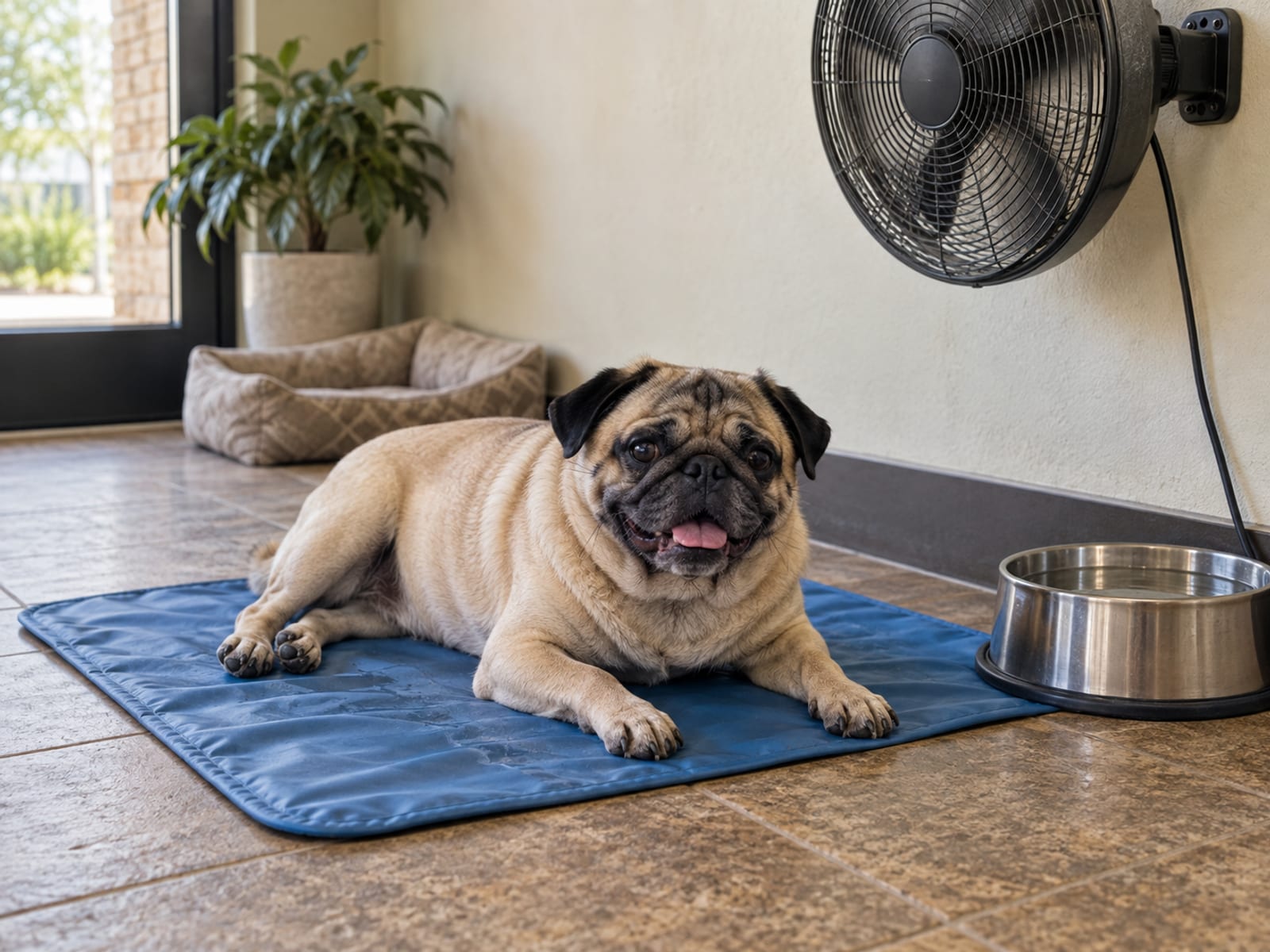
Air temperature alone is not a safe rule. The National Weather Service heat index combines temperature and humidity, and its chart assumes shade, since direct sunlight can add up to 15°F to the value. As an example, 100°F air at 55% relative humidity produces a heat index of 124°F.
The NWS categories are:
Tap or hover a row to highlight it.
| Heat index | Category | What NWS says is possible |
|---|---|---|
| Heat index80°F to 90°F | CategoryCaution | What NWS says is possibleFatigue with prolonged exposure or activity |
| Heat index90°F to 103°F | CategoryExtreme caution | What NWS says is possibleHeatstroke, cramps or exhaustion with prolonged exposure or activity |
| Heat index103°F to 124°F | CategoryDanger | What NWS says is possibleCramps or exhaustion likely; heatstroke possible |
| Heat index125°F or higher | CategoryExtreme danger | What NWS says is possibleHeatstroke highly likely |
These are human categories, not a dog-specific veterinary cutoff, and they are not a legal threshold. Treat them as a starting point and be more conservative for dogs. A Spanish government animal-welfare guide, for example, advises avoiding intense exercise at 32°C, about 90°F, and avoiding excessive running, ball play and cycling. It is not Texas law, but it is a cautious reference.
Set your triggers before the heat arrives, and tie each to something staff can check: the heat index, direct sun, the surface, exertion and the dog's risk group. Decide what you do at each level, for example a shorter walk, indoor play only, or cancellation. Then apply it the same way to every client. A rule you wrote in April is easier to defend in July than a judgment made at the door.
How hot can pavement and artificial turf get, and how do you check a route?
Measured surfaces can be far hotter than the air. Washington State University reported asphalt at 125°F when the air was 86°F and 143°F when the air was 87°F. A 2021 study of dog-exposed surfaces found sunny, dry bare ground at a median of 125.4°F, with readings up to 142.8°F. A 2026 dog-turf study found artificial turf reached 63.8°C, about 147°F, while natural turf stayed below 40°C, about 104°F, under the study's conditions. It recommends checking the surface before use, especially above 25°C, or 77°F, ambient temperature. A separate 2025 field study measured a mean daytime artificial-turf temperature of 49.9°C, about 122°F, and temperatures above a 48°C, about 118°F, human skin-burn threshold for almost four hours.
There is no universal paw-pad cutoff, and the popular "five-second rule" is not a complete safety standard, because surface temperature changes with material, sun, shade, moisture and how it is measured. So, inspect the actual route or run.
A practical surface check:
- Look at the route in the sun, not from the car. Asphalt and artificial turf in direct sun are the worst.
- Use a hand on the surface to catch what is obviously hot, and an infrared thermometer if you want a number you can record.
- Prefer shade and natural grass, and avoid hot asphalt and turf at peak sun.
- Move indoors if the surface is uncomfortable or dangerously hot.
- Write down the time, the surface and what you found. That record protects you and the dog.
Which dogs need a more conservative policy?
Write a stricter rule for these groups, and say so in your service agreement:
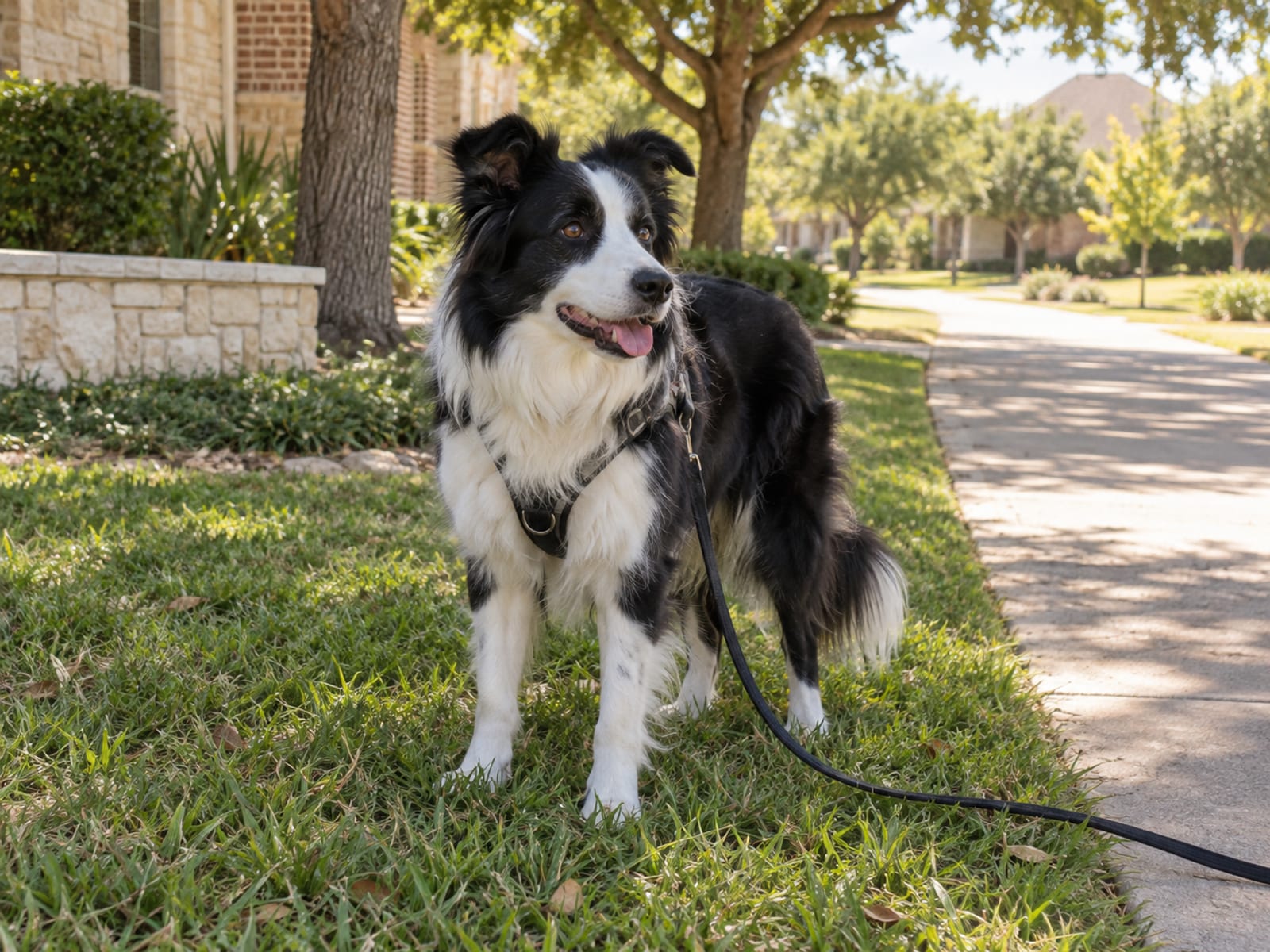
- Short-nosed (brachycephalic) breeds such as pugs and bulldogs.
- Overweight or obese dogs.
- Senior dogs.
- Dogs with heavy or dense coats.
- Puppies and dogs not used to hot weather.
- Dogs with chronic respiratory, heart or other health conditions.
- Dogs exercising hard or staying in heat without effective cooling.
AVMA names overweight and short-nosed dogs as higher risk. Texas A&M names short-nosed breeds. The Spanish government guide lists puppies, short-nosed dogs, chronically ill animals and older animals as more sensitive. For these dogs, shorter outings, more rest, more shade and a lower threshold for staying inside are reasonable, and your policy can say so.
If a client asks you to shave a double-coated dog for summer, know that the Spanish guide says fur can insulate and recommends professional advice for the coat type. Point the client to the groomer and veterinarian instead of promising an answer yourself.
How should a daycare or boarding facility manage extreme heat?
IBPSA's consumer guidance tells owners to ask whether the premises have air conditioning in summer, whether someone is on site at all times, how often dogs are released for exercise and whether runs have indoor and outdoor parts. It also stresses safety programs, ongoing education, staffing ratios and separating dogs by size, age and temperament. Owners will ask you these things, so your written policy should answer them:
- Climate-controlled indoor space.
- Clean drinking water at all times.
- Shade and cooling for any outdoor time.
- Outdoor play only in approved weather windows, with a surface check before each session.
- Scheduled rest periods.
- Smaller or separated groups when heat or exertion adds risk.
- Staff watching for panting, drooling, weakness, confusion, vomiting, diarrhea and collapse.
- An immediate move indoors when warning signs appear.
- Emergency veterinary contact and transport steps.
- Client notice, cancellation and refund rules.
- Records of weather, surface conditions, staff observations and actions taken.
If you board, Texas kennel law matters too, and it is covered below.
What should groomers know about dryers?
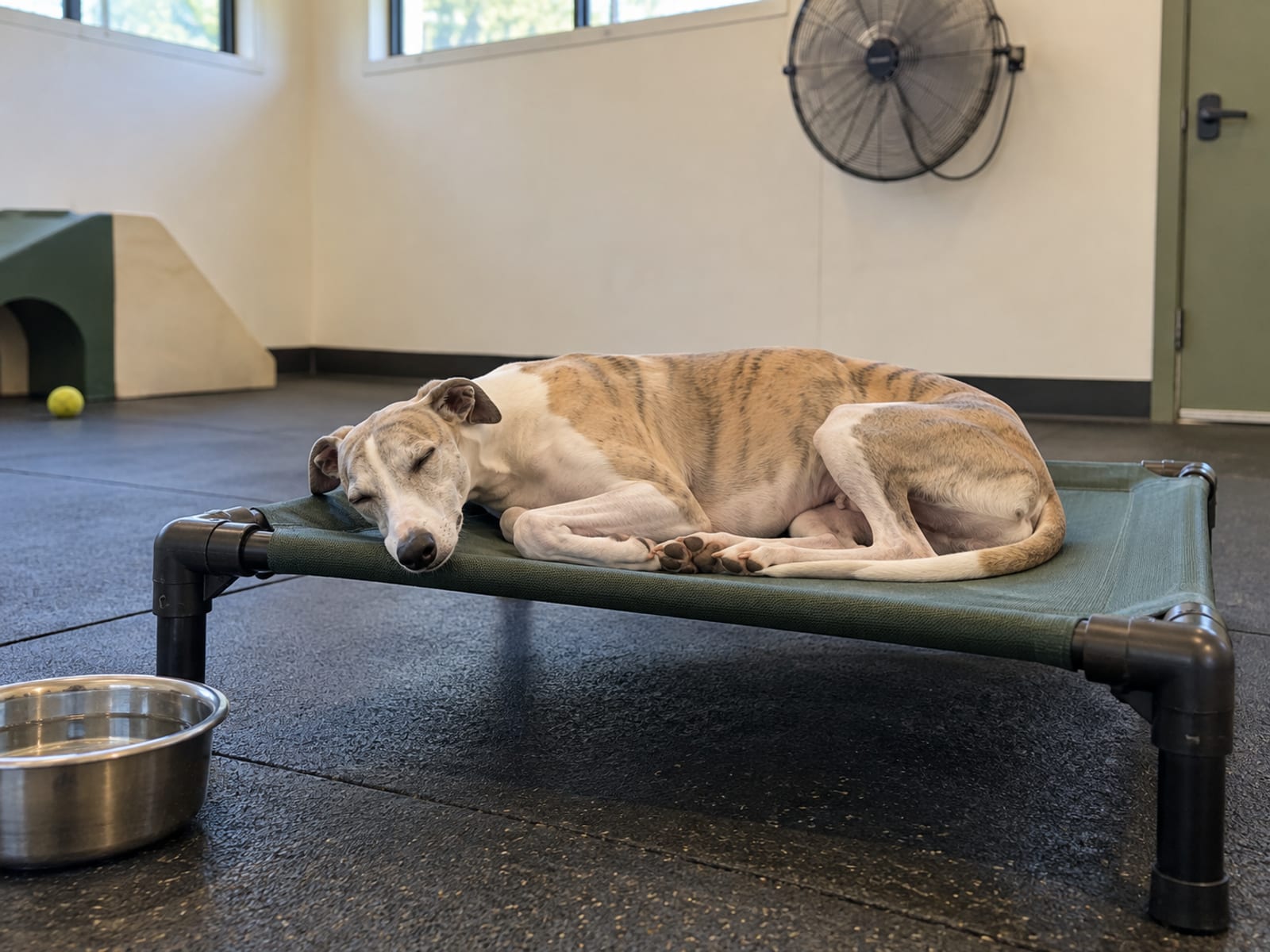
AAHA reports that enclosed, unmonitored heat from cage dryers can cause burns, overheating and heatstroke, and says one team member should be assigned to monitor an animal whenever a heating or cooling device is in use. Texas A&M warns that dogs can be burned while being dried after a bath.
A groomer's dryer policy should include:
- No unattended enclosed drying.
- Continuous observation, with regular checks of skin, breathing, behavior and temperature.
- Stopping right away if the dog shows distress, heavy panting, weakness or overheating.
- Careful control of airflow and heat.
- Extra caution with short-nosed, senior, overweight, heavy-coated or medically fragile dogs.
- A written emergency plan with a veterinary contact.
Which Texas laws and city rules cover vehicles and outdoor restraint?
Keep state law and city ordinances in separate boxes, because a city rule is not a statewide rule.
State law. Under Texas Health and Safety Code Chapter 821, inclement weather includes extreme high temperatures. Section 821.102 prohibits leaving a dog outside and unattended by restraint unless the dog has access to adequate shelter, which must protect from inclement weather and let the dog stand, sit, turn and lie down normally.
Kennels. Chapter 824 requires written notice and signed owner consent before a kennel leaves a boarded dog or cat unattended, with no employee present, during specified hours. A violation can bring a $500 civil penalty per animal per day. The chapter excludes kennels boarding no more than three dogs or cats at one time.
City example. Dallas City Code section 7-4.13 prohibits knowingly confining a dog or cat in an unattended motor vehicle for more than five minutes when extreme temperatures, inadequate ventilation or other conditions endanger the animal. It lists excessive panting or drooling, lethargy, collapse, vomiting and convulsions as examples, and lets an animal services officer, trained peace officer or licensed veterinarian remove the animal after reasonably trying to find the owner. Treat this as Dallas only.
Whatever the law says, AVMA's advice is plain: never leave a pet in a car, including in shade or with the windows cracked.
For your own city or county, ask the city planning or zoning department, building department, fire marshal and animal services office, plus the county clerk or county animal-control office if you are outside city limits. Ask whether your work is allowed at your address, whether a home-occupation, kennel or commercial pet-service permit applies, whether you need a certificate of occupancy, whether there are limits on dogs or overnight animals, whether climate control, drainage, ventilation, fencing or sprinklers are required, and whether mobile grooming or transport is regulated.
What should a summer client policy say?
Put it in the service agreement and repeat it by message when a hot week starts. It should cover:
- Objective triggers. The heat index, direct sun and surface checks that change your service.
- What changes. A shorter walk, an indoor alternative, or a cancellation, and who decides.
- Notice. How and when you tell the client, and what happens to the booking or payment.
- High-risk dogs. Stricter rules and the reason.
- Emergency authorization. Permission to take the dog to an emergency veterinarian, and who pays.
- Documentation. That you record the weather, the surface and your observations.
A short message you can adapt: "Because today's heat index is in the danger range, I'm shortening Max's walk to a short potty break and adding indoor play. The full walk will resume when conditions are safer." Keep the reason objective and the tone calm. Clients tend to accept a change that comes with a reason, a plan and an early notice.
Staff need training too. Walk each person through the signs, the cooling steps and the hospital route, and keep an incident record for every heat-related event, with the owner notified. If you are unsure about insurance, ask an agent to confirm in writing whether heat-related injury is covered; coverage varies and I cannot answer it for you.
Questions about heat safety for dogs in Texas
What temperature is too hot to walk a dog in Texas?
There is no single safe air temperature for every dog. Use air temperature, humidity, direct sun, the surface temperature, how hard the dog is working and the dog's risk factors, and shorten or cancel when the combination is unsafe.
How hot is too hot for pavement?
There is no single paw-safe number, and measured asphalt has reached 125°F at 86°F air. Check the actual surface where you will walk, prefer shade and natural grass, and go indoors when it is uncomfortable to touch.
Are dogs OK in 90 degree heat?
Some are and some are not. A 90°F heat index is the NWS extreme-caution range, and the Spanish government guide advises avoiding intense exercise at about 90°F; short-nosed, overweight, senior and heavy-coated dogs need extra care.
Can dogs stay in a car with the windows open?
No. AVMA says not to leave a pet in a vehicle, including in shade or with the windows cracked.
Your next step
Before your next hot week, write the one-page version: your triggers, your indoor backup, your emergency hospital and your client message. Then look up the rules for your own address with your city or county. When your policy is ready, add your business to the DogServ directory so the owners who care about this can find you.
Sources
- American Animal Hospital Association: AAHA
- American Veterinary Medical Association: AVMA's pet first-aid handout
- American Veterinary Medical Association: AVMA's warm-weather guidance
- archive.news.wsu.edu: asphalt at 125°F when the air was 86°F and 143°F when the air was 87°F
- codelibrary.amlegal.com: Dallas City Code section 7-4.13
- ibpsa.com: consumer guidance
- PubMed: bare ground
- PubMed Central: dog-turf study
- sciencedirect.com: 2025 field study
- statutes.capitol.texas.gov: Chapter 824
- statutes.capitol.texas.gov: Texas Health and Safety Code Chapter 821
- Texas A&M College of Veterinary Medicine: burned while being dried after a bath
- Texas A&M College of Veterinary Medicine: Texas A&M's School of Veterinary Medicine
- weather.gov: National Weather Service heat index