
Dog Business Insurance: What to Carry, What It Costs and What to Ask Before You Take Clients
By Cal Hewitt · Published
Business guides
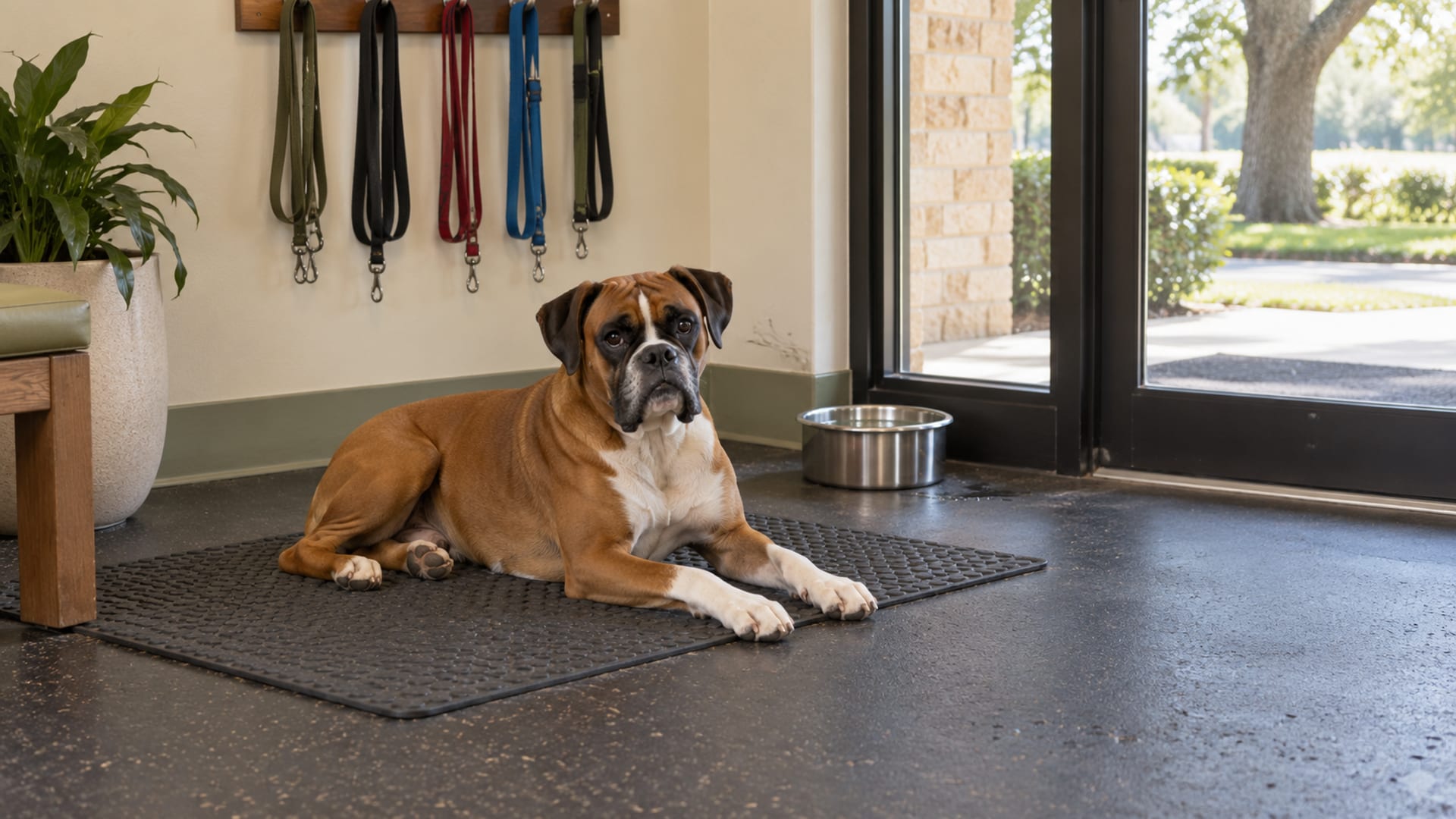
Dog business insurance usually means commercial liability coverage for the risks that come with walking, sitting, grooming, training, boarding, transporting or cleaning up after dogs. General liability can address injuries to other people and damage to property, but it commonly does not cover a client's dog while the dog is in your care, custody or control. Ask about animal bailee or equivalent pet-protection coverage. Depending on your work, you may also need professional liability, bonding, commercial auto, property coverage and workers' compensation. Requirements vary by state and city, so check the relevant insurance, workers' compensation, licensing, zoning and permit offices before you accept clients.
Key takeaways
Tap a card to bring it forward.
- Dog business insurance is commercial coverage for your work, not pet health insurance for anyone's dog.
- General liability commonly leaves out a client's dog in your care, so ask for animal bailee or care, custody and control coverage.
- A bond is a guarantee against theft or misconduct, not liability insurance.
- Workers' compensation is set state by state: California requires it with one employee, while Texas generally lets private employers choose.
- Published prices are starting points or benchmarks, not quotes for your business.
- A certificate of insurance summarizes coverage; the policy wording and exclusions decide a claim.
I'm Cal. My work is building websites and marketing for dog businesses, and I'm not an insurance agent, lawyer or accountant. What follows explains the coverage types and the questions to put to a licensed agent. The policy itself is what decides a claim.
What does dog business insurance cover, and what does general liability leave out?
Dog business insurance is business insurance. It is not the pet health insurance a client buys for their own dog. The SBA describes general liability as protection against financial loss from bodily injury, property damage, medical expenses, defense costs, settlements and judgments. That covers a lot of what worries a new owner, such as a passerby who is bitten or a client's gate that gets damaged.
The gap is the dog itself. General liability commonly excludes property in the insured's care, custody or control, and a client's dog in your care counts as that. Pet Care Insurance explains animal bailee coverage as the piece designed for client animals and other property in the business's care, and it can respond to a covered injury, illness, escape or death, subject to the policy. So, a cheap policy that includes general liability alone may leave out the exact loss you fear most. Ask any agent, in plain words, whether a client's dog is covered while it is in your home, on a walk or in your vehicle.
An LLC does not replace any of this. The SBA says an LLC or corporation can protect personal property from some lawsuits, but that protection has limits, while insurance addresses covered risks and defense costs.
What should you do this week, before you ask for quotes?
Quotes are only as good as the information you give, so start with a list. Write down every service you offer and where each one happens. Count the most dogs you will have in your care at one time. Note whether you offer overnight stays, daycare, transport, grooming or off-leash work. List who works with you, whether employees, contractors, volunteers or family, and list every vehicle and the business miles you drive. Then give every agent the same list.
That sameness matters later, because an insurer can exclude a service you never disclosed. Request exclusions and endorsements in writing, and keep the answers with your business records.

Which coverage answers which risk?
Each type of coverage answers a different loss, and most dog businesses end up with a few of them together.
General liability. Injury to other people and damage to their property, plus defense costs. Pet-business policies may carry an animal liability sublimit, so ask what it is.
Animal bailee, or care, custody and control. Client animals in your care. Pet Care Insurance says it may respond to covered injury, illness, escape, death, search costs or legal claims, subject to limits and exclusions.
Professional liability. Claims about professional errors, negligence or advice. The SBA describes it, and it matters most to groomers and trainers. The policy must define which services count.
Bonding. Professional Pet Sitters International describes a bond as a guarantee to clients against theft or misconduct, not liability insurance. Depending on the bond, it may cover only employees or extend to owners and contractors. It matters most when staff or contractors enter clients' homes.
Commercial auto. Liability for business use of a vehicle, and possibly damage to the vehicle. Personal auto coverage may not cover transporting client animals for business, and the IRS notes that vehicle costs must be split when a vehicle is part personal and part business.
Commercial property and business interruption. Business-owned equipment and buildings against covered causes such as fire, smoke, wind, hail, vandalism or theft, and lost income after a covered event.
Workers' compensation. Statutory benefits for employees hurt or made ill by work. Ordinary pet-sitter liability does not cover an injury to you or your staff, per Professional Pet Sitters International.
Some policies also add lost-key coverage and veterinary reimbursement, which is separate from liability. Ask whether each is a separate limit or sits inside another one.
What does each type of dog business need?
The exact package depends on your location, capacity, services, employees, vehicles and premises. This table shows what to raise with an agent for each type of work, not a fixed prescription.
Tap or hover a row to highlight it.
| Business | Coverages to discuss |
|---|---|
| BusinessDog walking | Coverages to discussGeneral liability, care, custody and control or animal bailee, animal liability, bonding, lost keys, non-owned auto, workers' compensation if you use staff |
| BusinessPet sitting | Coverages to discussGeneral liability, care, custody and control, animal bailee, bonding or employee dishonesty, lost keys, workers' compensation |
| BusinessGrooming | Coverages to discussGeneral liability, animal bailee, professional liability, equipment and property, commercial auto for a mobile van, workers' compensation |
| BusinessTraining | Coverages to discussGeneral liability, professional liability, animal bailee when dogs are physically in your care, commercial auto if you transport dogs, workers' compensation |
| BusinessBoarding or daycare | Coverages to discussGeneral liability, higher-limit animal bailee, animal liability, property, business interruption, workers' compensation, commercial auto, possibly umbrella coverage |
| BusinessWaste removal | Coverages to discussGeneral liability, commercial auto, equipment and property, workers' compensation, and environmental coverage if an agent identifies that exposure |
If you work from home, do not assume your homeowners policy covers boarding or grooming. Ask the home insurer and a commercial agent about business activity, animal care, the premises and liability. The SBA also describes home-based business insurance as its own category.

What does dog business insurance cost?
Treat every published price as a starting point. Premiums move with state, revenue, payroll, claims history, limits, deductibles, services, number of animals, property and vehicle use. These examples are dated, and none is a quote for your business.
Tap or hover a row to highlight it.
| Figure | Value | Source and date |
|---|---|---|
| FigureDog-sitter policy, starting price | Value$29.43 per month or $332.20 per year | Source and datePet Care Insurance, September 2026 |
| FigureBase animal bailee limit | Value$2,500 per occurrence, $5,000 per policy term | Source and datePet Care Insurance, September 2026 |
| FigureBase veterinary reimbursement | Value$1,000 per occurrence, $2,500 annual, $250 deductible | Source and datePet Care Insurance, September 2026 |
| FigureGrooming coverage, individual policies | Value$30 to $102 per month | Source and dateMoneyGeek, September 14, 2026 |
| FigureGrooming, average of six coverage types | Value$59 per month, about $709 per year | Source and dateMoneyGeek, September 14, 2026 |
| FigureBoarding business, annual estimate | Value$500 to $3,000 or more | Source and dateKennelPermit, July 2026, industry estimate |
Pet Care Insurance says its final pricing depends on business size, claims history and add-ons, and it publishes upgrade options for animal bailee at $5,000 and $10,000, $10,000 and $20,000, and $15,000 and $30,000 with added annual charges. MoneyGeek labels its figures as benchmarks, not quotes, and the KennelPermit range is an industry estimate rather than an insurer quote.
Limits matter as much as price. A low animal bailee limit is a different product from a higher one, so compare the per-occurrence and annual aggregate limits side by side. If you add employees, a vehicle or a facility, expect the total to climb well above a starting price. Business insurance premiums can generally be deducted, subject to IRS rules, and the IRS treats them as business insurance on Schedule C. Ask your accountant how it applies to you.
What can a policy exclude?
The exclusions are where dog businesses get caught, and the exclusions section of the policy is worth reading before you sign. Common ones include:
- Client pets under ordinary general liability, because they are property in your care.
- Your own pets.
- Aggressive dogs, sometimes based on an individual dog's documented history rather than breed.
- Service-dog, guard-dog, protection-dog, attack-dog or fighting-dog training.
- Boarding or daycare capacity above a stated number.
- Pet-taxi or transportation limits, and personal auto exclusions for business driving.
- Animals used for breeding or other commercial purposes.
- Services you did not disclose.
- Intentional or illegal conduct.
- Client belongings, unless broader property-damage coverage is added.
- Waiting periods, deductibles, per-occurrence limits, annual aggregates and sublimits.
- Limits on contractor and volunteer coverage, and state eligibility limits.
Pet Care Insurance publishes its own list of exclusions, including capacity, animal types, aggressive-dog history and protection-dog training. Policy definitions and exclusions control, and a similar claim someone else paid does not guarantee yours will be paid. Work done outside an app's booking system can also fall outside that platform's coverage, so ask whether your policy follows your business or only a specific booking.
"Insured and bonded" does not prove that every client loss is covered either. Coverage depends on limits, definitions, conditions, deductibles and the actual wording.
When does the law require insurance, and how does workers' compensation differ by state?
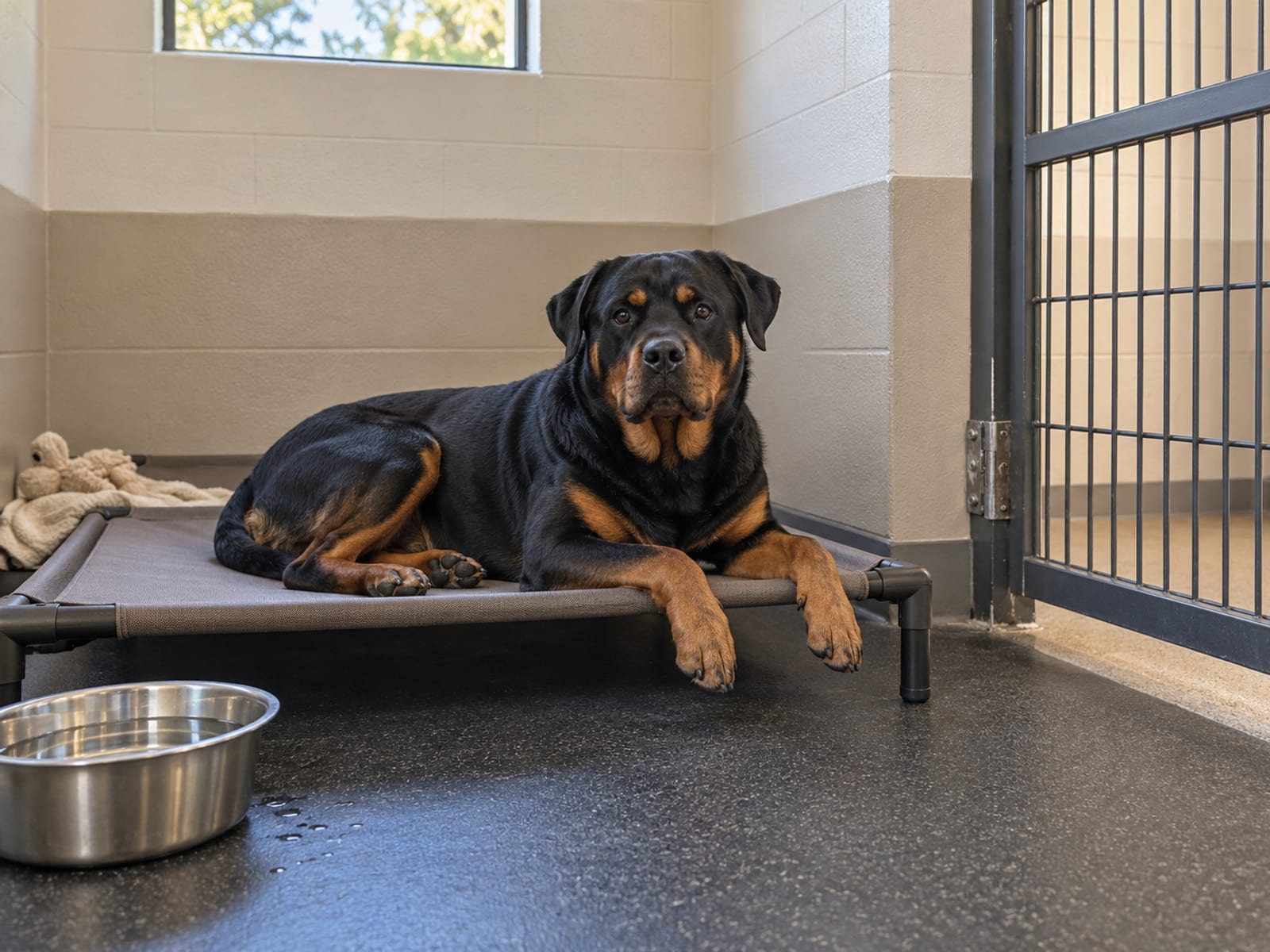
No single national rule says every dog business must carry the same insurance. Workers' compensation is mainly state law. The California Division of Workers' Compensation says employers must carry it even with one employee, including part-time workers, and that failing to carry it is a criminal offense. The Texas Department of Insurance says private employers can generally choose whether to carry it, and that non-subscribers have notice and reporting duties and may lose legal protections that subscribers have. Those are two examples, not a national rule.
The U.S. Department of Labor keeps a directory of state workers' compensation officials. Check the state where your employees work and any state where you operate. Commercial auto rules depend on how you use and own the vehicle, state law and sometimes federal motor-carrier rules, so ask your state motor-vehicle agency and a licensed commercial auto agent. See the FMCSA insurance filing page for the federal side.
Even where state law does not require coverage, a city, county, landlord, HOA, client contract or licensing office may ask for proof of insurance. For transport, USDA APHIS says businesses that take custody of regulated animals and transport them for hire can fall under the Animal Welfare Act, and its licensing assistant helps you find out whether your business needs a license or registration.
If you want one state compared closely, read Dog Business Insurance in Texas.
Which permits, zoning and local approvals should you check beside insurance?
Insurance is one piece of opening legally. Rules differ by state, county, city, zoning district, property type, HOA, landlord and activity, so ask the office that decides each point:
- State Secretary of State: entity registration and assumed name.
- State revenue or taxation department: sales tax, employer taxes and registration.
- State insurance department or workers' compensation office: insurance requirements and licensed carriers.
- State agriculture or animal-health agency: kennel, boarding, animal-facility or transport rules.
- City or county business-license office: local business license.
- City or county zoning office: home occupation, commercial use, parking, noise, signs and animal limits.
- Animal-control or kennel office: capacity, vaccination, sanitation and inspection rules.
- Fire marshal: occupancy, fire safety and evacuation.
- State motor-vehicle agency: commercial registration and vehicle requirements.
- Landlord or HOA: contract restrictions and insurance requirements.
Questions worth asking include whether your address is zoned for the activity, whether a home-occupation permit is needed, whether there is a dog-count or overnight limit, whether inspections come before opening, and whether proof of insurance is required.
How do you compare quotes, get a certificate of insurance and handle an incident?
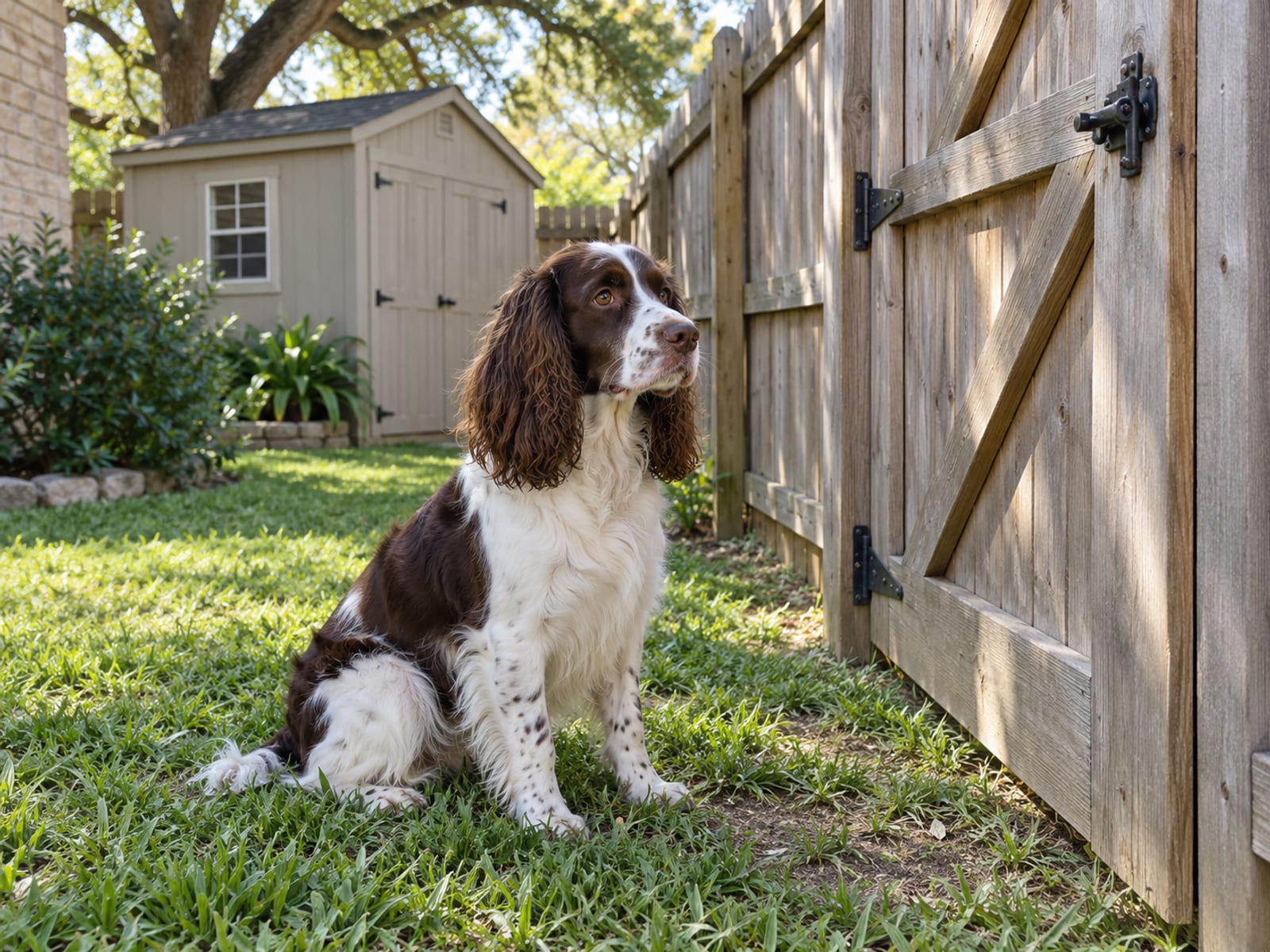
Compare quotes on equal terms. Line up the same limits, deductibles, services, locations, staff classifications, vehicles, animal limits, exclusions and endorsements. A quote that looks cheaper often covers less.
Use this checklist when you talk to an agent:
- List every service and where it happens.
- Count the most animals in care at one time.
- Identify overnight, daycare, transport, grooming and off-leash work.
- Identify employees, contractors, volunteers and owners.
- Identify vehicles and business mileage.
- Ask for general liability and animal bailee or care, custody and control coverage.
- Ask about professional liability where you give advice or specialized services.
- Ask about bonding, property, commercial auto and workers' compensation.
- Request exclusions and endorsements in writing.
- Compare equal limits and deductibles.
- Check state and local requirements.
- Get a certificate of insurance.
- Set an incident-reporting procedure.
A certificate of insurance is the document a client, landlord, HOA or commercial partner will ask for. It summarizes coverage. The policy, its endorsements, limits, conditions and exclusions control, so a certificate alone does not prove that a given loss is covered.
If an incident happens, protect people and animals first. Then preserve your records, notify your insurer promptly and follow the policy's claims instructions. Professional Pet Sitters International's standards call for documenting incidents and reporting claims promptly. Leave legal conclusions to your insurer and an attorney.
Questions dog business owners ask about insurance
The answers are short, and your agent's reading of the policy wording is the one that counts.
How much does pet business insurance cost?
Published starting prices run from about $29.43 per month for a dog-sitter policy to benchmarks of $30 to $102 per month for individual grooming policies. Facilities, employees, vehicles, property and higher limits cost more, and only a quote that names your services gives your number.
Is general liability enough on its own?
Usually not for a business that cares for client dogs. General liability can cover injury to other people and property damage, but it commonly excludes a client's dog in your care, so ask about animal bailee or care, custody and control coverage as well.
Do I need bonding?
A bond is not liability insurance. It can address covered theft or misconduct, so it matters most when employees or contractors enter clients' homes.
Do groomers need professional liability?
It may matter, because it addresses claims about service errors, negligence or advice. Confirm that the policy wording names grooming.
What is your next step?
Write down every service you offer, every place you offer it and the most dogs you will have at once. Then ask two or three agents for quotes using that same list, and request the animal bailee limits and exclusions in writing. Before your first client, check your state and city offices and get a certificate of insurance. When your paperwork is done, I'd be glad to have you claim or improve your listing in the DogServ directory.
Sources
- aphis.usda.gov: licensing assistant
- aphis.usda.gov: USDA APHIS
- dir.ca.gov: California Division of Workers' Compensation
- dol.gov: U.S. Department of Labor
- fmcsa.dot.gov: FMCSA insurance filing page
- irs.gov: IRS
- kennelpermit.com: KennelPermit
- moneygeek.com: MoneyGeek
- petcareins.com: Pet Care Insurance
- petcareins.com: Pet Care Insurance
- petsit.com: Professional Pet Sitters International
- sba.gov: SBA
- tdi.texas.gov: Texas Department of Insurance