
Heat Safety for Dog Businesses: Schedule Changes, Warning Signs, Emergency Steps and a Written Plan
By Cal Hewitt · Published
Business guides
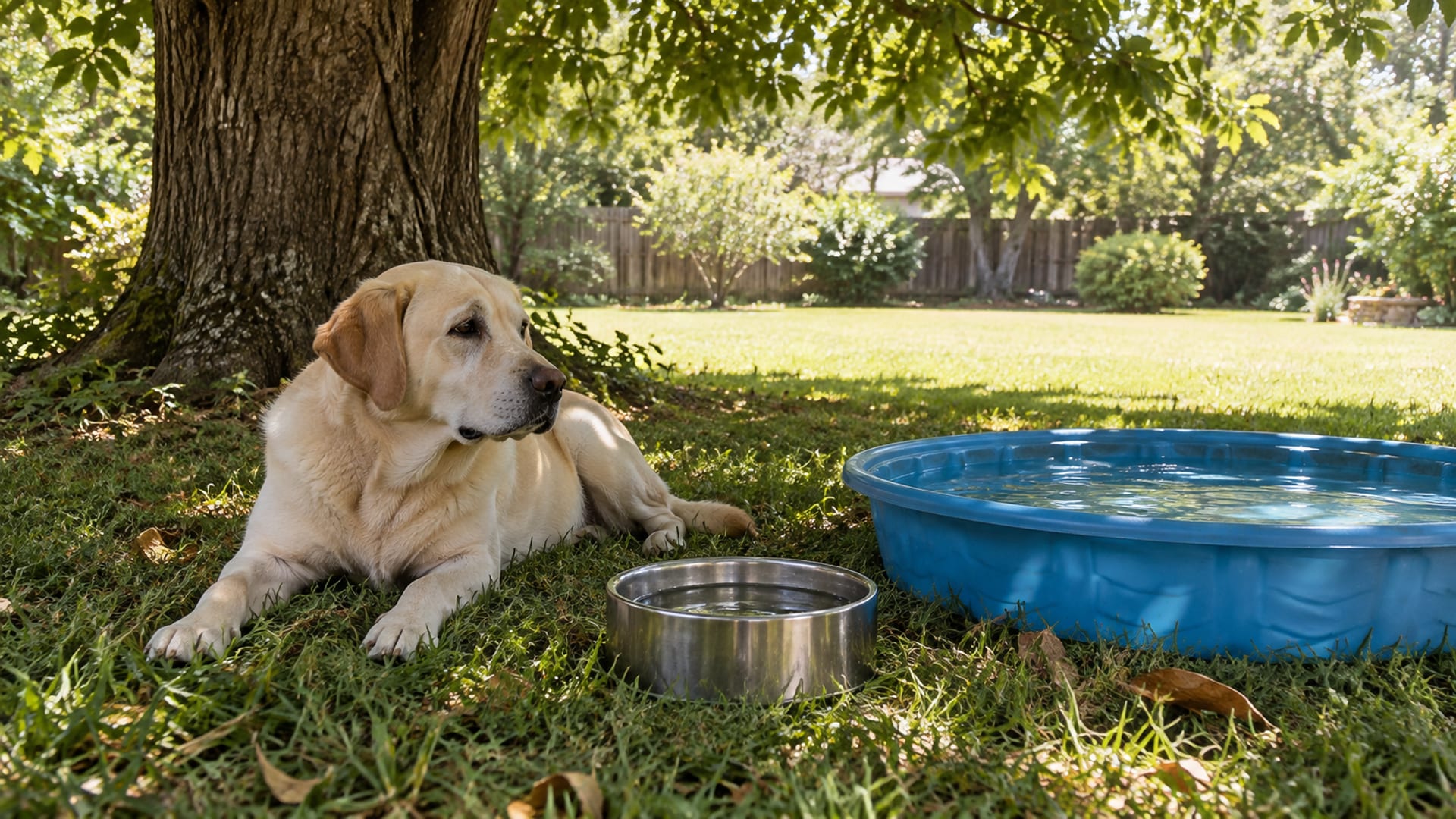
Heat safety for a dog business means changing the day before a dog overheats. Check the forecast, humidity and heat index, then move walks and outdoor play to cooler hours or replace them with indoor activity when conditions are unsafe. Give fresh water, shade, ventilation and rest, and add extra protection for puppies, senior, overweight, flat-faced and medically fragile dogs. If a dog collapses, staggers, vomits or pants hard and looks distressed, move it out of the heat, cool it with cool water, wet towels, fans or ice packs, and call an emergency veterinarian right away.
If you are running several dogs at once and worried about missing the early signs, or about how a client will take a shortened walk, you are in the right place. I'm Cal Hewitt, and I'm not a veterinarian. The first aid below follows veterinary and government guidance, linked beside each step. What follows is a plan you can start this week.
Key takeaways
Tap a card to bring it forward.
- No single temperature is safe for every dog, so check heat index, sun, pavement, exertion and each dog's risk.
- Cooler hours, shade, water and rest come first; swap in indoor activity or reschedule when conditions are unsafe.
- Rapid panting, distress, vomiting, weakness, poor coordination or collapse means emergency care now.
- Cool an overheated dog with cool water, wet towels, fans or ice packs, never a cold-water dunk, and keep going to the vet.
- Workers need water, rest and shade too, and your state, county and city set the license and zoning rules.
- Put thresholds, client permissions, emergency contacts and incident records in writing.
What should you check before the day starts, and what should change the schedule?
Start each morning with the forecast, the humidity and the heat index. The National Weather Service heat index combines air temperature and relative humidity. It assumes shade, and full sunshine can add up to 15°F to the heat burden. As an example, 96°F with 65% humidity produces a heat index of 121°F.
Those NWS ranges were written for people, so use them to read the day. They are not a veterinary cutoff for dogs. A heat index of 80°F to 90°F can bring fatigue with prolonged exposure or activity. From 90°F to 105°F, heat exhaustion, heat cramps or heatstroke are possible. At 105°F to 130°F, heat illness is likely and heatstroke is possible. At 130°F or higher, heatstroke is highly likely with continued exposure (NWS).
For dogs, the American Animal Hospital Association says to consider heatstroke whenever the temperature is above 80°F or the humidity is high. It also says to check the heat index and use early morning or late evening for activity. That is why a fixed number on its own does not work. Humidity, sun, exertion, ventilation, rest, age, body condition and health all play in. When two or three of those stack up, change the plan.
A morning routine I would use looks like this:
- Check the forecast, heat index and any local heat alerts.
- Look at your schedule and flag the dogs who need extra care.
- Decide which outings stay outdoors, which get shortened and which move indoors or to another day.
- Text the clients whose service is changing before you arrive; do not wait until you are at the door.
Tap or hover a row to highlight it.
| Data point | Figure | Source |
|---|---|---|
| Data pointHeat index example | Figure96°F air plus 65% humidity gives 121°F | SourceNWS |
| Data pointCaution range | Figure80°F to 90°F heat index, fatigue possible with prolonged exposure or activity | SourceNWS |
| Data pointDanger range | Figure105°F to 130°F heat index, heat illness likely, heatstroke possible | SourceNWS |
| Data pointSun effect | FigureFull sunshine can add up to 15°F | SourceNWS |
| Data pointDog activity caution | FigureConsider heatstroke risk above 80°F or when humidity is high | SourceAAHA |
These figures are separate tools. Do not blend them into one universal cutoff for every dog.
Which dogs need extra care, and how should walkers change a walk?
Veterinary sources name these dogs as higher risk: flat-faced (brachycephalic) breeds, puppies, seniors, overweight dogs, dogs with thick or heavy coats, dogs with breathing, heart or other medical problems, and dogs that are out of shape or not used to the heat (AAHA; Merck Veterinary Manual). Flat-faced dogs are one risk group among several. A healthy-looking dog can overheat too, and a dog that is excited may keep running past the point where it should stop. So, you make the stop call, not the dog.
Keep a risk note on each dog in your client file. It takes a minute and it tells a new staff member or a substitute walker who needs a shorter outing.
For walks, training sessions and outdoor play, these changes help:
- Move outings to early morning or late evening, as AAHA advises.
- Choose shaded routes and grass over open pavement.
- Test the pavement with the back of your hand held on the surface for several seconds. If it is too hot for your hand, it is too hot for paws. Hot pavement, asphalt, sidewalks and sand can burn paw pads (AAHA).
- Carry water and offer it, and build in rest stops in the shade.
- Keep potty breaks short when it is hot.
- Offer indoor enrichment or reschedule when the day is unsafe. Pet Sitters International lists cooler scheduling and pavement checks among its walker precautions.
The hand test helps with the surface only. It does not tell you about air temperature, humidity, sun, how long you will be out or how a particular dog is doing. If you need ideas for swapping outdoor exercise, our article on how much exercise a dog needs is a good place to start, and dog body language helps you read stress before it becomes an emergency.
How can groomers, boarding and daycare operators and drivers lower the risk?
Each kind of business has its own heat traps.
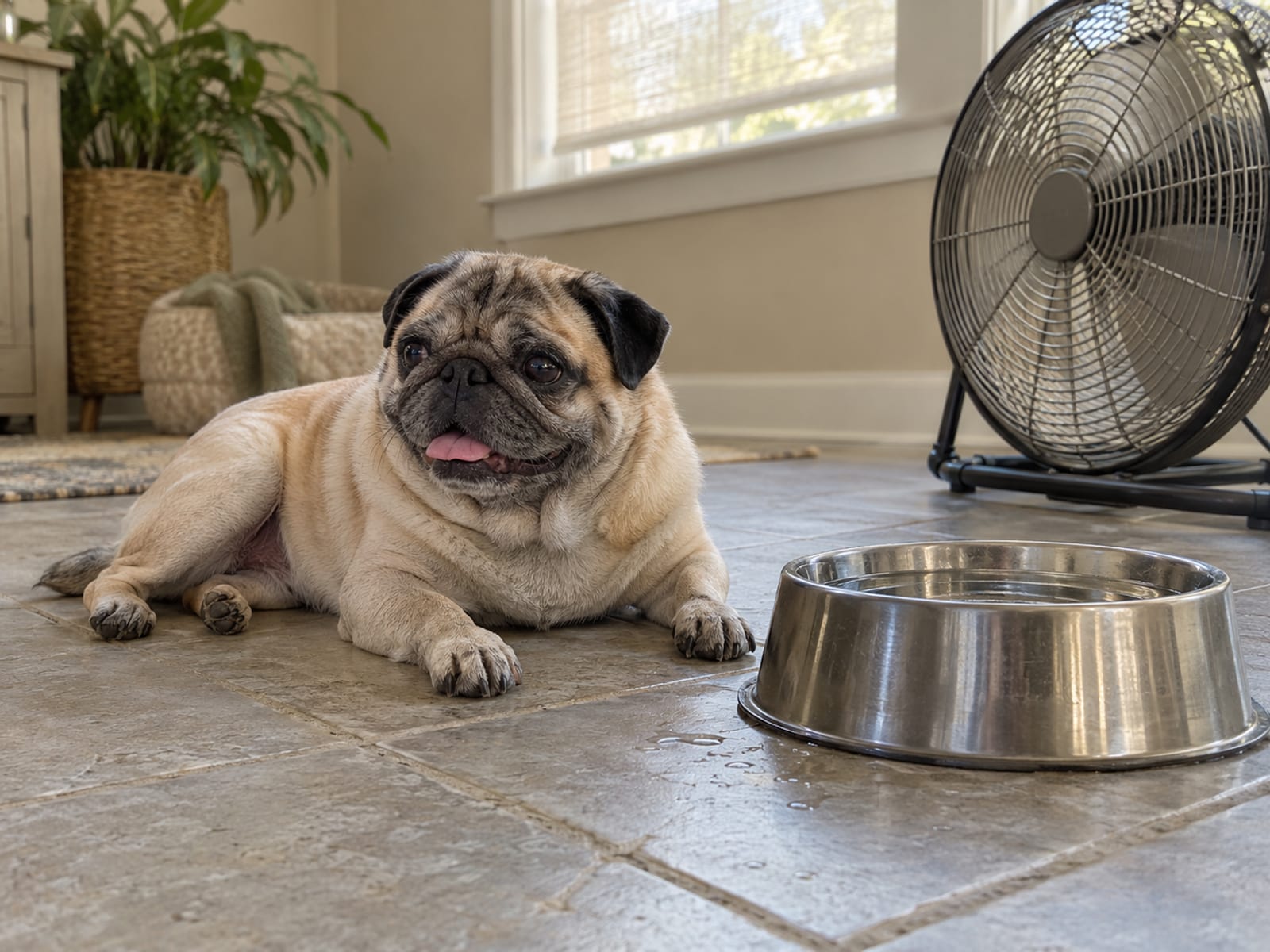
Grooming. Hot rooms, poor ventilation, long drying times, stress and equipment trouble all raise the risk. Keep the room cool and the air moving. Watch every dog under a dryer, and stop the moment one shows distress or overheating. Cage dryers need direct supervision and airflow. Follow the dryer manufacturer's instructions for settings and time, and ask a veterinarian or a qualified grooming safety educator when you are unsure. Coat management is not a universal heatstroke fix, so decide on a shave based on coat type, skin protection, matting and veterinary concerns, not on a belief that every thick coat should come off.
Boarding and daycare. Failed air conditioning, poor ventilation, crowded rooms, hard group play, too little rest and hard-to-reach water are the main problems. IBPSA tells pet owners to ask whether a facility is climate-controlled, whether someone is on site, what the provider-to-pet ratio is, whether dogs are grouped by size, age and temperament, and whether there are emergency and evacuation plans. Expect your customers to ask you those exact questions. Cut play intensity on hot days, use smaller groups, schedule cooling breaks, watch continuously and plan for a power outage or a broken AC. Test your backup plan before you need it.
Vehicles and mobile vans. Never leave a dog unattended in a parked vehicle. A cracked window does not make it safe, because a parked vehicle heats up fast (CDC en español). Air conditioning also is not a guarantee. A van can lose cooling, sit in direct sun or leave dogs exposed during loading and unloading. Keep loading time short, park in shade, keep ventilation running and check on the dogs actively.
Some operations fall under the federal Animal Welfare Act. For covered handlers, USDA APHIS requires shade while moving dogs or cats to or from a primary conveyance or terminal facility and bars exposure above 85°F for more than 45 minutes. That rule applies to covered, regulated operations and does not automatically govern every local pet-care trip, so check whether your business is covered.
What are the signs of heat stress and heatstroke, and what do staff do in an emergency?
Treat these as emergency signs, based on the Merck Veterinary Manual and the AVMA pet first aid brochure:
- Hot skin
- Rapid or heavy panting
- Excessive drooling
- Distress or agitation
- Weakness or drowsiness
- Vomiting or diarrhea
- Confusion or loss of coordination
- Collapse, seizures or unconsciousness
- Abnormally colored, dry or sticky gums
Panting alone is not always a problem, since dogs cool themselves mainly by panting and a little sweating through the paw pads. Rapid or excessive panting with any other sign on that list is a reason to act.
Staff act in this order:
- Move the dog out of the heat.
- Call the veterinarian or emergency veterinary hospital right away.
- Cool the head and body with cool water, wet towels, fans or ice packs, especially around the belly.
- Keep cooling on the way, without delaying care.
- Offer small amounts of water once the dog begins to cool.
- Do not put the dog in cold water.
- Keep going to the veterinarian even if the dog looks better.
This is first aid on the way to a professional, not a diagnosis or a treatment plan. Give no medication, and do not treat home care as a substitute for a veterinary exam. I'd call the vet first and cool the dog while someone drives. Our guide on how to do CPR on a dog covers a different emergency, and it is worth having staff trained in both.
Quick check: heat safety for dog businesses
How do you protect your workers from heat?
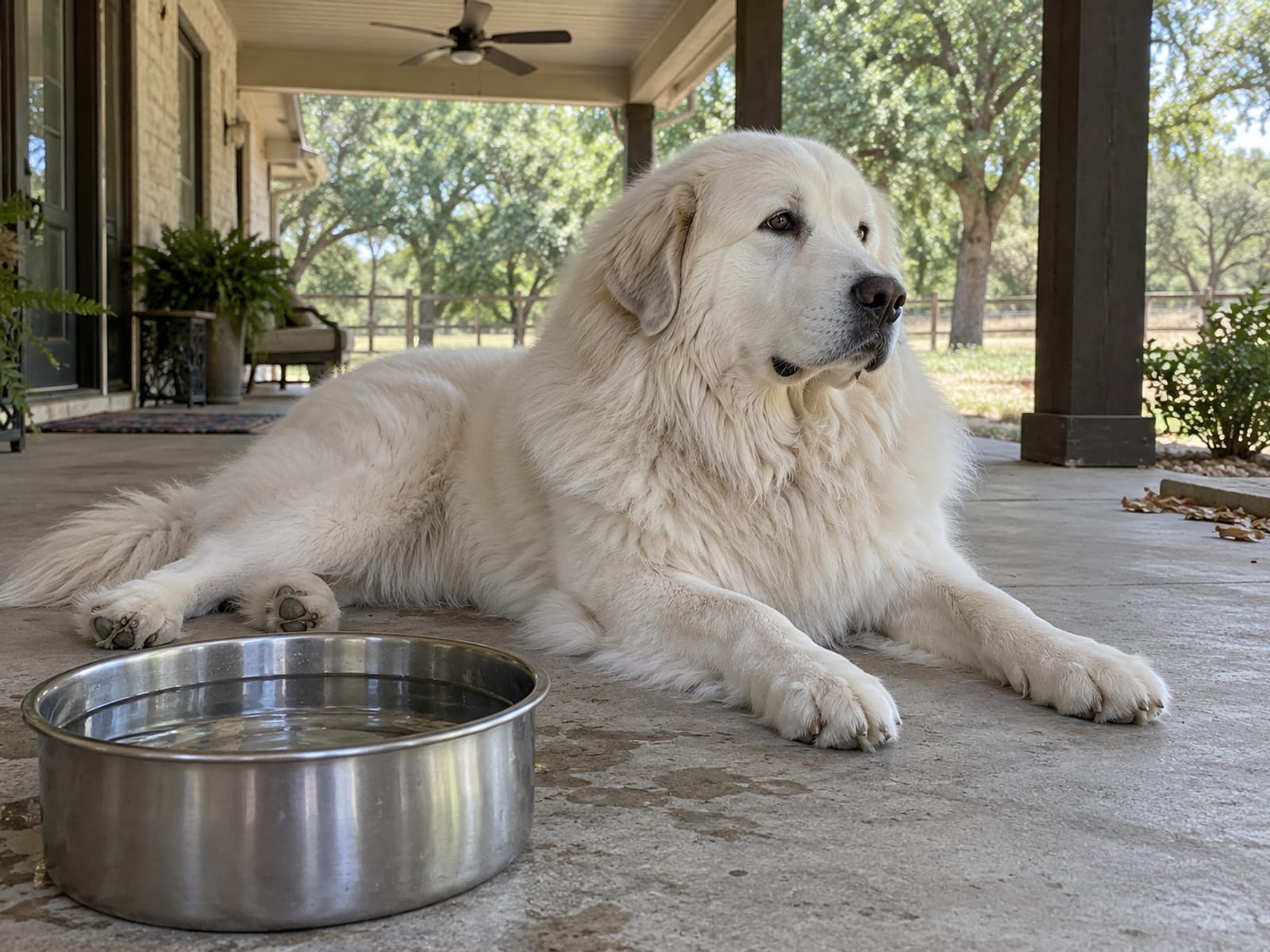
You are out there in the same heat. OSHA recommends water, rest and shade; training for supervisors and workers; shorter shifts or morning scheduling; frequent breaks away from the heat; engineering controls such as air conditioning and airflow; and acclimatization for new or returning workers. Its water, rest and shade page covers the break basics.
OSHA's heat illness guidance lists confusion, fainting, seizures, very high body temperature and red, hot, dry skin as heatstroke warning signs in workers. The response is emergency help, cooling, fluids and continuous observation. A buddy system helps, since someone who is struggling often does not notice it themselves. Build the week so that a new walker does not start with the hottest route on the hottest day.
Which licenses, permits and zoning rules apply, and who decides?
It depends on where you are and what you do. The SBA says most small businesses need a combination of federal, state and local licenses or permits, and it states: "The requirements and fees vary based on your business activities, location, and government rules." A walker who visits clients' homes can face different requirements from a business that houses dogs overnight, runs daycare, grooms on site or moves animals.
Two examples, and they are examples only, not national rules:
- Pennsylvania requires a kennel license to keep or operate a kennel, with separate licenses for each type and location. Boarding-kennel fees run $125 per year for one to 10 dogs, $200 for 11 to 25 and $325 for 26 or more, per the Pennsylvania Department of Agriculture and Dog Law.
- Massachusetts requires a person maintaining a kennel to hold a kennel license. The city or town issues it, sets the period and fee, and requires inspection by an animal-control officer before the first license or a renewal. State law also addresses commercial boarding and training kennels, including daycare (Massachusetts).
Ask your local offices these questions: Is my activity classified as daycare, boarding, training kennel, grooming, pet sitting or a home occupation? Do I need a kennel license, a business license or a fictitious-name registration? Is my address zoned for it? Are there limits on dog numbers, noise, parking, sanitation or fencing? Do I need a home-occupation permit? Are building, fire or ventilation inspections required? Are mobile grooming or transport vehicles regulated? What are the renewal dates and fees?
The people to call are the city or town clerk, planning and zoning, animal control, the fire marshal and building department, your state Secretary of State, the state revenue office and the state agriculture or animal-care agency. For insurance, ask your agent whether your policy covers heat-related injury to a dog and heat illness in an employee; our article on dog business insurance in Texas explains the kinds of questions to bring. For taxes, the IRS says "You may choose any recordkeeping system suited to your business that clearly shows your income and expenses," so keep receipts for cooling equipment, training and vehicle costs, and ask a tax professional how to treat them.
What goes into a written heat plan?
A verbal policy is hard to apply the same way twice. Write it down. Pet Sitters International's standards call for documented contingency plans, emergency-care authorization, first-aid and CPR training, and clear communication with clients and team. A usable plan includes:
- Who checks the forecast, heat index, humidity and local alerts, and when.
- Thresholds that trigger a shorter walk, an indoor swap, reduced play or a cancellation.
- Dog restrictions for puppies, seniors, overweight, flat-faced and medically fragile dogs.
- Water, shade and cooling for every service, plus pavement checks and route changes.
- Grooming rooms: ventilation, room temperature, supervised dryers, breaks.
- Playgroups: size, intensity and rest periods.
- Vehicles: loading, cooling and monitoring.
- Outage steps: what to do if the AC fails or the power goes out.
- Contacts: the emergency veterinary hospital, the owner and a backup contact.
- Client permissions: authorization for emergency care and for schedule changes.
- Staff roles, buddy monitoring and an incident record, with review dates and equipment checks.
- Spanish-language instructions for clients who need them.
Your clients will push back less when the rule is on paper before the hot day. A short note works: "Heat index is high today, so Biscuit will get a short, shaded potty break and an indoor play session instead of the long walk." Agree on the refund or reschedule terms ahead of time.
After any heat event, record the date, the conditions, which dog, what you saw, what you did, who you called and when. Those notes protect the dogs and help you improve the plan.
Questions about heat safety for dog businesses
How hot is too hot to walk a dog?
There is no single safe temperature for every dog. Check humidity, heat index, sun, pavement, how hard the dog will work, how long you will be out and the dog's risk factors, then shorten the outing or go indoors when conditions are dangerous.
Is pavement safe if the air feels comfortable?
Not necessarily. Test it with the back of your hand for several seconds, and choose grass or shade if the surface is too hot.
Are flat-faced dogs the only dogs at risk?
No. Flat-faced dogs are at higher risk, but any dog can overheat. Take extra care with puppies, seniors, overweight dogs and medically fragile dogs.
What does OSHA recommend for workers?
OSHA emphasizes water, rest and shade, plus training, acclimatization, monitoring and emergency procedures. Shorter or earlier shifts help too.
Your next step this week
Pick one day and write a one-page heat plan: your thresholds, your emergency veterinarian's number, your client permission text and your incident form. Then call your city or county offices about licensing and zoning. If you need an emergency vet or want to see local pros, use the DogServ directory. If you run a business and want to be found, you can claim your listing there. For more on setting up your business, see how to start a dog walking, grooming or boarding business in Texas, and our Texas heat safety guide for the state view.
Sources
- American Animal Hospital Association: American Animal Hospital Association
- American Veterinary Medical Association: AVMA pet first aid brochure
- aphis.usda.gov: USDA APHIS
- cdc.gov: CDC en español
- ibpsa.com: IBPSA
- irs.gov: IRS
- mass.gov: Massachusetts
- Merck Veterinary Manual: Merck Veterinary Manual
- osha.gov: OSHA's heat illness guidance
- osha.gov: OSHA
- osha.gov: water, rest and shade page
- pa.gov: Dog Law
- pa.gov: Pennsylvania Department of Agriculture
- petsit.com: Pet Sitters International's standards
- petsit.com: Pet Sitters International
- sba.gov: SBA
- weather.gov: National Weather Service heat index
- weather.gov: NWS
- weather.gov: NWS