

Parvo in Puppies: Symptoms, Treatment Costs and What to Do Now
By Cal Hewitt · Published , updated
Health
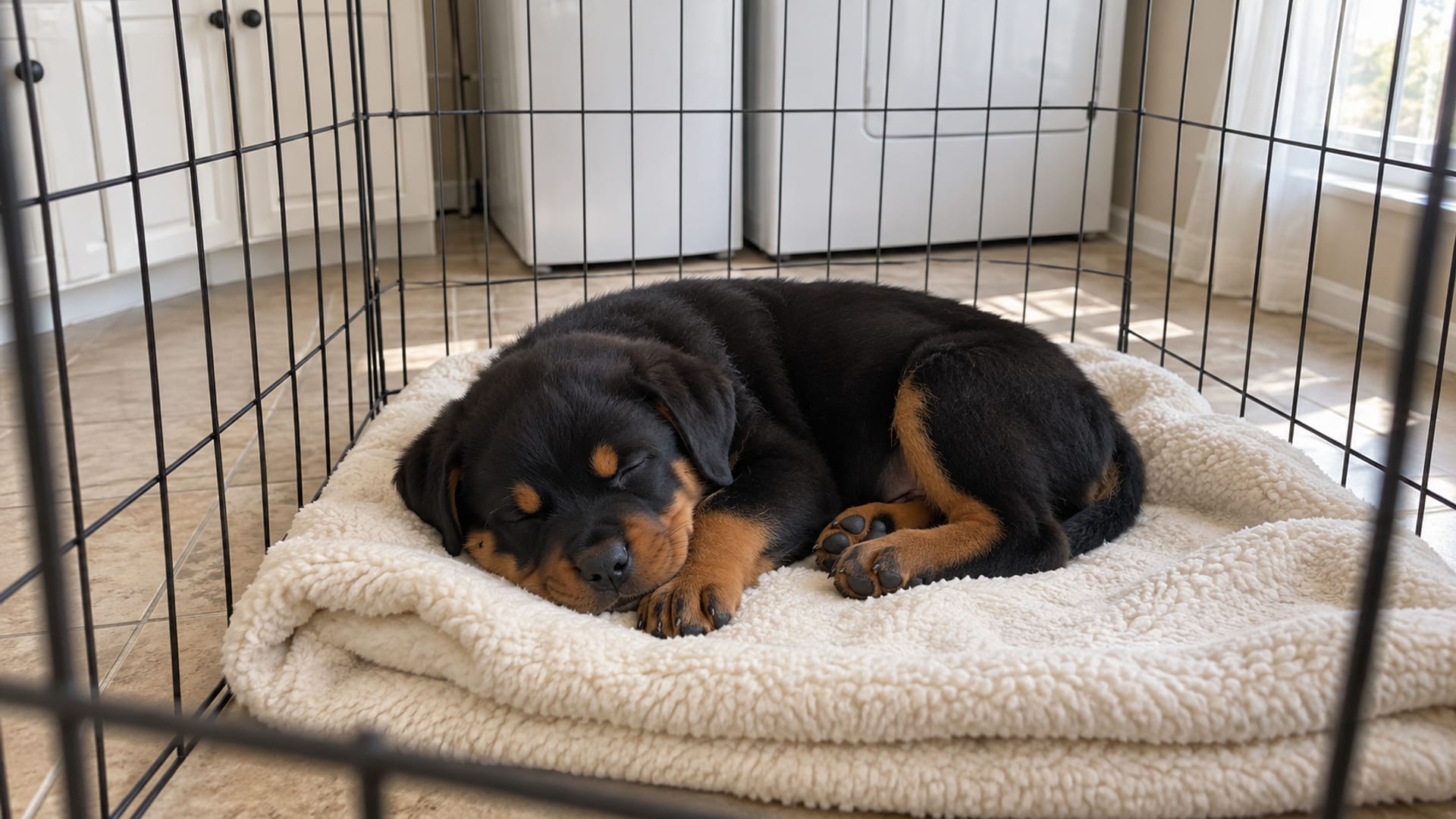
If your puppy is vomiting, has severe or bloody diarrhea, is unusually tired, won't eat, or was around a dog with parvo, call a veterinarian or emergency clinic now and keep the puppy away from every other dog. Tell the clinic that parvo is possible before you walk in. Parvo can cause rapid dehydration, sepsis and death, and the American Veterinary Medical Association (AVMA) says most deaths happen within 48 to 72 hours after signs begin. Treatment is supportive care from a veterinarian.
If you're reading this with a sick puppy next to you, you may be scared, and you may be worried about the bill too. I'm Cal, and I'm not a vet. What follows is what veterinary sources say, laid out in the order you'll need it. Make the call first, then come back.
Key takeaways
Tap a card to bring it forward.
- Call a vet or emergency clinic now for vomiting, severe or bloody diarrhea, lethargy, refusal to eat, or a known parvo exposure.
- Phone ahead and say "possible parvo" so the clinic can bring your puppy in through isolation.
- Treatment is supportive veterinary care; home care only follows a plan your veterinarian gives you.
- Ask for a written estimate, but don't let cost delay the first call.
- One or two early vaccines don't make a puppy safe, and a negative test doesn't rule parvo out.
- Clean indoor surfaces first, then use 1 part bleach to about 30 parts water with at least 10 minutes of wet contact.
Which signs or exposures mean you call a vet today?
The early signs of parvo are often quiet ones. According to the AVMA, they include lethargy, loss of appetite, fever or a low body temperature, belly pain or bloating, vomiting, and severe diarrhea that may be bloody. A puppy that seems flat and skips a meal may be at the start of something serious, so don't wait for the diarrhea to turn red before you pick up the phone. Bloody diarrhea is common with parvo, but it isn't required.
Call a veterinarian or emergency clinic right now if your puppy has any of these:
- Repeated vomiting, or can't keep water down
- Bloody or large amounts of diarrhea
- Collapse, severe weakness or confusion
- Pale or gray gums
- A painful or swollen belly
- Refusal to eat in a young puppy
- Signs of dehydration, fever, a low temperature, trouble breathing, or fast decline
That list comes from AVMA and Merck Veterinary Manual guidance. Vomiting and diarrhea can dry a small puppy out fast, and parvo also damages the gut and lowers the white blood cells that fight infection, which is how it leads to sepsis and shock.
Book a visit as soon as possible, even if your puppy looks fine, when it was recently around a sick dog or a contaminated area, hasn't finished its vaccines, or just came from a shelter or breeder. Merck notes that signs commonly show up about 3 to 7 days after infection, and a dog can shed the virus before it looks sick.
One honest limit: these signs aren't unique to parvo. Parasites, a swallowed object, poisoning, pancreatitis and distemper can look similar, according to Cornell University's College of Veterinary Medicine and Merck. Only an exam and testing can sort that out. If your dog has had a soft stool before and was fine, that history doesn't tell you this episode is harmless. A single soft stool in a puppy that is bright, eating, drinking and well hydrated may sometimes be watched, but only under your veterinarian's guidance.
How do you isolate your puppy and get it to the clinic safely?
Start by separating the puppy from every other dog in the house. Keep it off shared yards, sidewalks, bedding, bowls and crates. Parvo travels in feces and on anything that touches it, so a quiet room with an easy-to-clean floor is better than the living room rug.
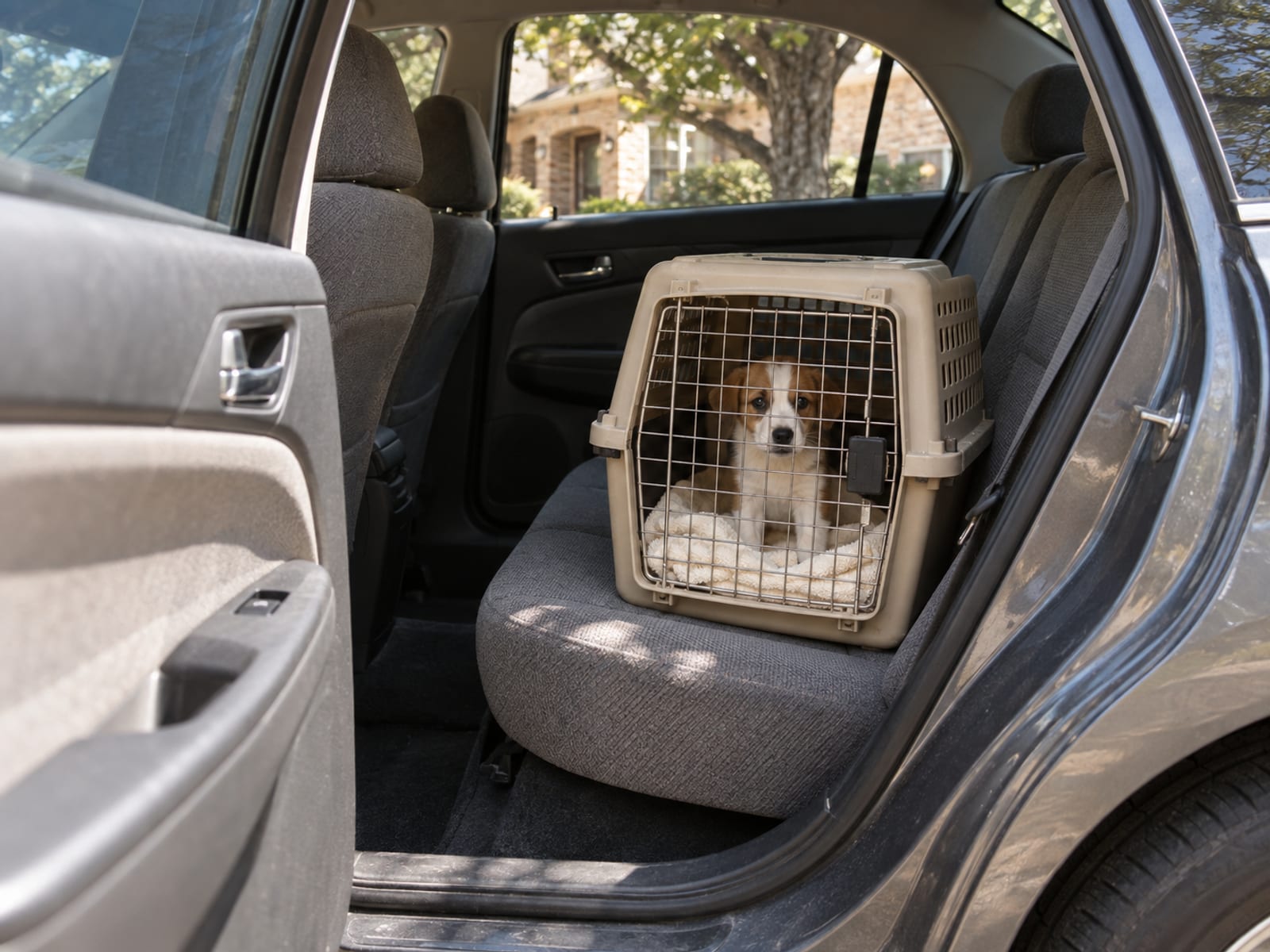
Next, call before you drive over. The AVMA and Cornell both advise saying that parvo is possible, because the clinic may want you to use a side door, wait in the car, or go straight to an isolation room. The same goes for any place dogs gather. Please don't bring a puppy that might have parvo to a dog park, groomer, daycare, boarding kennel, shelter or ordinary waiting room without calling first.
While you're on the phone or getting ready, jot down a few facts. Write when the vomiting, diarrhea, low appetite, tiredness or possible exposure started. Grab your puppy's vaccination records. If the clinic asks for a fresh stool sample, bring one in a sealed bag. Then follow their instructions on transport, food, water and anything else.
A few things can make matters worse. Veterinary sources warn against giving human anti-diarrheal medicine, leftover antibiotics, pain medicine, anti-nausea medicine or home remedies unless a veterinarian prescribes them. Don't force food or water into a puppy that's vomiting. Don't give fluids under the skin or by injection unless a veterinarian has examined the puppy, prescribed them and shown you how.
How is parvo treated, in the hospital and at home?
No routine drug kills the parvovirus directly. Treatment is supportive, which means the veterinary team keeps the puppy alive and stable while its body fights the virus. According to Merck and the AVMA, that care can include:
- IV fluids and electrolyte correction
- Anti-vomiting medication
- Nutrition support
- Checking blood sugar and electrolytes
- Keeping body temperature up
- Pain control
- Antibiotics when a secondary bacterial infection or sepsis is a concern
- Round-the-clock nursing
Severe cases generally need hospital care in isolation. How a puppy does depends on its age, its size and how sick it is when care begins, according to Merck and Cornell. Low blood sugar, very low white-blood-cell counts, other illnesses and delayed treatment can make things harder, and your veterinarian is the one who can judge that for your puppy. Nobody can promise an outcome, but early treatment gives a puppy its best chance.
Some veterinarians offer outpatient care for selected dogs. That option is for a puppy that is stable enough, can be watched closely, and has an owner who can return for rechecks and do the prescribed care at home. It is still veterinary treatment, planned and supervised by the clinic.
You may have seen videos online of a puppy that pulled through on a home remedy, next to posts from owners whose puppies didn't make it. If you tried something at home first, you did what you could with what you knew. What the veterinary sources are clear about is this: parvo needs a veterinarian now, and any care at home should follow the outpatient plan your veterinarian gives you.
What might treatment cost, and where can you find help paying?
Costs swing widely by location, how sick the puppy is, how long it stays in the hospital, and which tests it needs. PetMD reported in 2024 that outpatient care may start at several hundred dollars, severe hospital stays may run several thousand, and an average can go over $5,000. That's a consumer estimate, not a price list. For a sense of what goes into a hospital bill, a 2021 fee example from the Canadian Veterinary Medical Association came to CAD $2,815.50 before medications and markup for four full days, covering the exam, quarantine, lab work, X-rays, IV setup, fluids and injections. It's Canadian and several years old, so it isn't a current US price.
Ask the clinic for a written estimate. A good one covers the exam, fecal testing, bloodwork, fluids, medications, isolation, hospital days and possible complications. Asking is normal, and it helps you plan. Still, please make the first call before you've figured out the money, because early care improves the chance of survival.
If cost is the hard part, ask the treating clinic about payment plans and whether a veterinary teaching hospital nearby takes cases. Local shelters, humane societies and nonprofit veterinary clinics sometimes have funds or know who does. National aid groups such as RedRover Relief and The Pet Fund accept applications, though their money is limited, they have eligibility rules, and answers take time. In Texas, Texas A&M's veterinary college has described outreach clinics in underserved rural communities, and its teaching hospital in College Station offers emergency care; call ahead and mention suspected parvo. Keep the vet appointment moving while you apply for help.
For low-cost routine vaccines later, check shelters, nonprofit and mobile vaccine clinics, and call before you go.
What do vaccines and a negative test change?
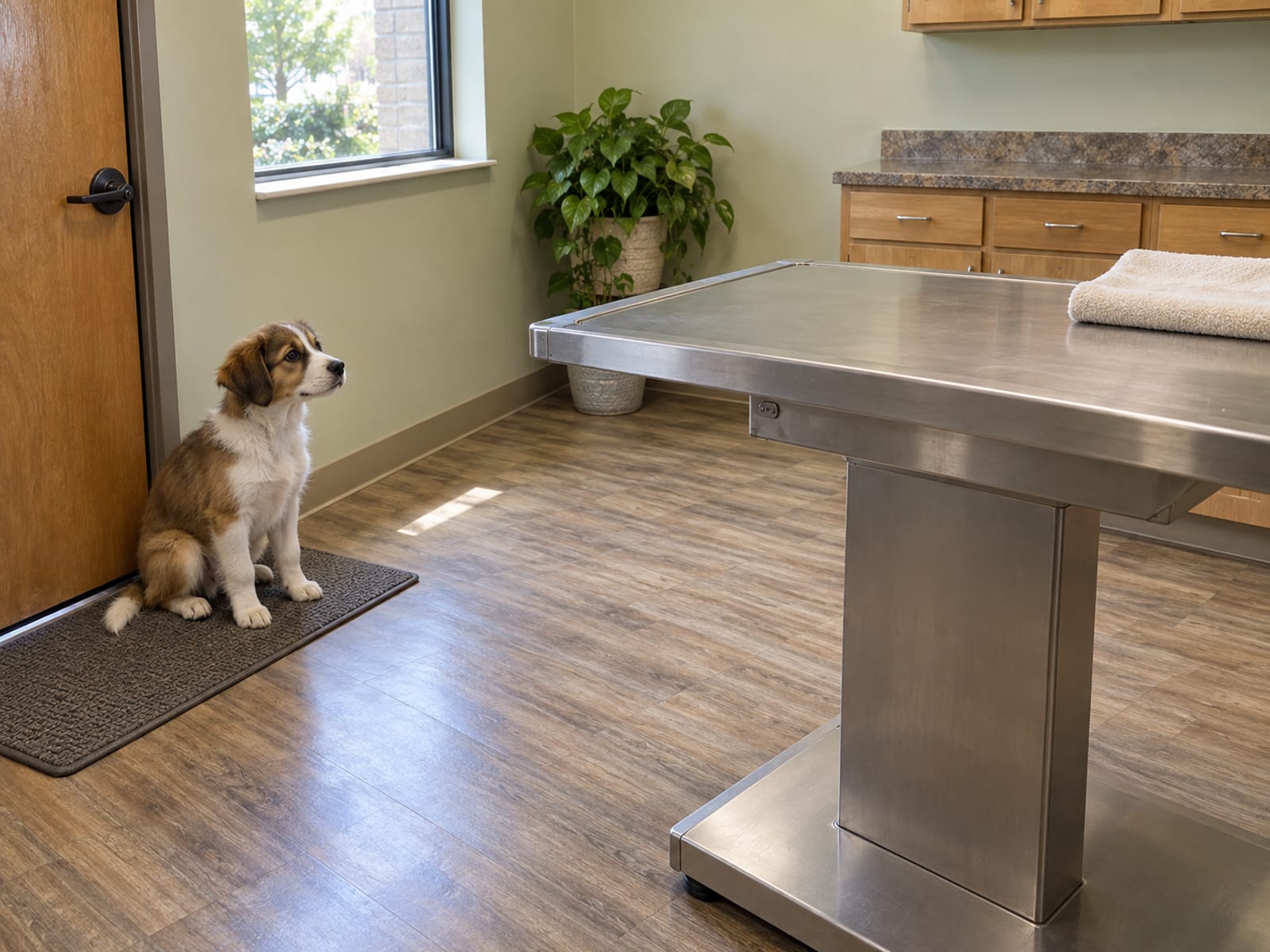
Vaccines are the main protection against parvo, but timing matters. AAHA lists parvo as a core vaccine for all dogs. For puppies, it recommends at least three doses of a combination vaccine between 6 and 16 weeks of age, spaced 2 to 4 weeks apart, with the last puppy dose at 16 weeks or later. In high-risk areas, vaccines may continue to 18 to 20 weeks. A follow-up dose comes within one year after the puppy series, then every three years.
Why so many shots? A puppy gets antibodies from its mother, and AAHA says those can linger until 13 to 15 weeks or longer. While they're around, they can block an early vaccine from working. So, a puppy that has had one or two shots is not reliably protected. If your puppy had one parvo shot and was exposed, treat that as an exposure and call your veterinarian.
The WSAVA 2024 guidelines add one more step: either an antibody test at least four weeks after the last puppy shot, or an extra dose at or shortly after 26 weeks, because a small share of puppies don't respond well enough. Vaccines lower the risk a great deal, but no schedule protects every dog, and exposure is never harmless.
A negative test is helpful, but it isn't the last word. Merck notes that fecal tests can miss parvo early in the illness, during heavy diarrhea, or later as shedding drops. If your puppy still looks sick, stay in touch with your veterinarian.
How do you protect other dogs and clean your home?
Parvo doesn't need dog-to-dog contact. It spreads through infected feces and through hands, clothes, shoes, crates, bowls, collars, leashes and even a dog's feet or coat, according to Cornell. A tiny smear of stool can be enough. Keep your other dogs in a separate space, give them their own bowls and bedding, and wash your hands and change your clothes and shoes after handling the sick puppy or its things. A fully vaccinated adult dog is generally at lower risk than a puppy, but ask your veterinarian about any dog in the house that isn't fully vaccinated.
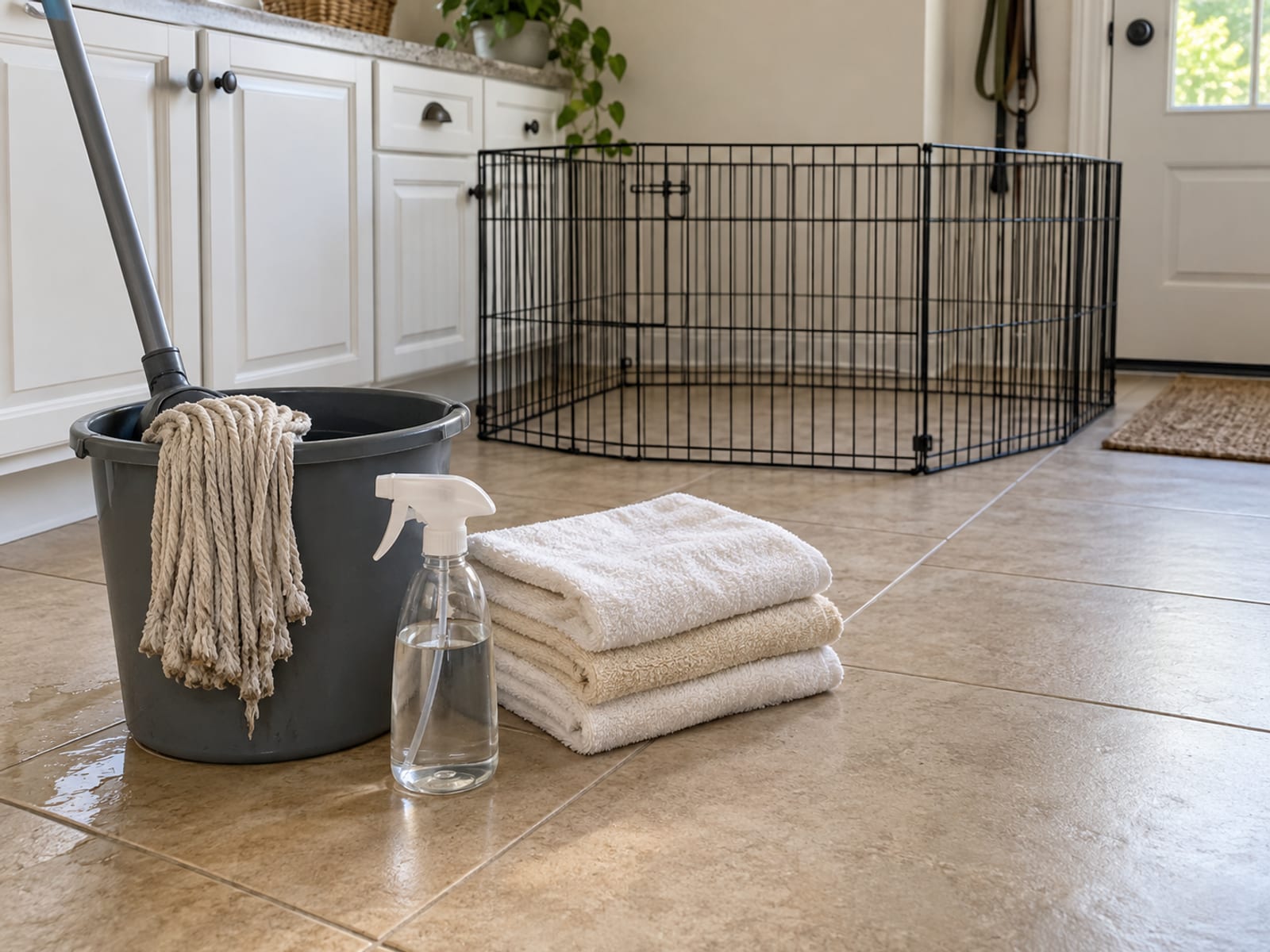
For indoor cleaning, Cornell recommends this method:
- Pick up all feces, vomit, food and dirt first. Bleach doesn't work well on surfaces still covered in organic material.
- Mix 1 part household bleach with about 30 parts water.
- Apply it to floors, crates, bowls and other washable surfaces, or soak bedding and bowls in it.
- Keep the surface wet for at least 10 minutes.
- Let it dry with good airflow, and keep pets away until it's dry.
Never mix bleach with ammonia, acids or other cleaners. Follow the product label, and ask your veterinarian about alternatives for materials bleach would damage. Don't assume that ordinary household cleaners, alcohol or common disinfectants kill parvo.
The yard is harder. Cornell says parvo can survive for months to years without disinfection or direct sun, and grass, soil, gravel and porous concrete are much tougher to clean than a kitchen floor. Remove feces right away, keep puppies and unvaccinated dogs off that area, let sunlight reach it where you can, and ask your veterinarian for advice about your space. Spraying a lawn product won't make a yard fully safe.
After recovery: how long to keep your dog apart, and when a new puppy can come home
A puppy that feels better can still spread the virus. VCA Animal Hospitals says shedding continues for about 14 days after signs clear up. Your treating veterinarian should set the actual release date. Until then, keep your recovered dog away from puppies and any dog that isn't fully vaccinated, and keep following the clinic's isolation and cleaning instructions.
If your puppy didn't survive, I'm so sorry. When you're ready, the cleaning steps above are the most useful thing you can do for the next dog. No veterinary source gives a waiting period that guarantees a home or yard is safe for a new puppy, since parvo can last months to years in the environment. The answer depends on how much of your home was contaminated, which surfaces you can disinfect, your outdoor conditions, and the new dog's vaccine status. Clean thoroughly, and talk with your veterinarian before bringing a new puppy home. An older, fully vaccinated dog may be at lower risk, but vaccination is not a reason to skip the cleanup.
Questions puppy owners ask about parvo
What are the very first signs of parvo in a puppy?
The earliest signs are often tiredness and a drop in appetite, sometimes with fever or a low temperature, before vomiting and diarrhea start, per the AVMA. Signs usually appear about 3 to 7 days after infection. A puppy can shed the virus before you notice anything.
Can a puppy survive parvo?
Yes, many do with treatment. Merck reports survival above 90% for dogs treated aggressively in the hospital, and the AVMA says survival can approach 90% with proper treatment, though death can still happen. No reliable figure exists for untreated puppies, but the risk of death without care is high.
How likely is a puppy to get parvo?
Any dog can catch it, but risk is highest in puppies under four months, dogs with missing or incomplete vaccines, shelter dogs and dogs from breeding kennels, according to Cornell. Contact with an infected dog or a contaminated place raises the risk further. Vaccinated dogs can occasionally be infected, as AAHA notes.
How is parvo diagnosed and treated in puppies?
A veterinarian examines the puppy and usually runs a fecal test and bloodwork, keeping in mind that an early test can miss parvo. Treatment supports the body with fluids, anti-vomiting medicine, nutrition and nursing care while the immune system clears the virus. Severe cases stay in the hospital in isolation.
How do I care for a puppy with parvo at home?
Only under a veterinarian's outpatient plan, for a puppy the vet judges stable enough. In a 2025 report from ASPCApro, 73 of 98 dogs with known outcomes (74%) survived one subsidized Florida clinic's outpatient protocol. That result applied to that clinic's program and doesn't carry over to every dog or every home plan.
Your next step
If your puppy has any of the signs above, or was exposed, call your veterinarian or the nearest emergency clinic now, say that parvo is possible, and keep your puppy away from other dogs until they tell you what to do. If you need a clinic, DogServ's emergency veterinarian and veterinarian directory listings are the place to start. Once your puppy is in care, come back to the cleaning and isolation steps here.
Sources
- American Animal Hospital Association: AAHA
- American Veterinary Medical Association: American Veterinary Medical Association (AVMA)
- ASPCApro: ASPCApro
- canadianveterinarians.net: Canadian Veterinary Medical Association
- Cornell University College of Veterinary Medicine: Cornell University's College of Veterinary Medicine
- Merck Veterinary Manual: Merck Veterinary Manual
- PetMD: PetMD
- redrover.org: RedRover Relief
- Texas A&M College of Veterinary Medicine: teaching hospital
- Texas A&M College of Veterinary Medicine: Texas A&M's veterinary college
- thepetfund.com: The Pet Fund
- VCA Animal Hospitals: VCA Animal Hospitals
- wsava.org: WSAVA 2024 guidelines