

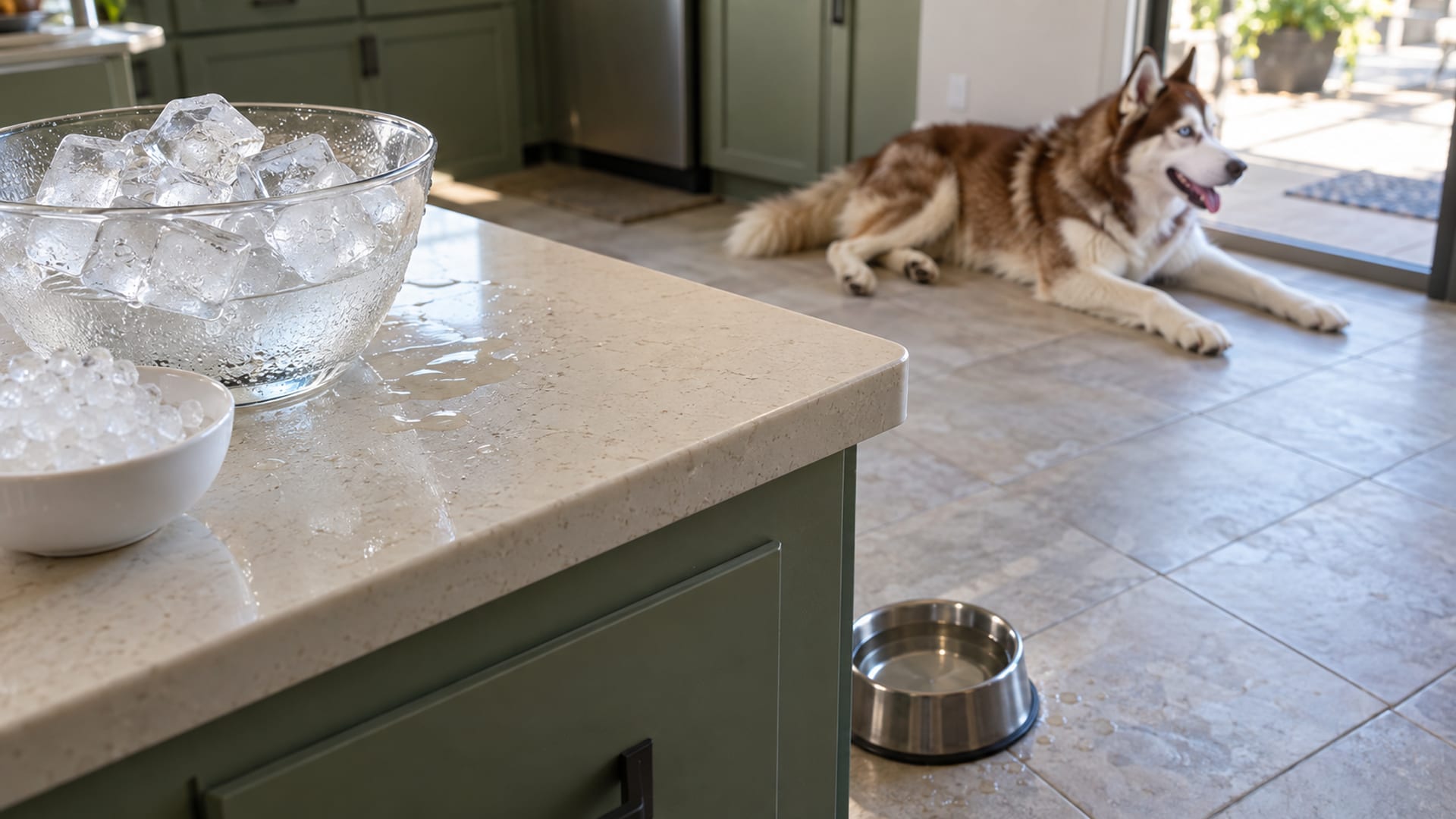
Yes. Plain ice made from drinking water is safe for most dogs in moderation, according to the American Kennel Club. It is not a poison. The risks are about size and teeth: a cube that is too big can be swallowed whole or choke a dog, and chewing hard ice can chip or break a tooth.
If your dog just crunched or gulped a cube and is breathing easily and acting normal, you do not need to do anything. If they are coughing, gagging, pawing at the mouth or struggling to breathe, get to a vet now. If what they ate was ice melt from the sidewalk, a flavored frozen treat or a freezer gel pack, skip ahead to the section on look-alikes.
Key takeaways
Tap a card to bring it forward.
- Plain water ice is safe for most dogs in moderation.
- Match the piece to your dog's mouth, and stay close while they chew.
- Hard cubes can chip or break teeth; shaved ice is gentler for seniors and dogs with weak teeth.
- Ice does not treat heatstroke. A dog showing heatstroke signs needs gradual cooling and a vet.
- Ice melt, snow from the road, and flavored pops are different products with their own risks.
My dog ate ice: what to watch for
For plain ice, the question is whether it went down the right way. The Merck Veterinary Manual lists the signs of choking as coughing, drooling, gagging, pawing at the mouth, or holding the mouth open while looking agitated.
Tap or hover a row to highlight it.
| What you see | What to do |
|---|---|
| What you seeCrunched or swallowed ice, breathing normally, acting like themselves | What to doNothing. Offer fresh water as usual. |
| What you seeCoughing or gagging that settles within moments | What to doStay with your dog and watch their breathing. Call your vet if it comes back. |
| What you seeGagging that will not stop, pawing at the mouth, struggling to breathe, or collapse | What to doGo to a vet or emergency clinic now. |
| What you seeBleeding from the mouth, a tooth that looks cracked, or chewing on one side | What to doCall your vet to have the tooth checked. |
| What you seeIt was ice melt, a flavored pop, a gel pack or unknown frozen food | What to doCall your vet or a poison line with the label in hand. |
Ice melts quickly, so a cube that slips down whole usually softens on the way. The larger the cube and the smaller the dog, the less room there is for error.
How to give ice safely
The AKC does not give a number of cubes by dog size. It recommends moderation, supervision, and a piece that suits your dog's jaw and chewing style. In practice that means:
- Small dogs and gulpers: ice chips or shaved ice, never a full-size cube they could swallow whole.
- Large dogs: a regular cube is fine for most, as long as you are watching.
- Seniors and dogs with worn, cracked or weak teeth: shaved ice, which the AKC suggests to take the strain off the teeth.
- Teething puppies: small pieces, with you in the room.
- A few cubes in the water bowl: fine on a hot day. Keep fresh water available all the time; ice does not replace it.
Freeze plain water only. Ice made with broth, juice or yogurt is a different food, and the ingredients decide whether it is safe.
Ice on a hot day, and heatstroke
Ice can make a warm dog more comfortable, but it does not treat heatstroke. The AKC says a dog showing heatstroke signs needs gradual cooling and a vet, and Merck treats heatstroke as an emergency. Heavy panting, drooling, weakness, stumbling, vomiting or collapse on a hot day means you should start cooling your dog with cool water, head for the nearest vet, and call on the way.
"My dog has chewed ice cubes for years"
Many dogs do, and that is real for your dog. Plain ice has no poison in it, so there is nothing to build up over time. What changes from one day to the next is the risk from the cube itself. A bigger cube than usual, a dog who grabs it and swallows fast, a tooth that has worn down with age, or a smaller dog in the house can turn a routine treat into a choking scare or a broken tooth. Keep picking a size that fits, and keep watching.
Ice melt, snow, pops and other look-alikes
- Ice melt, rock salt and sidewalk de-icer: chemical products. Pet Poison Helpline says they can contain sodium chloride, potassium chloride, magnesium chloride, calcium salts or urea, which can cause vomiting, diarrhea and, in large amounts, more serious illness. It reports that about 4 grams of sodium chloride per kilogram of body weight can be lethal to dogs. Call your vet or a poison line with the bag in hand.
- Snow and outdoor ice: it can carry salt, de-icer, dirt or animal waste. Clean snow from your own yard is a different case from a road-side slush pile.
- Flavored ice, popsicles and frozen desserts: read the label. The AKC's guide to frozen treats warns about xylitol, chocolate, macadamia nuts, sugar, fat and dairy, and about popsicle sticks. Can dogs eat ice cream? covers the dessert side.
- Freezer gel packs and ice packs: not food. Call your vet if your dog chewed one open.
- "Ice" as a street name for methamphetamine: a serious poisoning. Call a vet or poison line now if there is any chance your dog got into drugs.
Check what you learned
Quick check
Questions about dogs and ice
Are ice cubes bad for dogs' teeth?
They can be. Hard ice can chip or fracture teeth, especially in dogs whose teeth are already weak, according to the AKC. Shaved ice or small chips put less strain on the teeth.
Can ice cubes cause bloat in dogs?
Veterinary Partner says ice and ice water do not cause bloat. Gulping down a large amount of water very fast is a separate concern, and a few cubes in the bowl can slow a fast drinker.
Can puppies have ice cubes?
Yes, in small pieces while you watch. Teething puppies often like chewing on something cold. Skip full-size cubes for small puppies, who could swallow them whole.
Can dogs eat snow?
A mouthful of clean snow is frozen water. Snow near roads, driveways and sidewalks can hold salt and de-icer, so keep your dog from eating it on walks.
Is ice water bad for dogs?
Cool or iced water is fine for most dogs. Keep fresh water out all day, and add a few cubes on hot days if your dog likes them.
Sources
Checked September 25, 2026.
- American Kennel Club, Can Dogs Have Ice Cubes?
- American Kennel Club, Vet-Approved Frozen Summer Treats for Dogs
- Merck Veterinary Manual, What to Do in a Dog or Cat Emergency
- Pet Poison Helpline, Ice Melts Safe for Dogs
- Veterinary Partner, Ice or Ice Water Does Not Cause Bloat in Dogs