

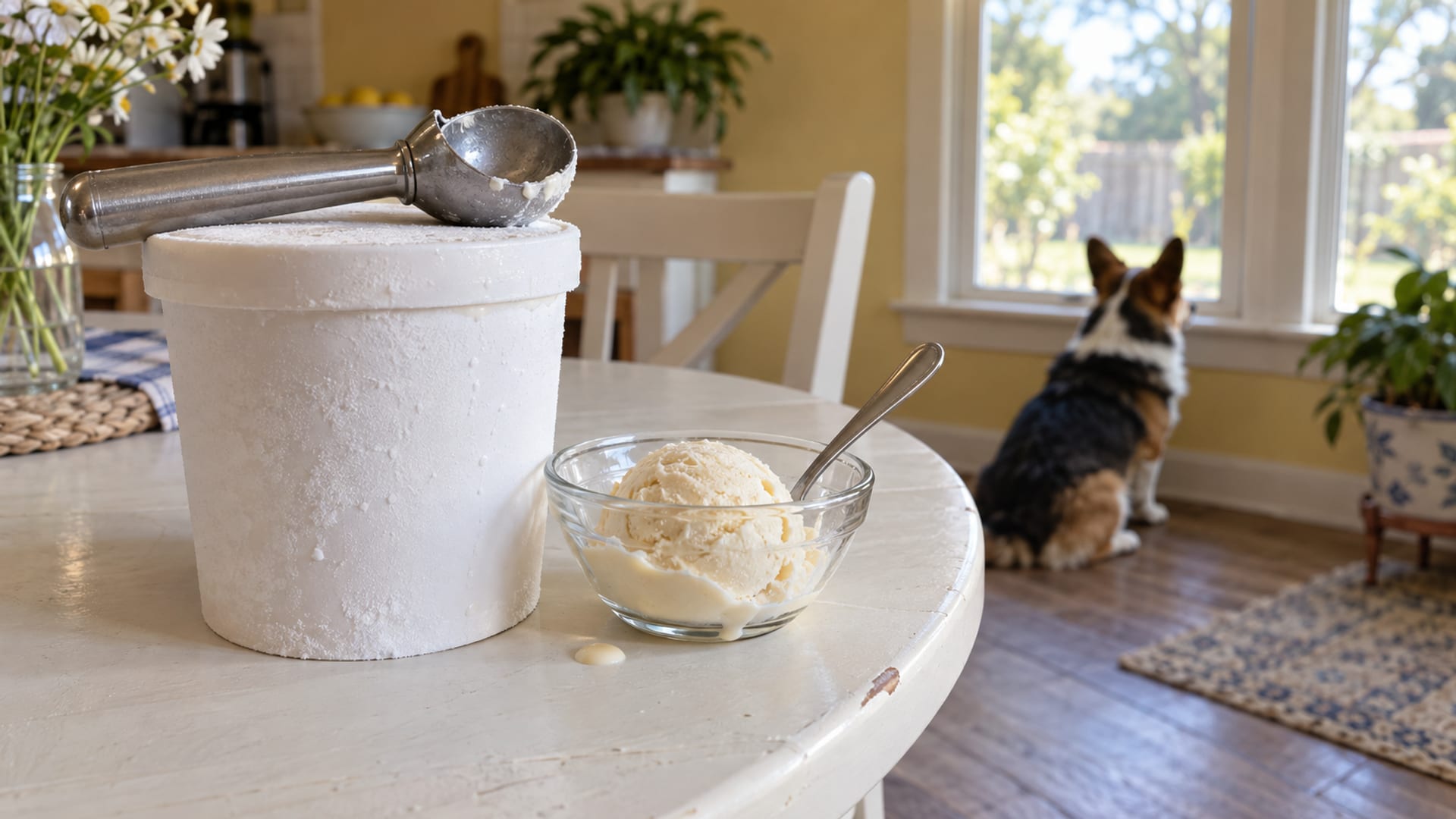
It is better not to share it. The American Kennel Club advises against ice cream because many adult dogs do not digest lactose well, and it is loaded with sugar and fat. A small amount of plain ice cream is more likely to cause gas or a loose stool than a poisoning.
The flavor is what decides whether you need to act. If your dog ate chocolate, coffee, rum raisin, macadamia or any sugar-free or "no sugar added" ice cream, read the label now and call your vet or a poison line.
Key takeaways
Tap a card to bring it forward.
- Plain ice cream is not poisonous, but it often upsets a dog's stomach.
- Many adult dogs digest lactose poorly, and ice cream is high in sugar and fat.
- Chocolate, mocha and coffee flavors contain caffeine and theobromine, which are toxic to dogs.
- Sugar-free ice cream may contain xylitol, which can drop a dog's blood sugar within minutes.
- Dairy-free, vegan and frozen yogurt are not automatically safe; read every label.
My dog ate ice cream: what to do first
Grab the carton or cup before anything else. The ingredient list decides the next step.
Tap or hover a row to highlight it.
| What they ate | What to do |
|---|---|
| What they ateA lick or a spoonful of plain vanilla or strawberry | What to doNothing more than watching for gas, loose stool or vomiting. |
| What they ateA bowl or more of plain ice cream | What to doWatch for vomiting, diarrhea or belly pain, and call your vet if it is severe or does not settle. |
| What they ateChocolate, cocoa, mocha, coffee or espresso flavors | What to doCall your vet or a poison line now, with the flavor, amount and your dog's weight. |
| What they ateSugar-free, keto, low-carb or "no sugar added" | What to doCheck for xylitol, birch sugar or wood sugar. If it is listed or you cannot tell, call now. |
| What they ateRum raisin, or any flavor with raisins or grapes | What to doCall now. |
| What they ateFlavors with macadamia nuts, or with alcohol | What to doCall now. |
| What they ateThe cone, stick, wrapper or plastic spoon | What to doWatch for gagging, vomiting or straining, and call your vet if they appear. |
For xylitol, the ASPCA says to contact your vet or its poison control center if your dog ate a product that has xylitol or could have it, and to take a dog with symptoms to a vet right away. Do not wait to see if signs appear after a chocolate or xylitol flavor.
Flavors and frozen desserts, one by one
Tap or hover a row to highlight it.
| Type | Okay for dogs? | Why |
|---|---|---|
| TypePlain vanilla, strawberry and similar | Okay for dogs?Better not | WhyLactose, sugar and fat; a lick is unlikely to poison |
| TypeChocolate, cocoa, fudge | Okay for dogs?No | WhyTheobromine and caffeine |
| TypeCoffee, espresso, mocha | Okay for dogs?No | WhyCaffeine |
| TypeSugar-free, keto, "no sugar added" | Okay for dogs?No, until the label is checked | WhySome contain xylitol |
| TypeRum raisin, fruit swirl with raisins | Okay for dogs?No | WhyRaisins can cause kidney failure; rum is alcohol |
| TypeButter pecan and nut flavors | Okay for dogs?Check the nuts | WhyMacadamia nuts are toxic to dogs |
| TypeDairy-free and vegan | Okay for dogs?Read the label | WhyCan still hold xylitol, chocolate or caffeine |
| TypeFrozen yogurt, gelato, soft serve, sorbet | Okay for dogs?Read the label | WhyThe name says nothing about the ingredients |
| TypeIce cream made for dogs | Okay for dogs?Follow the package | WhyCheck it for xylitol and the other ingredients above |
Chocolate flavors always need a call. The Merck Veterinary Manual explains that the risk depends on the type of chocolate and the dose for the dog's weight, and can dogs eat chocolate? walks through what to do. For raisins, see can dogs eat grapes?.
Why plain ice cream upsets dogs
Dogs make less lactase, the enzyme that breaks down milk sugar, once they are weaned. The AKC says many adult dogs are lactose intolerant to varying degrees as a result, and a 2025 review in Frontiers in Animal Science notes that tolerance differs from dog to dog. That is why one dog handles a lick of ice cream and another gets diarrhea.
Then there is fat and sugar. The AKC lists pancreatitis among its concerns with ice cream, and the Merck Veterinary Manual describes low-fat diets as a key part of managing pancreatitis in dogs. Regular sugary treats also add up to weight gain. Can dogs drink milk? covers lactose in more detail.
How much xylitol is a problem
Xylitol shows up in some sugar-free ice cream and frozen desserts, sometimes listed as birch sugar, wood sugar or birch bark extract. Pet Poison Helpline puts the dose that can cause low blood sugar at about 0.1 gram per kilogram of body weight, and the dose linked to liver damage at about 0.5 gram per kilogram. Brands use very different amounts, so a label that lists xylitol is a reason to call no matter how little your dog ate.
Tap or hover a row to highlight it.
| Dog's weight | About 0.1 g/kg (low blood sugar) | About 0.5 g/kg (liver damage) |
|---|---|---|
| Dog's weight10 lb (4.5 kg) | About 0.1 g/kg (low blood sugar)0.45 g of xylitol | About 0.5 g/kg (liver damage)2.3 g of xylitol |
| Dog's weight30 lb (13.6 kg) | About 0.1 g/kg (low blood sugar)1.4 g of xylitol | About 0.5 g/kg (liver damage)6.8 g of xylitol |
| Dog's weight60 lb (27 kg) | About 0.1 g/kg (low blood sugar)2.7 g of xylitol | About 0.5 g/kg (liver damage)13.5 g of xylitol |
These are grams of xylitol itself, and the amount in a scoop varies by brand. Read the product name and flavor to the poison line so they can assess it.
Signs after ice cream, and when they show
- Plain ice cream: gas, loose stool, diarrhea, vomiting or a sore belly. These usually pass. Call if they are severe or keep going.
- Xylitol: weakness, wobbling, tremors, collapse or seizures from low blood sugar. The ASPCA says these can start within 10 to 15 minutes or take up to 12 hours, and signs of liver damage can appear two to three days later.
- Chocolate or coffee: vomiting, thirst, restlessness, a racing heart and tremors, usually starting 6 to 12 hours after eating, according to Merck.
- Fatty ice cream in a dog prone to pancreatitis: vomiting that comes back, belly pain and not eating over the following days.
"My dog has licked my ice cream for years"
A lot of people share the last bite of a cone, and plenty of dogs have had it without trouble. That is real for that dog. It still is not a rule, because it depends on how much, how the dog handles dairy, the dog's size, and above all the flavor. A lick of vanilla and a lick of sugar-free chocolate are different events. Some problems also start late: chocolate signs often take hours, and xylitol liver damage can take days, so a dog who looked fine right after was not always fine.
Pup cups, "nice cream" and frozen treats for dogs
- Pup cups and shop treats: the name covers all sorts of recipes. Ask what is in it, and give a small one only if your dog handles dairy.
- Ice cream made for dogs: read the label like any food. A dog-themed name does not make it right for every dog.
- "Nice cream" and homemade frozen treats: check every ingredient, since recipes vary. Plain frozen banana is covered in can dogs eat bananas?.
- Frozen treat ideas: the AKC's frozen summer treats guide suggests dog-safe options and warns against ice cream and popsicles with ingredient lists you cannot read.
Check what you learned
Quick check
Questions about dogs and ice cream
What kind of ice cream can dogs eat?
A frozen treat made for dogs, with a full ingredient list and no xylitol, chocolate, caffeine, alcohol, raisins or macadamia nuts. Regular ice cream is best left out, even plain vanilla.
Can my dog lick my ice cream?
A lick of plain vanilla is unlikely to cause more than a mild upset. Keep chocolate, coffee and sugar-free flavors away from them entirely.
Is vanilla ice cream okay for dogs?
It is not toxic, but it still has lactose, sugar and fat. A small taste is the most to offer, and skip it for dogs with sensitive stomachs or past pancreatitis.
Can dogs eat frozen yogurt?
The same rules apply: plain is a stomach question, and flavored or sugar-free versions need a label check.
Can puppies have ice cream?
Better not. Pet Poison Helpline counts very young dogs among the higher-risk groups after chocolate, and a small body turns any chocolate or xylitol into a bigger dose.
Sources
Checked September 24, 2026.
- American Kennel Club, Can Dogs Eat Ice Cream?
- American Kennel Club, Frozen Summer Treats for Dogs
- ASPCA Animal Poison Control Center, Updated Safety Warning on Xylitol
- ASPCA Animal Poison Control Center, Xylitol: The Sweetener That Is Not So Sweet for Pets
- Pet Poison Helpline, Xylitol In Products
- Pet Poison Helpline, Signs of Chocolate Poisoning in Dogs
- Merck Veterinary Manual, Chocolate Toxicosis in Animals
- Merck Veterinary Manual, Pancreatitis in Dogs and Cats
- Frontiers in Animal Science, Review citing Grandi and others on lactose intolerance in dogs, 2025