

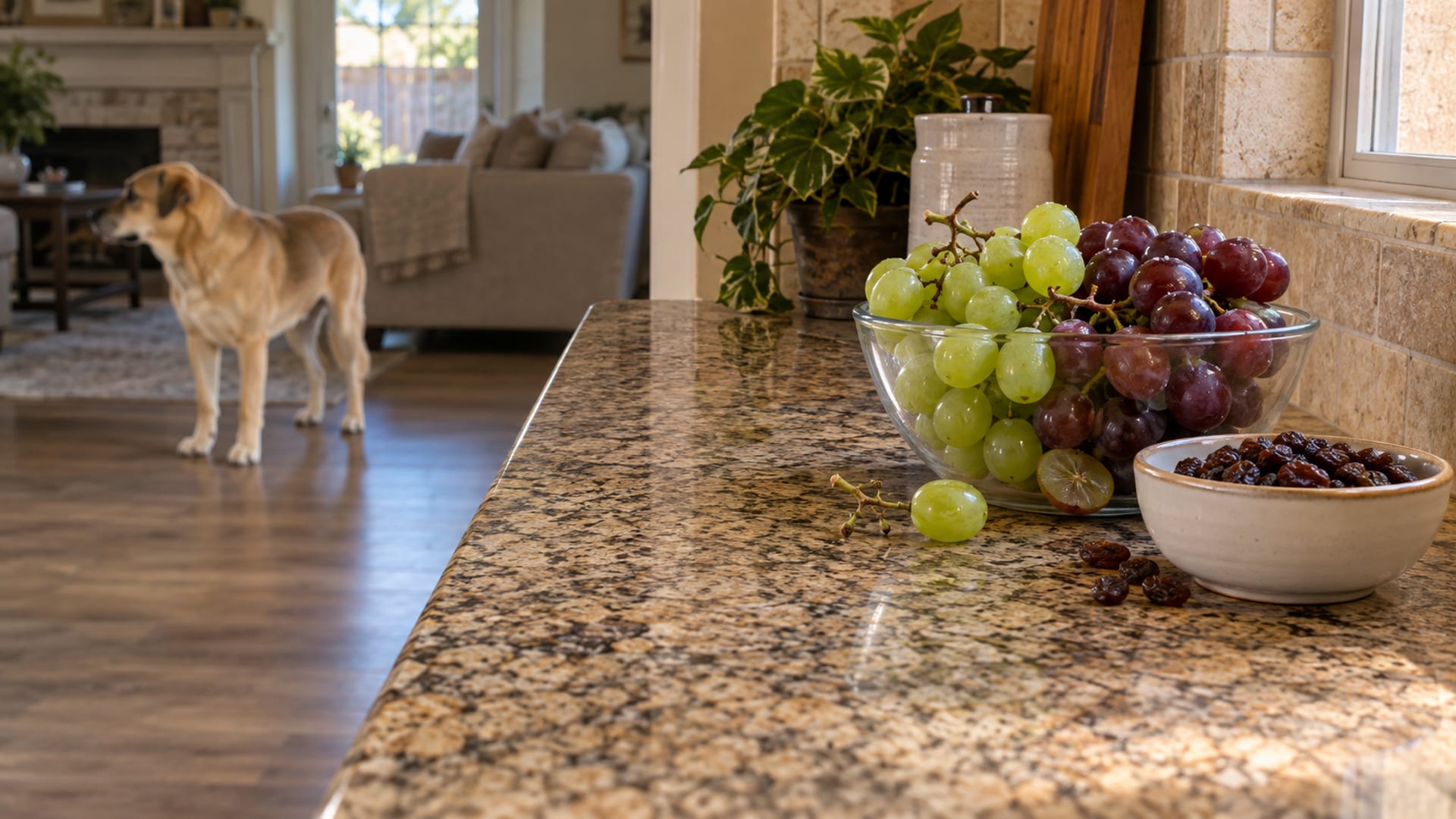
No. Grapes and raisins can cause acute kidney failure in dogs, and there is no amount known to be safe, according to the Merck Veterinary Manual. That covers green, red and seedless grapes, raisins, sultanas, Zante currants, and foods made with them.
If your dog ate grapes or raisins, call your vet, an emergency vet or a pet poison line now, even if your dog seems completely normal. Pet Poison Helpline's advice is plain: "Do not wait to see if symptoms develop".
Key takeaways
Tap a card to bring it forward.
- Grapes, raisins, sultanas and currants can cause sudden kidney failure in dogs.
- No amount is known to be safe, and no one can predict which dog will react.
- If your dog ate any, call a vet or poison line now. Do not wait for signs.
- Vomiting often starts within 6 to 12 hours; kidney failure can follow in 24 to 72 hours.
- Raisin bread, trail mix, cookies and cereal bars are the usual hiding places.
What to do right now
- Call. Your vet, the nearest emergency vet, or one of the poison lines at the top of this page. Acting early matters, because treatment is aimed at protecting the kidneys before damage sets in.
- Have this ready: your dog's weight, how many grapes or raisins (or how much of the food), what kind, and roughly when.
- Do not make your dog vomit at home unless a vet tells you to. Whether and how to do it is the vet's call.
- Bring the packaging if it was raisin bread, trail mix, a cereal bar or a baked good. Other ingredients such as chocolate, macadamia nuts or xylitol can add their own danger.
- Keep watching after the call, even if you are told your dog is low risk, and call back if anything changes.
Why one grape can matter
Researchers linked to the ASPCA identified tartaric acid as the likely cause in 2022. The amount varies from grape to grape and batch to batch, and dogs vary too. That is why no one can promise a safe number.
Some dogs eat a handful and never get sick. Others have developed kidney injury after small amounts. The ASPCA's point is that no one knows in advance which dog will react, and waiting to find out can lead to a poor outcome.
The numbers you may see quoted online are cautious rules, not safe limits:
- Merck says more than one grape or raisin per 10 pounds (4.5 kg) of body weight may contain enough tartaric acid to pose a risk.
- An older ASPCA summary reported the lowest documented toxic exposure as about 9 to 18 grams of grape or raisin per kilogram.
Neither means that less is fine. Raisins, sultanas and currants are dried, so the same weight packs more fruit than fresh grapes.
Signs, and how fast they come
Tap or hover a row to highlight it.
| When | What you may see |
|---|---|
| WhenWithin about 6 to 12 hours (can be up to 24) | What you may seeVomiting, often with bits of grape or raisin; diarrhea |
| WhenThe first day or two | What you may seeTiredness, not eating, belly pain, weakness, drinking more, shaking |
| When24 to 72 hours | What you may seeKidney failure: peeing much less or not at all, which is an emergency |
Timing from Merck and VCA Animal Hospitals. VCA notes that severe signs may not appear until 24 to 48 hours, often after kidney damage has started. That delay is the reason to call before anything shows.
A vet can check blood work for early kidney changes, and a dog may need hospital care with fluids and monitoring for several days.
Where grapes and raisins hide
- raisin bread, cinnamon raisin bagels, hot cross buns and fruitcake
- oatmeal raisin cookies, muffins and granola
- trail mix, cereal bars and some breakfast cereals
- chocolate-covered raisins (two dangers in one)
- grape juice and fruit salad
- a bunch of grapes left on a low table, in a lunchbox, or dropped by a child
Tamarind and cream of tartar contain the same kind of compound and have also been linked to kidney injury in dogs (Merck). True currants from the currant bush are a different plant from the Zante currants sold as dried fruit, which are tiny raisins.
"My dog ate grapes before and was fine"
That happens, and it does not make grapes safe for that dog next time or for another dog. Whether a dog gets sick seems to depend on how much tartaric acid was in that particular fruit and on the dog, and neither can be predicted. Published case reports include dogs that stayed well after large amounts and dogs that became seriously ill after small ones. A good outcome last time came down to that fruit on that day, so if it happens again, call again.
Check what you learned
Quick check
Questions about dogs and grapes
How long after eating grapes will a dog show signs?
Vomiting often starts within 6 to 12 hours, though it can take up to a day. Kidney failure can develop over 24 to 72 hours. Do not wait for either before calling.
How many grapes can kill a dog?
No one can give a number. The toxic amount varies between grapes and between dogs, and illness has followed small amounts. Treat any amount as a reason to call.
What percentage of dogs react badly to grapes?
There is no reliable figure. Not every dog that eats grapes gets sick, but there is no way to tell in advance which ones will.
Can a dog survive eating grapes?
Many dogs do, and plenty never get sick at all. The ones in trouble are those whose kidneys are damaged before help starts, which is why the sources on this page all say to call right away rather than wait.
Are seedless or green grapes safe for dogs?
No. Seeded, seedless, green and red grapes have all been involved in cases.
Is grape jelly or grape juice dangerous?
Treat grape juice and grape products as a grape exposure and call. Jelly may also contain xylitol if it is sugar free.
Sources
Checked September 24, 2026.
- Merck Veterinary Manual, Grape, Raisin, and Tamarind Toxicosis in Dogs (revised September 2024)
- Pet Poison Helpline, Can Dogs Eat Raisins? Emergency Guide
- VCA Animal Hospitals, Grape, Raisin, and Currant Poisoning in Dogs
- ASPCApro, Toxic Component in Grapes and Raisins Identified
- ASPCA, Leah's Close Call
- ASPCA Animal Poison Control Center, Grape and Raisin Toxicity in Dogs (Tox Brief)