
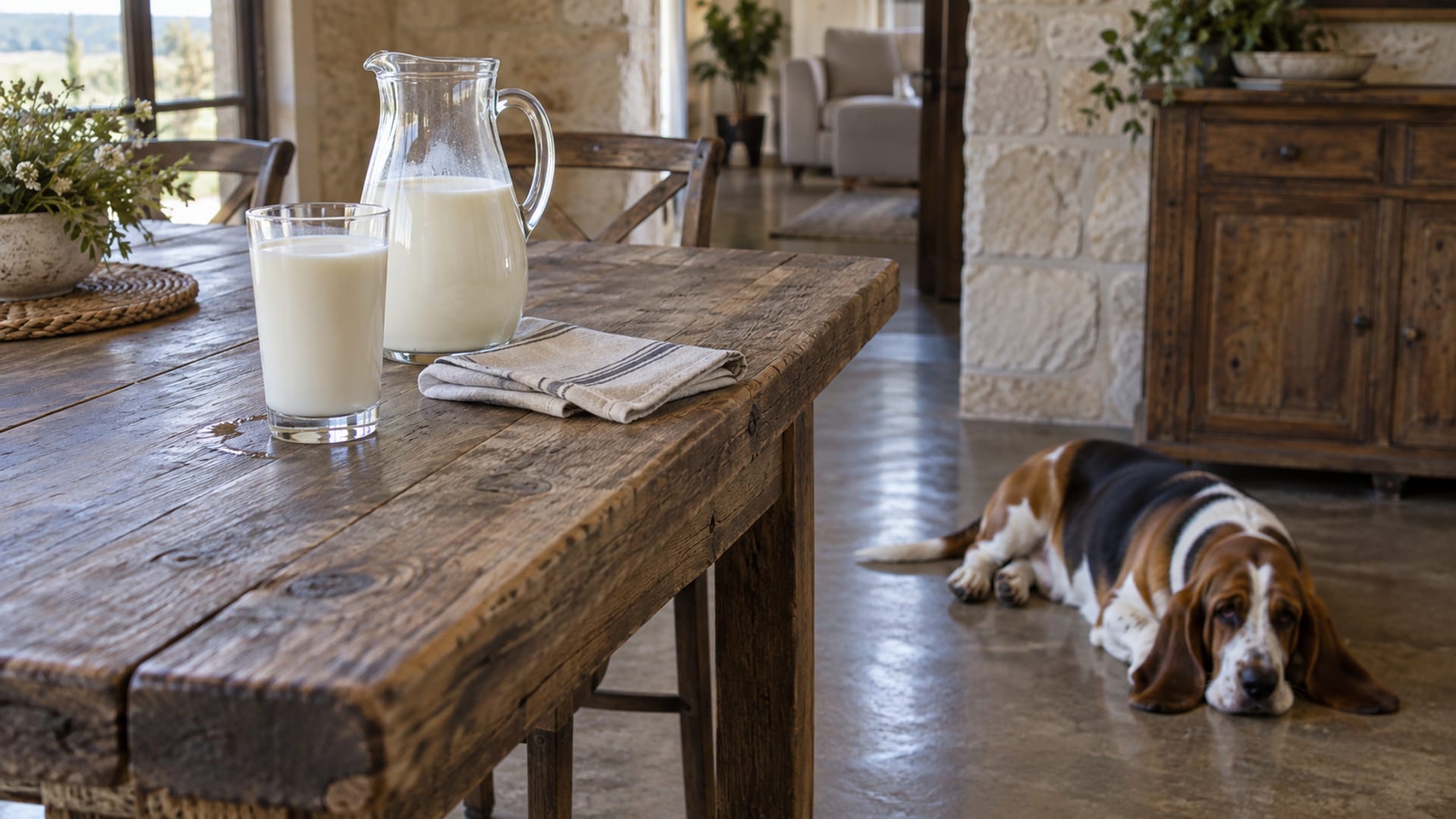
A small amount of plain milk is not poisonous to dogs, but it does not suit every dog. Milk carries lactose, a sugar some dogs cannot break down well, and it can leave them with gas, loose stool, vomiting or a sore belly, according to the AKC.
If your dog lapped up a spilled glass of plain milk, keep an eye on them for the rest of the day and call your vet if stomach trouble starts or will not settle. If it was chocolate milk, a sugar-free drink or anything with alcohol in it, find the label and call now. Can dogs eat chocolate? explains the chocolate side.
Key takeaways
Tap a card to bring it forward.
- Plain cow's or goat's milk is not a poison, but lactose can upset a dog's stomach.
- The AKC's amount is a few tablespoons, now and then, for a dog that handles it well.
- Chocolate milk, sugar-free milk drinks and anything with alcohol need a call to your vet.
- Puppies need a puppy milk replacer. Cow's and goat's milk carry too much lactose for them.
- Skip milk for a dog that has diarrhea, and never use it in place of water.
My dog drank milk: what to do
Tap or hover a row to highlight it.
| What they drank | What to do |
|---|---|
| What they drankA few laps or a spoonful of plain milk | What to doNothing special. Watch for gas or a loose stool. |
| What they drankA big bowl or a whole spill | What to doWatch closely. A large amount can cause vomiting or diarrhea even in dogs that usually handle milk. Call your vet if it keeps going. |
| What they drankChocolate milk or hot cocoa | What to doCall your vet or a poison line with the label. Chocolate contains theobromine and caffeine. |
| What they drankA sugar-free or "light" milk drink | What to doCheck the ingredients for xylitol. If it is listed, call now. |
| What they drankRaw milk | What to doRaw milk can carry bacteria. Watch for vomiting, diarrhea or low energy, and call your vet if they show. |
| What they drankA milkshake, ice cream or cream | What to doWatch for vomiting, diarrhea or belly pain. These are high in fat and sugar, so call your vet if signs appear. |
Sources: AKC, Pet Poison Helpline.
Call your vet promptly for vomiting that repeats, diarrhea that is severe or lasts, belly pain, a swollen belly, weakness, collapse, trouble breathing, or signs your dog is getting dehydrated. Have the product and a rough amount ready.
Why milk upsets some dogs and not others
Lactose is the sugar in milk. An enzyme in the gut called lactase splits it so the body can absorb it. Puppies make lactase to digest their mother's milk, and the Merck Veterinary Manual says that activity declines after weaning, which is how a dog can become lactose intolerant. Lactose that is not digested pulls water into the gut and feeds gut bacteria, and that is where the gas and diarrhea come from.
How much a dog can handle varies. The AKC notes that some dogs tolerate a small serving and others react to very little. Gut trouble also changes the picture: Merck says intestinal damage can cause lactose intolerance, and it advises keeping dairy away from animals with diarrhea.
Fat is the second issue. Whole milk, cream, ice cream and milkshakes are rich, and the AKC warns that high-fat dairy can contribute to pancreatitis, which can be serious.
Tap or hover a row to highlight it.
| Type | Okay? | What matters |
|---|---|---|
| TypePlain cow's milk | Okay?A few tablespoons at most | What mattersLactose |
| TypePlain goat's milk | Okay?Same limit | What mattersStill contains lactose |
| TypeLactose-free milk | Okay?Better on the stomach for some dogs | What mattersStill has fat, calories and sometimes additives |
| TypeRaw milk | Okay?Skip it | What mattersCan carry bacteria |
| TypePowdered, evaporated or condensed milk | Okay?Skip it | What mattersLactose, fat and sugar vary a lot by product |
| TypeChocolate milk | Okay?No | What mattersTheobromine and caffeine |
| TypeSoy, oat, almond, rice or coconut drinks | Okay?Check with your vet | What mattersDifferent ingredients; the milk answer does not carry over |
| TypePuppy milk replacer | Okay?Yes, for puppies | What mattersMade to match a mother dog's milk |
How much milk is okay, and how to offer it
The AKC puts it at "a few tablespoons of cow's milk or goat's milk" as an occasional treat for a dog that tolerates it. Plain and unflavored only.
- The first time, offer a tablespoon or two and watch the next day's stool.
- If your dog gets loose stool, gas, vomiting or belly pain after a small amount, the AKC's advice is to find a different treat.
- A small dog gets more milk for its size from the same splash, so go smaller.
- Never set out a bowl of milk in place of water.
- If your dog has had pancreatitis, skip whole milk and cream and ask your vet first.
Your dog does not need milk. Merck notes that a complete commercial dog food generally covers what a healthy adult dog needs.
Signs of a milk upset, and when to worry
Watch for gas, loose stool or diarrhea, vomiting, belly pain, bloating and going off food, according to the AKC. These show up as the milk works through the gut, and how long they last depends on how much your dog drank and how well they handle lactose. A mild upset after a little milk usually passes on its own.
Two things turn it into a vet visit. Vomiting or diarrhea that keeps going can dehydrate a dog. And if your dog got into a rich dairy treat and then keeps vomiting, has belly pain or will not eat, call, because high-fat dairy can contribute to pancreatitis.
"My dog has had milk every morning for years"
That can be true, and plenty of dogs handle a splash of milk without trouble. The AKC says dogs vary in how much lactose they can take. Your dog may be one who keeps enough lactase, or the amount may be small for their size, or the milk may be skim or lactose-free.
It still does not work as a rule. A small dog, a bigger serving, a richer product like cream or ice cream, or a week when your dog's gut is already upset can each change the result. The AKC also notes that a large amount can cause vomiting or diarrhea even in dogs that are not lactose intolerant. Keep the serving small, and stop if the stool changes.
Check what you learned
Quick check
Questions about dogs and milk
What can dogs drink besides water?
Fresh water is the drink your dog needs every day. Plain milk can be an occasional extra of a few tablespoons for a dog that tolerates it, never a stand-in for water. If you are thinking about any other drink, ask your vet.
Can puppies drink cow's milk?
No. Merck says cow's and goat's milk are too high in lactose for puppies and raise the risk of diarrhea. A puppy that cannot nurse needs a puppy milk replacer and a vet's guidance.
Is lactose-free milk okay for dogs?
It is less likely to cause lactose trouble, but it still has fat and calories and can contain additives. Treat it like regular milk: a small amount now and then.
Can dogs drink goat's milk?
A small amount, the same as cow's milk. Goat's milk still contains lactose, so it is no safer for a dog that reacts to dairy.
Can milk give a dog pancreatitis?
High-fat dairy can contribute to pancreatitis, according to the AKC. The warning is aimed at rich products such as cream, whole milk, ice cream and milkshakes, so keep those away from a dog with a history of pancreatitis.
Can cats drink milk?
Cats can become lactose intolerant after weaning too, and Merck says many cats are affected. A cat is not safe with milk just because the dog in the house is.
Sources
Checked September 24, 2026.
- American Kennel Club, Can Dogs Drink Milk? Is Milk Bad for Dogs?
- American Kennel Club, Can Dogs Eat Ice Cream?
- American Kennel Club, Can Dogs Eat Yogurt?
- Merck Veterinary Manual, Malabsorption Syndromes in Small Animals
- Merck Veterinary Manual, Nutritional Requirements of Small Animals
- Pet Poison Helpline, Toxic and Hazardous Food Guide for Pets