

Diabetes in Dogs: Signs, Treatment, Daily Care and Monthly Cost
By Cal Hewitt · Published , updated
Health

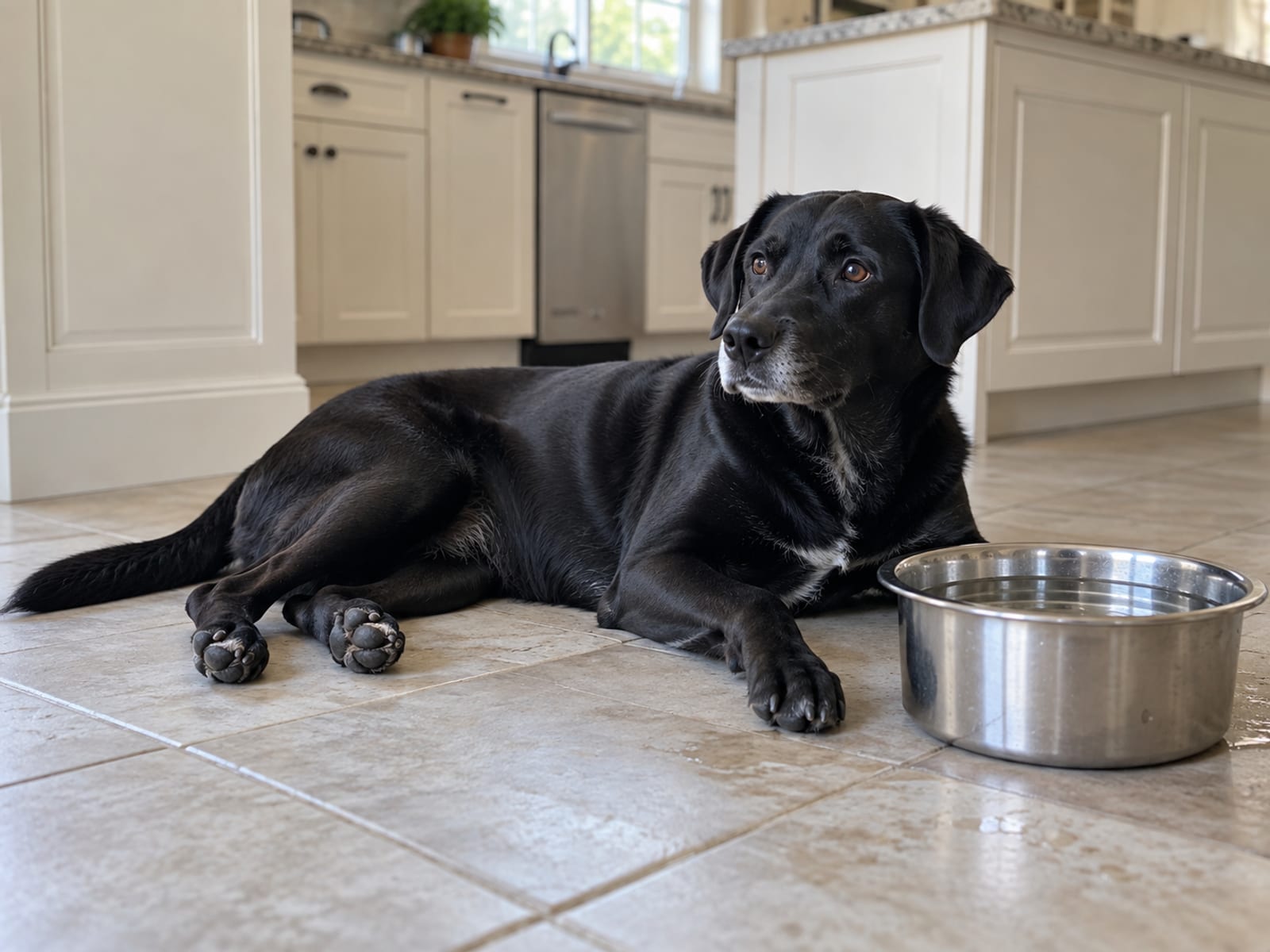
Maybe your dog is emptying the water bowl twice as often, asking to go out at night, or eating well and still getting thinner. Or you just walked out of the vet's office with the word "diabetes" in your head and a lot of questions: can I really give injections, will my dog be okay, and can I afford this?
If your dog has any of these, call an emergency vet now: collapse, a seizure, trembling, marked weakness or wobbly walking, confusion, vomiting, refusing to eat or drink, or fast or labored breathing. In a dog on insulin, these can be low blood sugar or diabetic ketoacidosis, and both are emergencies.
For everything else: diabetes in dogs is a serious disease that can be managed. Dogs with diabetes often drink and pee more, lose weight while eating well, and can become tired or develop cloudy eyes. A vet confirms it with blood and urine tests. Most dogs need insulin for life, plus steady meals and monitoring. The AVMA says diabetic dogs "can live long, comfortable lives with appropriate treatment and monitoring."
Key takeaways
Tap a card to bring it forward.
- The classic signs are drinking more, peeing more, eating more and losing weight anyway (AVMA, Cornell).
- Drinking and peeing more have many causes. They are a reason to see your vet soon, not a home test for diabetes.
- Weakness, trembling, seizures, collapse, vomiting or refusing food in a diabetic dog: call a vet or emergency clinic now.
- Most dogs need insulin for life, given as your vet prescribes, with the same food at the same times (Cornell).
- Never raise, lower, skip or move an insulin dose unless your own vet tells you to.
- Monthly cost varies a lot. Insulin alone has been estimated at $30 to $150 a month (PetMD, 2025).
The signs of diabetes in dogs, and the ones I missed
The core signs, according to Cornell and the AVMA:
- Drinking much more water than usual
- Peeing more, bigger puddles, more trips outside, or accidents in a house-trained dog
- Eating more, or acting hungry all the time
- Losing weight even though they are eating
The thirst and peeing happen because extra sugar in the blood spills into the urine and pulls water out with it. Other signs can include tiredness or weakness, a smaller appetite, cloudy eyes from cataracts, skin or bladder infections that keep coming back, a dull coat, and loss of muscle.
The AAHA notes that early signs can build so slowly that owners may not notice them. I know how true that is. My dog, Nucky, had diabetes, and I found out only shortly before he was put to sleep. He also had cancer and masses, so diabetes was one of several things wearing him down. I missed the signs in my own dog, and I wish I had done more to keep him comfortable. If your dog's drinking or peeing has changed, call your vet this week, even if everything else seems fine.
Dogs at higher risk. The AVMA says dogs are usually diagnosed between 4 and 14 years old, most often around 7 to 10, and females are affected about twice as often as males. Cornell names middle-aged females, Samoyeds, Miniature Schnauzers, Poodles, and dogs with a history of pancreatitis. The Merck Veterinary Manual adds Yorkshire Terriers, Border Terriers, Cavalier King Charles Spaniels, Bichon Frises and West Highland White Terriers, and stresses that any breed can get diabetes. A risk factor is a reason to pay attention. It is not a diagnosis.
For a picture of what normal drinking, energy and weight look like, see signs of a healthy dog.
Emergency now, a vet visit soon, or keep following the plan
Tap or hover a row to highlight it.
| What you see | What it can mean | What to do |
|---|---|---|
| What you seeWeakness, trembling, wobbly walking, confusion, a seizure or collapse | What it can meanLow blood sugar (hypoglycemia), especially in a dog on insulin | What to doCall a vet or emergency clinic now |
| What you seeVomiting, not eating or drinking, unusual quietness, sweet-smelling breath, fast or hard breathing, severe weakness | What it can meanDiabetic ketoacidosis (DKA), a life-threatening emergency | What to doEmergency vet now |
| What you seeNew heavy drinking and peeing, weight loss, a bigger or smaller appetite, cloudy eyes, repeat infections | What it can meanPossible diabetes, or another illness | What to doBook a vet visit soon; do not wait and watch for weeks |
| What you seeA diagnosed dog who is bright, eating, and back to normal drinking, peeing and weight | What it can meanGood control, by the AAHA's definition | What to doKeep following your vet's plan and log |
The VCA calls DKA an emergency, and the AVMA tells owners to contact their vet immediately for the low blood sugar and DKA signs above. Signs of too much insulin and too little can look alike, which is one more reason never to guess by changing the dose.
Low blood sugar: what to do right now
- Call your vet or the nearest emergency clinic immediately.
- If your dog is awake and can swallow, the VCA says a small amount of glucose solution, honey or corn syrup may be offered. Cornell advises Karo syrup on the gums, then calling your vet right away.
- If your dog cannot swallow properly, rub a small amount on the gums or under the tongue. Do not pour liquid into the back of the mouth; your dog could breathe it in.
- Go in. A dog who is having a seizure, is unconscious or is badly affected needs emergency care. The VCA says severe low blood sugar needs glucose given through an IV.
Ask your vet now, before you ever need it, how much syrup is right for your dog; there is no one amount for every dog. Never use sugar-free syrup or a sugar substitute. Honey or syrup buys time on the way to the vet. It does not replace the vet.
How a vet diagnoses diabetes
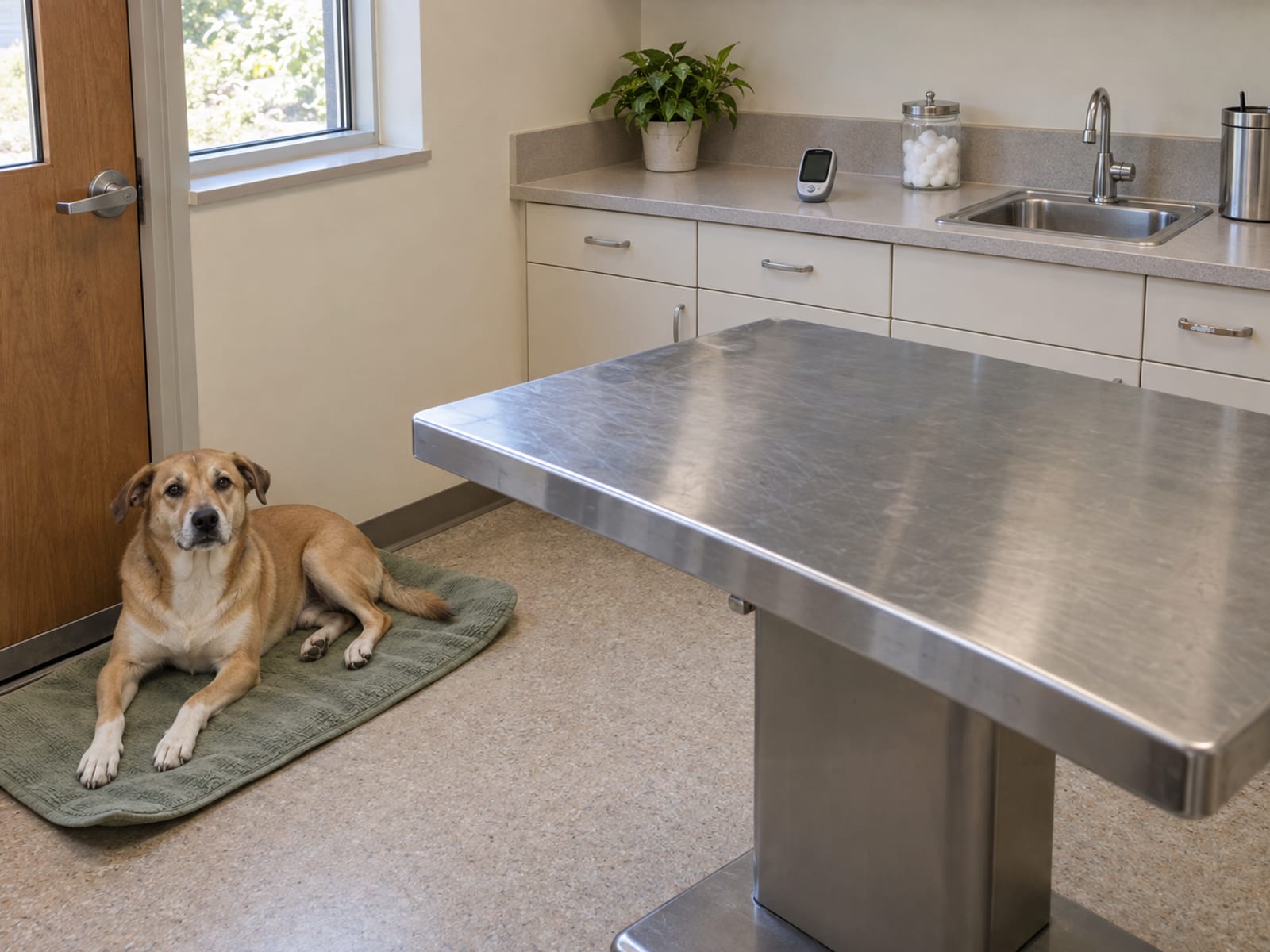
Diagnosis is vet work. It rests on the signs plus high blood sugar that stays high and sugar in the urine. The AAHA says those two findings together establish the diagnosis. Your vet will take a history, examine your dog, run blood and urine tests, and look for other illnesses that make diabetes harder to control. Cornell notes that a fructosamine test can help tell stress from true diabetes when a dog has high blood sugar but no signs.
Before the visit, write down:
- When you first noticed the drinking, peeing, appetite or weight change
- Roughly how much water your dog drinks in a normal day, if you can measure it
- Every medicine, food and treat your dog gets
- Past health problems, and whether an unspayed female recently had a heat cycle
Keep your dog's water available the whole time. Taking water away to see what happens is not safe.
Treatment and daily life with a diabetic dog
According to Cornell, insulin is the cornerstone of treatment and most diabetic dogs need it for life. It is usually injected under the skin twice a day at mealtimes, with the same amount of food at the same times. Your vet chooses the insulin and the dose. Cornell tells owners never to increase insulin without their vet's direction.
What counts as success surprises many owners. The AAHA's 2026 guidelines say "the primary goal of treating canine diabetes mellitus is to control clinical signs." A well-controlled dog drinks, pees and eats close to normal and holds or gains weight. Tight blood sugar numbers are rarely possible with twice-daily insulin, so one high reading does not mean the treatment has failed.
The daily routine usually looks like this:
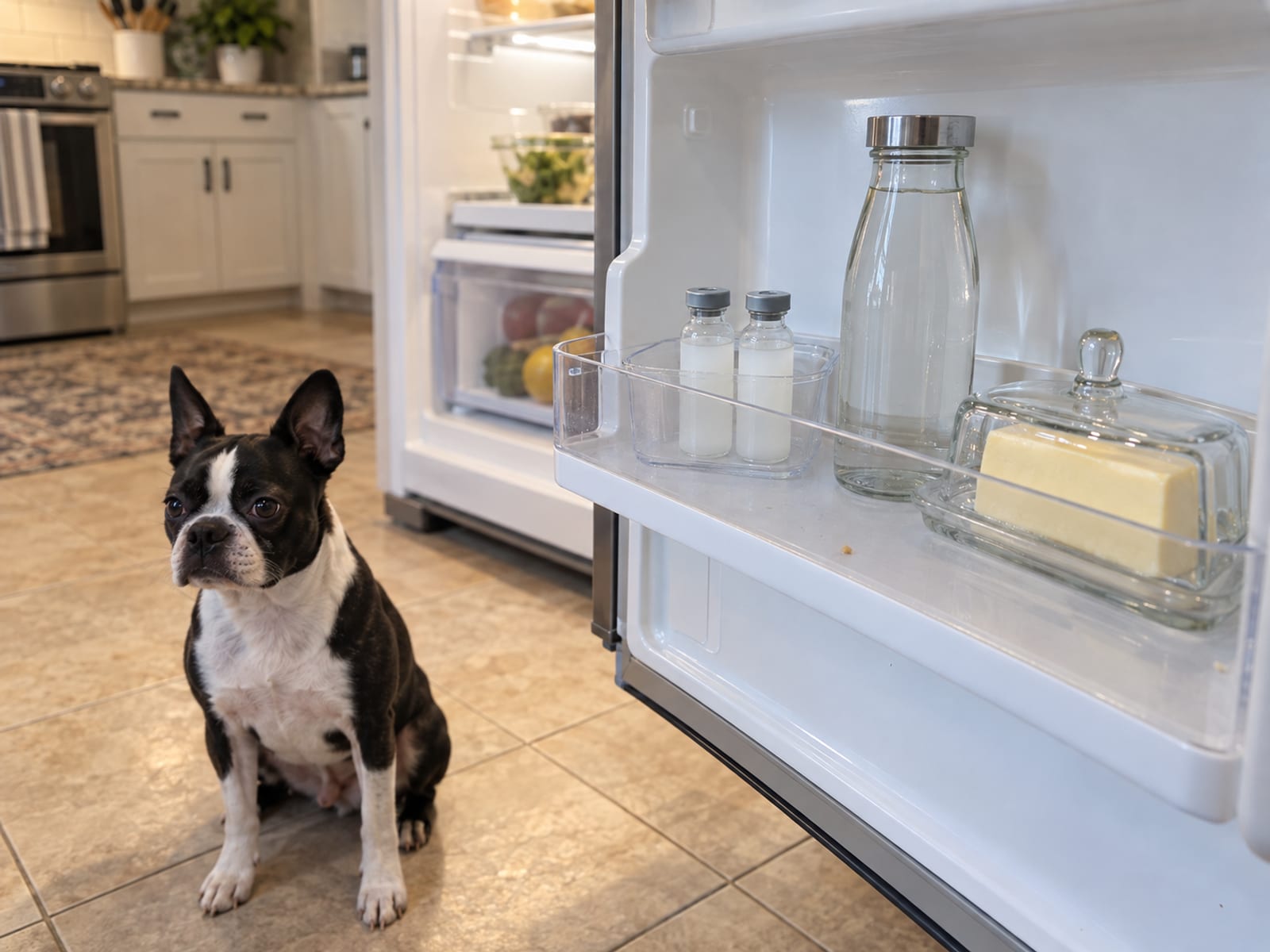
- Insulin exactly as prescribed. Ask the clinic team to show you how to give injections and how to store and handle the insulin.
- The same food, the same amount, on schedule. Cornell says many dogs do well on a complete and balanced diet they enjoy; some do well on higher-fiber food. Change food only with your vet.
- Steady activity. Keep walks and play about the same from day to day.
- A daily log. Food eaten, water, appetite, peeing, weight and each insulin dose. One shared log also stops two people in the house from giving the same dose twice.
- Monitoring your vet sets up. Blood glucose checks, a continuous glucose monitor, or urine glucose or ketone checks, only as your vet directs. The AAHA does not recommend human glucose meters for managing dogs, because they may not be calibrated for dogs.
- Rechecks. Glucose curves and follow-up visits show how your dog is responding.
Get a plan in writing for the bad days: what to do if your dog skips a meal or eats only part of it, and what to do if you see low blood sugar signs. The AVMA says a normal appetite matters with insulin, because a dog who does not eat can end up with low blood sugar.
The first months after a diagnosis
The diagnosis visit
Blood and urine tests, a check for other illnesses, and your first insulin plan. Ask the team to show you how to give an injection.
The first weeks
Daily log, steady meals and walks, and rechecks or a glucose curve so your vet can adjust the dose. Early months often cost more because of these visits.
Settled in
Thirst, peeing and appetite back near normal and a steady weight. Regular rechecks continue, and any change goes to your vet.
Other health problems can make diabetes harder to control, including obesity, pancreatitis, Cushing's disease, an underactive thyroid, infections, dental disease and steroid medicines, according to the AAHA. In unspayed females, hormones after a heat cycle can work against insulin, and your vet may talk with you about spaying. Older dogs may need closer monitoring.
What diabetes treatment costs each month
There is no single national price. Cost depends on your dog's size and insulin needs, the insulin your vet chooses, how your dog is monitored, food, your clinic and region, and any complications. The early months, with extra rechecks and glucose curves, usually cost the most.
Tap or hover a row to highlight it.
| Measure | Figure | Source and date |
|---|---|---|
| MeasureInsulin alone | Figure$30 to $150 a month | Source and datePetMD, updated Nov. 14, 2025 |
| MeasureTotal diabetes care, including bloodwork and other therapies | FigureUp to $2,500 a year (about $208 a month spread over a year) | Source and datePetMD, updated Nov. 14, 2025 |
| MeasureAverage monthly injectable-insulin diabetes care | Figure$79 a month | Source and dateCareCredit cost study, 2023 to 2025 |
The PetMD figures and the CareCredit survey measure different things, so treat them as a rough guide, not a quote. CareCredit itself says real costs vary by location and provider.
When my dog, Nucky, was diagnosed, I was quoted about $200 a month for insulin. I learned later that insulin could be bought at a significant discount at Walmart. Because of his other conditions, treatment was not the right path for him, but I would have considered it on that basis.
If cost is what stands between your dog and treatment, say so to your vet. Ask whether a lower-cost option, including human-labelled insulin sold at pharmacies such as Walmart, is suitable for your dog. The type of insulin, the dose and the syringe all have to match, and that decision belongs to your vet.
Also ask the clinic for a written estimate that covers the diagnosis, the first weeks of adjusting the dose, supplies, rechecks, and what an emergency visit would cost. If you have pet insurance, check the policy terms; coverage for a new diagnosis depends on the policy and its pre-existing condition rules.
Mistakes to avoid
- Waiting for weight loss or cataracts to confirm it. New thirst and peeing are enough reason to call.
- Diagnosing at home. One reading or a set of symptoms is not a diagnosis; your vet needs blood and urine tests.
- Taking away water. It does not help and can make your dog dehydrated.
- Changing the insulin dose, timing, type or syringe on your own. Too much insulin can cause life-threatening low blood sugar.
- Changing food, treats or activity without your vet. Consistency is part of the treatment.
- Using human diabetes advice as a plan for your dog.
- Treating honey or syrup as the cure for low blood sugar. It is first aid on the way to the vet.
- Two people dosing without a shared log. Write every dose down.
Check what you learned
Quick check: diabetes in dogs

Questions about diabetes in dogs
What are the first signs of diabetes in a dog?
Drinking more, peeing more, eating more and losing weight are the classic signs. Tiredness, cloudy eyes and repeat skin or bladder infections can also appear. The AVMA and Cornell say a vet should check these signs.
Can a dog live a normal life with diabetes?
Many can. The AVMA says diabetic dogs can live long, comfortable lives with the right treatment and monitoring. It is a serious disease, and how an individual dog does depends on things like other illnesses and whether DKA develops.
How do vets diagnose diabetes in dogs?
With the signs plus blood sugar that stays high and sugar in the urine, according to the AAHA. Blood and urine tests also check for other illnesses that affect treatment.
What if my diabetic dog will not eat?
Call your vet before giving insulin, and follow the plan they gave you for missed meals. A dog who gets insulin without eating can develop low blood sugar.
What does low blood sugar look like in a dog?
Weakness, tiredness, trembling, seizures and wobbly walking, according to the AVMA. Cornell adds poor appetite and confusion. Call your vet or an emergency clinic immediately.
What is diabetic ketoacidosis?
A life-threatening emergency caused by too little working insulin. Signs include vomiting, not eating or drinking, fast or hard breathing, weakness and collapse. It needs emergency treatment.
How much does insulin for a dog cost a month?
PetMD estimated insulin alone at $30 to $150 a month in 2025, and one national cost study lists $79 a month for injectable-insulin diabetes care. Ask your clinic for a written estimate, and ask whether a lower-cost insulin is suitable for your dog.
Is there one best food for a diabetic dog?
No single food suits every dog. Cornell says higher-fiber diets help some dogs, many do well on a complete and balanced food they enjoy, and consistency matters most. Your vet should direct any change.
Your next step
If your dog's drinking, peeing, appetite or weight has changed, call your vet and book a visit this week, and bring your notes. If you need a vet near you, start with the DogServ directory. And if your dog has already been diagnosed, ask your vet today for the missed-meal and low blood sugar plan in writing, and put it on the fridge next to your log.
Sources
- American Animal Hospital Association: AAHA's 2026 guidelines
- American Animal Hospital Association: AAHA
- American Animal Hospital Association: AAHA
- American Veterinary Medical Association: AVMA
- CareCredit: CareCredit
- Cornell University College of Veterinary Medicine: Cornell
- Merck Veterinary Manual: Merck Veterinary Manual
- PetMD: PetMD
- VCA Animal Hospitals: VCA
- VCA Animal Hospitals: VCA