

Ataxia in Dogs: Sudden Wobbling, When It Is an Emergency and What the Vet Will Check
By Cal Hewitt · Published , updated
Health

If your dog is suddenly wobbly, can't stand, keeps falling, is vomiting, has eyes flicking rapidly, may have gotten into a medication or poison, or just took a fall, call your veterinarian or an emergency clinic now. Ataxia in dogs means abnormal coordination. It can look like swaying, stumbling, crossing the legs, standing with the feet wide apart, circling, or walking as if drunk. It is a sign, not a diagnosis, and the Merck Veterinary Manual describes causes ranging from the inner ear to the spinal cord, cerebellum and brain. While you call, keep your dog away from stairs.
Key takeaways
Tap a card to bring it forward.
- Ataxia means abnormal coordination. It is a sign, and only an exam can find the cause.
- Sudden onset, inability to stand, repeated falling, vomiting, rapid eye movements, a possible toxin or medication, or an injury means go now.
- If poisoning is possible, call poison control or your vet and do not make your dog vomit unless they tell you to.
- Block stairs, add nonslip footing and keep your dog confined and supervised until you are seen.
- Some vestibular cases improve over days to weeks, but other causes progress or leave lasting changes.
- Ask the clinic for a written estimate before advanced imaging such as an MRI.
Is sudden wobbling an emergency, and when should you go now?
It can be, and I'd rather you call too early than too late. AAHA's emergency guide says sudden weakness or paralysis from a neurologic problem, a spinal injury or a severe toxin-related imbalance is always an emergency, and it also lists seizures, unresponsiveness, injury, persistent vomiting and sudden loss of mobility.
Go to an emergency clinic, or get your vet's direction by phone right away, for any of these:
- The wobbling started suddenly or is getting worse quickly.
- Your dog can't stand or walk, keeps falling, or has collapsed.
- Your dog is vomiting along with severe imbalance, or can't keep water down.
- Your dog's eyes are moving rapidly back and forth, especially with serious disorientation.
- You know or suspect your dog got into a medication, plant, chemical or other toxin.
- There was a fall, a collision, a bite or another injury.
- There is a seizure, severe depression or no response to you.
- Your dog has trouble breathing or the gums look an abnormal color.
An alert dog is not proof that it is safe to wait. If your dog is only mildly unsteady and otherwise acting normal, I'd still call your vet the same day, because the signs alone can't tell you which cause you are dealing with.
What should you do right now?
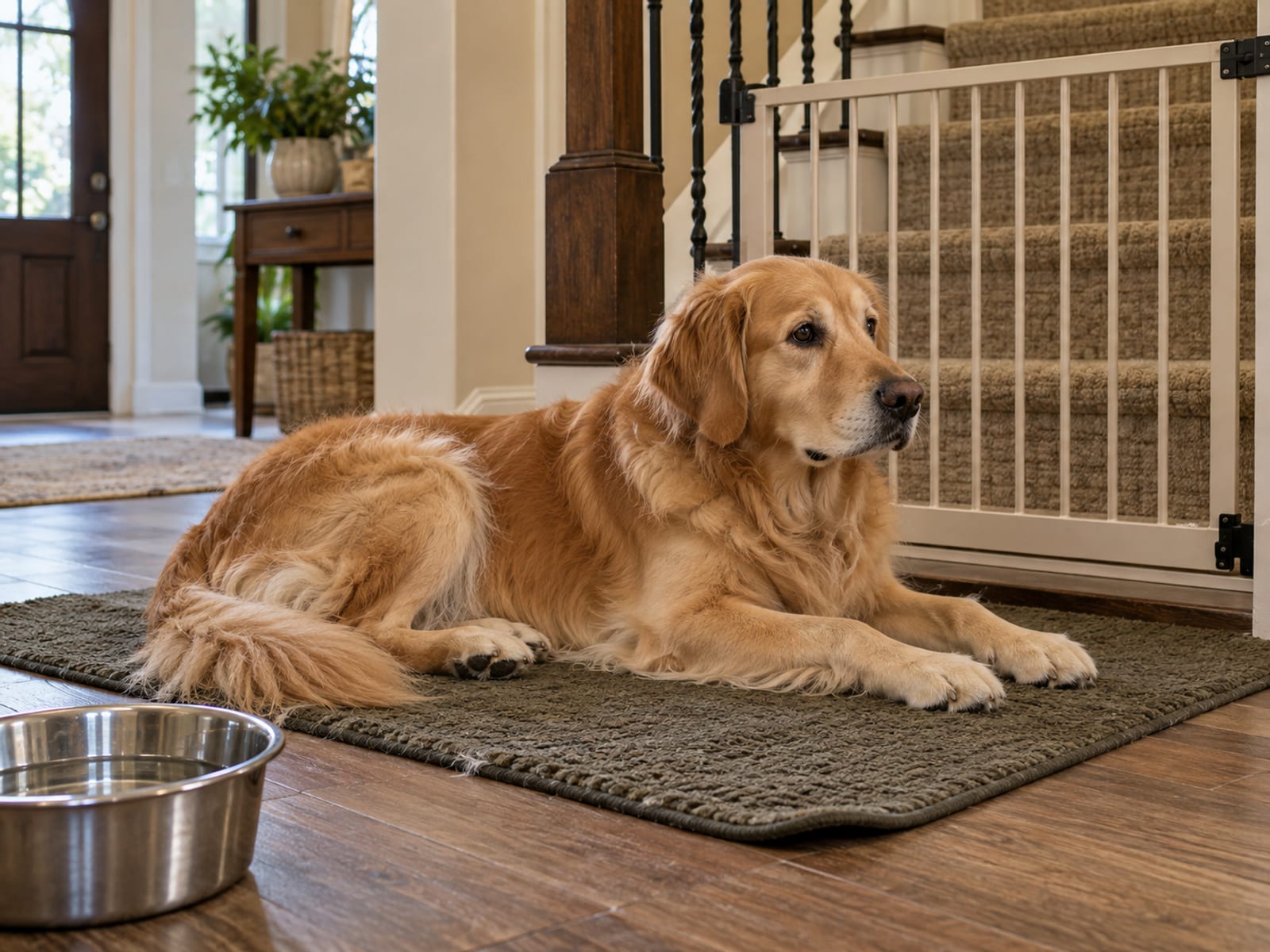
Start with safety, then information. Keep your dog away from stairs, balconies, pools and any other place a fall could happen. Put your dog in a small, calm, uncluttered room. Use nonslip rugs or mats on slick floors, and go along for short bathroom trips so you can steady your dog.
If walking is unsafe, carry your dog or use a properly positioned harness, sling or towel for support, but only if it doesn't cause pain or a fall. For an injured pet, AVMA's pet first-aid brochure advises confining or supporting the animal during transport. Keep food and water within reach, but don't force either if your dog is vomiting or has trouble swallowing. Keep children and other animals away while your dog is disoriented.
If poisoning is possible, take away whatever your dog got into, keep the package, and call your vet, an emergency hospital or poison control. The ASPCA Animal Poison Control Center is open 24 hours at 888-426-4435. AVMA says not to try to make your dog vomit or give any medication unless a veterinarian or poison-control professional tells you to, and our guide to making a dog throw up explains why that step belongs to them. Use only the product and amount they give you, never a home dose. Signs can also be late: Pet Poison Helpline says bromethalin signs may begin within 2 hours or be delayed up to 36 hours, so a dog that looks fine after an exposure still needs a call.
Before you go, gather what the vet will ask for:
- When the wobbling started and how it has changed.
- Every medication, supplement, flea or worm product your dog gets, plus anything new.
- Packaging from any possible toxin, and any chewed or vomited material.
- A short video of the walking or the eye movements, if you can film it safely.
What does ataxia look like, and how is it different from weakness or limping?
Owners describe swaying or weaving, stumbling, crossing the legs, a wide-based stance, falling or leaning to one side, circling, dragging the toes, and big, high steps. Turning and backing up can be hard. Some dogs also have a head tilt or eyes that flick back and forth. The VCA veterinary hospitals ataxia page lists these signs, and they fit what readers mean by "drunk walking."
Merck defines ataxia as an inability to perform normal coordinated movement that weakness, a musculoskeletal problem, tremor or myoclonus doesn't explain. In plain terms, a dog with weakness has trouble producing movement or holding up its weight. A dog with lameness is favoring a painful or mechanically affected limb, which is what you would see in our guide to why a dog is limping. A dog with ataxia knows how to move but can't place its feet or control its balance. The three can overlap, so it takes an exam to sort them out.
What are the three types of ataxia?
Vets sort ataxia by where in the body the trouble starts. Merck describes three types, and these are clues to location, not a diagnosis you can make at home.
Sensory or spinal ataxia comes from a problem in the pathways that tell the brain where the limbs are. You may see clumsy foot placement, a wide stance, swaying, crossed legs and toe dragging, sometimes with weakness.
Vestibular ataxia comes from the balance system, which includes the inner ear, the vestibular nerve and the brainstem. One-sided disease often causes leaning or falling to one side, and a head tilt or rapid eye movements may show up. Both sides affected can look like a crouched posture, a reluctance to move and side-to-side head movements. Our guide to why dogs tilt their heads goes deeper on the head tilt.
Cerebellar ataxia comes from the cerebellum, which controls the rate and range of movement. It often causes hypermetria, an exaggerated, high-stepping or overreaching gait, and sometimes tremors when your dog reaches for something. Merck notes it can happen without weakness.

What can cause ataxia?
The list is long, which is exactly why a vet needs to examine your dog. VCA and Merck name these groups of causes:
- Middle or inner ear infection, which affects the balance pathways. Our guide to dog ear infections covers the ear side.
- Idiopathic vestibular disease, often seen in older dogs, and vestibular disease that involves the brainstem.
- Spinal problems such as compression, inflammation, infection, injury, degenerative disease, a disc problem or a fibrocartilaginous embolism.
- Tumors of the brain, ear, skull, spine or spinal cord, and inflammation of the brain or spinal cord.
- Infections, including canine distemper and some tick-borne diseases.
- Medication toxicity. VCA lists metronidazole, and its macrocyclic lactone page covers a class of dewormer and parasite-product toxicity.
- Poisons such as rodenticides, insecticides, alcohols and other pesticides and chemicals, which Pet Poison Helpline links to neurologic signs.
- Low blood sugar, potassium or calcium, abnormal red-blood-cell counts, and heart, circulation or breathing disease.
- Inherited or developmental cerebellar disease, which is a question to raise for a young puppy.
One possible cause on this list doesn't prove it in your dog. A normal-looking ear doesn't rule out a balance problem either, because the balance pathways also run through the brainstem. Sudden balance loss isn't always a stroke, and a head tilt alone doesn't prove vestibular disease. If your dog may also be having seizures or is acting confused, see our guide to seizures in dogs. If an older dog's changes have come on slowly, dog dementia and senior dog care are the better reads, though sudden imbalance is not normal aging and still needs a vet.
What will the vet check, which tests may follow, and what can imaging cost?
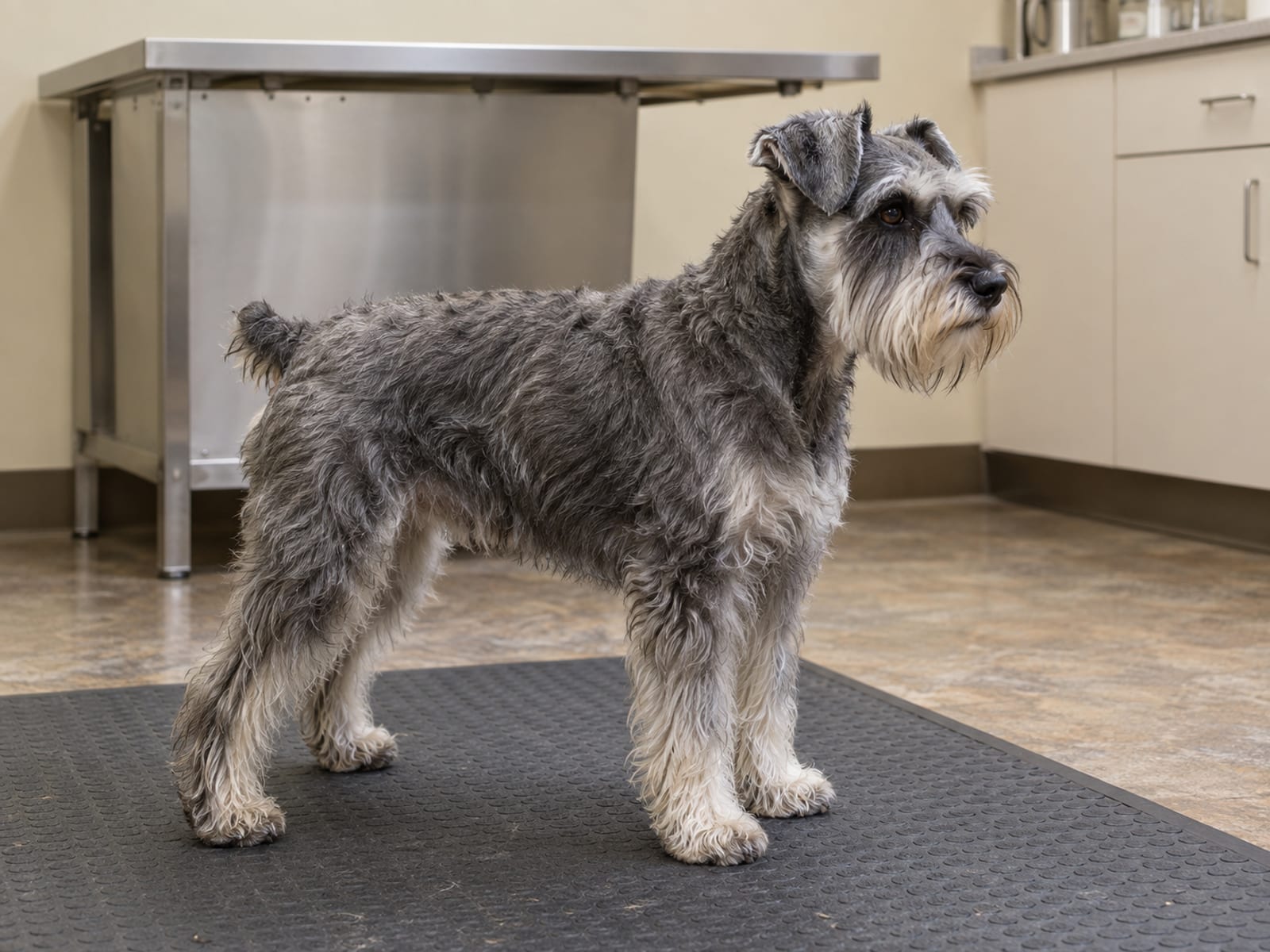
Expect the vet to start with questions and a hands-on exam. The MSD Veterinary Manual describes a neurologic evaluation that looks at how your dog walks, turns, backs up and stands, the cranial nerves, postural reactions, spinal reflexes, muscle tone, pain and position sense. Your vet will also look in the ears. Your notes, medication list and video help here.
Tests are chosen from the exam findings, not run as an automatic package. They can include a blood count, chemistry, glucose and electrolyte testing, urinalysis, and selected infectious or hormone tests. Radiographs help with bones, the spine and the chest. CT suits certain bone, ear and spine problems. MRI shows the brain, spinal cord and soft tissue. Some dogs also get cerebrospinal-fluid analysis or a specialist referral.
On cost, PetMD puts a dog MRI at roughly $2,300 to $5,000 or more, on a page updated in 2025. An MRI needs general anesthesia because your dog has to stay motionless, and the bill also moves with monitoring, pre-anesthetic testing, hospitalization, location and what else is included. That is not a fixed US price. Ask for a written estimate that lists the exam, each test, anesthesia, hospitalization and interpretation separately, and ask which steps matter most if you need to stage the workup.
Treatment depends on the cause
There is no single treatment for ataxia, because treating the sign without the cause doesn't fix much. Depending on what the vet finds, care can include:
- Antimicrobial or anti-inflammatory medicines when infection or inflammation is identified.
- Anti-nausea medicine and other supportive care when your dog can't eat or drink.
- Pain medicine when your dog is in pain.
- Decontamination or antidote treatment for certain poisonings, under veterinary or poison-control direction.
- Intravenous fluids and nursing care.
- Surgery for certain spinal compression, structural disease or tumors.
- Rehabilitation and controlled movement, then reassessment.
Your vet picks the medicine and the amount for your dog, and none of it is a home project. Don't give human medication.
What recovery can you expect, and how do you keep a wobbly dog safe while it heals?
Recovery follows the cause, so I can't promise you an outcome, and neither can a web page. For idiopathic vestibular disease, Cornell's Riney Canine Health Center says improvement often begins after the first day, recovery can take weeks, and a mild head tilt may remain. The cause still has to be checked before anyone assumes that pattern.
The published numbers show why the range is wide:
- A 2020 study of 36 dogs with peripheral vestibular disease found about half had incomplete recovery, often with lasting facial nerve problems or a head tilt.
- A 2020 study of 393 dogs with vestibular disease in UK primary care reported 18.97% deaths during the study period. The dogs had many different causes, so this is not a prognosis for any one dog.
- A 2025 study of 43 dogs with acute spinal conditions that did not compress the cord found 40 survived to discharge and 19 of those 40 later recovered fully. The authors note small numbers and a retrospective design.
- A 2024 study of 31 paraplegic dogs found independent walking in 9 of 14 dogs that kept deep pain sensation and 1 of 12 that didn't. These were severe, selected cases.
While your dog heals, keep the same safety setup: blocked stairs, nonslip footing, a small confined area and supervised bathroom trips. Cornell describes using a harness or towel for support. Keep short walks slow and controlled, and call the vet if your dog gets worse, stops eating or drinking, or vomits repeatedly. If your dog's vomiting is the main worry, our guide to dog vomiting covers that side.
Questions about ataxia in dogs
Short answers to what owners ask most, each one worth confirming with your vet.
What is the life expectancy of a dog with ataxia?
There isn't one number, because ataxia is a sign and the outlook follows the cause. Some vestibular cases clear up in days to weeks, while tumors, infections and severe spinal disease can be serious. Ask your vet what the cause and test results mean for your dog.
Can a dog recover from ataxia?
Often, yes, but it depends on the cause and how severe it is. Idiopathic vestibular cases commonly improve over days to weeks, although a head tilt can linger, and other causes can progress or leave lasting deficits.
What are the early signs of ataxia in dogs?
Watch for swaying, stumbling, a wider stance than usual, crossing the legs, toe dragging, trouble turning or backing up, and leaning to one side. Rapid eye movements or a head tilt are also worth reporting. Any sudden version of these deserves a call to your vet that day or, if severe, right now.
Can an ear infection make a dog lose balance?
Yes. Middle or inner ear disease can disturb the balance pathways and cause vestibular signs, and only an exam can separate an ear problem from the other causes.
What is your next step?
Call your vet or an emergency clinic now if anything on the go-now list fits, and ask whether your dog should be seen today. Block the stairs, put down nonslip footing, bring your notes, your video and any packaging, and ask for a written estimate before imaging. If you want more on the conditions that overlap, start with why dogs tilt their heads or seizures in dogs. I'm not a vet, and this page can't tell you what is wrong with your dog, so let your vet do that.
Sources
- American Animal Hospital Association: AAHA's emergency guide
- American Veterinary Medical Association: AVMA's pet first-aid brochure
- ASPCA: ASPCA Animal Poison Control Center
- Cornell University College of Veterinary Medicine: Cornell's Riney Canine Health Center
- Merck Veterinary Manual: Merck Veterinary Manual
- msdvetmanual.com: MSD Veterinary Manual
- Pet Poison Helpline: Pet Poison Helpline
- Pet Poison Helpline: Pet Poison Helpline
- PetMD: PetMD
- PubMed Central: 2020 study of 36 dogs
- PubMed Central: 2020 study of 393 dogs
- PubMed Central: 2024 study of 31 paraplegic dogs
- PubMed Central: 2025 study of 43 dogs
- VCA Animal Hospitals: macrocyclic lactone page
- VCA Animal Hospitals: VCA veterinary hospitals