

Ticks and Lyme Disease in Dogs: How to Remove a Tick and What to Watch For
By Cal Hewitt · Published
Health
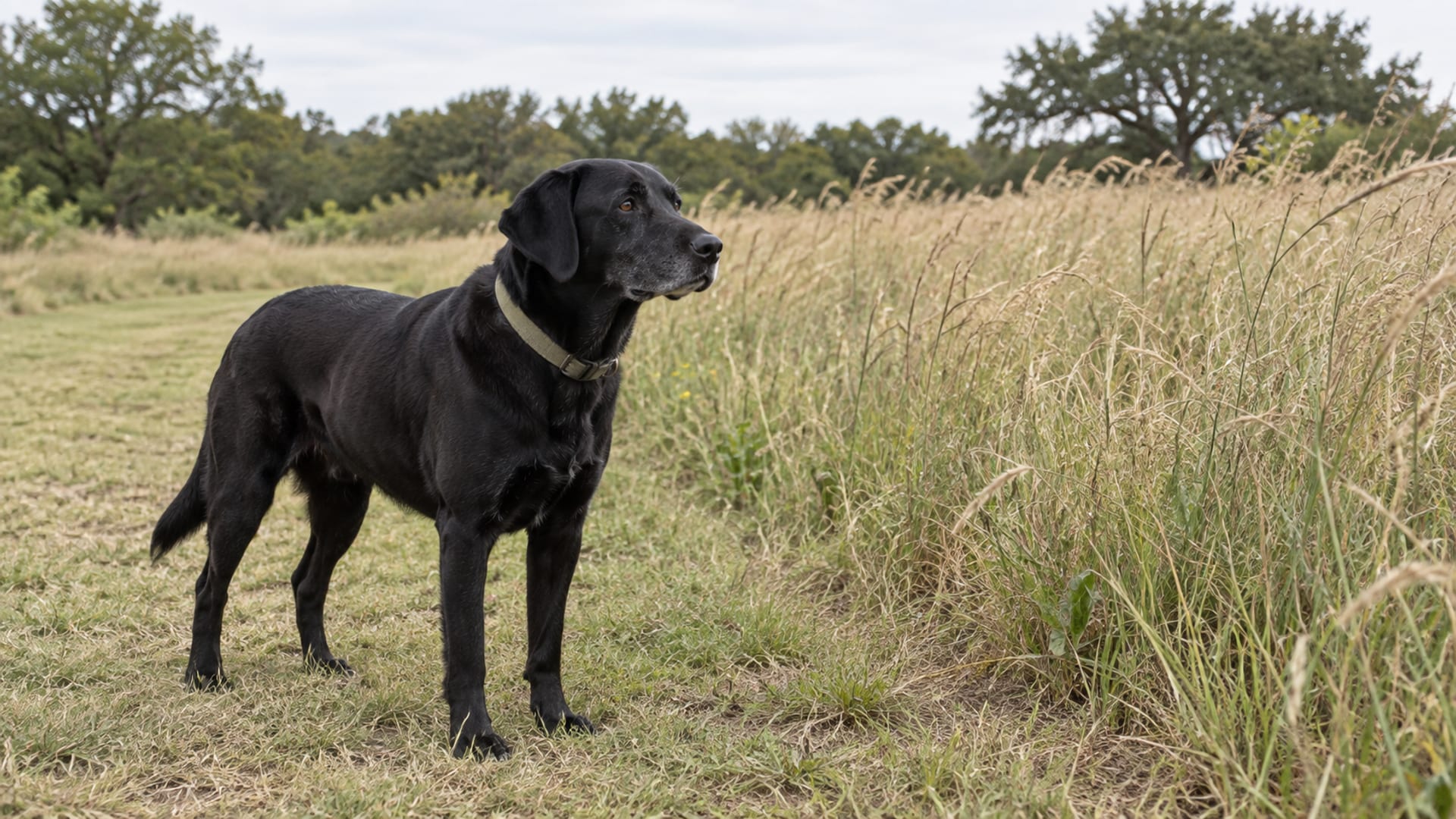
If there is a tick on your dog right now, take it off now. Use clean, fine-tipped tweezers, grab the tick right where it meets the skin, and pull straight up with steady, even pressure. Don't twist or jerk it. Put the tick in a sealed container or wrap it tightly in tape, then clean the bite and your hands. Call your veterinarian if your dog develops a fever, low energy, lameness, bleeding, pale gums, weakness, or neurologic signs such as seizures. A tick bite means infection is possible. It does not mean your dog has Lyme disease.
Key takeaways
Tap a card to bring it forward.
- Remove the tick right away with fine-tipped tweezers, gripping close to the skin and pulling straight up without twisting.
- Skip alcohol, petroleum jelly, nail polish and heat on an attached tick; alcohol is for cleaning the bite and disposing of the tick afterward.
- If the mouthparts stay in and won't come out easily, leave them; the skin usually pushes them out as it heals.
- Watch your dog daily for weeks. Some tick diseases show signs within days to about three weeks, and Lyme can take weeks to months.
- A positive screening test can mean exposure, not active illness, so your vet decides what it means for your dog.
- Choose tick prevention with your vet, keep checking for ticks, and never put a dog product on a cat.
I'm Cal, and I'm not a vet. What I can do is put the guidance from the CDC and the Merck Veterinary Manual in the order you need it tonight: the tick off first, then what to watch for, then how to keep the next one away. If your dog is already acting sick, skip down to the signs that mean you call the vet.
How do I get the tick off my dog right now?
The removal method that the CDC's "What to Do After a Tick Bite" page gives is simple, and veterinary sources such as the Merck Veterinary Manual also recommend prompt removal. The CDC writes its steps for people, and they are the standard mechanical method for a dog too.
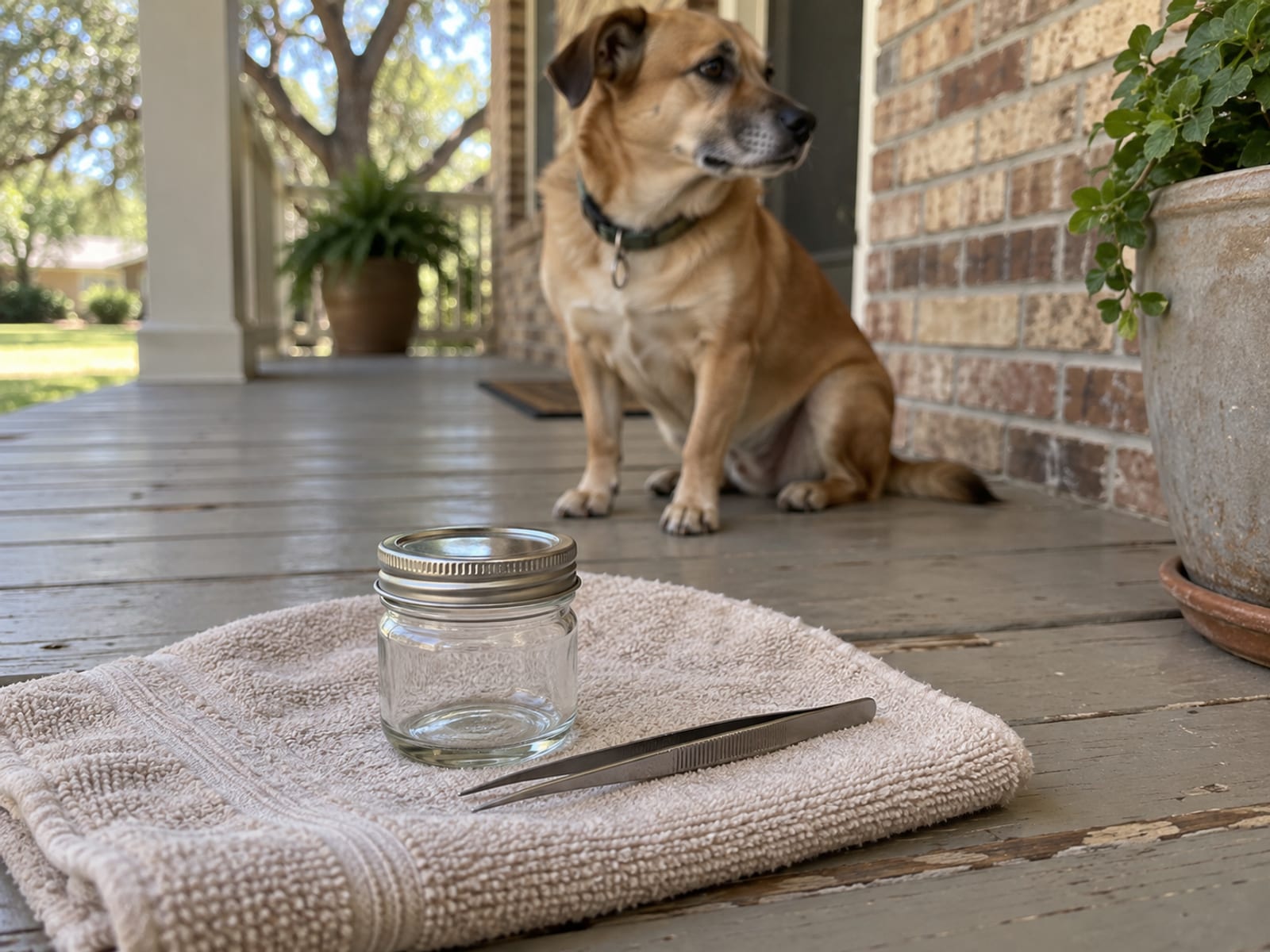
- Get clean, fine-tipped tweezers. Part the fur so you can see where the tick enters the skin.
- Grip the tick as close to the skin as you can. Hold the head end, not the swollen body. Squeezing the body is what you want to avoid.
- Pull upward with steady, even pressure. No twisting, no jerking.
- Clean the bite and your own hands with soap and water, rubbing alcohol, or hand sanitizer.
- Check the rest of your dog for more ticks, then check yourself and anyone else who was outside with the dog.
You'll see a lot of other methods online, and some of them are very popular. Rubbing alcohol poured on the tick, a glob of Vaseline, a coat of nail polish, or a match or lighter held close to make the tick "back out" all come up constantly. The CDC says to avoid petroleum jelly, heat and nail polish, and its guidance also says not to coat an attached tick with oil or alcohol. These methods can irritate or agitate the tick while it is still attached, and heat near fur is a burn risk for your dog. Tweezers are the safer and faster route.
Alcohol still has a job here, just not while the tick is attached. It works for cleaning the bite and your hands, and a tick dropped into alcohol is one of the CDC's disposal options.
If you can't get the tick out safely, call your veterinarian rather than keep trying. A vet's office can remove it for you.
What if part of the tick stays in the skin?
This is one of the most common worries, and the answer is calmer than most people expect. If the mouthparts break off and you can lift them out easily with the tweezers, do that. If you can't, the CDC says to leave them alone. The skin generally expels them as it heals. Digging at the bite with a needle or the tweezer tips only makes a bigger wound.
After the tick is off: disposal, the bump it leaves, and how long to keep watching
Once the tick is out, get rid of it in a way that doesn't put it back on anyone. The CDC lists four options: a sealed container, tightly wrapped tape, a container of alcohol, or flushing it down the toilet. Don't crush it with your bare fingers.
Before it goes, take a minute to write a few things down. Note the date, where on your dog's body the tick was, about how long it may have been attached if you know, and whether it looked swollen with blood. A photo of the tick can help your vet later. Just know that telling tick species apart by eye is unreliable for owners, so a picture is a helpful note, not an answer. You also can't tell from the tick's appearance whether it passed on a disease.
A small red bump where the tick was is common. Keep an eye on it for a few days. Call your vet if the redness spreads, the area swells, it leaks discharge, or the irritation keeps going instead of fading.
How long should you watch? There isn't one cutoff that covers every disease, because each has its own timeline. According to the Merck Veterinary Manual, ehrlichiosis commonly develops 1 to 3 weeks after infection, the blood changes of anaplasmosis commonly appear 1 to 2 weeks after infection, and Lyme disease signs may show up weeks to months later. Rocky Mountain spotted fever signs commonly develop within days to about two weeks. So, pay close attention every day for the first few weeks, and keep that date you wrote down handy for the months after, in case your dog starts limping or slowing down later.
Which signs mean it's time to call the vet?
Your dog can stay home and be watched when the tick came off promptly, your dog is acting like normal, is eating, drinking and breathing normally, and the bite shows only a small local reaction. Keep up daily checks. Watching is not a substitute for care once your dog starts showing whole-body signs.
Go to an emergency vet now for any of these:
- Collapse, severe weakness, or not being able to stand
- Trouble breathing
- Pale or white gums
- Bleeding that won't stop
- Seizures or severe neurologic changes
- Severe pain, repeated vomiting, or dark urine along with weakness
- Illness that is getting worse quickly
Book a visit soon if your dog has a fever, low energy, a poor appetite, new lameness, swollen or painful joints, enlarged lymph nodes, bruising, nosebleeds, vomiting or diarrhea that keeps going, weight loss, or yellow gums or eyes.
It is also reasonable to call even if your dog seems fine when you found several ticks, your dog is very young or medically fragile, your dog has had a tick-borne disease before, or you couldn't get the tick out safely. The Merck Veterinary Manual notes that puppies, seniors and dogs with chronic disease may have less reserve, so they deserve a prompt look if signs appear. It also notes that chronic ehrlichiosis appears more common in German Shepherd Dogs than in some other breeds.
One thing I'd ask you not to do: don't give your dog leftover antibiotics from a past illness. Treatment and doses need to come from the vet who examines your dog.
Does a tick bite mean Lyme disease, and should my dog be tested now?
A tick bite means exposure is possible. It is not a diagnosis. Exposure doesn't always lead to infection, and the Merck Veterinary Manual says many dogs infected with Lyme never show signs at all. When they do, the signs can include lameness that comes and goes or shifts from leg to leg, fever, low energy, a reduced appetite, swollen lymph nodes and painful joints.
Lyme also isn't the only disease ticks carry, and in much of the country it isn't the most likely one. Here is how the others tend to look, according to the Merck Veterinary Manual:
- Ehrlichiosis: fever, low energy, poor appetite, bleeding or bruising, nosebleeds, lameness and sometimes neurologic signs.
- Anaplasmosis: fever, low energy, lameness, joint pain and bleeding tendencies. Early blood tests for antibodies can be negative.
- Babesiosis: fever, weakness, pale or yellow gums, dark urine and, in severe cases, collapse. Timing varies and may be weeks after infection (Merck, babesiosis).
- Hepatozoonosis: fever, severe muscle pain, stiffness and weakness. Dogs usually catch it by swallowing an infected tick rather than being bitten, and signs may come weeks to months later (Merck, blood parasites of dogs).
These diseases overlap a lot, which is why the vet visit matters more than guessing from a list.
On testing: many vets use a 4Dx-type screening test, which checks for antibodies to Lyme, Ehrlichia and Anaplasma, plus a heartworm antigen. It is a screening tool, not a full diagnosis. A test run right after the bite can come back negative even if your dog was infected, because the body hasn't had time to respond yet. That's why testing the same day you pulled the tick often can't answer your question.
A positive result doesn't automatically mean your dog is sick or needs treatment. The Merck Veterinary Manual states that a positive Lyme antibody test alone does not show that current signs are caused by Lyme, since many exposed dogs never get sick and other diseases look similar. Your vet may pair the result with an exam, blood work, a urine test, PCR or a repeat test. Treatment depends on the organism and how your dog is doing. Doxycycline is commonly used for ehrlichiosis, anaplasmosis and clinical Lyme disease, while babesiosis and hepatozoonosis can need different care.
Costs vary widely by city, clinic and emergency status, so I can't give you a fair national price. When it isn't an emergency, ask for an estimate before tests are run.
If your dog has had plenty of ticks and never gotten sick, that's common, since many infections never turn into illness. It doesn't make the next bite harmless, so the signs above still apply.
How do I keep ticks off my dog from here on?
The Companion Animal Parasite Council (CAPC) recommends year-round parasite control. The main product classes work in different ways, and no product prevents every tick-borne infection, so this is a choice to make with your vet.
- Oral isoxazolines are chewable products that kill many ticks after the tick bites and feeds. They don't repel ticks or stop every bite. The FDA considers them safe and effective for most dogs and cats but reports possible neurologic reactions, including tremors, stumbling and seizures, even in animals with no seizure history.
- Collars may kill ticks, repel them, or both, depending on the active ingredient. Fit, water exposure, how long they last and the right weight label all matter.
- Topical products applied to the skin may kill, repel or do both. Follow the label, and keep children and other animals away until the product dries when the label says to.
- The Lyme vaccine is meant to reduce the risk of Lyme disease only. It doesn't protect against ehrlichiosis, anaplasmosis, babesiosis or Rocky Mountain spotted fever, and it doesn't replace tick control. Whether your dog needs it depends on where you live and how your dog spends time outside.
Bring up your dog's full history when you talk about options, especially seizures or other neurologic problems, pregnancy, other medications, or a past reaction to a flea and tick product. Labels also set minimum ages and weights.
Whatever you pick, keep doing tick checks after walks and outdoor time. A collar or a chewable doesn't replace your hands going over the ears, neck, armpits and between the toes. And "natural" remedies aren't automatically safer; safety depends on the substance and the species.
Does Texas change the risk, and are my other pets and family at risk?
Texas has several important dog ticks, including the brown dog tick, the American dog tick, the lone star tick, the Gulf Coast tick and, in parts of the state, blacklegged ticks. The brown dog tick matters most indoors, because it can live inside a home and spread *Ehrlichia canis*. For Texas dogs, ehrlichiosis, anaplasmosis, spotted fevers, babesiosis and hepatozoonosis are all real concerns.
Lyme disease does occur in Texas. It's generally reported at lower levels than in the Northeast, the mid-Atlantic, the upper Midwest and the Pacific Coast, where infected blacklegged ticks are more established. Lower doesn't mean impossible. The CAPC maps that track this are built from reported veterinary test results, so they're a useful snapshot rather than a full count, and they change from year to year. There is also no tick-free season in Texas. Ticks can be active all year, with more activity in warm, humid weather and after rain, according to Texas DSHS and the CDC.
If you have a cat, be careful with dog products. The EPA and product labels warn that permethrin and some other dog insecticides can be highly toxic to cats. Never put a dog product on a cat, and keep cats away from a freshly treated dog as the label directs.
For your family, the risk is the tick, not the dog. The CDC says dogs don't pass Lyme disease, ehrlichiosis or anaplasmosis to people through ordinary contact. A tick can ride into the house on your dog, though, and later bite a person. The CDC describes dogs as a sign of the household's tick exposure, so a tick on your dog is a good cue for everyone to check themselves after time outside. A positive test in your dog doesn't mean anyone in the family is infected. If a person has symptoms, they need their own doctor.
Questions owners ask about ticks on dogs
These come up again and again when someone has just found a tick.
Can I remove a tick from my dog at home?
Yes. The CDC's tweezer method is meant for doing at home, and prompt removal is the goal. If your dog squirms, a second person holding and calming the dog makes the grip easier, and if you can't do it safely, your vet's office can remove it.
Will rubbing alcohol make a tick back out?
Alcohol isn't a removal method, and the CDC guidance is to avoid coating an attached tick with it. Pull the tick with tweezers first. Then use rubbing alcohol to clean the bite, and a small container of it to dispose of the tick.
How do I get a tick's head out of my dog?
If the mouthparts lift out easily with tweezers, remove them. If not, leave them in place and keep the area clean, since the skin generally pushes them out while it heals. Call your vet if the bite swells, oozes or the redness keeps spreading.
What kills ticks on a dog?
Your next step tonight and over the coming weeks
Get the tick off with tweezers if you haven't yet, dispose of it, and clean the bite and your hands. Write down today's date and where the tick was. Then check your dog over once a day for the next few weeks, and call your vet the moment you see fever, low energy, limping, bleeding, pale gums, weakness or neurologic changes. At your next visit, ask your vet which prevention fits your dog, and keep up tick checks after every walk.
Sources
- capcvet.org: Companion Animal Parasite Council (CAPC)
- cdc.gov: CDC's "What to Do After a Tick Bite"
- cdc.gov: CDC
- cdc.gov: CDC
- cdc.gov: Rocky Mountain spotted fever
- dshs.texas.gov: Texas DSHS
- epa.gov: EPA
- Merck Veterinary Manual: anaplasmosis
- Merck Veterinary Manual: ehrlichiosis
- Merck Veterinary Manual: Merck Veterinary Manual
- Merck Veterinary Manual: Merck Veterinary Manual
- Merck Veterinary Manual: Merck, babesiosis
- Merck Veterinary Manual: Merck, blood parasites of dogs
- U.S. Food and Drug Administration: FDA