

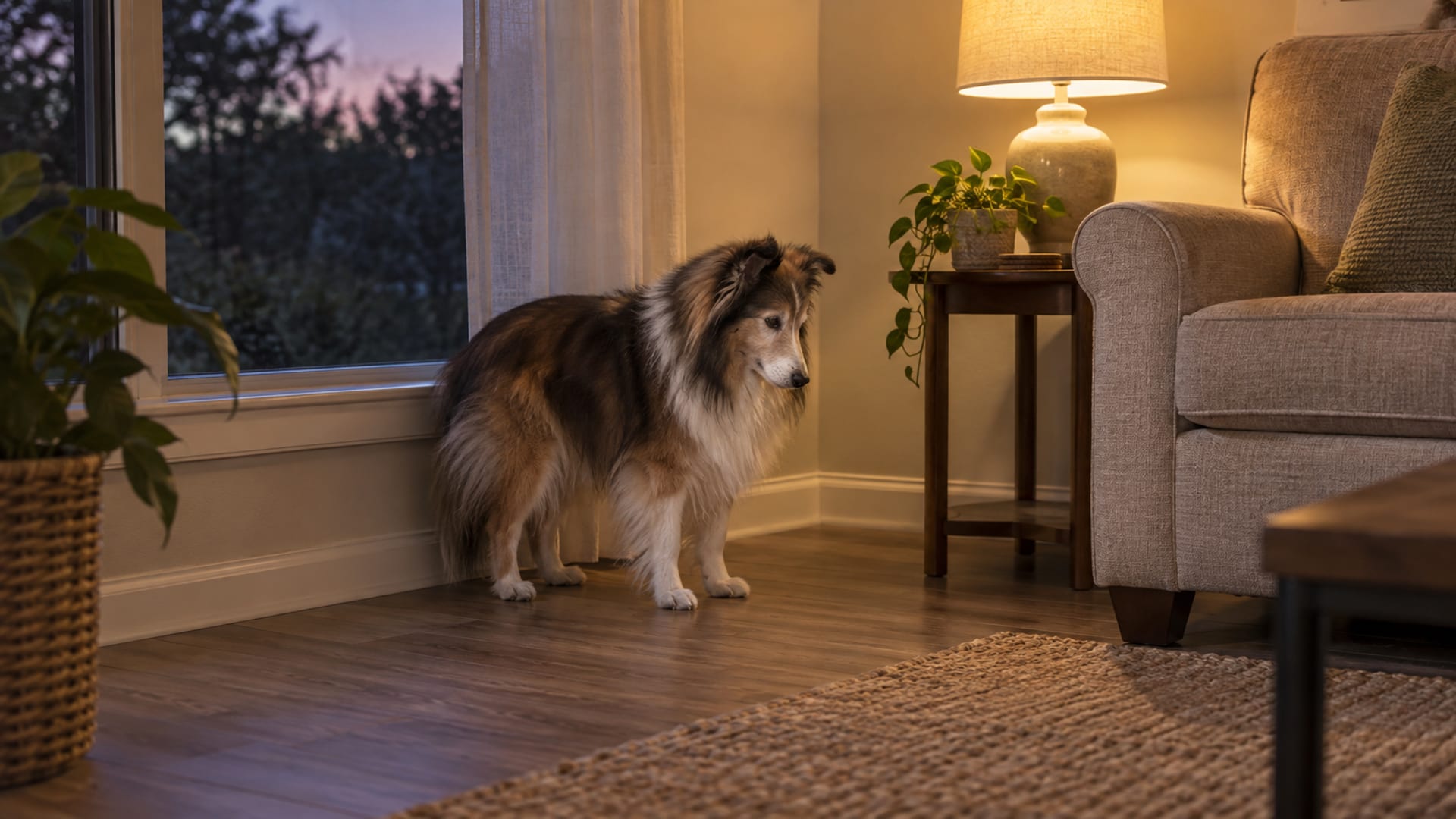
If your older dog is pacing, staring, getting stuck in corners or awake all night, make the house safe tonight and book a vet exam in the next few days. Call a vet or emergency clinic right away for collapse, a seizure, sudden severe neurologic change, inability to stand, severe pain, trouble breathing or possible poisoning. "Dog dementia" usually means canine cognitive dysfunction, an age-related brain condition that can cause confusion, sleep changes, accidents and anxiety, according to Cornell University College of Veterinary Medicine. Pain, vision or hearing loss, urinary disease, hormone problems, organ disease and brain disease can cause the same signs, so the list alone can't tell you which one your dog has.
Key takeaways
Tap a card to bring it forward.
- Collapse, seizures, inability to stand, severe pain, trouble breathing or possible poisoning need a vet right away.
- Dog dementia usually means canine cognitive dysfunction, an age-related condition that tends to progress over time.
- Vets group the signs into six areas: disorientation, interaction, sleep, house-soiling and learning, activity and anxiety.
- Pain, sensory loss, urinary disease, Cushing's disease and brain disease can look the same, so the vet exam comes first.
- A steady routine, clear pathways, gates, non-slip floors and furniture that stays put help at home starting today.
- There is no single cure, but medicine, diet and daily activity may ease signs or slow decline in some dogs.
Your older dog is pacing, confused or up all night: what to do tonight
If you're up in the middle of the night with a dog who seems lost in their own home, start with safety. You don't need a diagnosis to protect your dog tonight.
Put a gate across the stairs and close off any room where your dog could fall, get trapped or chew something unsafe. Clear a simple path between the bed, the water bowl and the door you use for potty breaks. If the floors are slick, lay down rugs or mats along that path. Leave the furniture where it is, because a familiar layout is easier for a confused dog to move through. Take your dog outside on a leash or into a securely fenced yard, and stay with them. Keep food, water, bedding and a toilet spot easy to reach.
Please don't scold accidents or night pacing. The Merck Veterinary Manual says punishment should be avoided because it can raise anxiety and make learning problems worse. A calm voice and the usual bedtime routine help more.
Then start a record. Write down the date you first noticed each change, and film an episode on your phone if you can. A 30-second video of your dog stuck behind a door or circling at 3 a.m. shows your vet more than any description.
This is how I'd sort the urgency:
- Get help now: collapse, a seizure, sudden severe neurologic change, inability to stand or walk, severe pain, breathing trouble, severe distress, or a chance your dog swallowed something toxic. The Merck guide to neurologic evaluation describes these as signs that need prompt veterinary assessment.
- Call your regular vet this week: new confusion, night waking, accidents, staring or changes in how your dog greets the family, or any of these getting worse.
You can find a clinic near you in our directory of local vets.
What canine cognitive dysfunction is
Canine cognitive dysfunction syndrome is an age-related neurodegenerative condition. In plain words, the brain changes with age in a way that affects memory, learning, awareness, sleep, activity and social behavior. Cornell says signs may begin around 9 years of age or older.
It's common. The American Animal Hospital Association (AAHA) cites roughly 14% to 22.5% of dogs older than 8 with age-related cognitive impairment. Merck reports one study that found signs consistent with the syndrome in 28% of dogs aged 11 to 12 and 68% of dogs aged 15 to 16. An internet survey Merck also describes estimated 14.2% in dogs older than 10, with more than 85% of those likely cases never diagnosed. The large Dog Aging Project study looked at 15,019 companion dogs using an owner-completed rating scale; because owners filled it in at one point in time, it estimates impairment and doesn't confirm a vet diagnosis in each dog.
Common still doesn't mean it's something to shrug off. Merck says abnormal impairment should be reported to your vet, and catching it early may leave more ways to manage it.
The condition usually progresses. AAHA's 2025 guidance report describes three stages: mild, with subtle changes and normal daily function mostly intact; moderate, with changes that get in the way of daily life and call for adjustments at home; and severe, where the dog needs help with basic functions. The same report notes that no standard cognitive test exists for routine checkups, and no commercial blood test can confirm the diagnosis.
The signs to watch for: the DISHAA pattern
Vets use the letters DISHAA to group the changes. AAHA recommends these six categories:
- Disorientation: getting lost in familiar rooms, getting stuck in corners or behind furniture, staring into space or at walls, wandering, or seeming unable to find the way.
- Interaction changes: less interest in the family, unusual clinginess or avoidance, reacting differently to familiar people or things, or seeming not to recognize someone.
- Sleep-wake changes: sleeping more during the day and waking, pacing, crying or wandering at night.
- House-soiling and learning: peeing or pooping indoors after years of good habits, forgetting known cues like "sit," or having a hard time learning something new.
- Activity changes: less play, restlessness, repetitive movement or pacing, and changes in appetite.
- Anxiety: new fears, irritability, distress, or needing you much more than before.
One sign on its own tells you little. A pattern across several categories, building over weeks or months, is what gets a vet's attention. Write down which letters fit your dog and when each change began.
If the crying or pacing happens mostly when you leave the house, that points in a different direction, and our page on dog separation anxiety covers that pattern.
Other health problems that can look like dementia
Many conditions in older dogs cause the same behavior as dementia, and some of them are treatable.
- Pain and arthritis, which can make a dog restless, irritable or reluctant to get up and go outside.
- Vision, hearing or smell loss, which can make a dog seem lost, startle easily or miss your call.
- Urinary disease, which can cause indoor accidents that look like forgotten house training.
- Organ disease and endocrine (hormone) disease, including Cushing's disease.
- High blood pressure, in the right clinical situation.
- Seizure disorders.
- Brain tumors and other structural brain disease.
No single sign proves any one of these. That's why AAHA describes cognitive dysfunction as a diagnosis of exclusion in everyday practice: the vet rules out the other causes first. A dog can also have more than one problem at once, such as arthritis on top of cognitive changes.
How a vet evaluates it, and what the evaluation may cost
Expect the visit to start with questions. Your notes and videos help here. According to AAHA, a history, a physical exam, a neurologic exam, blood chemistry and a urinalysis are central to the workup. Depending on what the vet finds, the visit may also include:
- A pain check and a look at vision and hearing.
- A blood pressure reading when it's called for.
- MRI, and possibly a sample of cerebrospinal fluid (CSF, the fluid around the brain and spinal cord), when a brain tumor or other structural disease is a concern. Both usually mean anesthesia and a specialist.
AAHA's 2025 report describes two levels of diagnosis. The first rests on history and clinical signs after other illness is ruled out. The second adds MRI and CSF analysis. The report also admits that the full workup may be impractical for many families because of cost and anesthesia concerns, so many dogs are diagnosed and managed at the first level.
Your vet may also use a questionnaire. The CCDR scale was built from a 2011 study of 957 older dogs. CADES, from a study of 215 dogs aged 8 to 16.5, is designed to track severity and change over time. A 2024 comparison of CADES, CCAS and CCDR found the three don't always score the same dog the same way. They help with screening and follow-up; the exam and tests still decide the cause.
On cost, I can't give you a reliable national price, because I haven't found one from a veterinary source. Prices vary by region, type of practice, dog size, urgency, the lab panel, specialist referral and whether anesthesia is involved. MRI with anesthesia and CSF collection costs far more than a routine exam and bloodwork. Ongoing care can include a prescription diet, prescribed medicine, supplements your vet approves, follow-up visits, home changes like gates and rugs, and sometimes daytime care or boarding. Ask the clinic for a written estimate for each step before you agree to it.
What helps at home starting today
Home changes help whatever the final diagnosis turns out to be. Merck and senior-care guidance support these:
- Keep a predictable routine. Meals, walks, potty breaks and bedtime at the same times each day.
- Keep pathways clear. Remove clutter, cords and shoes from the routes your dog uses.
- Use gates at stairs and in rooms that aren't safe.
- Add non-slip surfaces where your dog slips, such as tile or wood floors near the water bowl and the door.
- Leave the furniture where it is. Rearranging a room can leave a confused dog stuck or lost.
- Supervise outdoors, on a leash or in a secure fence, since some dogs wander off and can't find the way back.
- Offer more potty breaks and make water, food and a soft bed easy to reach.
- Use gentle rewards. Praise and treats for the things you want, and no punishment.
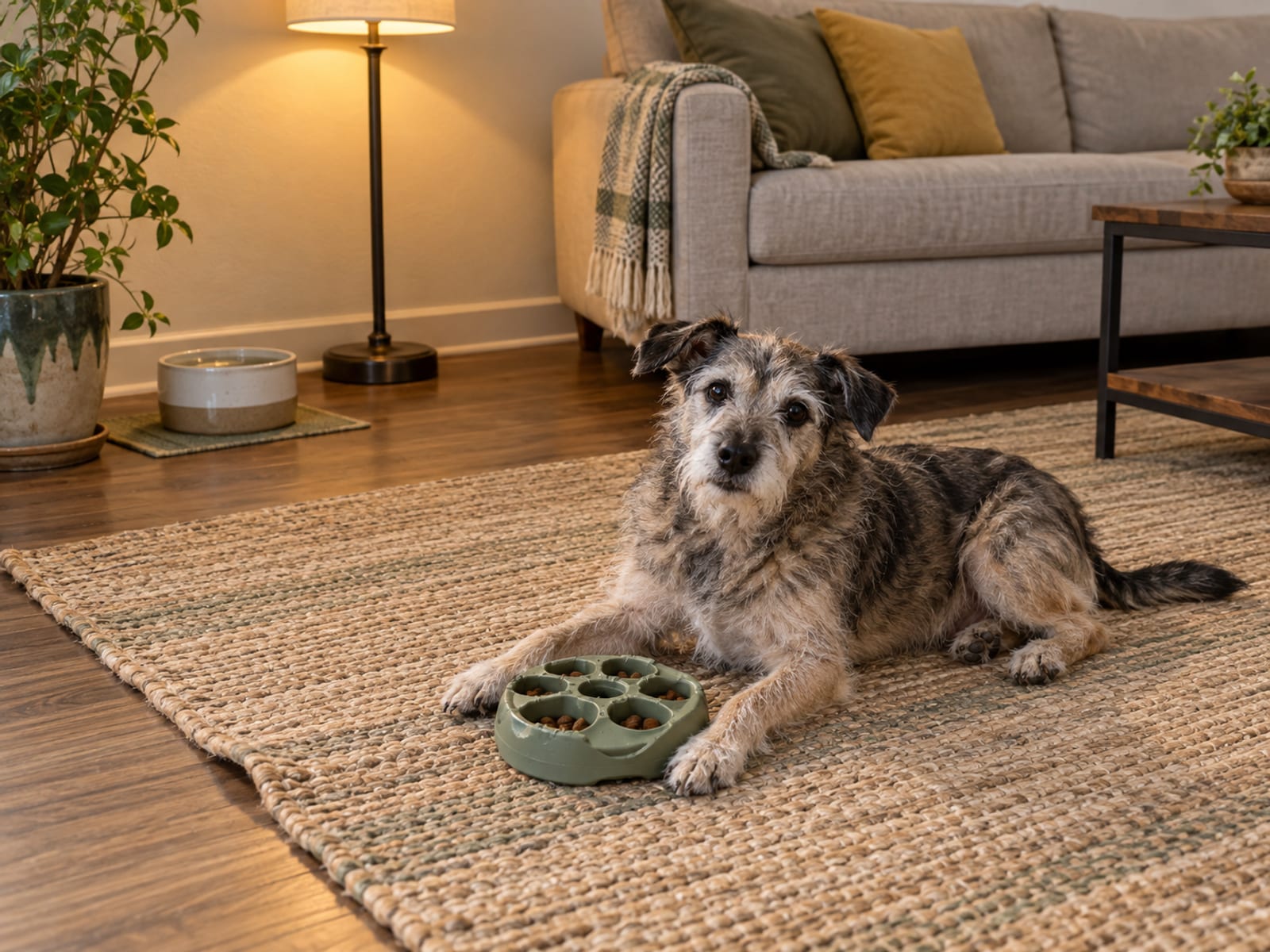
Daily mental and physical activity matter too. Merck recommends regular exercise suited to your dog's comfort and mobility, interactive play and puzzle toys, and positive reinforcement. Merck notes that this kind of stimulation may improve signs or slow decline, though it won't reverse the condition.
Treatments your vet may discuss: medicines, diets and supplements
Cornell says there is no single treatment or cure, and that management may improve signs or slow decline.
Medicine. Merck describes selegiline, a monoamine oxidase-B (MAO-B) inhibitor, as the drug labeled in North America for canine cognitive dysfunction. Merck also mentions propentofylline, licensed in Europe and Australia for dullness, lethargy and a depressed demeanor in older dogs. Your vet may use other medicines for anxiety, sleep, pain or another health problem the dog has. Use only the medicine and amount your vet prescribes, and don't give human sleep aids or calming drugs on your own.
Diets. Veterinary sources describe diets with added antioxidants and fatty acids, including DL-alpha-lipoic acid and L-carnitine. Diets with medium-chain triglycerides (MCTs) supply ketone bodies, a backup fuel for aging brain cells. Cornell names prescription diets marketed for brain support, although what's on the market and what's in each formula can change. Ask your vet whether a diet change fits your dog, especially if there's kidney, liver or stomach trouble.
Supplements. Products sold for older dogs' brains may contain phosphatidylserine, resveratrol, vitamins, alpha-lipoic acid, carnitine, omega-3 fatty acids, glutathione, SAMe or apoaequorin. The evidence behind them is limited and specific to each product, so one formula's results don't carry over to another. Supplements can also interact with medicines or be a poor fit for a dog with other illness. Bring the label to your vet before you start one. The same goes for CBD and calming products; I don't have a veterinary source to point you to on those.
Managing nighttime restlessness
Night waking is often the hardest part, because nobody sleeps. Merck suggests working on the day to fix the night:
- Spend time with your dog during the day and keep them engaged.
- Get your dog into daylight, outdoors or by a sunny window.
- Add daytime activity your dog can manage comfortably.
- Keep the same sleeping spot and the same bedtime.
- Darken the room at night.
- Use gates or a safe, enclosed area so your dog can't wander into danger while you sleep.
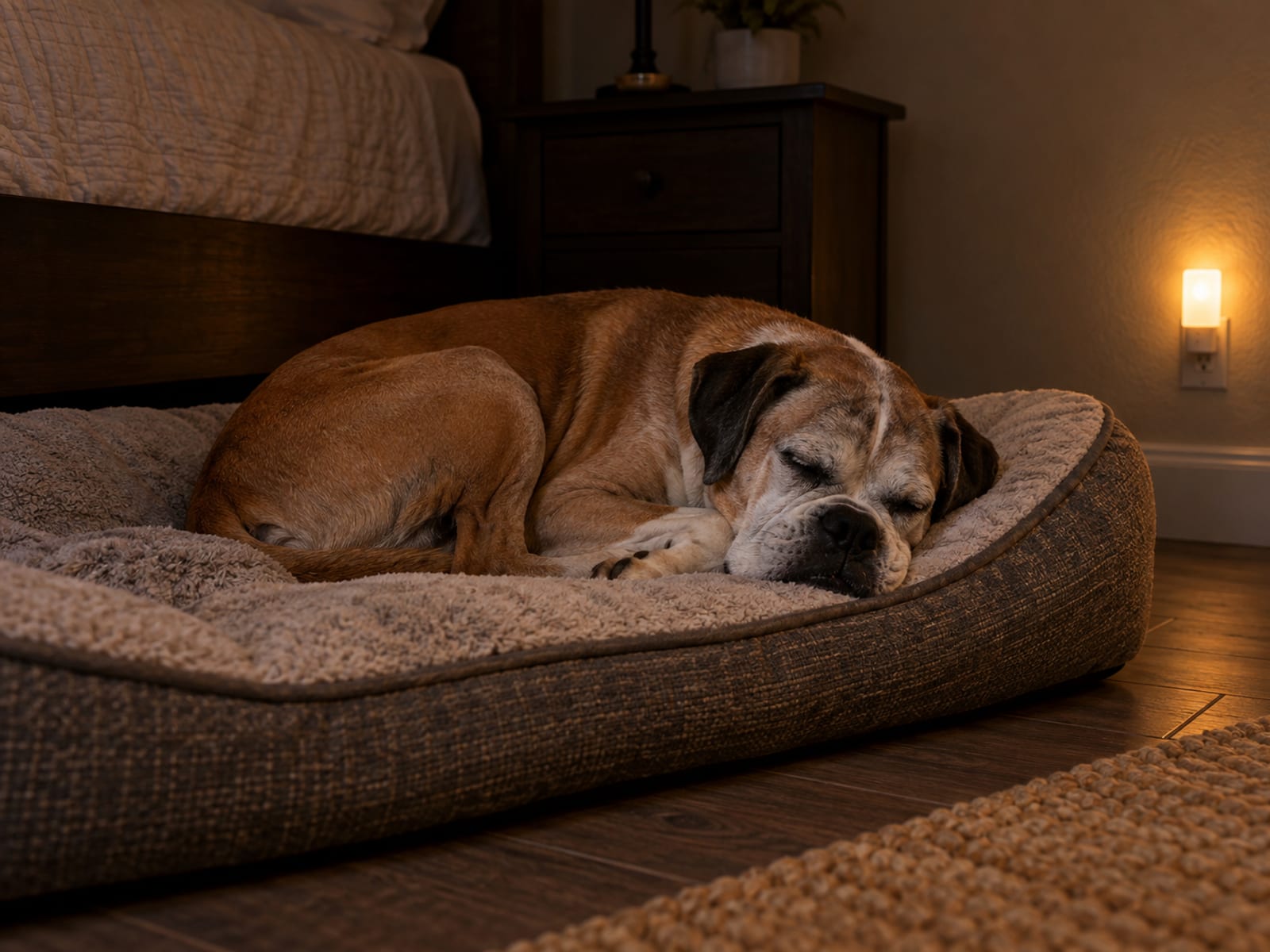
A small night-light may make sense if your dog has vision loss and struggles to find the way, but Merck's own advice centers on daylight during the day and darkness at night.
Keep pain in mind too. A dog who can't get comfortable may pace for reasons that have nothing to do with memory. Call your vet about medicine when the sleep problem is persistent or severe, when your dog seems distressed, when the wandering is unsafe, or when the home changes haven't helped after a fair try. AAHA also backs talking with your vet about anxiety and sleep problems as part of managing the condition. If you're exhausted, supervised daytime care can give you a break and keep your dog active during the day.
What to write down each week
Tap a card to bring it forward.
- The date each new change started, and a short video of any episode.
- Which DISHAA signs you see: disorientation, interaction, sleep, house-soiling, activity, anxiety.
- Sleep, appetite, drinking and toileting.
- Comfort and mobility: getting up, stairs, walks.
- Interaction with the family and signs of fear or distress.
- The number of good days and bad days.
Tracking progression and quality of life
Judge how your dog is doing over weeks, and never from one rough night. AAHA encourages repeated observations, and your vet may repeat a questionnaire like CADES at later visits to see whether the score is changing.
At home, keep a simple log. Track sleep, eating, drinking, comfort, mobility, toileting, interaction, anxiety, and whether your dog still enjoys things safely, such as a short walk, a favorite chew or time on the couch with you. Mark each day good or bad. Over a month, that tally shows you and your vet the direction things are going.
The hard question comes later for many families. When the severe stage arrives, and a dog needs help with basic functions, is anxious much of the time, or has more bad days than good ones, it's time for an honest talk with your vet about comfort care and, eventually, euthanasia. There's no single right day, and you don't have to decide alone. Our senior dog care guide covers comfort, mobility and end-of-life quality of life in more detail.
Questions owners ask about dog dementia
How do I tell if my dog has dementia?
You can't confirm it at home. You can spot the pattern: several DISHAA signs that build over time in an older dog. A vet then rules out pain, sensory loss, urinary disease, hormone problems, organ disease and brain disease with an exam and tests, and that's how the diagnosis is made.
How long will a dog with dementia live?
It varies a great deal, and I can't give you a typical survival time from a veterinary source. What shapes the outlook is how quickly the signs progress, what other health problems your dog has, and how well home changes and treatment keep your dog comfortable. Your vet's repeated checks and your good-day and bad-day log are the best guide.
Could my older dog's restlessness at night be pain?
Yes. Pain and arthritis are on the list of conditions Cornell says blood and urine tests and an exam help rule out. A dog who can't settle or struggles to lie down may be uncomfortable, so ask your vet to check for pain before putting the night pacing down to memory loss.
Does my dog still recognize me?
Changes in how a dog responds to family are one of the DISHAA signs, and they vary a lot from dog to dog. Merck treats altered interaction as a sign to note, and it doesn't prove your dog has lost their bond with you. Keep your voice, touch and routine steady.
The next step
Tonight, gate the stairs, clear the path and keep things calm. Tomorrow, start your log and film anything unusual. Then book a vet visit and bring your notes, because the first job is finding out whether something treatable is behind the change. If your dog collapses, has a seizure, can't stand, is in severe pain or distress, or may have eaten something toxic, don't wait for that appointment. You can find a nearby clinic in our directory of local vets.
Sources
- American Animal Hospital Association: AAHA's 2025 guidance report
- American Animal Hospital Association: American Animal Hospital Association (AAHA)
- Cornell University College of Veterinary Medicine: Cornell University College of Veterinary Medicine
- Merck Veterinary Manual: Merck guide to neurologic evaluation
- Merck Veterinary Manual: Merck Veterinary Manual
- PubMed: 2011 study of 957 older dogs
- PubMed Central: 2024 comparison
- PubMed Central: Dog Aging Project study