
Why Do Dogs Tilt Their Heads: What It Means and When to Call the Vet
By Cal Hewitt · Published , updated
Health
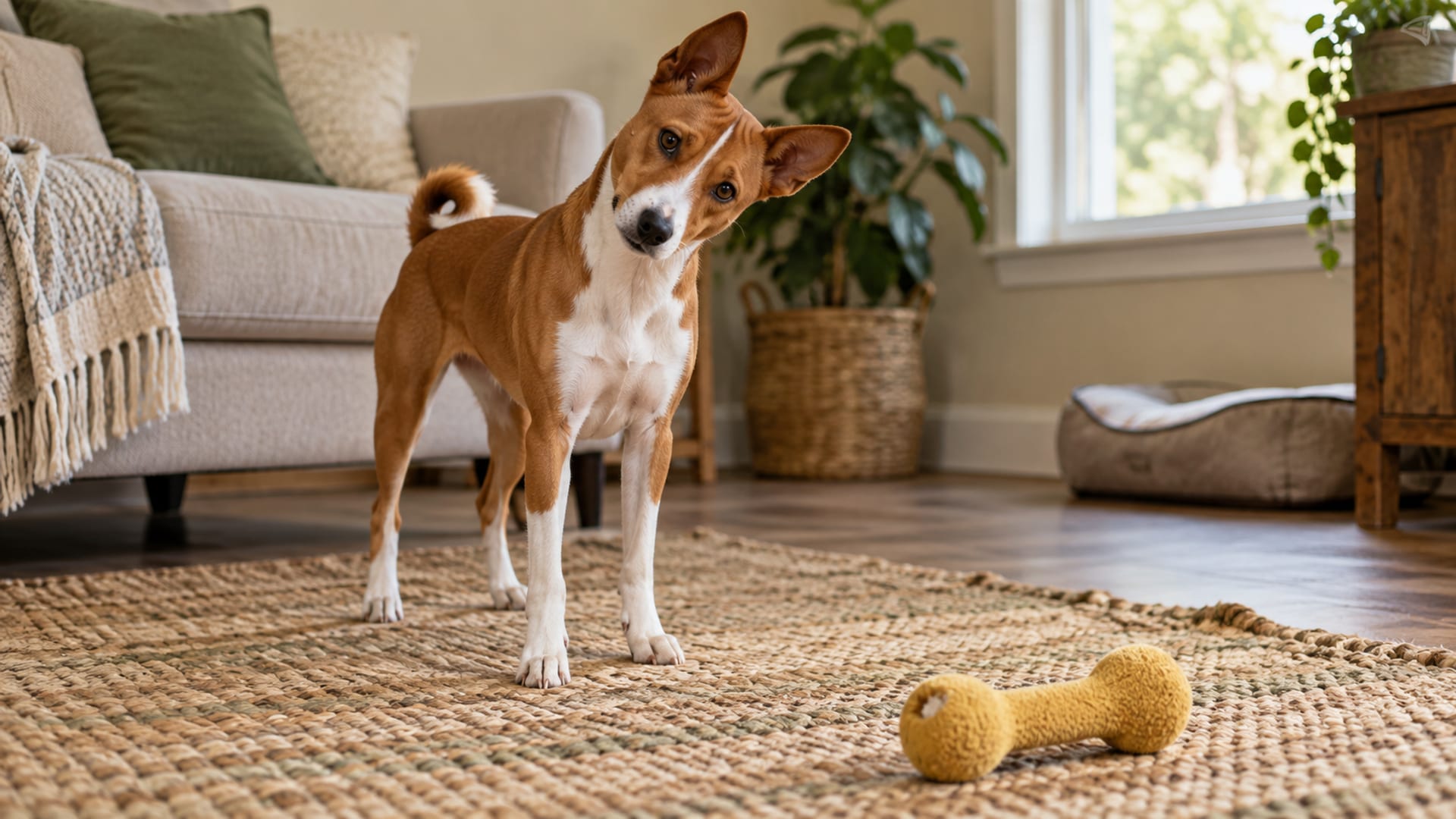
Most dogs tilt their heads for a few seconds because a sound, a word or your face has caught their attention. Turning the head and ears can help a dog work out where a sound comes from, or see your face more clearly past the muzzle. A tilt that stays, starts suddenly, or comes with stumbling, circling, falling, eyes that drift or jerk, or vomiting is a different thing. Call a veterinarian promptly for those signs. If your dog also can't stand, go to an emergency clinic.
Key takeaways
Tap a card to bring it forward.
- A short tilt while your dog listens to you or to a sound is usually attention, and it is common.
- Turning the head and ears may help a dog locate a sound or see your face past the muzzle.
- A 2021 study linked tilting to familiar toy names in seven gifted word-learner dogs, which does not show that every dog tilts because it understands words.
- A tilt that stays, starts suddenly, or comes with balance loss, circling, falling, fast eye movements or vomiting needs a vet.
- Keep an unsteady dog in a small, padded area away from stairs while you arrange care.
Why does my dog cock its head when I talk or at a sound?
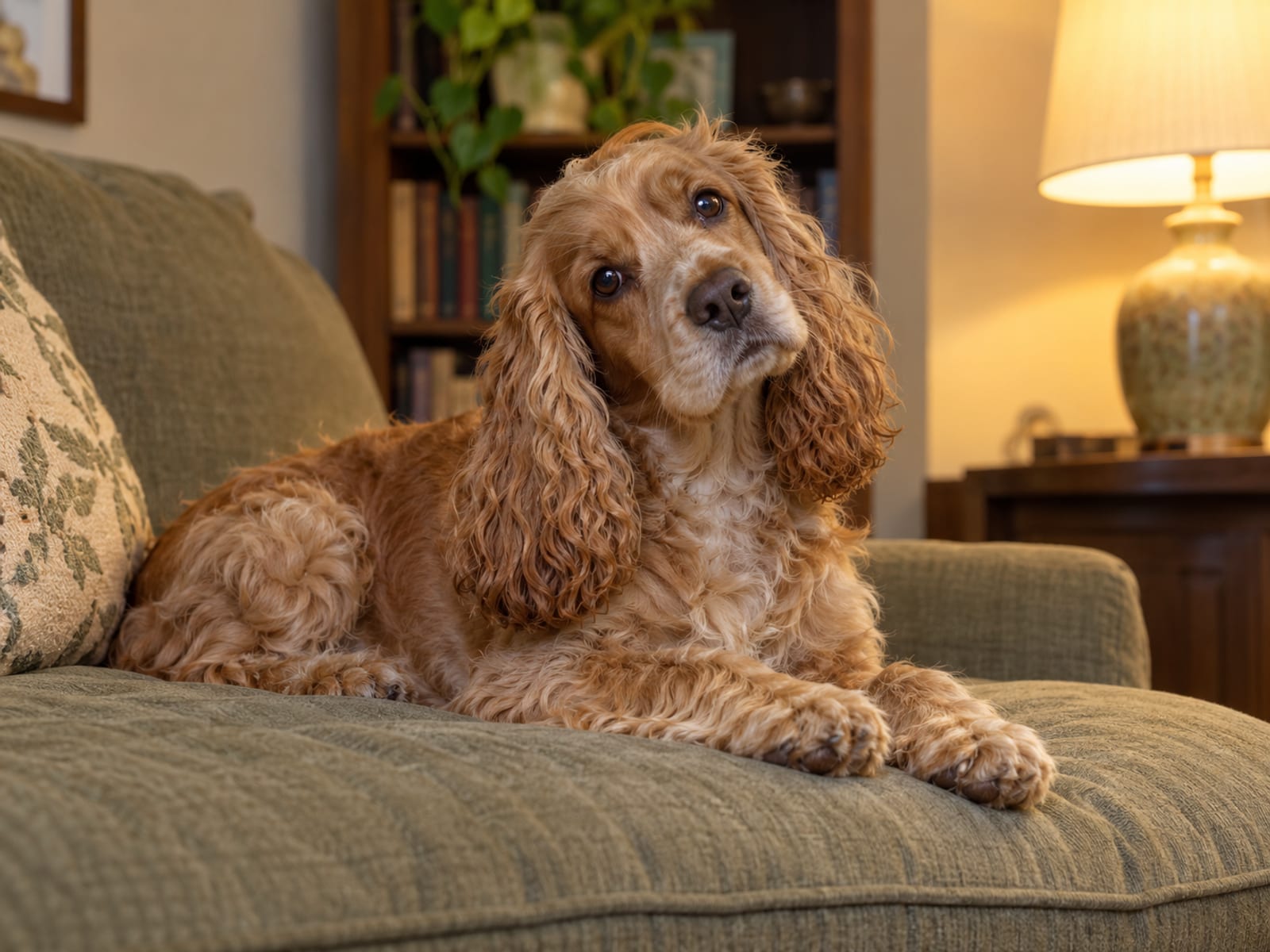
You say your dog's name, or squeak a toy, and the head tips to one side. It is one of the most loved things a dog does, and the plain answer is that the dog is paying attention to you. I'll give you the short version first and the details after, because the one thing worth remembering is the difference between a tilt that comes and goes and a tilt that stays.
A tilt that comes and goes, tied to a sound or to something you said, and with a dog who walks and acts normally, is ordinary behavior. A tilt that shows up with no sound or interaction to explain it, holds for a long time, or arrives with other changes belongs to a different group, and the sections below on telling them apart and on calling the vet are the ones to keep handy.
What does a brief tilt usually mean?
There are a few explanations, and they can overlap. Some are backed by more evidence than others.
Hearing. VCA explains that a dog's ear flaps can partly or fully cover the ear canal, so moving the head and the ear may help the dog pick up a sound better. Sound also reaches each ear at a slightly different time, which helps a dog judge which way a noise is coming from and how far away it is. That is a veterinary explanation, not the result of an experiment built to test head tilts.
Seeing your face. VCA and the American Kennel Club both describe the idea that a dog may tilt to see your face around its own muzzle. The AKC mentions Stanley Coren's pilot observation that dogs with more pronounced muzzles seemed to tilt more often toward their owners. Treat this one as a reasonable idea that is still open.
Social attention. Dogs read tone of voice, facial expressions, eye movements and body language, according to VCA. A tilt often shows up while a dog is closely watching and listening to you. It does not translate to "I understand every word."
Attention and treats that make it happen again. VCA and the AKC both note that praise, affection, treats or a walk after a tilt can make a dog repeat it. That explains why a tilt can become more common in a dog who gets a big reaction, without telling us why the first tilt happened. It is plausible, but nobody has proven it.
If you want to know more about the other signals your dog gives you, our article on dog body language covers stress, fear and comfort, and what to do about each.
Does a head tilt mean my dog understands what I'm saying?
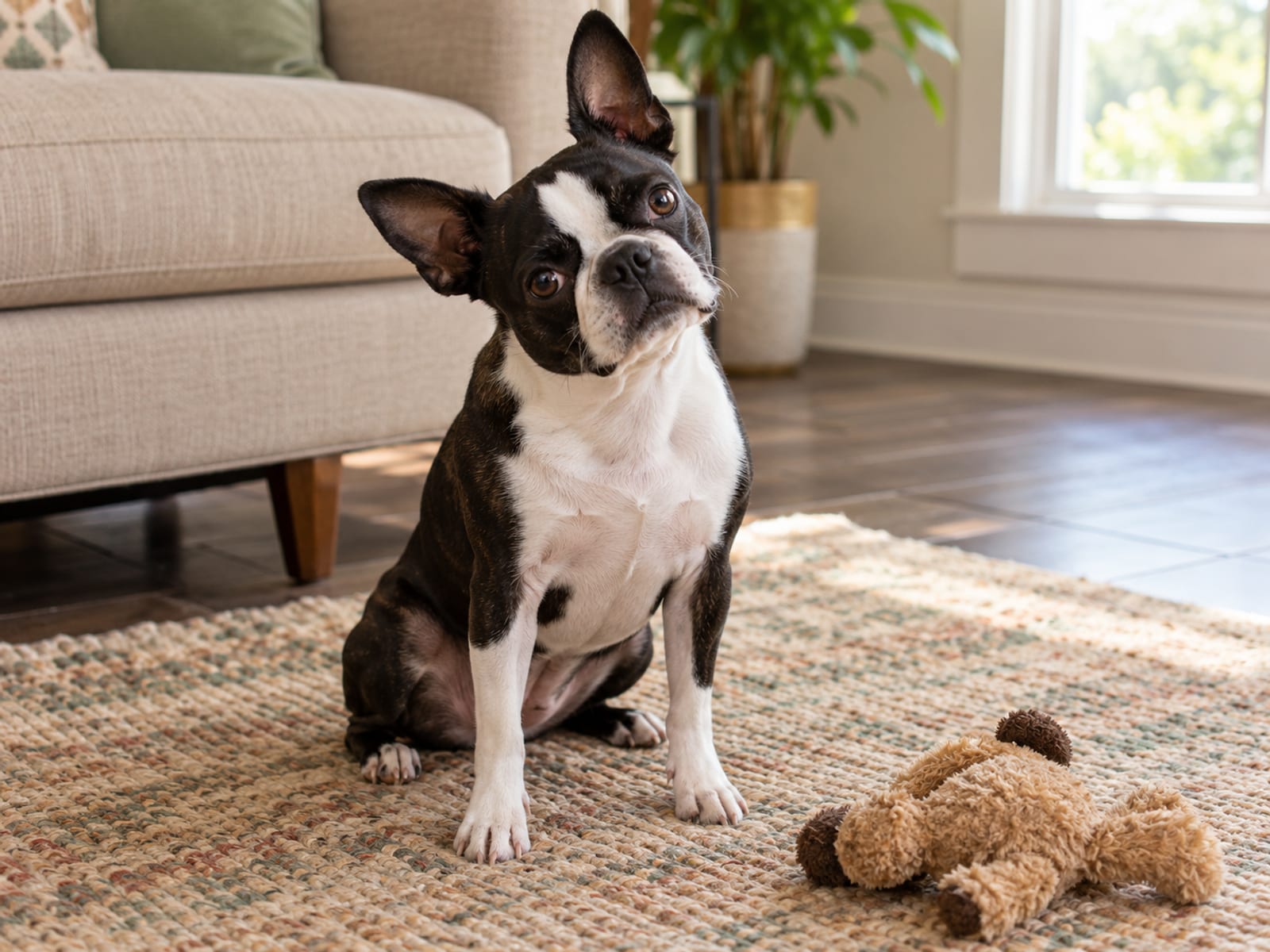
Not necessarily, and the strongest study on this shows why. In 2021, researchers published an exploratory analysis of head-tilting in dogs in the journal Animal Cognition. They watched 40 dogs during tests in which an owner asked the dog to fetch a toy by name. Thirty-three were typical family dogs motivated by toys. Seven were gifted word learners, dogs that had reliably learned the names of many toys.
In the first experiment, the gifted dogs tilted their heads in 43% of trials. The typical dogs tilted in 2%. Each gifted dog also tended to favor the same side across repeated tests. The authors suggested that tilting may be related to processing meaningful or relevant stimuli.
Tap or hover a row to highlight it.
| Figure | What it means |
|---|---|
| Figure40 dogs | What it meansTotal sample |
| Figure33 dogs | What it meansTypical family dogs |
| Figure7 dogs | What it meansGifted word-learner dogs |
| Figure43% of trials | What it meansTilt frequency in gifted dogs, first experiment |
| Figure2% of trials | What it meansTilt frequency in typical dogs, first experiment |
How far does that go for your own dog? Not very far. The group was small, the task was narrow (fetch a named toy), and the gifted dogs are unusual. The result does not show that an ordinary dog tilts because it understands a word, that a tilt measures intelligence, or that your dog's left or right side means anything in particular. It also says nothing about a tilt that stays because of illness. If your dog tilts when you say a familiar word, enjoy it; it may well be attention to something that matters to your dog.
How can I tell a brief tilt from a tilt that stays?
You can usually tell in the moment by looking at four things.
Context. A brief tilt follows something: a sound, your voice, a squeaky toy, a new face. A tilt with no trigger is different. VCA advises a veterinary exam when a dog tilts its head without hearing anything.
Duration. A brief tilt lasts seconds and then the head straightens. If the head stays tilted while your dog rests, walks or naps, or the tilt is still there an hour later, that is a tilt that stays. One clue is that one ear is held lower than the other all the time.
How your dog moves. Watch your dog walk across the room. A dog with a brief tilt walks normally. Leaning, stumbling, a wide-based stance, falling or rolling to one side are not part of a normal brief tilt.
Other signs. Look at the eyes, the stomach and the ears. Eyes that drift or jerk from side to side, vomiting, refusing food or water, and ear pain, odor, discharge, scratching or head shaking all change how quickly you should call.
There is one look-alike to know about. Tilting the head to eat, or chewing on only one side, can be a sign of dental disease, according to AAHA. That is a separate problem from a balance-related tilt, and it is worth mentioning to your vet if you see it. Our Signs of a Healthy Dog guide can help you check your dog's normal baseline before you call.
When do I call my vet, and when do I go to an emergency clinic?
If your dog shows any of these, call a veterinarian promptly:
- A head tilt that stays, or one that started suddenly
- Loss of balance, a wide-based stance, stumbling, leaning or falling
- Circling, or rolling to one side
- Nystagmus, meaning the eyes drift or jerk without control
- Vomiting or obvious nausea
- Trouble standing or walking, or new disorientation
- Ear pain, odor, discharge, redness or head shaking
- Rapid worsening
The Merck Veterinary Manual says a head tilt, meaning one ear held lower than the other, usually points to a problem with the balance system. The Vestibular Disorders Association lists head tilt, circling, falling, nystagmus, poor coordination and vomiting as possible signs. The ASPCA lists head tilt with loss of balance, unusual eye movements, circling or hearing loss as ear-related signs that need veterinary attention. None of these signs names a disease. They tell you the dog needs an exam.
My rule of thumb: if it is during your regular vet's hours, call now and say what you see, in those words. If your dog cannot stand, keeps falling or rolling, cannot keep water down, or is getting worse while you watch, or it is after hours, go to an emergency clinic. The AAHA guidance on strokes in pets notes that a head tilt, trouble walking and abnormal eye movement can occur with a stroke, and that a head tilt alone does not prove one. Only an exam can sort that out. You can find both kinds of clinics in the DogServ directory under vets and emergency vets.
What can cause a tilt that stays?
I can't tell you what is going on with your dog, and an article can't either. What I can do is show you what a vet will be thinking about, so the appointment makes sense.
The list from the Merck Veterinary Manual, the 2023 review of idiopathic vestibular syndrome and related sources includes:
- Idiopathic vestibular disease, often called old dog vestibular disease. "Idiopathic" means no cause is found. It is the pattern behind many tilts in older dogs.
- Middle or inner ear disease, including infection. Our dog ear infection article covers those causes and care.
- Hypothyroidism, which has been linked to vestibular disease in a study of 10 dogs.
- Vascular problems, including stroke.
- Inflammation or infection in the nervous system.
- Trauma to the head or ear.
- Tumors or other lesions in the brain.
- Less often, drug or toxin effects, depending on the history.
An ear infection is not the answer every time, and neither is a stroke. That is the reason the exam matters. Please don't start ear drops, human medicine or a home remedy before your vet tells you to.
What will the vet do, and what might it cost?
The visit usually starts with questions: when it began, how it has changed, medications, past ear problems and other illness. Then comes a general exam and a neurologic exam. The vet watches your dog's posture, gait, balance and eye movements, and looks in the ears. Depending on what the vet finds, next steps may include blood tests, urinalysis, thyroid testing, blood pressure measurement, and, for selected cases, a CT or MRI, cerebrospinal fluid testing or hearing-pathway testing. Treatment depends on the cause, and that is the vet's call.
Costs vary widely by region and clinic, so these dated figures are for orientation:
Tap or hover a row to highlight it.
| Item | Reported range | Source and date |
|---|---|---|
| ItemEmergency exam | Reported range$65 to $215 (national average $98) | Source and dateRover, 2025 |
| ItemDog MRI | Reported range$1,811 to $4,140 (national average $2,285) | Source and dateCareCredit, June 2026 |
| ItemDog MRI | Reported range$2,300 to $5,000 or more | Source and datePetMD, January 2025 |
The Rover figure covers an emergency exam only, not a full workup. The CareCredit and PetMD numbers are for MRI. Both are cost surveys, not veterinary guidelines. The total for a full workup depends on which tests your dog needs. Ask the clinic for an itemized estimate that lists the exam, lab work, imaging, anesthesia, specialist reading and any hospital stay, and ask which parts can wait.
How long does recovery take, and how do I keep my dog safe meanwhile?
For idiopathic vestibular disease, Southfields Veterinary Specialists reports that most pets show some improvement within 72 hours, and full recovery may take two to five weeks. A mild tilt can remain afterward, and it usually has little effect on quality of life. A relapse can happen, but it is less common. Other causes recover differently, and improvement does not prove which cause your dog had.
While you arrange care, or while your dog is recovering, the same veterinary sources describe a simple plan:
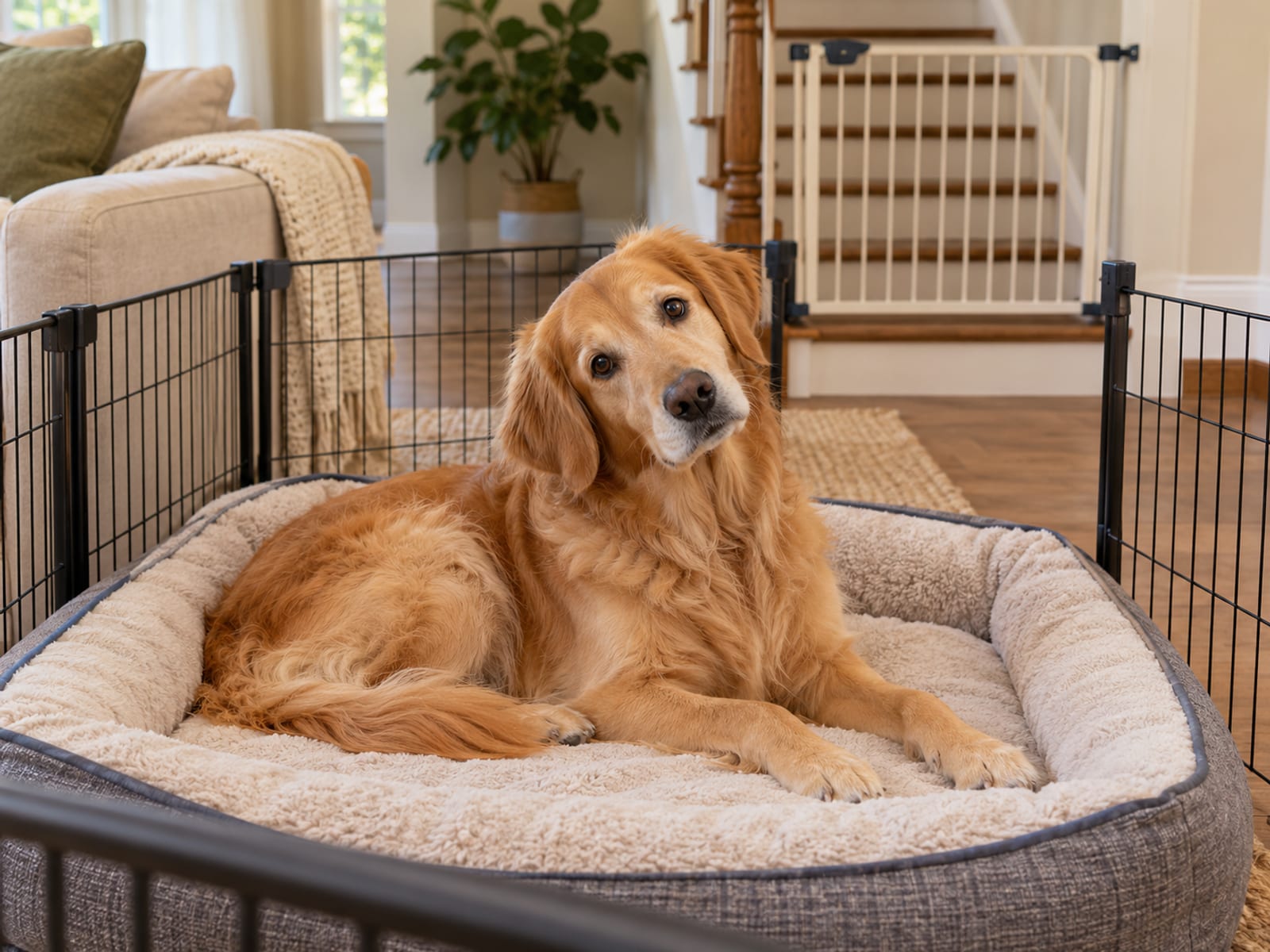
- Keep your dog in a small, safe area or pen.
- Block stairs, jumping and furniture.
- Use soft, well-padded bedding.
- Stay with your dog while it eats and drinks if it seems disoriented.
- Go outside with your dog for bathroom trips and support it if it is unsteady.
- Keep your dog indoors and off unsupervised outdoor time.
- Call your vet if your dog can't eat, drink, stand or walk safely, or gets worse.
If your dog is older, our senior dog care and dog dementia articles may help you sort out what else is going on at that age.
Questions people ask about dog head tilts
Why do dogs tilt their heads when you talk to them?
A brief tilt can reflect attention, sound processing, trying to see your face, social engagement, or a habit reinforced by your reaction. Dogs also pick up your tone and body language, not just words.
Are dogs that tilt their heads smarter?
A tilt is not a test of intelligence. The 2021 study found more tilting in seven gifted word learners during toy-name requests, but it did not measure intelligence, and typical pet dogs tilted rarely in that setting.
Can an ear infection make a dog tilt its head?
Yes. Middle or inner ear disease can affect the balance system and cause a tilt that stays. Ear pain, odor, discharge, scratching or head shaking may come with it.
What is vestibular disease in dogs?
It is a problem with the balance system, which involves the inner ear, the vestibular nerve and parts of the brain. A head tilt can be one sign, and an exam is needed to find the cause.
What should I do at home while I wait to see the vet?
Limit stairs and jumping, use padded bedding in a small area, and watch your dog eat, drink and go outside. Follow whatever your vet tells you on the phone.
Your next step
If your dog tilts its head for a moment when you talk, keep talking and enjoy it. If the tilt stays, started suddenly, or comes with any sign in the list above, call your vet today and describe exactly what you see. Look for a vet or an emergency clinic in the DogServ directory, and write down when the tilt started so you can tell the clinic. I can't examine your dog, and an article can't either, but a vet can.
Sources
- American Animal Hospital Association: AAHA
- American Animal Hospital Association: AAHA
- American Kennel Club: American Kennel Club
- ASPCA: ASPCA
- CareCredit: CareCredit
- Merck Veterinary Manual: Merck Veterinary Manual
- Merck Veterinary Manual: Merck Veterinary Manual
- PetMD: PetMD
- PubMed: study of 10 dogs
- PubMed Central: 2023 review of idiopathic vestibular syndrome
- PubMed Central: an exploratory analysis of head-tilting in dogs
- Rover: Rover
- southfields.co.uk: Southfields Veterinary Specialists
- VCA Animal Hospitals: VCA
- vestibular.org: Vestibular Disorders Association