
Why Do Dogs Love Squeaky Toys? The Instinct Behind It and How to Keep Play Safe
By Cal Hewitt · Published
Training
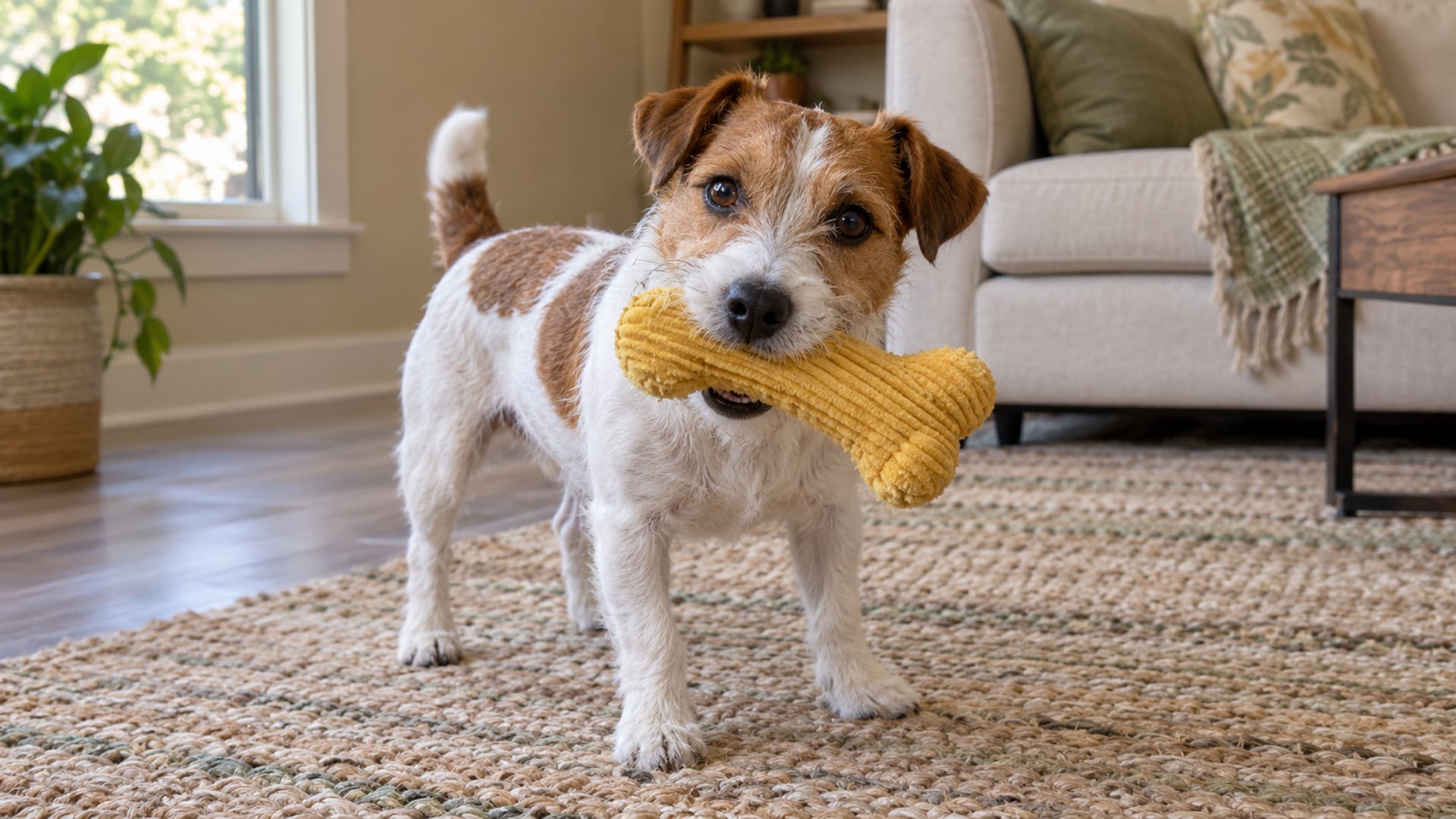
Dogs love squeaky toys because the sound, the movement, the texture and the chewing are all rewarding at once. The American Kennel Club says the high pitch may also resemble sounds linked to prey, but that is a theory, not a proven reason for every dog. Some dogs would rather have a ball, a tug rope or no toy at all.
The part that matters most for safety: if your dog rips a squeaky toy open, take it away as soon as the squeaker or stuffing shows. A swallowed squeaker can block the gut, and vomiting, appetite loss, belly pain, diarrhea, dehydration or lethargy need a call to your vet.
Key takeaways
Tap a card to bring it forward.
- Sound, movement, texture, chewing and novelty all make a squeaky toy rewarding.
- The prey-sound idea is one theory, and it does not explain every dog.
- Remove a toy the moment the squeaker or stuffing is exposed.
- A swallowed squeaker or toy piece can cause a blockage, so call your vet promptly.
- Ordinary squeaky play is not aggression; guarding, threats or biting need professional help.
- Quiet toys, tug toys, balls, food puzzles and scent games are good alternatives.
Why does my dog go so wild for squeaky toys?
Ears up, eyes locked on the toy, and a dog that will not stop making it squeak: it is a familiar scene, and there is rarely one single reason. A squeaky toy gives your dog several rewards in one object.
The AKC says many dogs are drawn to toys that act like prey, and that high-pitched squeaks and tearing apart soft plush toys can be very satisfying. That is a general explanation, not proof that every squeak sounds like prey to every dog.
Other things likely make the toy rewarding too:
- Your dog makes the sound by biting, so the squeak feels like its own doing.
- The toy moves in odd ways when shaken, and the texture feels good.
- Chewing is rewarding on its own, and a new toy gets extra attention.
- You join in through tug or fetch, or your dog learned that the squeak keeps the game going.
A 2010 peer-reviewed study by Pullen, Merrill and Bradshaw gives some numbers. It looked at short-term toy preferences in kennel-housed dogs. In the first trial, 34% of rehoming dogs and 43% of long-stay dogs interacted with the toys, and floor toys held attention longer than hanging ones. In a second trial, 76% of rehoming dogs interacted with at least one toy, and the less robust toys got more interaction. The authors concluded that interest may rise when a toy is easier to chew or makes a noise.
Keep the limits in mind. Those were kennel dogs, not pets on your couch. The study measured short-term interest, not lifelong preference, and it did not show that a squeak imitates prey.
Why does my dog rip the squeaker out, and when should I take the toy away?
A dog may go after the squeaker because that is the interesting part, because chewing and tearing feel good, or because dogs naturally pick objects apart. Destroying a toy does not, by itself, mean your dog is aggressive. It is usually chewing and object play.
What it does change is the toy's safety. Once your dog has opened the toy, take it away. Do not leave a dog alone with a soft toy it can shred. The AKC recommends that dogs who destroy soft toys do not get unsupervised access to them, and it warns that swallowing a squeaker or toy piece can cause serious complications and may need surgery.
A simple routine works well. Keep the squeaky toy as a "play with me" toy, bring it out for tug or fetch with you, and put it away afterward. That way you are there when the stitching gives way.
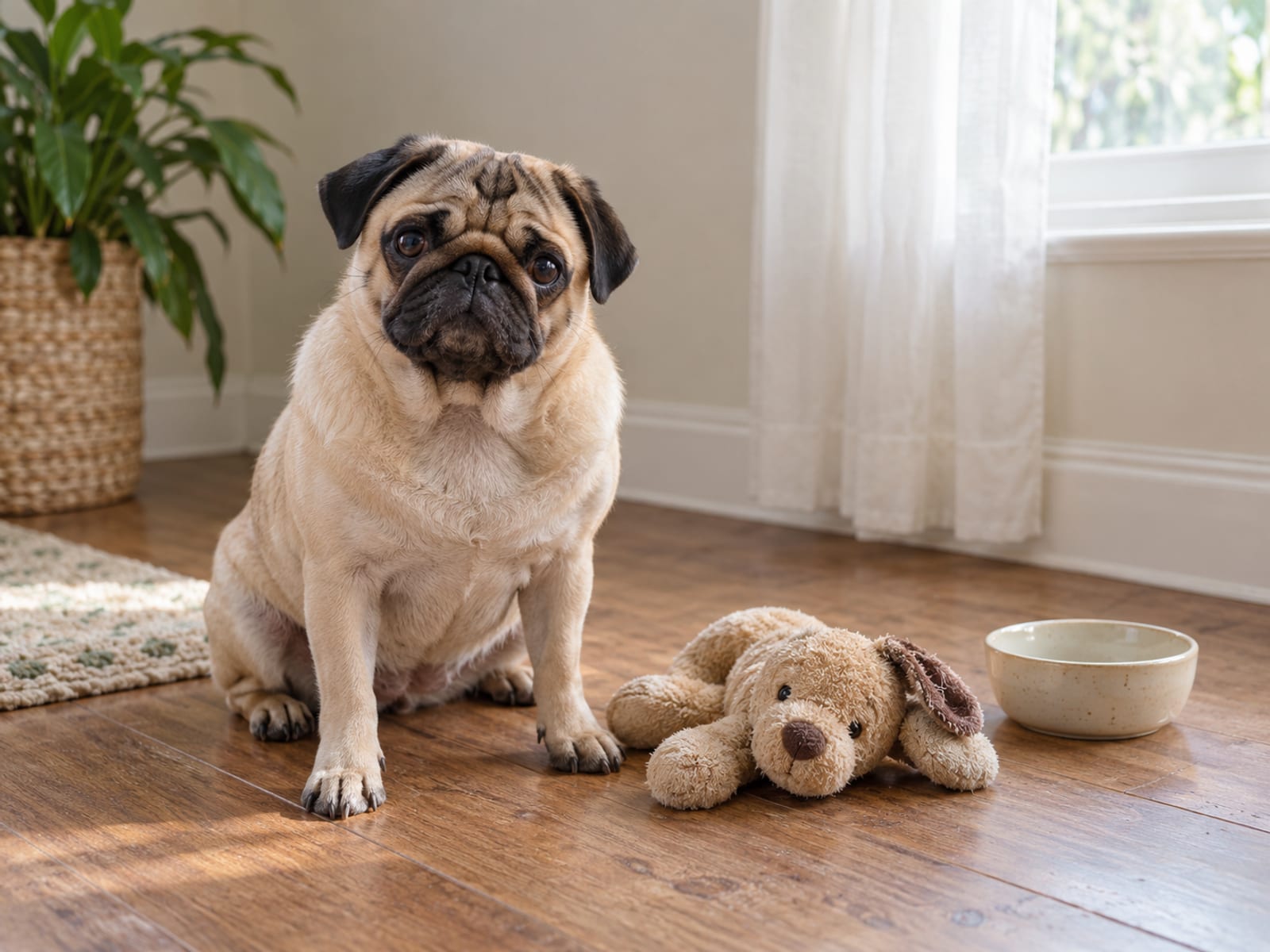
My dog swallowed a squeaker or a piece of toy. What do I do?
If you think your dog swallowed a squeaker, stuffing or any toy piece, call your veterinarian promptly, even if your dog seems fine right now. If your regular clinic is closed, use the emergency vet directory to find one that is open. Do not try to make your dog vomit, and do not wait at home hoping it will pass without a vet's guidance.
Cornell University's College of Veterinary Medicine describes a gastrointestinal obstruction as an emergency that may need surgery to remove the object. The signs include:
- Vomiting
- Loss of appetite
- Belly pain
- Diarrhea
- Dehydration
- Lethargy
Any one of these after a suspected swallow is a reason to phone the vet right away. Your vet may use a physical exam, X-rays or ultrasound, blood work, endoscopy or surgery to find and treat the problem, depending on the object and where it is.
When you call, say what the toy was, which part is missing, and when you noticed, and bring the damaged toy if you have it. Do not give medicine or any home remedy unless your vet tells you to and gives you the amount.
Why does my dog whine or carry a squeaky toy around like a baby?
Toy carrying and whining can mean different things. The usual explanations are excitement, frustration, attention-seeking, an invitation to play, stress, or a habit your dog learned because it gets a reaction from you. Read the whole dog: body posture, appetite, energy, the setting, and anything that changed recently. My dog body language guide can help you tell happy excitement from tension.
There is one medical explanation worth knowing if your dog is an unspayed female. Pseudopregnancy, also called false pregnancy, can make a female nest and "mother" toys or shoes. The Merck Veterinary Manual says it can also bring weight gain, a swollen belly, mammary swelling, milk production and behavior changes, and that it commonly ends on its own in 1 to 3 weeks. A vet visit is still how you tell it apart from a true pregnancy and deal with discomfort or troublesome behavior.
UC Davis says pseudopregnancy commonly shows up 45 to 60 days after heat, and that reducing stimulation may shorten the episode. Most cases resolve over a few weeks.
Call your vet if toy carrying comes with poor appetite, lethargy, physical changes, marked agitation, aggression, mammary problems, discharge, pain, or a sudden behavior change that has no clear cause. The vet directory can help you find one nearby.
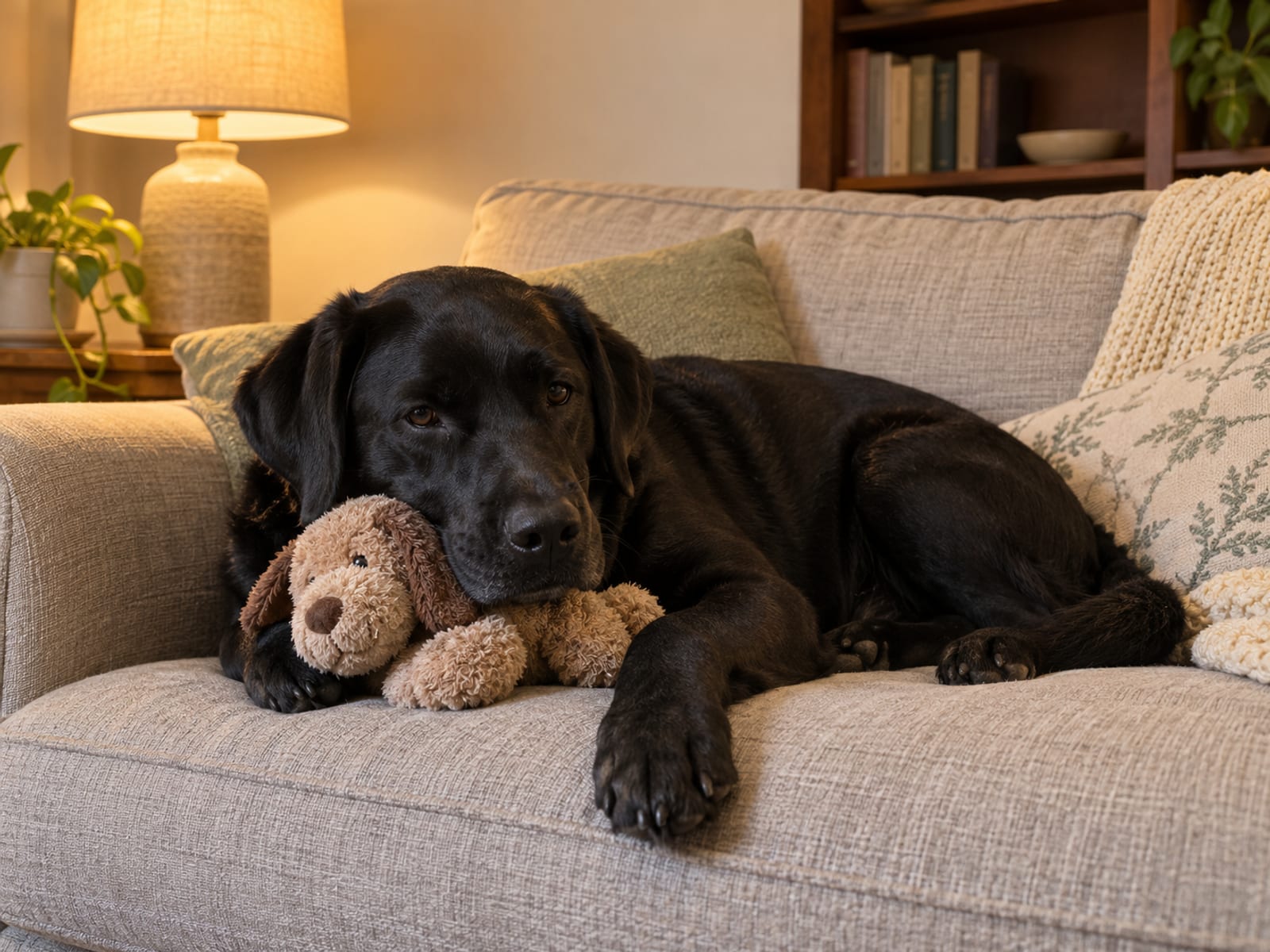
Do squeaky toys make dogs aggressive?
No. Ordinary squeaky play is not a sign that your dog is turning aggressive. A dog can play hard, shake a toy, growl during tug, or bite the toy without any aggression toward a person.
What matters is the difference between play and a problem:
- Play looks like a loose body, play bows, easy pauses and a willingness to let go. There is no threat aimed at people.
- A concern looks like a stiff body, freezing, hard staring, snarling, snapping, guarding, biting, or not being able to disengage.
If your dog guards a toy, do not grab it, corner your dog, or punish a growl. Manage the situation by keeping the toy out of reach, and get qualified help. The ASPCA lists resource guarding, destructive chewing and aggression as behaviors that may need individual professional attention. If a bite has already happened around a toy, read why dogs bite for the immediate safety steps.
Which toy sounds do dogs like best, and why do some dogs ignore squeaky toys?
Dogs do not share one favorite sound or toy. Different dogs lean toward different things:
- High-pitched squeaks or crinkling
- Soft plush or rubber textures, or firm chewable surfaces
- Toys that move or roll
- Tug toys, balls and fetch toys
- Food-filled or puzzle toys and scent-search games
- Toys that you present, rather than toys left on the floor
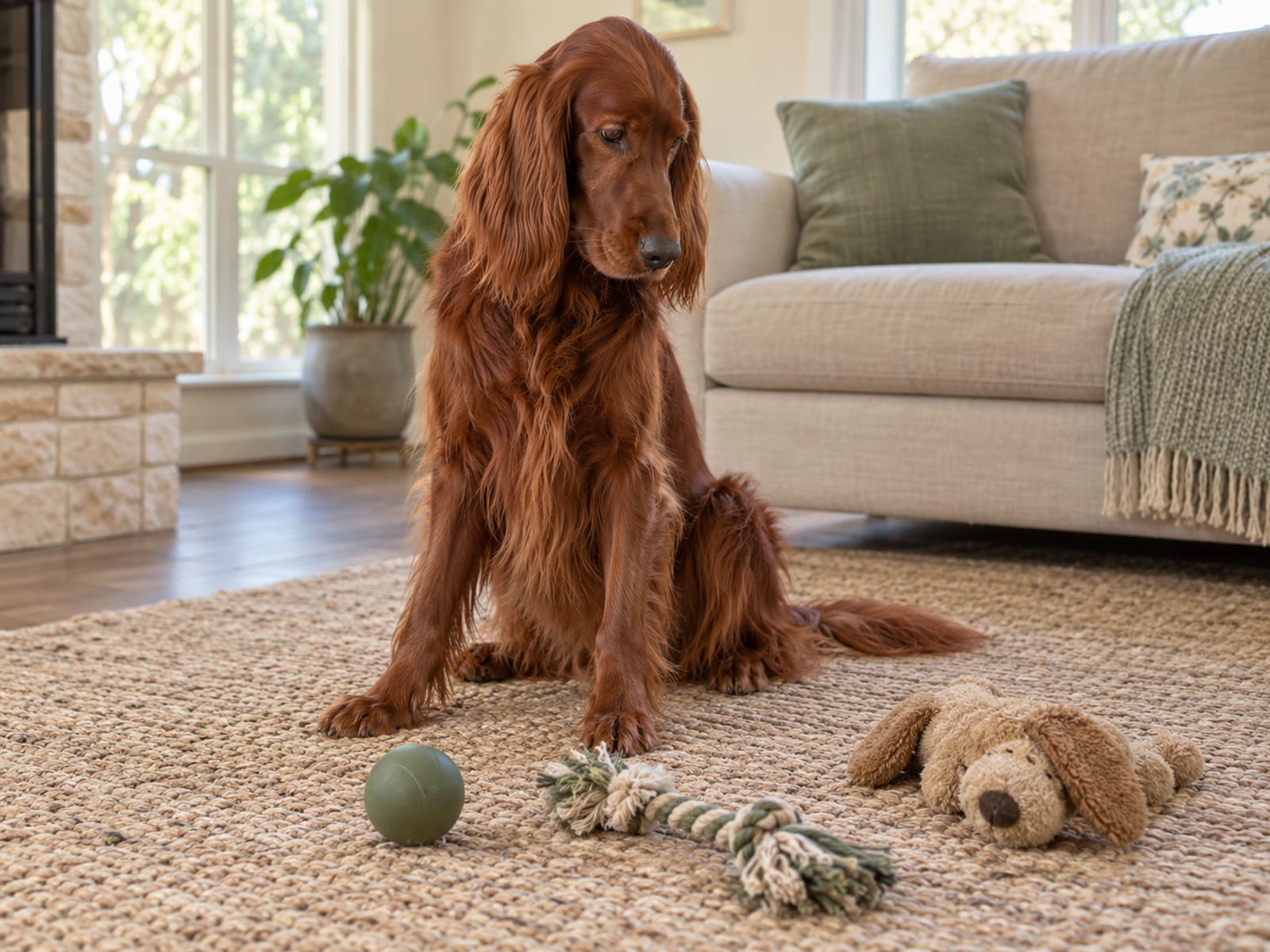
The kennel study found longer interaction with toys that were easier to chew or that made noise, but that does not mean all dogs prefer squeakers. The AKC notes that some dogs prefer harder toys, balls or flying discs, and some do not care for toys unless their person joins in.
So, a dog that ignores a squeaky toy is not strange. It may prefer chewing pressure, retrieving, tugging, scent work, food puzzles, time with you, or quiet play. Older dogs may like softer toys, and puppies may reach for rubbery chew toys while teething, but those are general patterns, not rules.
If your dog seems uninterested, do not force the squeak on it. Offer a few different choices and see what it picks.
How do I keep squeaky play safe?
Safe play comes down to the toy you choose, the way you watch, and when you retire it. Pick a toy that:
- Is too big for your dog to swallow whole.
- Matches your dog's chewing force and play style.
- Has no loose eyes, strings, seams or detachable parts.
- Is easy to inspect.
- Gets used only while you supervise, if your dog destroys soft toys.
Look the toy over before every play session. Throw it away the moment the squeaker, stuffing or inner material is exposed. For tougher chewers, my guide to indestructible dog toys explains why no toy is truly indestructible and why supervision still counts.
How many toys should you keep out, and how often should you swap them? There is no proven number or schedule. A sensible approach is to keep only safe, intact toys available, rotate a few good options based on your dog's interest, and retire any toy that has become a swallowing risk. Offering a variety of textures and ways of presenting toys makes sense, as the kennel study suggests.
To take a toy back without a fight, trade. The American Veterinary Society of Animal Behavior says evidence supports reward-based methods for all canine training and that methods relying on force, pain or discomfort should not be used. In practice:
- Offer food or another toy your dog values.
- Wait for your dog to let go of the first toy.
- Reward the release.
- Return the toy when it is safe to do so.
Stop if your dog tenses up or threatens. For the basics of teaching "drop it" and release, see how to train a dog and positive reinforcement dog training. If you want structured toy play, teaching a dog to fetch is a good place to start.
A toy can keep your dog busy, but it does not treat separation anxiety. If your dog struggles when you leave, see dog separation anxiety.
What can I use instead of a squeaky toy?
If squeaky toys are a bad fit, because your dog shreds them or the noise drives your household up the wall, there are plenty of quieter choices:
- Non-squeaking rubber toys and sturdy tug toys
- Balls and fetch toys
- Food puzzles and lickable enrichment surfaces
- Scent games and training games you lead yourself
Each one still has to match your dog's size, chewing style and swallowing risk. Inspect any of these as you would a squeaky toy. Exercise matters here as well; how much exercise a dog needs covers the physical and mental side of a full day.
Who can help with toy guarding, biting or destructive chewing?
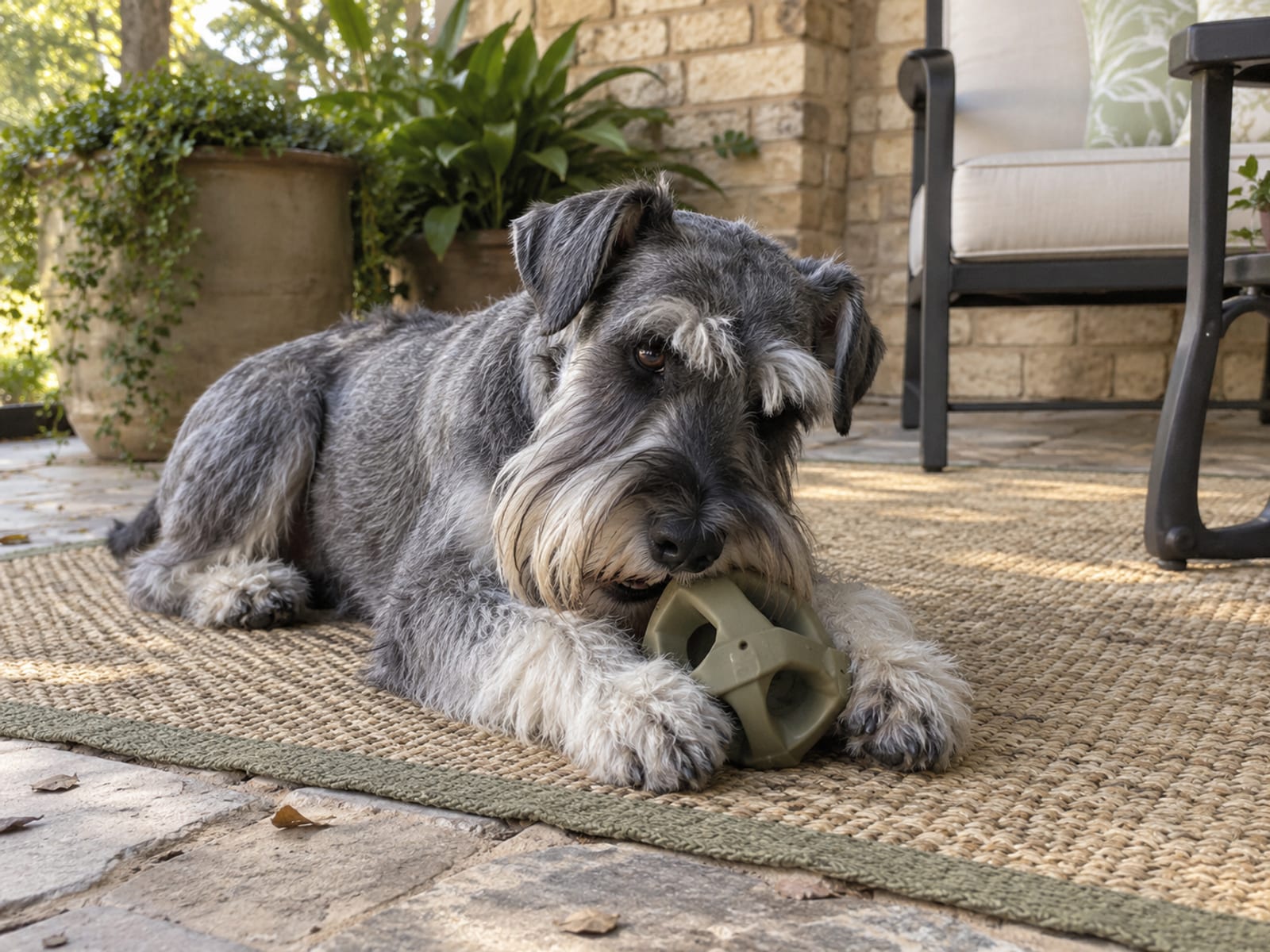
Start with your veterinarian for suspected swallowing, illness, pain, a sudden change in behavior, or the signs of pseudopregnancy. After that, the right behavior professional depends on the problem. The ASPCA suggests comparing qualifications, methods and experience, talking with more than one professional, and asking for references. Reward-based methods are the standard to look for.
Here is how the credentials differ:
- Certified trainer (CPDT-KA): The CCPDT says this credential measures knowledge of ethology, learning theory, training technique and instruction. Eligibility includes at least 300 hours of dog-training experience in the previous three years and a 200-question exam. A CPDT-KSA adds a skills assessment. A trainer like this can help with toy manners, trade games, "drop it," impulse control and reward-based play.
- IAABC credentials: The IAABC lists an Accredited Dog Trainer credential for manners, life skills and enrichment, and a Certified Dog Behavior Consultant (CDBC) credential for more complex behavior that affects safety or quality of life. The IAABC describes it as for consultants with at least three years of experience.
- ACAAB and CAAB: The ASPCA explains that an ACAAB has a master's-level applied animal behavior qualification and a CAAB has a doctoral-level qualification with supervised training in animal behavior.
- Veterinary behaviorist (DACVB): A veterinarian who completed specialized behavior training and passed the relevant exam. This is the route for complex cases that may involve both medical and behavior causes.
Look for a behavior consultant or veterinary behaviorist if your dog guards resources, bites or threatens around toys, can't stop once it starts, destroys things compulsively, or if children or other animals are involved. The same goes for behavior that is sudden or getting worse, or where pain, illness or reproductive status may play a part. You can start your search in the trainer directory.
Questions about squeaky toys
These are the questions owners ask most, answered briefly.
Why do dogs like squeaky toys?
Sound, texture, movement, chewing and novelty may all play a part. A prey-like sound is one theory, not a universal explanation, so your dog's own taste matters.
Why do dogs rip out the squeaker?
Some dogs are drawn to the part that makes the sound, and they enjoy chewing and taking toys apart. Take the toy away once it is damaged, since a loose squeaker is easy to swallow.
Are there dog toys that do not squeak?
Yes. Rubber chews, tug toys, balls, food puzzles and scent games all work without a squeak. Pick based on your dog's size, chewing style and what it actually enjoys.
Why does my dog cry when it carries a squeaky toy?
Whining can come from excitement, frustration, attention-seeking, stress or maternal behavior. In an unspayed female a few weeks after heat, pseudopregnancy is one possible reason, so a vet visit makes sense if other signs show up.
Do squeaky toys make dogs aggressive?
Ordinary squeaky play does not show that a dog is becoming aggressive. Guarding, threats or biting around a toy need safety management and a qualified behavior professional.
Which toy sounds do dogs like best?
Dogs vary. Some like squeaks, some like crinkles, and some prefer hard chews, balls, tug toys, scent activities or time with you. Age, personality and past experience all shape the choice.
At what age do dogs stop destroying things?
There is no set age. Puppies chew while teething, and some adult dogs keep shredding toys for life. What works is matching the toy to your dog's chewing style, supervising, and removing damaged toys. If destruction looks compulsive or comes on suddenly, talk with your vet.
What should I do next?
Pick up your dog's squeaky toys today and look each one over. Throw away anything with an exposed squeaker, torn seams or loose stuffing, and keep the squeaky favorites for supervised play with you. If you think your dog swallowed a piece, call your vet now rather than waiting for symptoms. For help beyond toys, DogServ's directory can lead you to vets, emergency vets and trainers near you.
Sources
- American Kennel Club: American Kennel Club
- American Veterinary Society of Animal Behavior: American Veterinary Society of Animal Behavior
- ASPCA: ASPCA
- Certification Council for Professional Dog Trainers: CCPDT
- Cornell University College of Veterinary Medicine: Cornell University's College of Veterinary Medicine
- IAABC: IAABC
- Merck Veterinary Manual: Merck Veterinary Manual
- UC Davis School of Veterinary Medicine: UC Davis