
How to Train a Dog: A Beginner's Guide You Can Start Today
By Cal Hewitt · Published , updated
Training
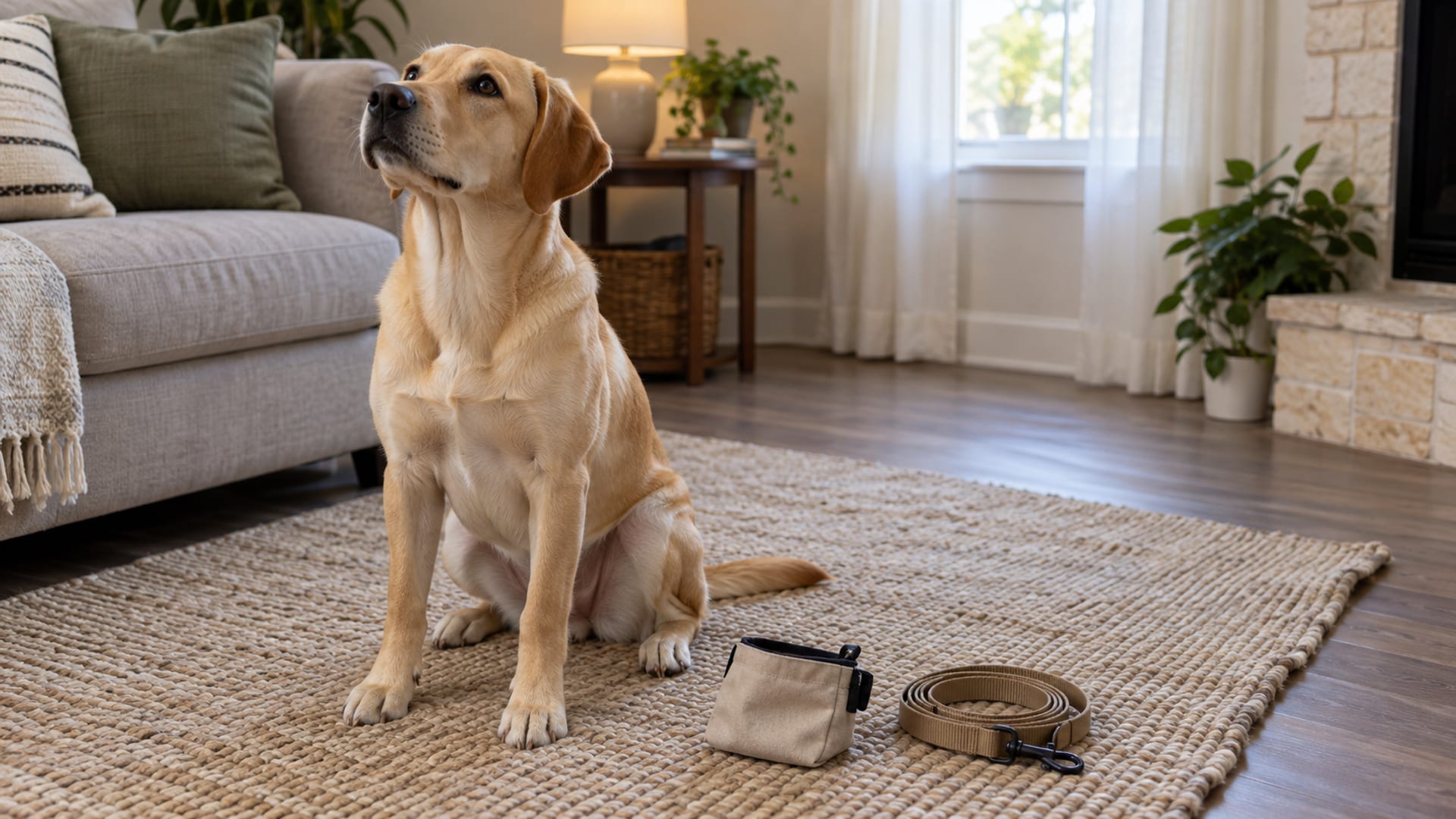
You brought a dog home, or you have had one for a while, and something is not working. Maybe it is a puppy who chews everything and ignores their name. Maybe it is a rescue with no training history, pulling you down the street. Or maybe your dog sits perfectly in the kitchen and acts as if they have never heard the word outside. You want to know where to start, and you want to start today.
Here is the short version. Train at home in short sessions, in a quiet room, with rewards your dog actually wants. Teach attention first, then sit and down, a release word, a short stay, a recall and loose-leash walking, and add distractions only a little at a time. Skip punishment. If your dog is fearful, aggressive or has suddenly changed, call your vet before you start any of this.
I am not a dog trainer. I shared about ten years with my dog, Nucky, and I have spent years building websites and writing for dog trainers and dog service businesses. The steps below come from the American Veterinary Society of Animal Behavior (AVSAB), the American Kennel Club (AKC), VCA Animal Hospitals and the trainer certification bodies, each linked where it is used.
Key takeaways
Tap a card to bring it forward.
- Start with attention and a reward your dog wants, then sit, down, a release word, stay, come and loose-leash walking.
- Keep sessions short. VCA suggests about 15 minutes a day, split into three 5-minute sessions.
- Change one thing at a time: first how long, then how far, then how distracting.
- A dog who sits in the kitchen but not in the park needs practice in each new place. Dogs do not carry skills to new places automatically.
- AVSAB says evidence supports reward-based methods for all dog training.
- Fear, aggression, a bite or a sudden change in behavior means a call to your vet first, then a qualified professional.
What to teach first, and in what order
This order works because each step makes the next one easier:
- Safety and management. Leashes, gates, a crate or a closed door, and a routine. They stop your dog from practicing the behavior you do not want while you teach the one you do. If a behavior appeared suddenly, see your vet before treating it as a training problem.
- Their name, and a marker. Your dog learns that their name means "look at me," and that a word like "yes" (or a click) means a reward is coming.
- Sit and down. Easy to teach, easy to reward, and useful instead of jumping or rushing the door.
- A release word and a short stay. The release tells your dog when they are done. Stay is built one second at a time.
- Come. Taught indoors, then on a long line outside. It is a safety skill.
- Loose-leash walking. A slack leash, with your dog near you. It does not need to be a perfect heel.
- Real life. The same skills with different people, rooms and distractions, plus whatever your dog needs next: crate training, a potty routine, greetings, handling.
The AKC's stay guidance builds duration first, then distance, then distractions. The same idea runs through all of it: make it easy, then make it a little harder. For a trainer's list of first commands, see DW Dog Training's 10 commands to teach first.
Before your first session
Three things to set up tonight:
- A reward your dog cares about. Small, soft treats work for most dogs. Toys, play, a sniff break, praise or the door opening can work too, if your dog wants them right then, according to the VCA.
- A marker word. Pick one short word, like "yes," and use it the instant your dog does the right thing, followed by the reward. Positive reinforcement dog training explains markers and rewards in depth.
- A quiet room. Start where nothing is competing for your dog's attention.
Agree on the words with everyone in the house. If one person says "down" for lie down and another says "down" for get off the couch, the dog has two meanings for one sound.
How to teach the first five skills at home
Say each cue once. If your dog does not respond, make it easier rather than repeating yourself.
Their name
Wait until your dog is not looking at you. Say their name once, in a happy voice. The moment they turn toward you, say "yes" and reward. Repeat a few times, then try from a little farther away. Never use their name to scold them, according to the AKC.
Sit
Hold a treat at your dog's nose and move it slowly up and back over their head. When their rear touches the floor, say "yes" and reward. If they jump, keep the treat lower and move it less. After a few good repetitions, make the same hand motion with an empty hand and reward from your other hand. Once the hand signal works every time, say "sit" just before you give it.
Down
From a sit or stand, bring a treat from your dog's nose straight down to the floor, then slowly forward. When their elbows touch the floor, mark and reward. Do not push them down by the shoulders or the leash. Fade the treat to an empty hand, then add the word "down."
Stay, and the release word
Teach the release first. Ask for a sit, wait one second, reward, then say your release word ("free" or "okay") and encourage your dog to get up. Then add stay: ask for a sit, say "stay," wait one or two seconds, reward, and release. Add seconds slowly. AKC suggests adding a single step of distance only once your dog can hold about 30 seconds, and adding distractions last. If your dog breaks the stay, make the next one shorter.
Come
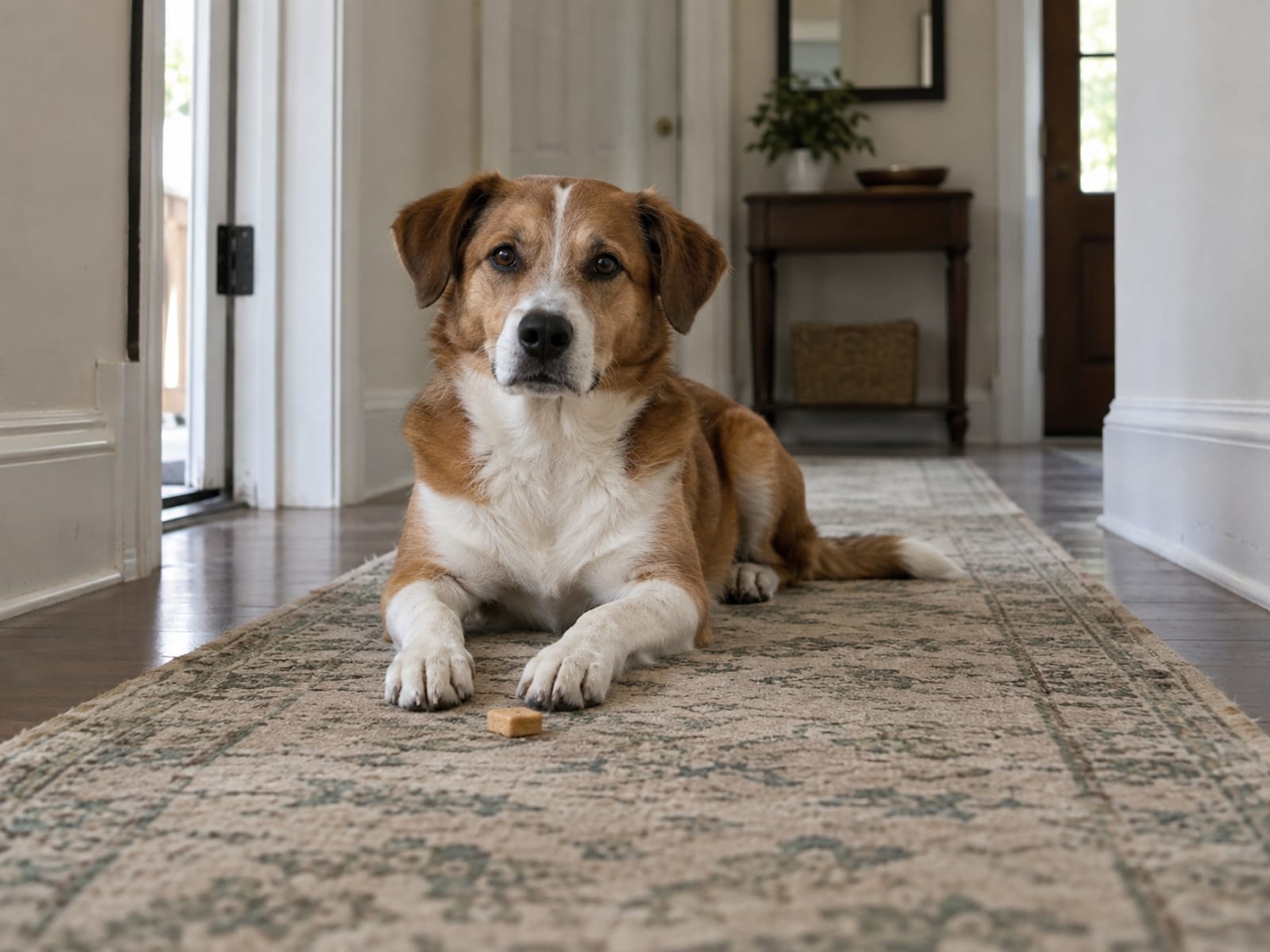
Start indoors. Say "come" once and reward right away, even before your dog has moved much. Then toss a treat a few feet away, and as your dog finishes it, call them and reward when they reach you. Make coming to you the best thing that happens all day, and often send them back to what they were doing, according to the AKC. Outside, practice only in a fenced area or on a long line. Never call your dog to scold them.
Loose-leash walking
Start indoors or in a quiet yard. Reward every few steps your dog walks near you with slack in the leash. When they pull to the end, stop and wait. Move again when the leash goes slack. Pulling should never be what gets them to the smell they wanted, and a good sniff can be the reward for a few calm steps, according to the AKC.
How long each session should be
A VCA puppy-training handout suggests 15 minutes a day, split into three 5-minute sessions, and daily practice through the first year. Treat it as a starting point and adjust to your dog.
The easiest way to fit it in is to attach training to things you already do. A sit before the food bowl goes down. A short stay before the door opens. A few steps of loose leash at the start of every walk. End each session while your dog still wants more, and stop early if they stop taking treats, start avoiding you or get wound up.
What progress looks like, week by week
Every dog moves at their own pace. These milestones show roughly what to expect:
Your first months of training
Days 1 to 7
A routine, a reward your dog loves, name response and one easy skill in a quiet room. Progress means your dog turns to you faster and gets easy repetitions right.
Weeks 2 to 4
Sit and down, the release word, short stays, recall games indoors and a few steps of loose-leash walking. Progress means success when you change one small thing.
Weeks 4 to 8
Longer stays, more distance and mild distractions, taken to the yard, the hallway or a quiet street on leash.
Month 3 and after
Reliable responses in everyday life, kept up with regular practice and rewards. This part takes months, not days.
What speeds it up or slows it down: your dog's age and history, pain or illness, fear, how long a habit has been paying off, your timing and consistency, whether everyone at home uses the same rules, and how busy your practice spots are. Breed can hint at tendencies, but it does not set your dog's timeline.
Why your dog listens inside but not outside
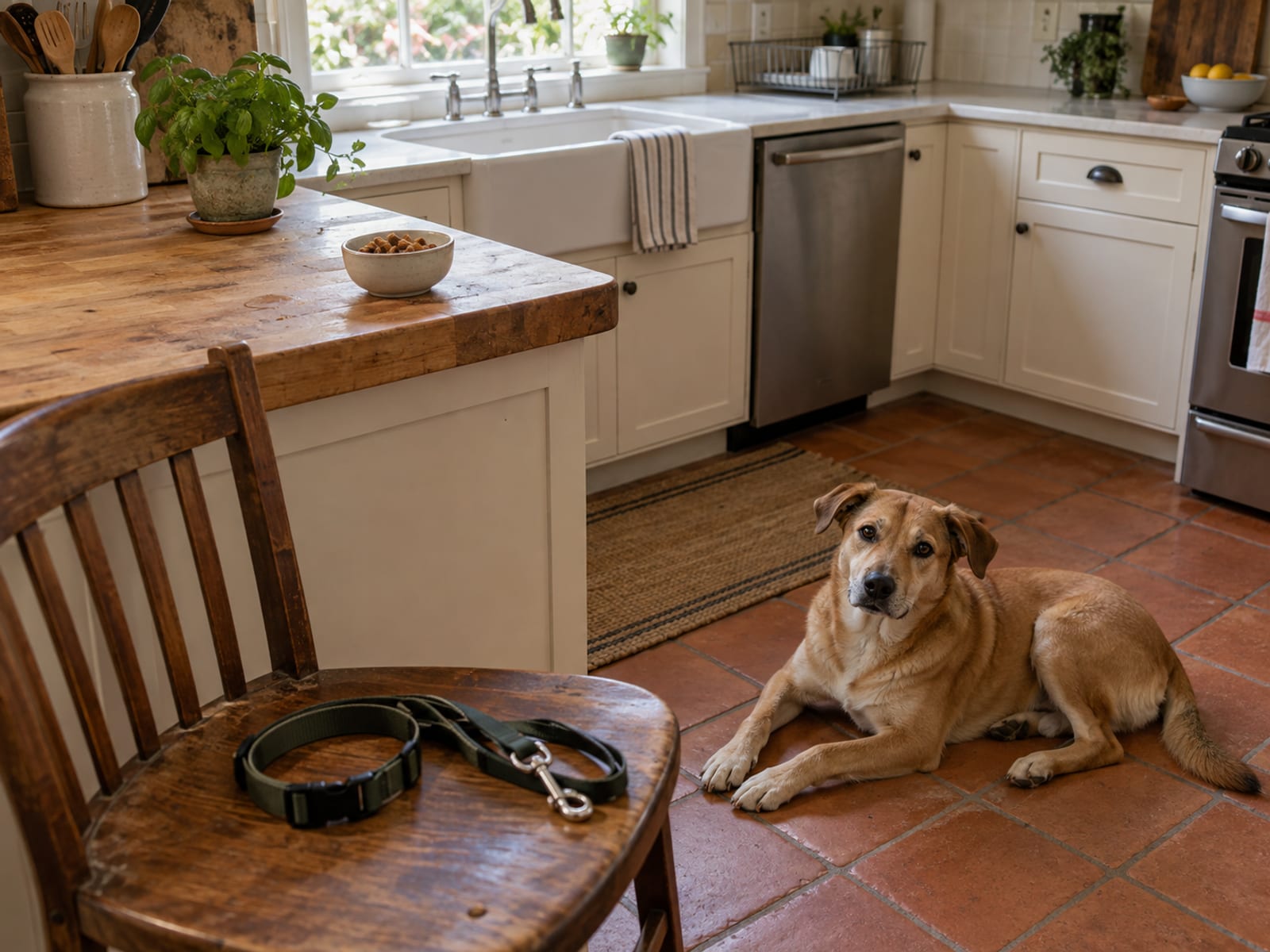
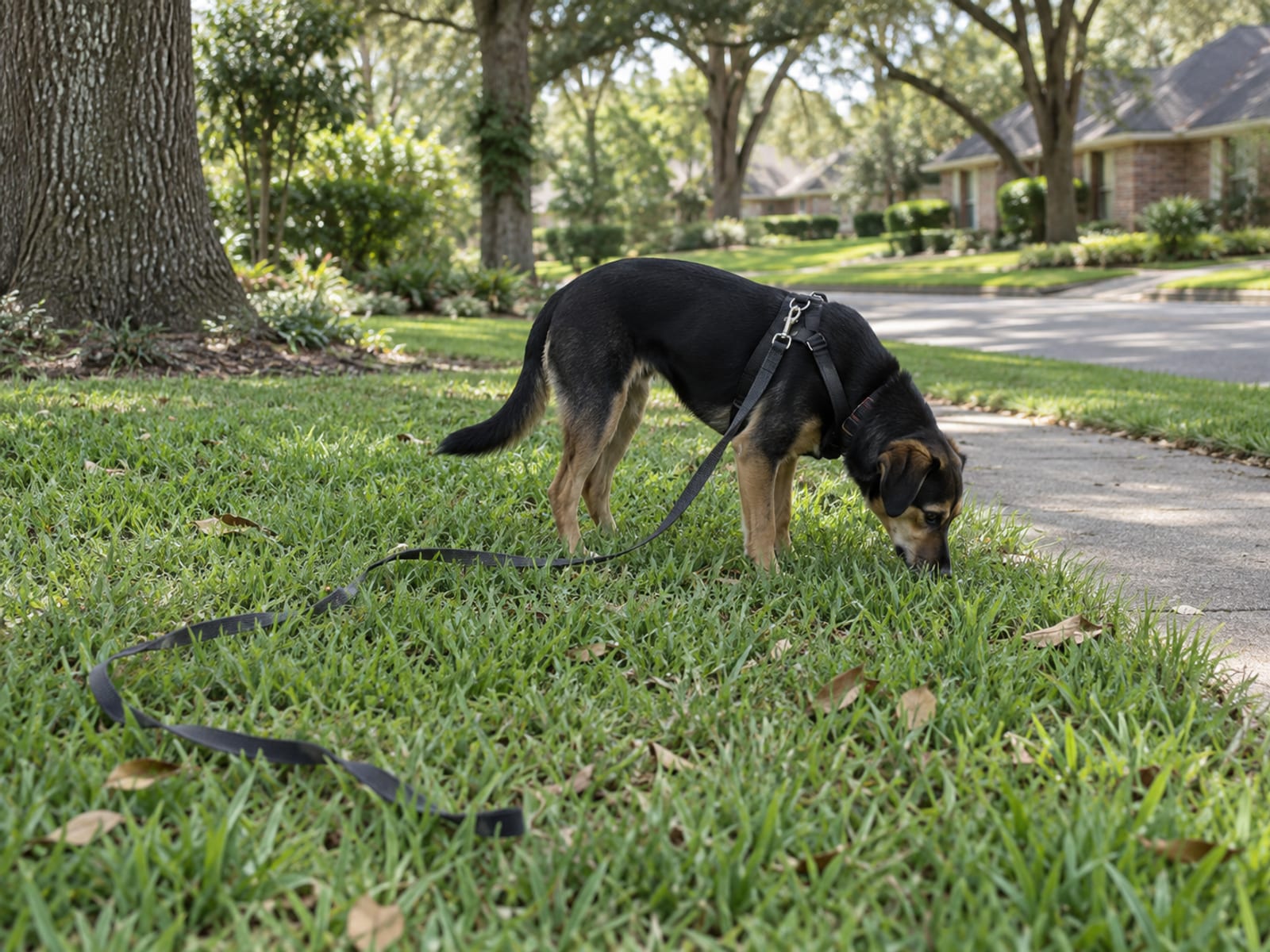
This is one of the most common frustrations, and it has a plain explanation: dogs do not automatically carry a skill from one place to another. A sit learned in a quiet kitchen is a kitchen sit until you practice it in the hallway, the yard, the driveway and the street.
The fix is to go back to an easier version outside. Stand farther from the distraction, use a better treat, ask for something shorter, and build up from there. A dog who ignores you outside usually needs an easier setup and a better reward. Training a stubborn dog has a step-by-step plan for this.
Mistakes that slow training down
A few patterns come up again and again (the full list, with fixes, is in dog training mistakes):
- Repeating the cue. "Sit, sit, SIT" teaches your dog that the first two do not count.
- Moving too fast. Asking for a long stay at the park after a five-second stay in the kitchen.
- Rewarding late. A treat that arrives after your dog has stood up rewards standing up.
- Calling your dog to something unpleasant. If "come" means a bath or the end of play, the recall gets weaker.
- Punishment. In a 2024 study of 758 UK owners, 44% reported physically moving their dog as a correction, 41% shouting and 40% leash corrections, according to Animals, 2024. AVSAB's position is that aversive methods should not be used for training.
- Treating fear as disobedience. A dog who freezes, hides or growls near something is telling you it is too much. Add distance and get help.
Class, private trainer or do it yourself?
Doing it yourself works well for a healthy, relaxed dog when you can practice a few minutes most days and you see small gains each week.
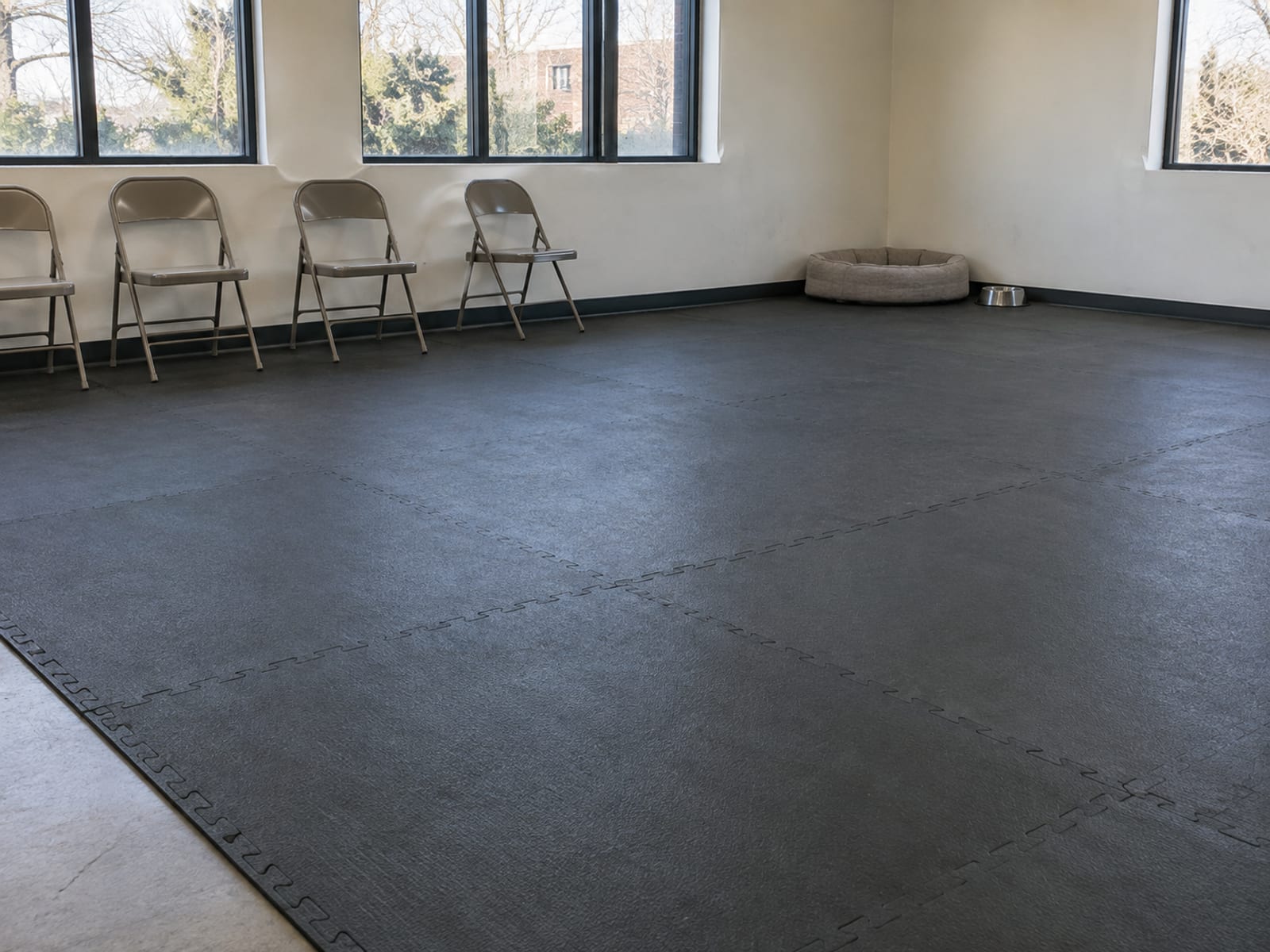
A group class gives you coaching, structure and practice around other dogs and people. It suits first-time owners and puppies, as long as your vet has cleared your puppy's vaccination plan and the class is reward-based and lets dogs take breaks. A 2022 systematic review linked puppy classes with better responses to commands and friendlier reactions to strangers in some studies, with mixed results in others, according to Canine Socialisation review, 2022.
A private trainer helps when your dog cannot focus in a group, when the problem happens at home or on your street, or when you want a plan built around your dog. Obedience training compares these formats with real prices.
When to get professional help
Get help now, not after something goes wrong, if your dog has bitten or nearly bitten, growls or snaps at people or other animals, guards food or toys, panics when left alone, is severely afraid, hurts themselves, or changes suddenly. Start with your vet, because pain and illness can change behavior. The American Animal Hospital Association lists aggression toward people or animals among the reasons to refer to a veterinary behaviorist, according to the AAHA. Until you have help, keep distance from whatever sets your dog off.
Dog training is unregulated in many places, so anyone can call themselves a trainer. These letters mean something specific:
Tap or hover a row to highlight it.
| Credential | Who holds it | What it tells you |
|---|---|---|
| CredentialDACVB | Who holds itA veterinarian board-certified in veterinary behavior | What it tells youCan assess medical causes and, where licensed, prescribe medication |
| CredentialCPDT-KA | Who holds itA certified professional dog trainer | What it tells youPassed a comprehensive exam and has at least 300 hours of training experience (CCPDT) |
| CredentialCPDT-KSA | Who holds itA certified professional dog trainer | What it tells youThe CPDT-KA plus a hands-on skills assessment (CCPDT) |
| CredentialCBCC-KA | Who holds itA certified behavior consultant | What it tells youA CCPDT credential for behavior consulting |
| CredentialIAABC-ADT | Who holds itAn accredited dog trainer | What it tells youTwo or more years teaching manners, life skills and prevention (IAABC) |
| CredentialIAABC-CDBC | Who holds itA certified dog behavior consultant | What it tells youAn IAABC behavior-consulting credential |
Whoever you hire, ask how they train, which tools they use, what they do when a dog is stressed, and whether they work with your vet. Walk away from anyone who promises a guaranteed result, will not explain their methods, or talks about dominance and "showing the dog who is boss", according to the CCPDT.
Check what you learned
Quick check: training basics
Questions about training a dog
What is the first thing I should teach my dog?
Their name and a reward marker, then sit and down. Once your dog looks at you when you say their name and knows "yes" means a reward, every other skill is easier to teach.
How do you train a dog at home as a beginner?
Pick one quiet room, one reward your dog loves and one skill. Practice in short sessions of about five minutes, say the cue once, reward the moment your dog gets it right, and only make it harder when they succeed most of the time.
How long does it take to train a dog?
There is no set timeline. A dog can learn a new sit in a quiet room in a few sessions, but a reliable response around distractions takes weeks to months of steady practice.
Should I use treats to train my dog?
Treats are the easiest reward to start with. Toys, play, praise and access to things your dog wants work too. Once a skill is reliable, you can mix in real-life rewards and use food less often.
What should I do when my dog ignores a cue?
Do not repeat it or punish. Make it easier: move away from the distraction, shorten what you ask for, use a better reward, then reward the next success.
Can you train an older dog?
Yes. Adult and senior dogs learn with the same short, reward-based sessions. A dog with an unknown history may need extra patience with anything that worries them, and a vet check if something seems painful.
When should I hire a trainer or see a veterinary behaviorist?
For aggression, a bite, severe fear, guarding, panic when alone, or any sudden change, start with your vet. A veterinary behaviorist (DACVB) handles complex cases, and a certified, reward-based trainer helps you put the plan into practice.
What to do today
Pick the reward, pick the word, and spend five minutes on your dog's name tonight. Tomorrow, add sit. If something about your dog worries you more than it should, trust that feeling and call your vet.
If something your dog chewed or ate is the worry right now, check it in Can My Dog Eat, and for anything else, send me a note through the contact page.
Sources
- American Animal Hospital Association: AAHA
- American Kennel Club: AKC
- American Kennel Club: AKC
- American Kennel Club: AKC
- American Kennel Club: AKC
- American Veterinary Society of Animal Behavior: AVSAB
- Certification Council for Professional Dog Trainers: CCPDT
- DW Dog Training: 10 commands to teach first
- PubMed Central: Animals, 2024
- PubMed Central: Canine Socialisation review, 2022
- VCA Animal Hospitals: VCA
- VCA Animal Hospitals: VCA