Dog Training Mistakes: Why Training Stalls and How to Fix It
By Cal Hewitt · Published , updated
Training
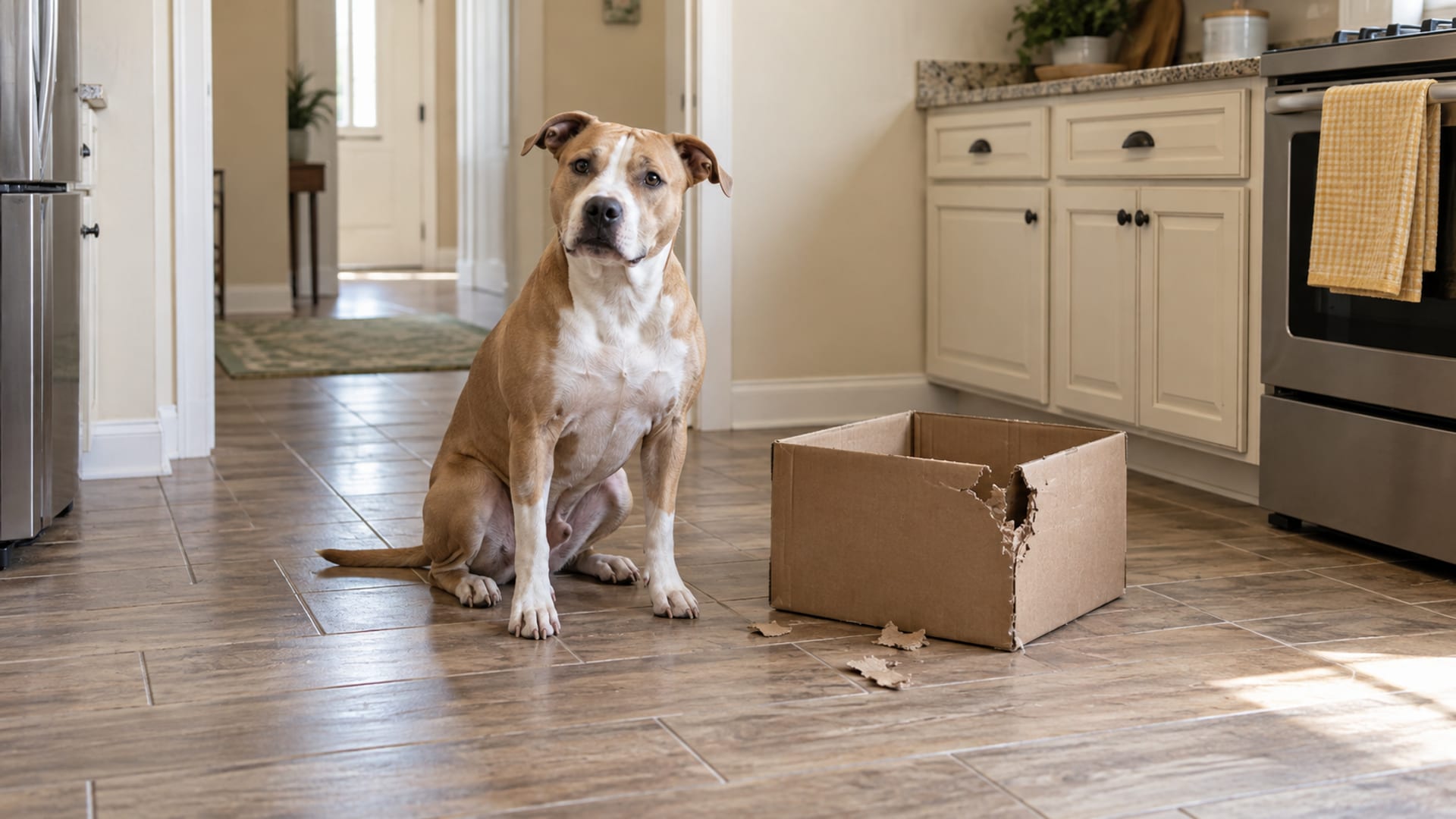
You have been at it for weeks. The treats are in your pocket, you watched the videos, maybe you paid for a class, and your dog still jumps, pulls or wanders off when you call. Or worse, the barking and lunging seem to be getting worse, and you are starting to wonder whether you are the problem.
Most stalled training comes down to a handful of fixable things: rewarding the wrong moment, repeating the cue, different rules from different people, asking for too much too soon, or using punishment instead of teaching what to do. Almost every owner makes some of these; they are fixable, and the fix usually starts with making things easier. If your dog is fearful, aggressive, or has suddenly changed, that is a call to your vet and a behavior professional rather than a training tweak.
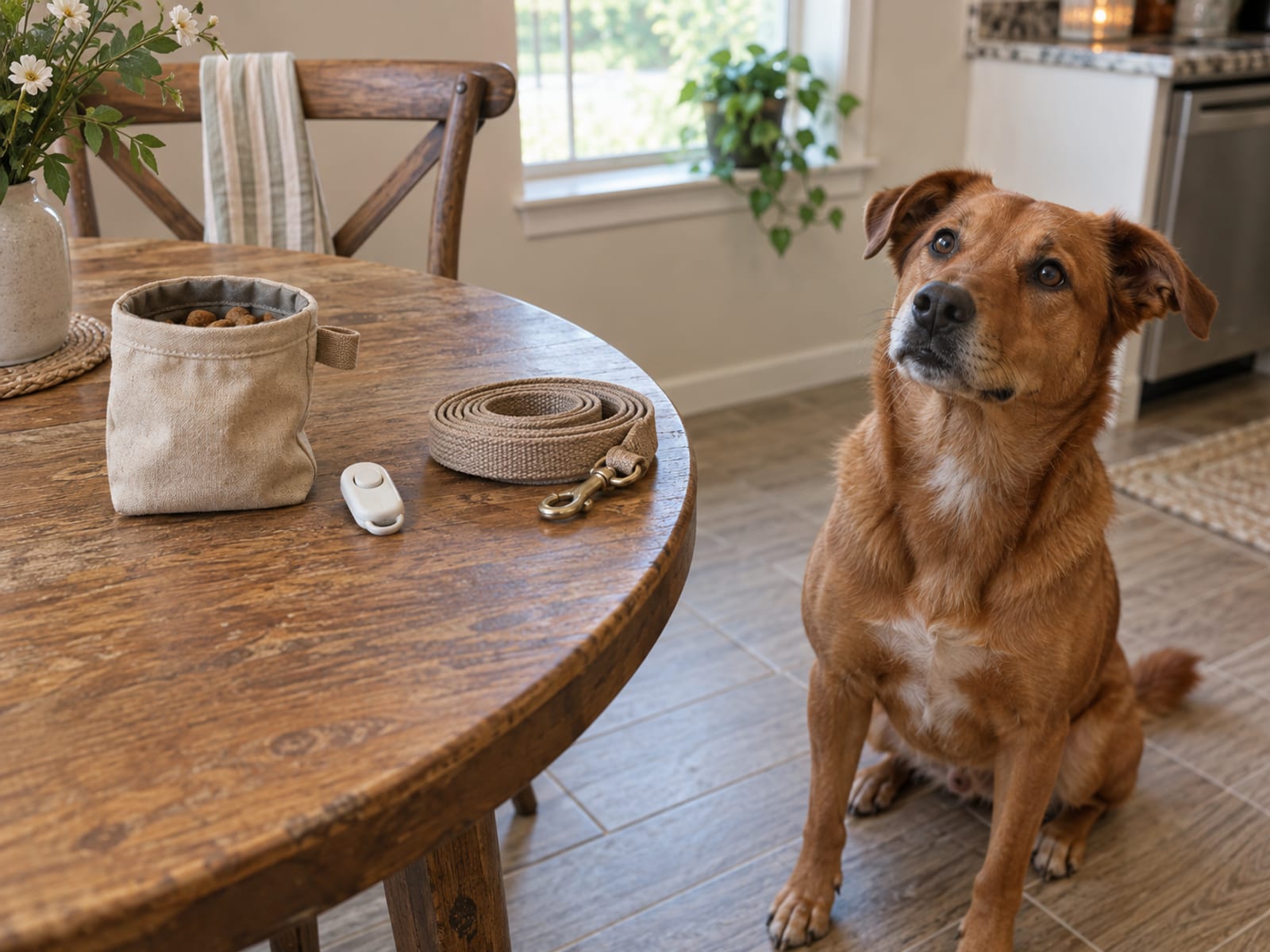
Below, the mistakes to look for, what each one does, and what to do instead, drawing on the American Kennel Club (AKC), the American Veterinary Society of Animal Behavior (AVSAB), the ASPCA and the American College of Veterinary Behaviorists (ACVB).
Key takeaways
Tap a card to bring it forward.
- When training stalls, first ask: have I asked for more than my dog has learned in this place?
- Say a cue once. Repeating it teaches your dog the first one does not count.
- Mark and reward the exact moment, with something your dog wants, every time while a behavior is new.
- Agree on one set of words and rules for everyone in the house.
- Punishment and harsh tools can add fear and damage trust. AVSAB recommends reward-based methods for all training.
- Fear, aggression, pain or a sudden change needs your vet first, then the right professional.
The ten mistakes, and the fix for each
The order puts the highest-risk mistake first. No survey ranks these by how often owners make them.
1. Punishment, intimidation or harsh equipment
Leash jerks, yelling, pinning a dog down, and choke, prong or shock collars can stop a behavior for the moment without teaching what to do instead, and without changing the fear, pain or excitement behind it. AVSAB's review links aversive methods with stress and with longer-term anxiety and aggression.
Fix: stop the aversives, prevent the unwanted behavior with management (a leash, a gate, distance), figure out what you want your dog to do instead, and reward that.
2. Different rules from different people
If your dog is allowed on the couch with one person and not another, or one person says "down" for "lie down" and another for "get off," the rules are a coin toss. A jump that sometimes gets attention keeps happening, because sometimes it works, according to the AKC.
Fix: write down one cue, the exact behavior, the reward and what happens instead, and stick it on the fridge. Give your dog an easy way to get it right, like a mat to go to or a gate during greetings.
3. Rewarding late, weakly, or not enough
A treat that arrives two seconds late rewards whatever your dog is doing at that moment, like standing up out of the sit. A dull reward loses to a squirrel.
Fix: mark the exact behavior with "yes" or a click, reward right away, and reward every correct response while a behavior is new. Fade the food only after it is reliable in easy places.
4. Repeating the cue
"Come. Come. Come! COME!" AKC calls this cue nagging: it teaches your dog that the first few do not matter.
Fix: get your dog's attention first, say the cue once when they can actually succeed, and if they cannot, make it easier.
5. Asking for too much, too soon
A kitchen sit is not yet a park sit. Adding distance, time and distraction all at once is three new challenges together, according to the AKC.
Fix: in any new place, go back to an easier version, then raise only one of distance, duration or distraction at a time. Training a stubborn dog walks through this step by step.
6. Practicing only at class
An hour a week at class is not much practice.
Fix: short daily sessions (AKC suggests five to ten minutes for most dogs) and practice built into your routine, like a sit before the leash goes on.
7. Making a cue mean something unpleasant
If "come" always ends play, starts a bath or means a nail trim, your dog learns to hesitate.
Fix: call your dog many times a day for something good, then let them go back to what they were doing. For baths and leaving the park, go get your dog instead of calling.
8. Training while frustrated
Long sessions, repeated failures and a tense owner make dogs check out.
Fix: stop before either of you gets frustrated, make it easier, and end on an easy success.
9. Treating fear, pain or aggression as disobedience
A dog who growls, freezes, snaps or suddenly refuses may be afraid or hurting, not defiant. Pain and illness can cause or worsen behavior changes.
Fix: see your vet for any sudden change, possible pain, or aggression, before more training. The ASPCA says an aggressive dog should see a vet first.
10. Rushing or forcing puppy socialization
AVSAB calls the first three months the most important window for socialization, and the goal is safe, positive experiences, not forcing a puppy to meet everyone.
Fix: short, calm, controlled introductions where your puppy can choose to approach or back away, with your vet's advice on vaccines before classes and public places.
When your training is not working: check these first
If you are not sure which mistake is yours, go down this list in order:
- Am I asking for more than my dog has learned here? Lower one of distance, duration or distraction.
- Does everyone at home do the same thing? One written plan for every person.
- Is the unwanted behavior still paying off somewhere? Attention, food, access or freedom. Block the payoff and make the alternative pay better.
- Am I repeating the cue? Once, then make it easier.
- Is my reward late, dull or missing? Mark the exact moment, and pay well while it is new.
- Do I only practice in one room or at class? A few minutes daily, then new places.
- Is my dog scared, wound up, tired or sore right now? Pause, manage, and get help when needed.
- Do I respond to mistakes with scolding or force? Make the next try easier and reward what you want.
For the full how-to on the skills themselves, see How to Train a Dog, and for the method, Positive Reinforcement Dog Training. Crate and toilet mistakes have their own pages: crate training and potty training.
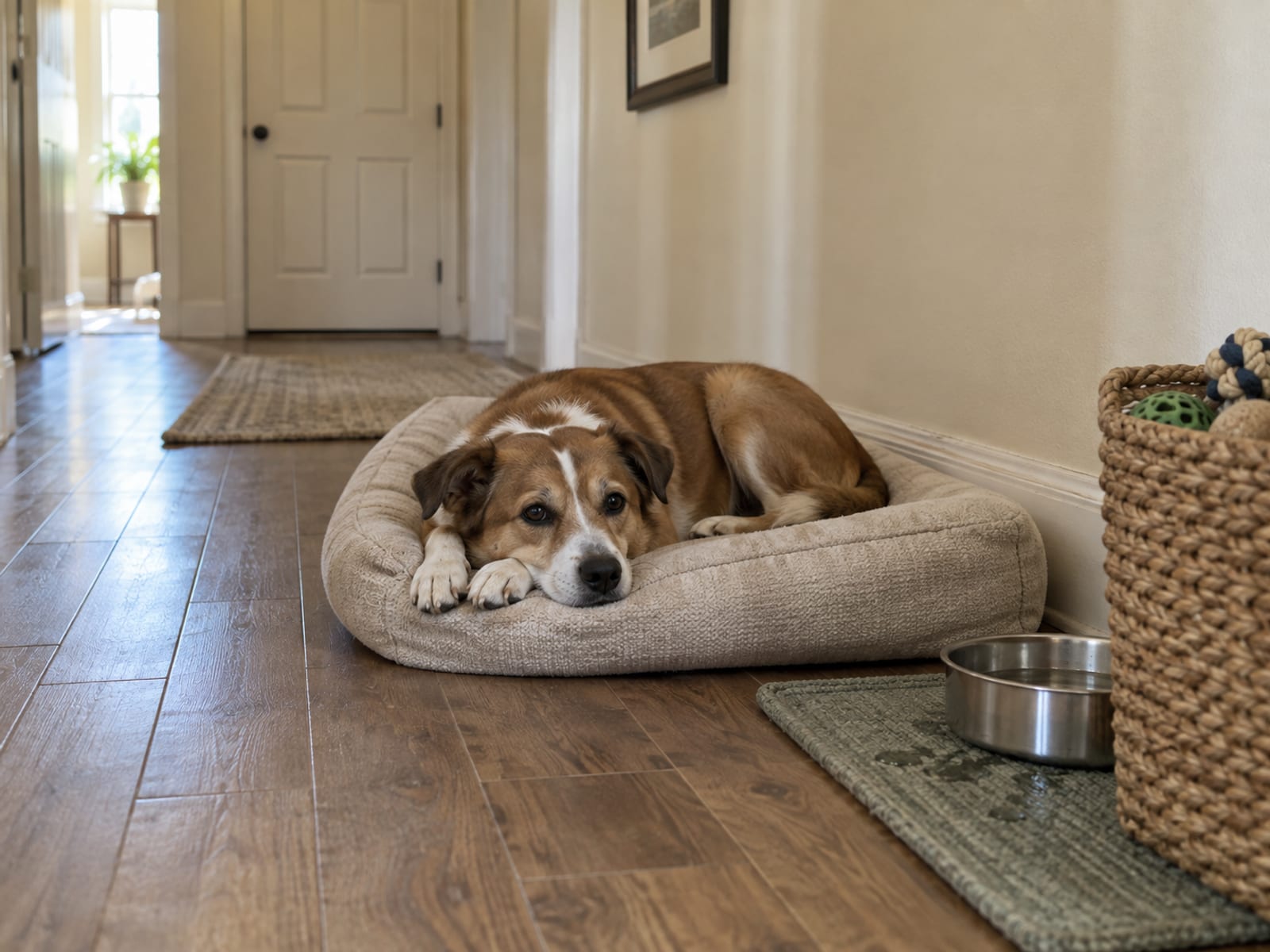
Mistakes that can leave lasting fear
These carry the highest risk:
- Aversive training with a fearful, anxious or aggressive dog. In a 2020 study of 92 dogs at seven training schools in Portugal, dogs from schools using aversive methods showed more stress behaviors during training and more "pessimistic" responses in a later test than dogs from reward-based schools, according to Vieira de Castro et al.. It shows an association, not proof for every dog.
- Flooding: keeping a scared dog close to what scares them until they "get used to it."
- Forcing contact with people or dogs.
- Confronting a dog over food or a toy.
- Punishing growling. It can remove the warning while leaving the discomfort that caused it.
If you think this has happened: stop the exposures that push your dog over the edge, and keep people and other animals safe. See your vet, especially for new behavior or aggression. Then work with a qualified professional on a plan built on management, gradual exposure your dog can handle, good associations and a replacement behavior. A well-fitted muzzle, introduced with a professional's help, can be an important safety tool while you work. Track distance from the trigger, whether your dog can eat and recover, and how often and how strongly episodes happen. Progress is rarely a straight line.
What getting back on track looks like
No one can promise a date. These checkpoints are a planning guide:
Getting training back on track
Week 1
Agree on house rules, drop the repeated cues and harsh corrections, manage the trigger, and practice one easy behavior somewhere quiet. Progress means more correct tries and fewer setups for failure.
Weeks 2 to 3
Your dog offers the behavior more readily in the easy setting. Add one small change at a time.
Weeks 4 to 6
Practice in several places and with different family members. Progress means succeeding in more planned situations and bouncing back after a miss.
After week 6
Take stock of your notes, your dog's health and your setup. Fear, reactivity, aggression or a long-standing habit may need a longer professional plan. If your dog is getting more upset or unsafe at any point, get help now.
When to call a professional
- Your vet: a sudden change in behavior, possible pain or illness, toileting problems that could be medical, or any aggression.
- A certified trainer (CPDT-KA, CPDT-KSA or IAABC-ADT): basic skills, a household plan, timing and practice in new places, when you are stuck after simplifying.
- A behavior consultant (CBCC-KA or IAABC-CDBC): fear, anxiety, phobias, reactivity, guarding or safety problems.
- A veterinary behaviorist (DACVB): aggression, serious fear or anxiety, self-injury, complex cases or when medication may help. The ACVB recommends professional help for any animal showing aggressive behavior.
Check what you learned
Quick check: training mistakes

Questions about training mistakes
What are the biggest mistakes dog owners make in training?
Using punishment instead of teaching, inconsistent rules at home, rewarding late or too little, repeating cues, and asking for too much too soon. Most are fixed by making things easier and more consistent.
Why is my dog not listening when they know the command?
They may know it in the kitchen but not in this place. Go back to an easier version here, then raise distance, time and distraction one at a time. Do not repeat the ignored cue.
Am I rewarding my dog too much?
Not while a behavior is new. Reward every correct response at first. Once your dog knows it in that setting, you can reward less often, as long as the rewards are ones your dog values.
How do you spot a bad dog trainer?
Be cautious of anyone who guarantees results, promises to fix aggression quickly, will not explain their methods, or uses pain, fear or intimidation. Ask what they do when a dog gets it wrong, and check their credentials.
How long should a training session be?
AKC says five to ten minutes is enough for most dogs. Stop while your dog is still keen, and make it easier before either of you gets frustrated.
Can older dogs still learn?
Yes. Puppies have an important early window for socialization, but dogs of any age can learn with rewards and consistent practice. Past experiences can change the pace.
Fix one thing this week
Pick the one mistake that sounds most like your house, fix only that, and watch what changes over a week. If the problem involves fear, growling, snapping or a sudden change, call your vet first. You can also reach me through the contact page.
Sources
- American College of Veterinary Behaviorists: ACVB
- American Kennel Club: AKC
- American Kennel Club: AKC
- American Kennel Club: AKC
- American Veterinary Society of Animal Behavior: AVSAB
- American Veterinary Society of Animal Behavior: AVSAB
- ASPCA: ASPCA
- Certification Council for Professional Dog Trainers: CCPDT
- IAABC: IAABC
- PubMed: Vieira de Castro et al.