

Crate Training: How to Do It Step by Step, for Puppies and Adult Dogs
By Cal Hewitt · Published , updated
Training
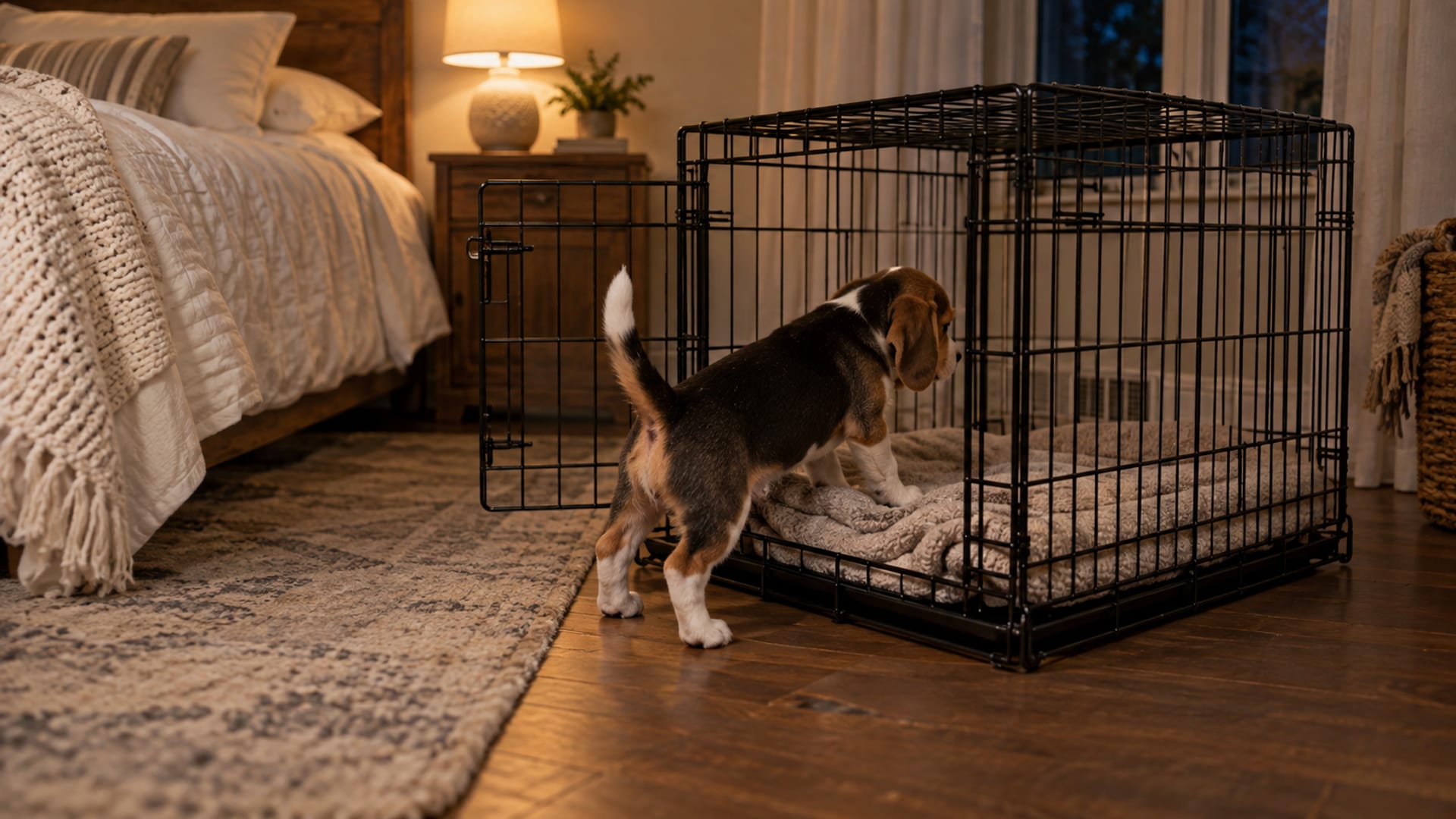
It is the first night with your new puppy, the crate is set up next to your bed, and the crying starts. Or it is a rescue dog who plants their feet at the crate door and will not go in. Either way, the same two questions come up: am I being cruel, and what do I do right now?
If your puppy is crying tonight, check the obvious first. If they have not been out in a while, take them outside on a leash, calmly and quietly, for a toilet break, then bring them back. Do not yell or bang on the crate. If the crying keeps going, or comes with heavy panting, drooling or frantic attempts to get out, the crate has become too much for now, and the plan needs to get easier.
The steps below follow guidance from the American Kennel Club (AKC), VCA Animal Hospitals, the ASPCA, the Humane Society and the American Veterinary Society of Animal Behavior (AVSAB), linked in each section.
Key takeaways
Tap a card to bring it forward.
- Introduce the crate with the door open, food inside and no pressure. Your dog should choose to walk in.
- Close the door for seconds at first, and build time in small steps while your dog stays relaxed.
- Take puppies out for toilet breaks on a schedule. VCA gives about 3 hours for a 2-month-old, 4 for 3 months, 5 for 4 months, as upper limits.
- Never use the crate as punishment, never force a dog in, and do not leave a dog to cry it out.
- Panting, drooling, escape attempts or self-injury mean stop crating and get help. A crate does not fix separation anxiety.
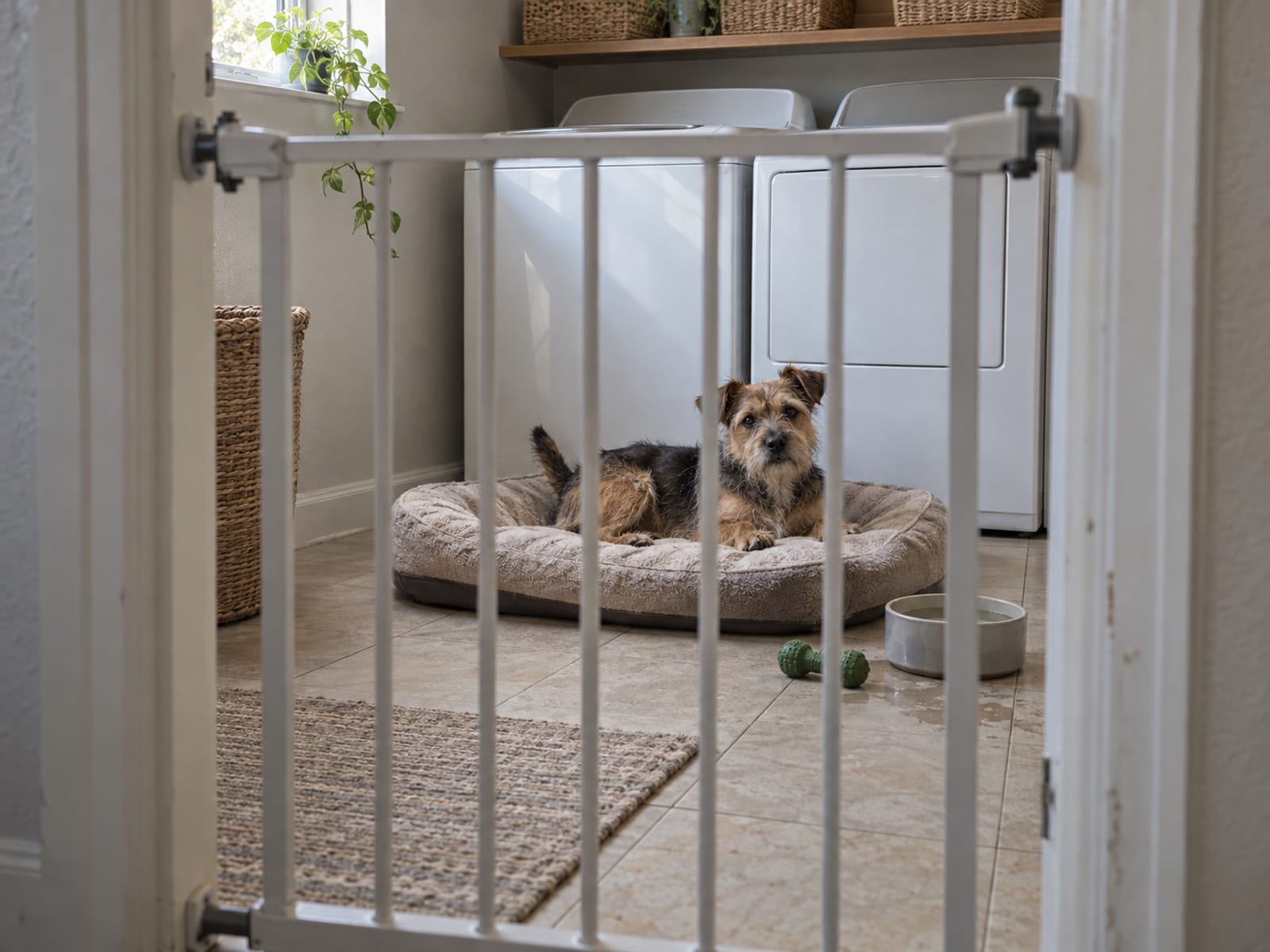
- A puppy-proofed room, a gate or an exercise pen is a good alternative when a crate is not working.
Is crate training cruel?
Not when it is done well. A crate can become a quiet place to rest, and it helps with house training, travel, vet stays and keeping a puppy safe when you cannot watch them. AVSAB's 2025 guidance on puppies says properly introduced crates or pens can give a puppy a safe place to rest.
It becomes a problem when a dog is forced in, crated as punishment, left to cry for long stretches, or kept in longer than they can hold their bladder. And some dogs never settle in a crate. The ASPCA notes that crates help some dogs and add stress and anxiety for others. Watch the dog you have: the goal is a dog who walks in on their own and lies down, not a dog who has gone quiet from exhaustion.
How to crate train, step by step
The same steps work for a puppy and an adult dog. The dog sets the pace.
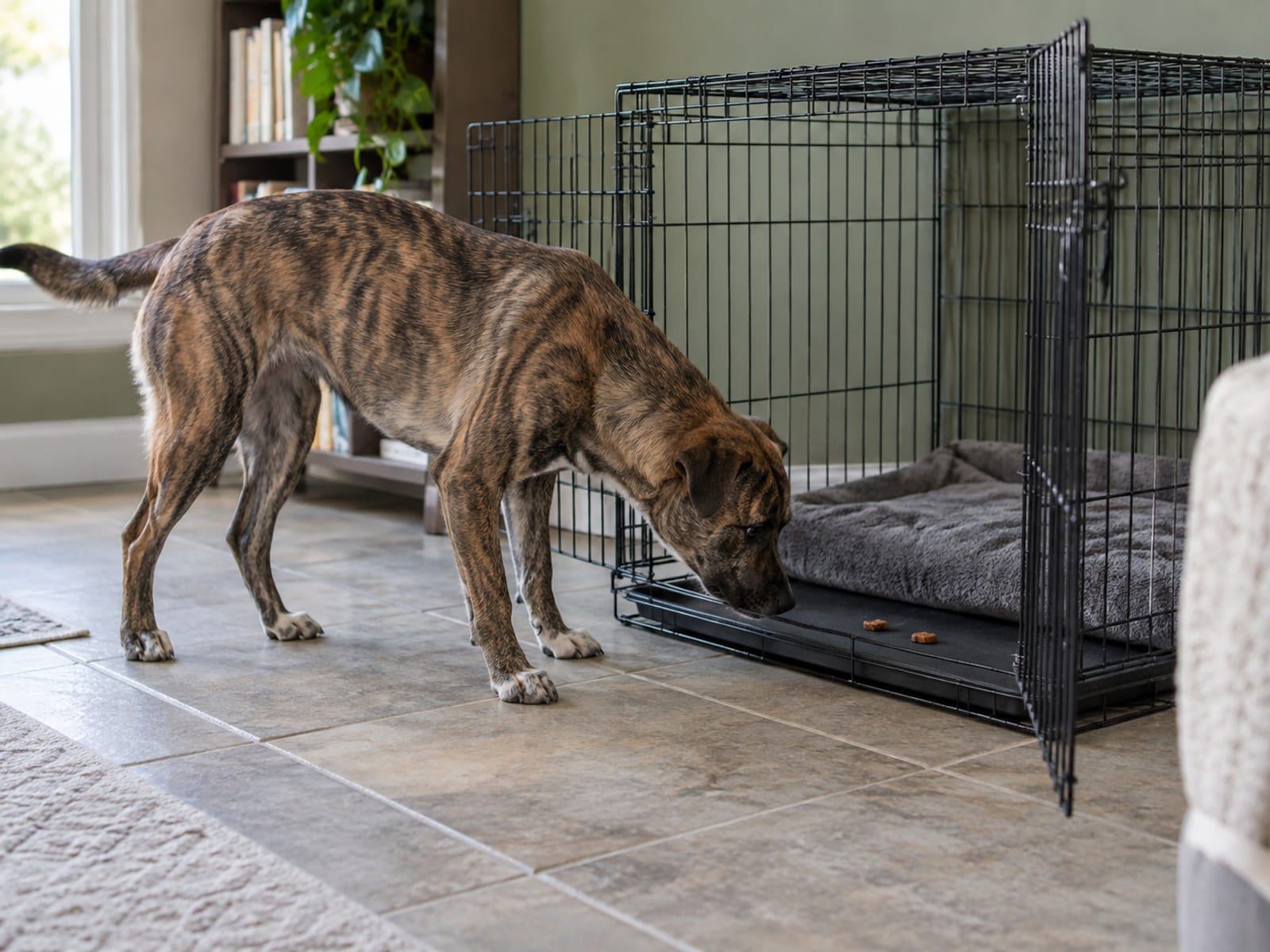
- Set the crate up with the door open. Put it in a quiet room where the family spends time, and fasten the door open so it cannot swing shut and startle your dog. Add a bed only if your dog will not chew it.
- Make it the place good things happen. Toss treats just inside, then farther in. Feed meals, a food puzzle or a safe chew toy in the open crate. Reward your dog for walking in, turning around and lying down. Never push them in.
- Close the door for a second or two while your dog is eating or settled, then open it before they get upset. Repeat, adding a few seconds at a time.
- Step away. Once your dog stays calm with the door closed, take a step back, then walk across the room, then out of sight for a moment.
- Build to about 30 quiet minutes with you mostly out of sight. The Humane Society says this can take days or weeks. Only then start short trips out of the house, according to the Humane Society.
- Before every crate session, make sure your dog has been out to toilet, has had some exercise and is not thirsty or hungry.
Keep comings and goings low-key. A big greeting when you open the crate makes the time inside feel like waiting for the best part of the day.
For a rescue or adult dog who will not go in
Stop trying to close the door. Go back to treats and meals with the door wide open, and count every step toward the crate as progress. In the meantime, use a puppy-proofed room, a baby gate or an exercise pen. A dog with an unknown past may have had bad experiences with confinement, and they may need much smaller steps or a different setup altogether.
Choosing and placing the crate
Size. Your dog should be able to stand without crouching, turn around and lie down comfortably. For a growing puppy, buy the adult size and use a divider, moving it back as they grow. Too much spare room lets a puppy sleep at one end and use the other end as a toilet, according to the AKC.
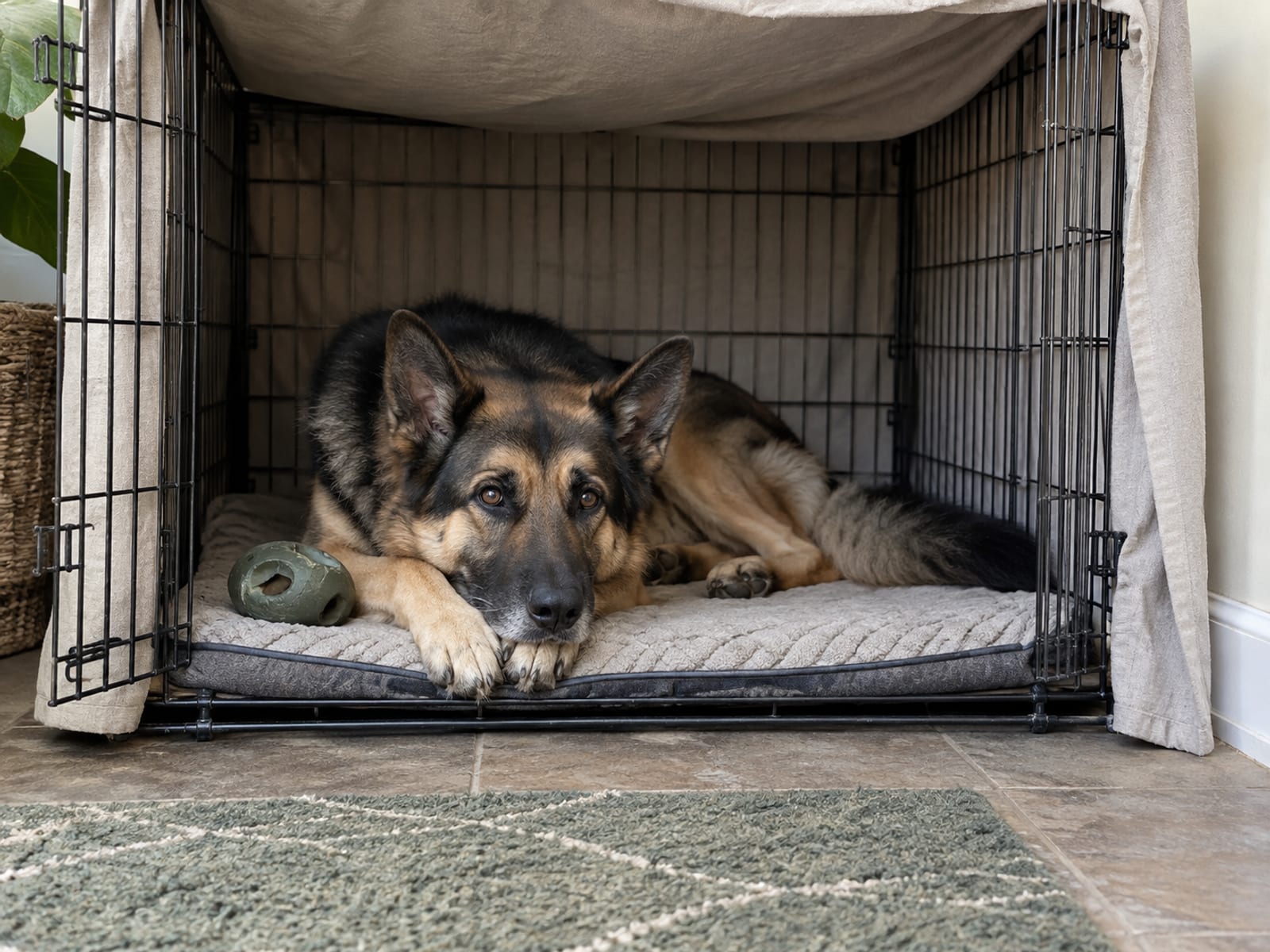
Wire or plastic. It depends on the dog. Some like seeing everything through a wire crate; others settle better in a darker, enclosed one, or a wire crate with a breathable cover. Keep it well ventilated so it does not get hot.
Safety. Take off collars, harnesses and tags before crating, since they can catch. AKC advises removing the collar in the crate.
Where it goes. Somewhere quiet but not isolated. For the first nights, many owners keep a puppy's crate next to the bed, so you can hear when they need to go out and they do not feel alone. Once your puppy sleeps well, you can move it gradually. Avoid the garage, hot or cold spots, and places where children can bother a sleeping dog.
How long can a puppy stay in a crate?
A puppy should never be crated longer than they can hold their bladder, and most days should stay well under that. VCA Animal Hospitals gives these daytime upper limits, right after a toilet break, with wide differences between puppies:
Tap or hover a row to highlight it.
| Age | Guidance | What it means day to day |
|---|---|---|
| Age8 to 12 weeks | GuidanceAbout 3 hours in the day (VCA); may need a toilet trip overnight | What it means day to dayTrain in seconds and minutes. Plan for someone to let them out, or a larger puppy-safe area |
| AgeAbout 3 months | GuidanceUp to about 4 hours (VCA) | What it means day to dayFour hours is a ceiling. Breaks, play and training still matter |
| AgeAbout 4 months | GuidanceUp to about 5 hours (VCA) | What it means day to dayWhining for a toilet trip, discomfort or fear means a break or a different plan |
| AgeOlder puppies and adults | GuidanceOne hour per month of age, up to 6 to 8 hours at most (AKC rule of thumb) | What it means day to dayNot a recommendation to crate a dog all workday. Health, age, mobility and total time alone all count |
Older dogs with arthritis or other pain often need more room than a crate gives them.
If you work full days
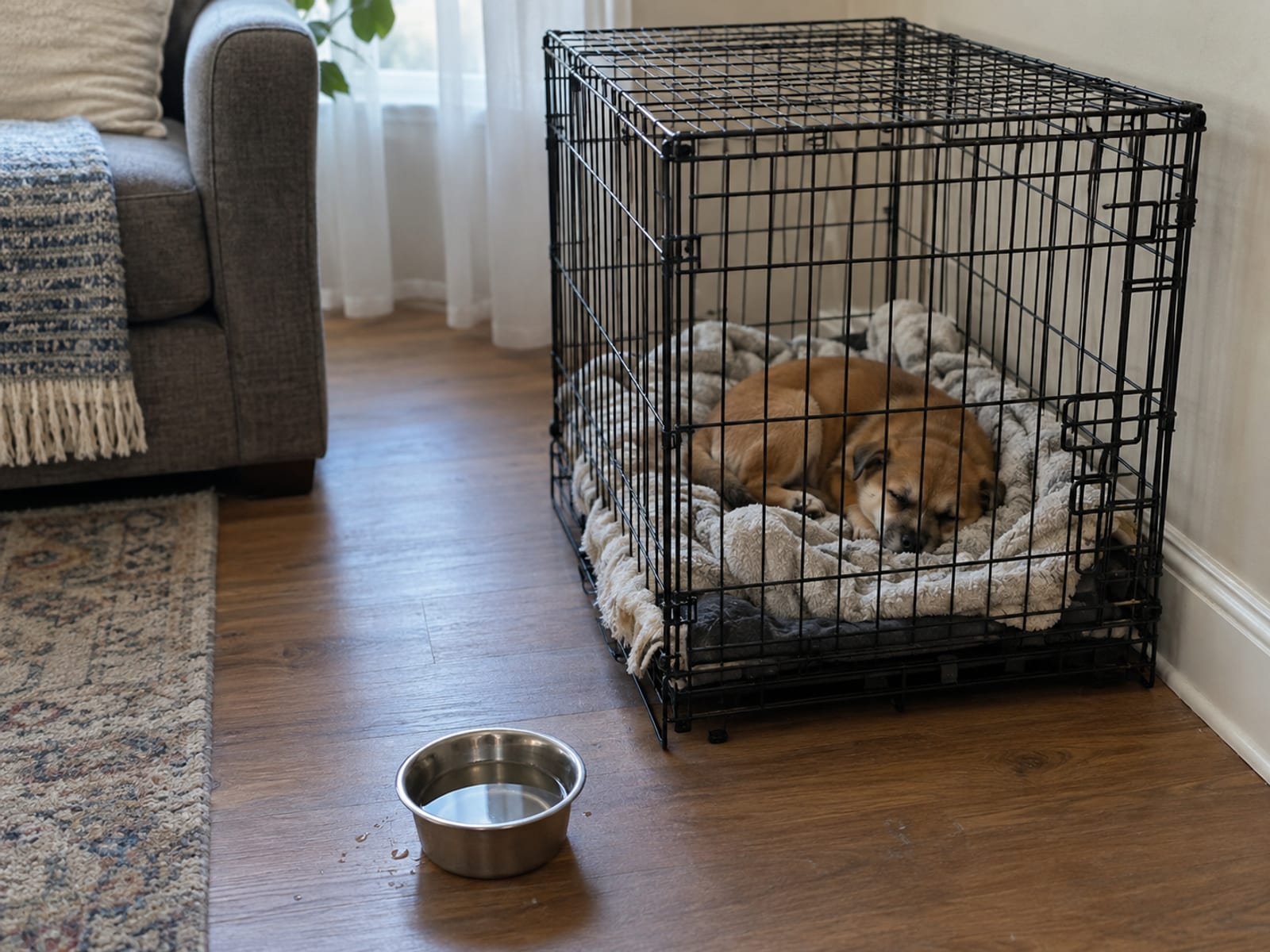
A crate is not meant to hold a dog for a full working day. If you are out for eight or nine hours, plan for a midday walk, a dog walker or a neighbor, doggy daycare, or a safe puppy-proofed room or pen with space to move, water and a spot for toilet pads while your puppy is young. Build up to your real schedule gradually over the weeks before you go back to work, if you can.
When your dog cries, barks or panics in the crate
Work out what the crying means:
- A toilet need. Often the reason for a young puppy at night. Take them out, keep it boring, and bring them back.
- Mild protest. Your dog has toileted, takes treats, looks loose and settles quickly. Make the next session shorter so it ends before they start crying, and stay nearby for a while longer.
- Distress. Persistent barking or howling, heavy panting, drooling, frantic escape attempts, hurting themselves, having accidents only when confined, or refusing food. The ASPCA lists these as signs a crate is not the right option.
For distress, stop crate sessions, use a gated room or pen instead, and talk to your vet. If it is safe, record what happens while you are away; AVSAB suggests video when barking during absences needs confirming.
AKC's advice is to never force a dog into a crate or leave them to cry it out. Crying tells you the last step was too big.
Crate distress or separation anxiety?
One night of crying is not separation anxiety. A useful clue: if your dog is calm loose in a room but panics in the crate, the crate itself is likely the problem. If your dog panics whenever you leave, crated or not, separation distress is more likely. Veterinary behaviorist Dr. Meredith Stepita, DVM, DACVB, notes that many dogs with separation anxiety get worse in a crate and can damage their teeth or skin trying to escape, according to the AVSAB. These are clues to take to your vet, who can rule out pain and other medical causes.
What progress looks like
The Humane Society and the Animal Welfare League of Alexandria both put crate training at days to weeks, depending on the dog's age, temperament and history.
Crate training, stage by stage
The first sessions
Your dog sniffs the crate, eats inside with the door open and stays relaxed. For a new puppy or rescue, that may be all for the first days.
The next days to weeks
Meals and chews inside, short rests with the door closed, then you moving around the room. Progress looks like choosing to go in and settling down to rest.
After many calm sessions
About 30 quiet minutes with you mostly out of sight, then short trips out of the house.
If your dog goes backward, the last step was too big. Go back to the last calm step and move forward more slowly.
Mistakes to avoid
- Forcing your dog in or leaving them to cry it out. Go back to the open door and food.
- Crating longer than your dog can hold it. Arrange a break, a sitter or a pen.
- Treating panic as bad behavior. Stop, switch to a gated area and get help.
- Adding time, distance and leaving all at once. Change one thing at a time.
- A crate that is too small, too hot or too busy. Size it right, keep it cool and quiet, and remove the collar.
- Expecting the crate to fix chewing, accidents or anxiety on its own. It supports supervision; it does not replace it.
- Punishing accidents. AVSAB notes that punishment even minutes later cannot be connected to the accident and can teach a puppy to hide when they go.
When to call your vet or a professional
Call your vet first for pain, changes in peeing or pooping, a sudden change in behavior, injury, or accidents that continue even with a good toilet routine. Get help from a reward-based trainer or behavior consultant if progress has stalled, your dog has a fearful history, or you cannot keep your absences short enough yet. For panic, self-injury, escape attempts or severe distress when alone, ask your vet about a veterinary behaviorist (DACVB), who can check for medical causes and prescribe medication when it is needed, according to the ACVB.
Whoever you hire, ask what they will do when your dog cries or refuses the crate. Choose someone with a clear reward-based plan who works with your vet, and avoid anyone who talks about dominance, uses force or promises results, according to the CCPDT.
Check what you learned
Quick check: crate training
Questions about crate training
Should I ignore my puppy crying in the crate at night?
Not at first. Offer a calm toilet trip if one is due, then put them back without fuss. If crying goes on, or comes with panting, drooling or escape attempts, make the crate easier, keep it next to your bed, and do not rely on letting them cry it out.
Do vets recommend crate training?
Many do, when it is done gradually and kindly. VCA Animal Hospitals publishes crate training guidance for owners, and AVSAB says properly introduced crates or pens can give puppies a safe place to rest. Vets and behaviorists also warn that a crate is not right for dogs who panic in one.
Can I leave my dog in a crate for 8 hours?
Not a puppy. For adult dogs, AKC's rule of thumb tops out at 6 to 8 hours, as an outer limit for the occasional long day. A dog left alone for a full workday needs a midday break, a walker, daycare or a larger safe space.
Is it better to crate a dog or leave them out?
It depends on the dog. A crate helps with house training and keeps a young dog safe from chewing hazards. A dog who is house trained and calm alone may do well in a dog-proofed room. A dog who panics in a crate should not be crated.
Do puppies grow out of crying in the crate?
Most settle as their bladder grows and the crate becomes familiar, especially with short, positive sessions and a toilet routine. Crying that gets worse, or turns into panic, needs a different approach.
What size crate should I buy?
One your dog can stand up, turn around and lie down in comfortably. For a puppy, buy the adult size and use a divider.
Where to start tonight
Put the crate by your bed, fasten the door open, and toss a few treats inside. Let your puppy or dog explore it on their own terms. Tomorrow, feed breakfast in it. Small steps now make every night after easier.
If your dog's reaction to the crate worries you, your vet is the right first call. For anything else, reach me through the contact page. And if you are still getting started with training in general, How to Train a Dog covers the first skills to teach.
Sources
- American College of Veterinary Behaviorists: ACVB
- American Kennel Club: AKC
- American Veterinary Society of Animal Behavior: AVSAB
- American Veterinary Society of Animal Behavior: AVSAB
- American Veterinary Society of Animal Behavior: AVSAB
- American Veterinary Society of Animal Behavior: AVSAB
- ASPCA: ASPCA
- Certification Council for Professional Dog Trainers: CCPDT
- Humane Society of the United States: Humane Society
- VCA Animal Hospitals: VCA Animal Hospitals