

Potty Training a Puppy (and an Adult Dog): A Schedule That Works
By Cal Hewitt · Published , updated
Training
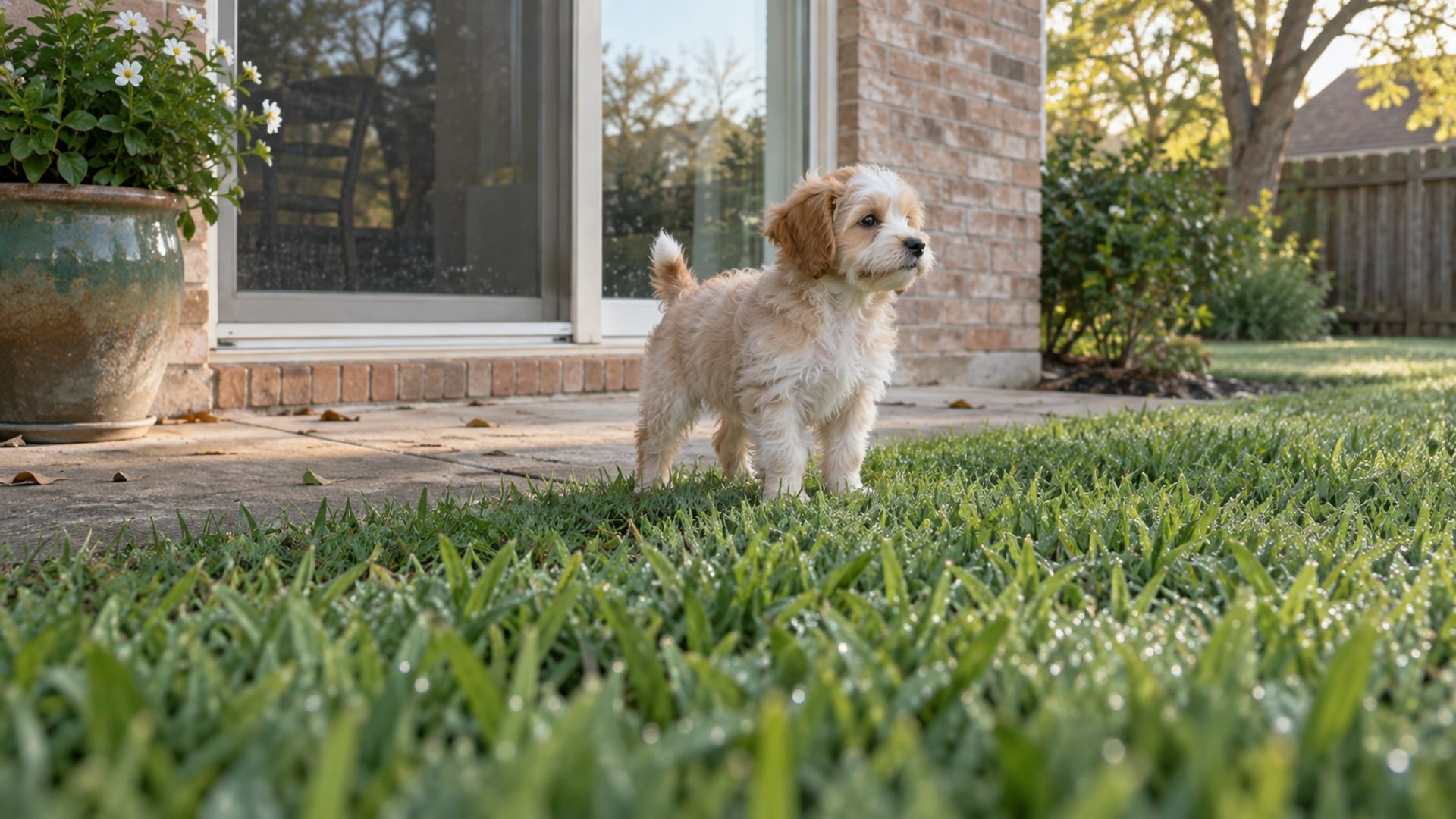
Three accidents before lunch. A wet spot on the rug you did not see happen. A puppy who goes outside, sniffs around, comes back in and pees on the kitchen floor. If that is your week, you are not doing it wrong, and your puppy is not being difficult. Young puppies have small bladders and are still learning where the bathroom is.
What helps most, starting now: take your puppy to the same outdoor spot right after waking, eating, drinking, napping and playing, and before bed. Reward them the second they finish, right there. Watch them closely indoors, and clean accidents with an enzymatic cleaner without a word. If a dog who was already house trained starts having accidents, call your vet before anything else.
The routine below comes from VCA Animal Hospitals (written with veterinary behaviorist Dr. Ellen Lindell), the American Kennel Club (AKC), the ASPCA and the American Veterinary Society of Animal Behavior (AVSAB).
Key takeaways
Tap a card to bring it forward.
- Take your puppy out after waking, naps, meals, drinks, play and crate time, and before bed. AKC says that can mean a dozen or more trips a day.
- Use one spot, one door and one cue word, and reward the moment your puppy finishes, while you are still outside.
- Watch closely indoors, and give more freedom only after a long run without accidents.
- Never punish an accident you find later. Clean it with an enzymatic cleaner and adjust the schedule.
- Many puppies started early are reliable most of the time by about 6 months, according to AKC's chief veterinarian.
- New accidents in a trained dog, blood in the urine, straining or leaking while asleep mean a call to your vet.
The daily routine that does most of the work
- Choose one toilet spot, and use the same door to get there every time.
- Go out at the moments your puppy needs to go: right after waking up, after every nap, after meals and drinks, after play, after time in the crate, and last thing before bed. Add trips in between often enough that accidents do not happen.
- Keep it boring. Put your puppy on a leash, walk to the spot and wait quietly. This trip is for the toilet, not for play.
- Say your cue as they start. Pick a phrase like "go potty" and say it once, calmly, as your puppy begins.
- Reward the moment they finish, with praise and a small treat, right there at the spot. VCA stresses rewarding outdoors near the spot, not after you come back inside.
- No luck after about five minutes? Go back inside, keep your puppy with you or in their crate or pen, and try again a little later.
Learn your puppy's signs: sniffing the floor, circling, restlessness, suddenly stopping play, or starting to squat. The moment you see one, head for the door.
Keep a simple log
For a few days, write down when your puppy eats, drinks, sleeps, plays, goes outside, and has an accident. Patterns show up fast: a puppy who always goes about ten minutes after breakfast, or who has accidents at the same time every afternoon. Use the log to move your trips earlier, and do not stretch the time between trips just because one day went well. An accident means the gap was too long.
Supervision and freedom
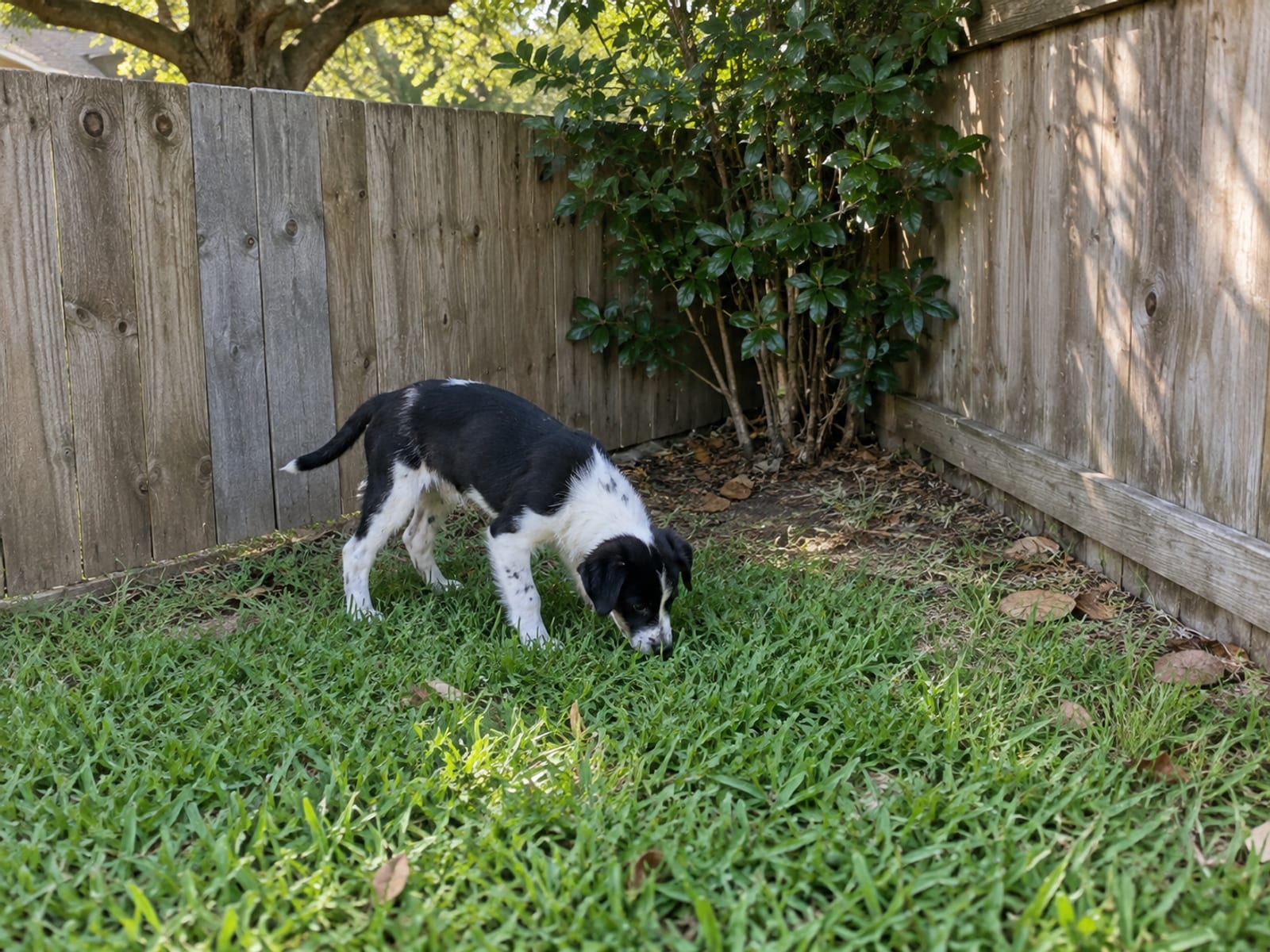
Accidents happen most when a puppy has the run of the house. The ASPCA suggests limiting your dog to one or two rooms where you can see them, and giving more space slowly as training takes hold.
When you cannot watch, use a gated area, an exercise pen or a crate your puppy is comfortable in. When you can watch, keep your puppy in the same room, or clip their leash to your belt. VCA gives 8 to 12 weeks without mistakes as a possible point to start adding freedom, one room at a time.
A crate helps because most puppies avoid soiling where they sleep, but it only works if your puppy is relaxed in it and is not left longer than they can hold it. Crate training covers how to introduce one and how long a puppy can stay in it by age.
When you catch an accident, and when you find one
Caught in the act: calmly interrupt (a quiet "oops" is enough), take your puppy outside to their spot, and reward if they finish there.
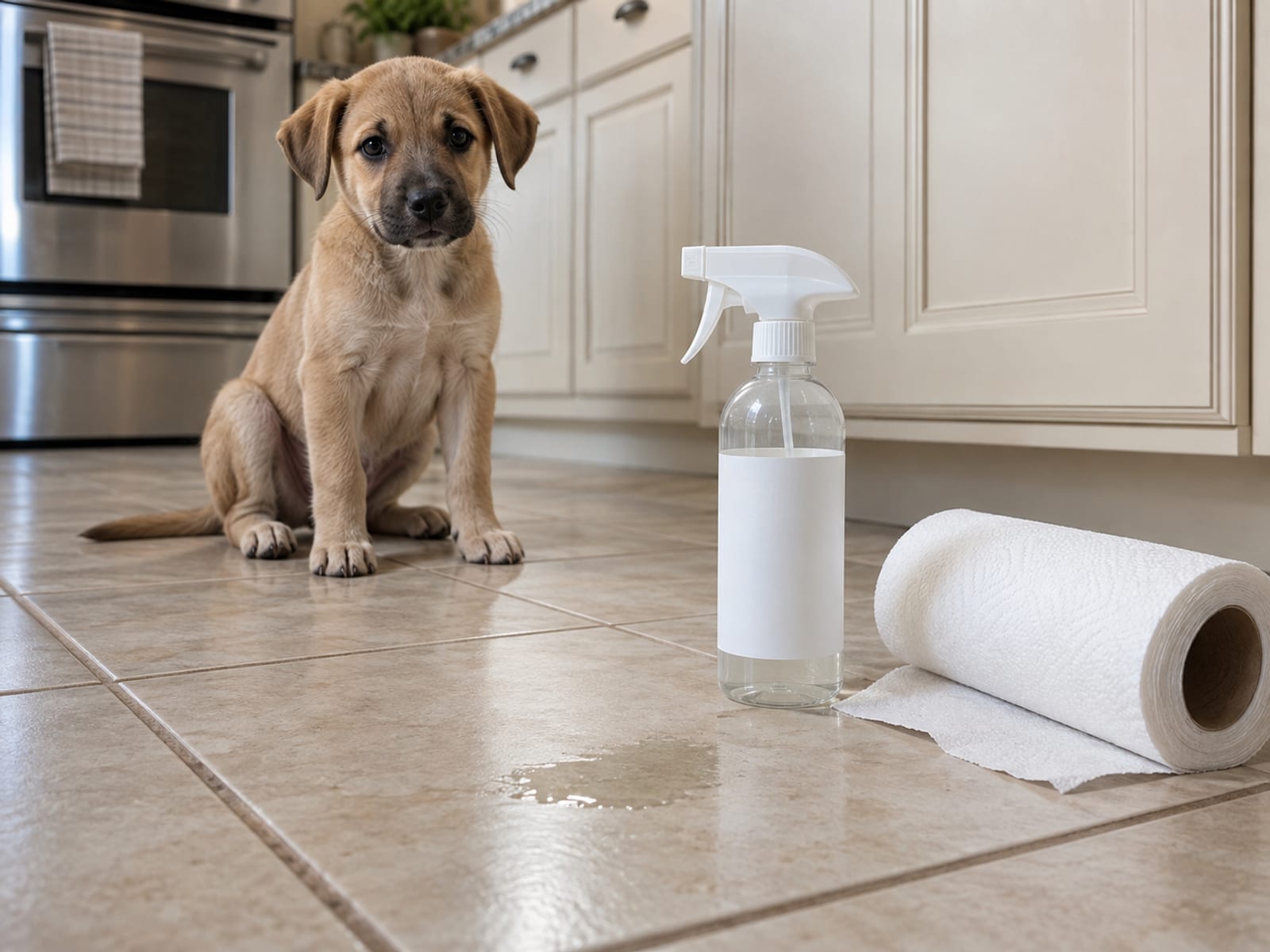
Found later: clean it up and say nothing to your puppy. A dog cannot connect a scolding to something they did earlier, and punishment can teach them to hide from you when they need to go, according to the ASPCA. Never rub a dog's nose in it.
Clean with an enzymatic pet cleaner, following the label. Ordinary cleaners can leave a smell your puppy still notices, and VCA notes that the leftover odor can draw them back to the same spot.
How long a puppy can hold it
Puppies usually go to new homes around 8 weeks old, when their bladder control is at its weakest. It improves as they grow. AKC offers rules of thumb built on age: roughly one hour for each month of age, and in another article, age in months plus one. Treat these as outer limits for planning.
In practice, very young puppies need to go out much more often than any formula suggests, especially after eating, drinking, sleeping and playing. Puppies under about 3 months may need a trip outside during the night. Toy breeds often need more frequent breaks. Never hold back water or make your puppy wait longer to "train" them.
Apartments, pads and bad weather
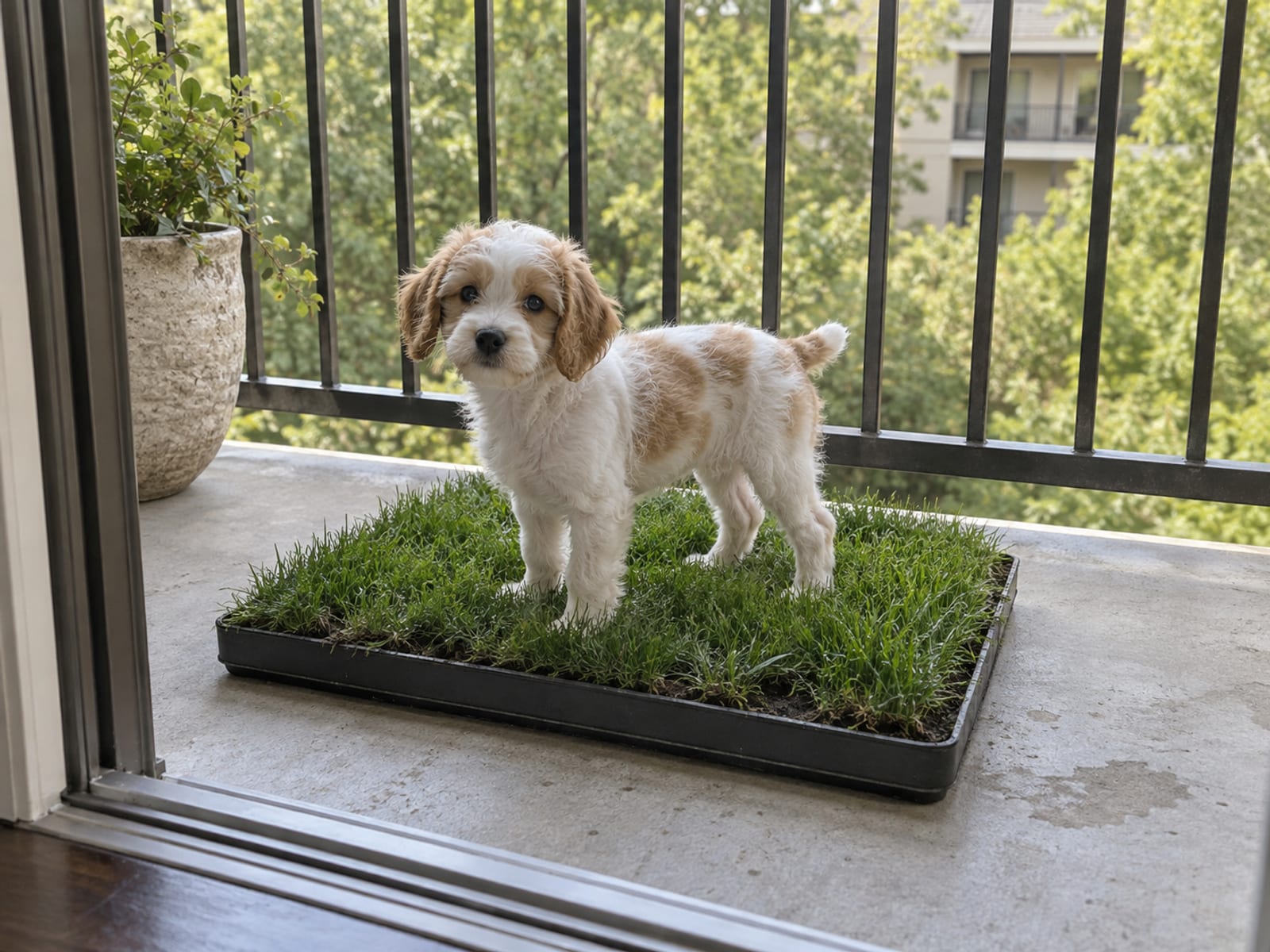
Indoor toilets are a real option. VCA says dogs can learn to use absorbent pads, a dog litter box or another indoor spot, which helps in an apartment, in bad weather, for a dog who has trouble with stairs, or when you are out longer than your puppy can wait.
Decide up front whether the indoor spot is permanent or a bridge to going outside:
- If it is permanent: put the pad, tray or turf in one quiet spot, away from food and bed, take your puppy there at the same trigger times, and reward right there.
- If it is a bridge: AKC notes that pads can build a habit of going indoors on that surface, which you will then need to change. Move the station toward the door a little at a time, then just outside it, then to the outdoor spot. Keep the same cue and reward, and only remove the indoor station once your puppy is using the next spot reliably.
If your puppy will be an outdoor-only adult, get them used to going out in rain and cold, on a leash, while they are young.
How long potty training takes
It varies a lot. AKC says some puppies build reliable habits in days and others take several months, depending on age, history and how consistent the routine is. AKC's chief veterinarian, Dr. Jerry Klein, says a puppy whose training started early can usually be depended on to go outside "most of the time" by about 6 months.
What progress looks like
Week 1
You learn your puppy's signs and timing, and set the spot, cue, reward and cleanup routine. Accidents still happen. Progress means more trips that end in the right place.
Weeks 2 to 3
Your log shows clear patterns after sleep, meals, drinks and play. Your puppy starts going quickly once you reach the spot.
Weeks 4 to 8
Longer stretches without accidents. You add a little supervised freedom. Your puppy still needs frequent trips because their bladder is still growing.
Months, not weeks
Reliable habits and freedom around the house. Many puppies started early are dependable most of the time by about 6 months.
Apartment stairs, bad weather, a busy yard, several people with different routines and irregular meals all make it harder. The trend matters more than any single day: fewer accidents, faster success at the spot.
House training an adult or rescue dog
An adult dog learns the same way. First work out which situation you are in: a dog who was never trained, a newly adopted dog in a new home, a dog marking territory, a dog afraid to go outside, or a dog who was reliable and has started having accidents.
For a trained dog with new accidents, see your vet first. For the others, start over as if with a puppy: one spot, regular meals if your vet agrees, a log, frequent trips with you, rewards at the right spot, supervision indoors and freedom added slowly. An adult can hold it longer than a puppy, but base the schedule on their accident pattern, not on how long an adult should be able to wait.
When accidents are a reason to call the vet
VCA says a well-trained dog who starts soiling in the house can have a medical or behavioral cause. Possible causes include urinary infections, bladder stones, diabetes, kidney or liver disease, Cushing's disease, parasites, bowel disease, pain that makes it hard to squat or get outside, incontinence, and changes in older dogs.
Call your vet soon for:
- New or worsening accidents in a trained dog
- Drinking more than usual, or much larger amounts of urine
- Diarrhea, constipation or straining
- Crying or pain while going, frequent licking of the genitals
- Leaking urine, or wet spots where your dog has been sleeping, according to the VCA
Get urgent care for frequent attempts that produce little or no urine, blood in the urine, or crying while urinating. A dog who cannot pass urine at all is an emergency, according to the VCA Urgent Care.
Mistakes that cause accidents
- Too much freedom too soon. Give access one room at a time, after success.
- Trips that are too far apart. Tie them to waking, eating, drinking, play and naps, and shorten the gap after any accident.
- A late reward. Treat outside, right as your puppy finishes, not back in the kitchen.
- Punishing an accident you found later. Clean it quietly and fix the schedule.
- Different rules from different people. Agree on one spot, one cue and one routine for the whole household.
- Cleaning with the wrong product. Use an enzymatic cleaner so the smell does not invite a repeat.
- Expecting too much too early. Follow your puppy's actual pattern, and never withhold water.
- Calling a sudden change stubbornness. Start with your vet.
When to get help from a professional
Your vet comes first for new accidents in a trained dog, any of the urinary or bowel signs above, or a puppy making no progress despite a steady routine. If your vet rules out a medical problem and the routine still is not working, a certified, reward-based trainer (CPDT-KA or CPDT-KSA) can help you adjust it. For accidents tied to fear, anxiety or marking, look for a certified behavior consultant (CBCC-KA or IAABC-CDBC) or ask your vet about a veterinary behaviorist (DACVB).
Dog training is not licensed by the government, so check that a trainer is listed in their certifying body's directory, and ask how they handle accidents. Avoid anyone who suggests scolding after the fact, fear, pain, choke, prong or shock collars, or promises a fixed timeline, according to the CCPDT.
Check what you learned
Quick check: potty training
Questions about potty training
How often should I take my puppy outside?
After waking, meals, drinks, naps, crate time and play, and before bed, plus often enough in between that accidents do not happen. AKC says a very young puppy may need a dozen or more trips a day.
How long does it realistically take to potty train a puppy?
Anywhere from days to several months. It depends on your puppy's age, history and how consistent the routine is. Many puppies who start early are reliable most of the time by about 6 months.
How long can a 9-week-old puppy hold pee at night?
Not all night, usually. Puppies under about 3 months may need a toilet trip overnight. Keep the crate near your bed so you hear them, and make the night trip quiet and boring.
Should I punish my puppy for peeing inside?
No. A dog cannot link a scolding to an accident that already happened, and punishment can teach them to hide from you to go. Clean it up and give them the next chance to get it right.
Can I use puppy pads in an apartment?
Yes. Dogs can learn to use pads or another indoor spot. If you want your dog to go outside eventually, plan a gradual move of the pad toward the door and then outside.
Why is my potty-trained dog suddenly peeing in the house?
It can be medical or behavioral. See your vet, especially if you notice frequent or painful urination, blood, straining, more thirst, diarrhea, or leaking while asleep.
Start today
Pick the spot, pick the cue word, buy an enzymatic cleaner, and start a simple log on your phone. Take your puppy out right after their next nap, and have a treat ready. For the wider picture of teaching your first skills, see How to Train a Dog, and if you have questions, write to me through the contact page.