
Dog Incontinence: Why Your Dog Leaks Urine, When to Call the Vet and What Helps at Home
By Cal Hewitt · Published , updated
Health
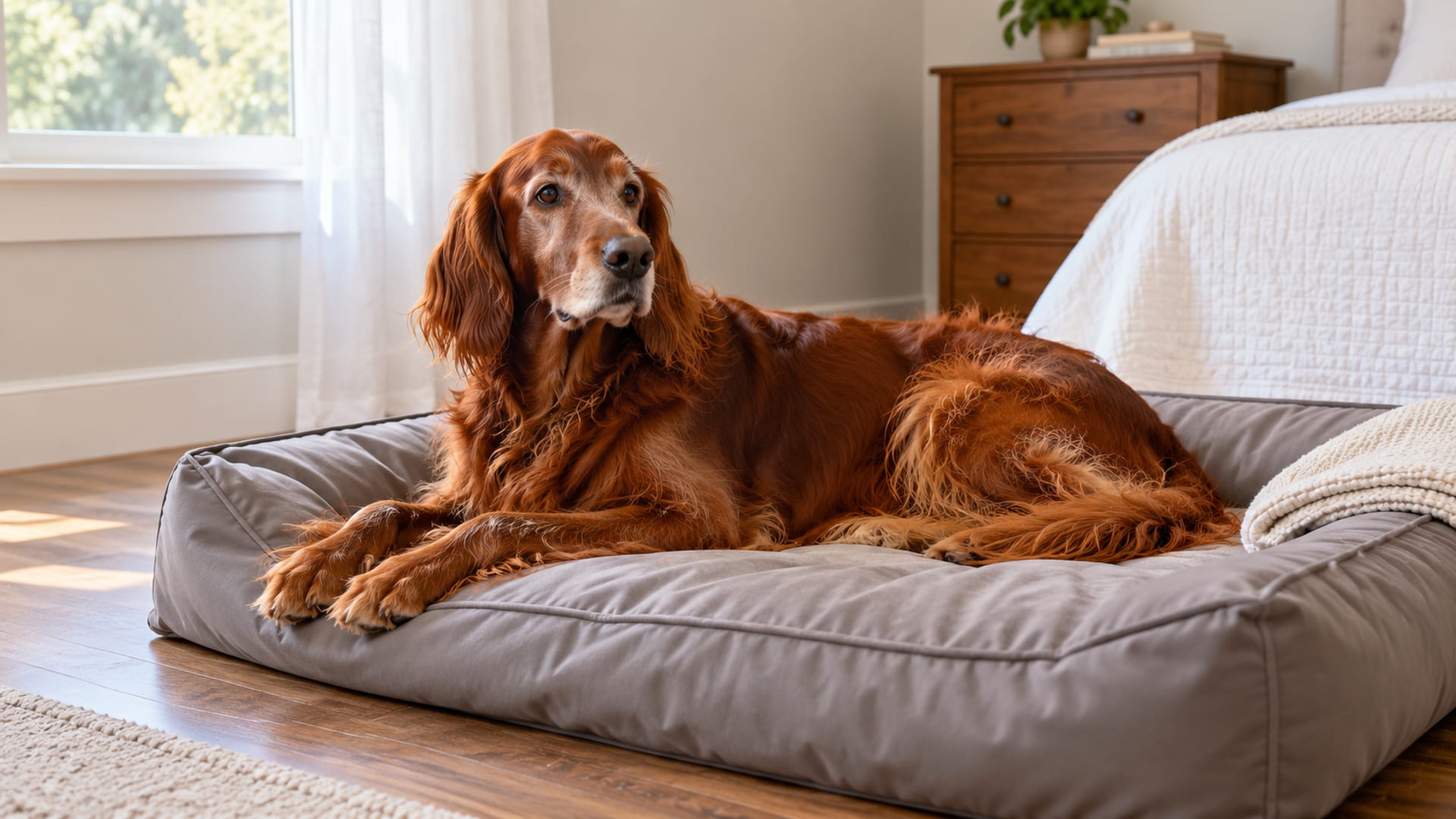
Call an emergency vet today if your dog strains to pee but produces little or no urine, cries in pain, has blood in the urine along with signs of illness, collapses, or suddenly gets weak in the back legs. If none of that fits, book a regular vet visit soon. Dog incontinence is involuntary urine leakage, often seen as a wet spot where your dog slept, dribbling while walking, or damp fur around the genitals. Your dog may not know it is happening, so please do not scold. While you wait for the appointment, keep your dog and the bedding clean and dry.
Key takeaways
Tap a card to bring it forward.
- Incontinence is involuntary leakage, not bad behavior, and a dog can leak while sleeping or relaxed and still pee normally outside.
- Spayed females often have weak urethral closure, but infection, stones, diabetes, kidney disease, spinal problems and birth defects can look the same.
- Any new leakage deserves a vet visit; straining with little or no urine, severe pain, collapse or sudden hind-leg weakness needs care today.
- The vet can check with a history, exam, urine test and sometimes bloodwork or imaging, and treatment depends on the cause.
- At home, use washable bedding, more potty breaks and careful diaper use, and keep skin clean and dry.
- Do not cut back your dog's water unless your vet tells you to.
Finding a wet spot where your dog slept: the short answer and the signs that mean care today
I know how tiring it is to strip wet bedding again, and how much you worry about what it means. Start with the two lists that matter most.
Get same-day or emergency care for any of these, according to the Merck Veterinary Manual and the AAHA senior care guidelines:
- Straining again and again while producing little or no urine, or being unable to urinate.
- Severe pain, crying, collapse or deep lethargy.
- Blood in the urine along with illness or pain.
- Sudden weakness, trouble walking or new hind-leg paralysis along with leaking.
- A swollen or painful belly.
Merck says a complete blockage of the urethra is a medical emergency, and sudden nerve signs may point to a spinal problem, not ordinary incontinence. Find a clinic near you in our emergency vets directory.
For anything else, such as a wet bed, repeated dribbling or new accidents in a house-trained dog, book a regular visit soon. Our vet directory can help you find a clinic.
What dog incontinence looks like
The signs tend to be quiet. VCA Animal Hospitals describes wet spots where the dog slept or relaxed, urine pooling under the body and dribbling while walking. You may also see damp fur around the vulva or the prepuce. Many dogs seem unaware, and they often pee normally when they are awake and outside. That is why a dog can look healthy and still leak in bed.
Write down what you see, because your vet will ask:
- When the leaking began.
- Whether it happens while asleep, relaxed, walking or after peeing.
- Whether your dog seems to notice.
- How much your dog drinks and pees.
- Blood, cloudy or strong-smelling urine, pain or straining.
- Redness, sores, damp fur or urine scald on the skin.
- Current medicines and any recent spay, surgery, injury or illness.
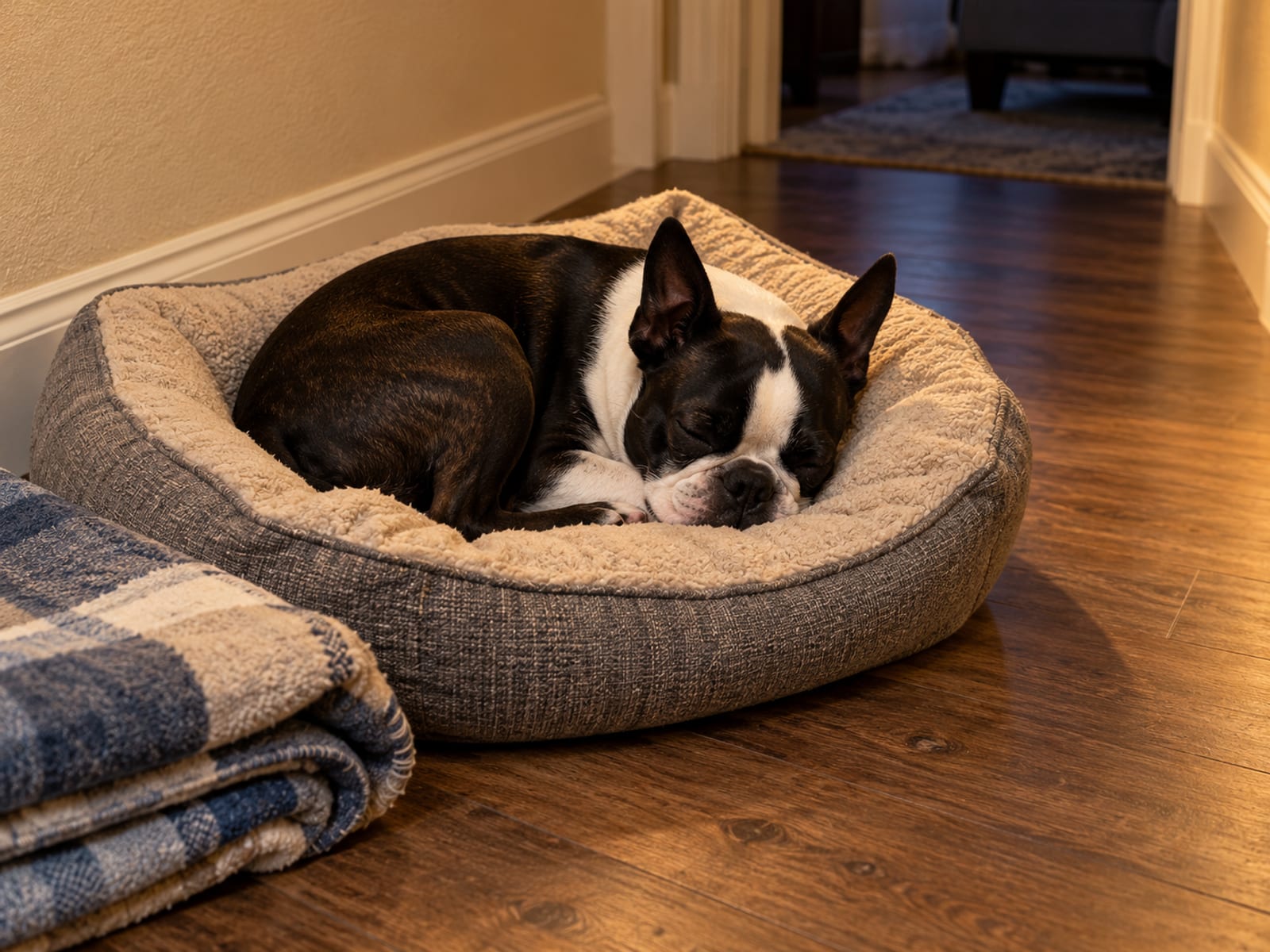
Incontinence or a house-soiling problem?
It matters, because the fix is different. The ASPCA says house-soiling can be caused by incontinence, and lists medical causes to rule out before any behavior work. Here is how the patterns usually differ:
- Incontinence. Passive leakage, often while asleep or relaxed, and the dog may not notice.
- Marking. Small amounts placed in chosen spots, often after sniffing around.
- Submissive or excitement urination. It happens during greetings or play, when the dog is aroused.
- House-training gaps or anxiety. The dog chooses to go indoors because of incomplete training, limited access to outside, or stress.
- Cognitive decline. An older dog seems confused. Our dog dementia article covers that side.
You cannot tell these apart from one accident, and a dog can have both a medical problem and a behavior problem. For a puppy that has never been dry, our potty training a puppy guide covers normal training, but constant dribbling can be medical, as the next section explains. Talk to a trainer only after your vet has ruled out a medical cause. Our trainer directory can help then.
Why your dog is leaking, by age and pattern
These are possible causes, not a diagnosis for your dog.
Young dogs. Ectopic ureters are birth defects in which a ureter opens somewhere other than the normal spot in the bladder. UC Davis calls them the most common cause of incontinence in young dogs, and they are commonly diagnosed before one year of age. A puppy who dribbles constantly, since early on, is not failing at house training.
Spayed females. Urethral sphincter mechanism incompetence, shortened to USMI, means the muscle that holds urine in is weak. Merck calls it the most common urinary storage disorder in dogs, especially in spayed females, and its pharmacology review reports an incidence of 11% to 20% in large-breed spayed females. The leaking may start months or years after surgery, and it is often more noticeable in middle-aged or older dogs.
Older dogs. Possible causes include urinary tract infection, bladder stones, diabetes, kidney disease, spinal or nerve disease, tumors, and a blocked bladder that overflows. Merck also says a dog can have more than one problem at once. More thirst and more peeing point toward a broader exam, and our diabetes in dogs article covers that pattern. Leaking is not simply aging, and our senior dog care guide can help you spot other changes.
When to call the vet: soon versus today
You have the same-day list above. Book a visit soon for:
- Any new leaking.
- Wet bedding or urine pooling during sleep.
- Repeated dribbling.
- Peeing more often or in larger amounts, or more thirst.
- Cloudy or strong-smelling urine, or blood in the urine.
- Licking or irritation around the genitals.
- Redness, sores or hair loss from urine on the skin.
- A puppy that dribbles all the time.
- A house-trained dog with new accidents.
What the vet will check
Your vet will ask for the history you wrote down, then examine your dog. The workup can include several steps.
- Physical and neurological exam, including feeling the bladder and checking how much urine remains after your dog pees.
- Urinalysis, which looks at the urine's appearance, pH, concentration, glucose, blood, protein and sediment, as Cornell describes.
- Urine culture when infection is suspected or keeps coming back.
- Bloodwork to check kidney function, blood sugar, hydration and other illness.
- X-rays or ultrasound to look for stones and changes in the bladder or kidneys.
- CT, contrast studies or cystoscopy, a camera exam, when an ectopic ureter or another structural problem is suspected.
The ACVIM consensus statement from 2024 defines incontinence as passive, involuntary leakage of urine and supports matching the tests and treatment to the type of urinary problem.
How incontinence is treated
Treatment depends on the cause, and I can't choose one for your dog. I will not give doses; your vet chooses the medicine and the amount.
- Medicines for weak urethral closure. Veterinary sources describe alpha-adrenergic drugs, especially phenylpropanolamine, and estrogen therapy such as estriol for suitable female dogs. These need veterinary selection and monitoring.
- Medicines for other bladder problems, such as drugs for an overactive bladder muscle, if that is the cause.
- Surgery for ectopic ureters. Merck describes laser ablation through a camera for some cases and surgical reimplantation for others.
- Injectable urethral bulking, where material is placed near the urethra to help it close.
- Treating the underlying illness, such as infection, stones or diabetes.
Results vary, so treat these numbers as examples, not promises for your dog:
- UC Davis reports surgical success for ectopic ureters ranging from 50% to 75%.
- Merck cites a laser study in which 23 of 30 female dogs, or 77%, stayed continent, some with added medicine.
- UC Davis reports an injectable bulking study in which 27 of 40 dogs, or 68%, were continent for an average of 17 months. Some dogs got worse after a year and needed repeat treatment.
- An estriol field study on the FDA DailyMed label found success in 66% of treated dogs versus 37% on placebo at day 14.
- A small study of 22 spayed females found 72.7% were continent at day 28 with phenylpropanolamine. It was small and used one protocol.
- The ACVIM statement reports that continence after surgery can decline over time in some female dogs.
Ask your vet what result to expect for the cause your dog has.
Tap or hover a row to highlight it.
| Fact | Figure | Source |
|---|---|---|
| FactIncidence in large-breed spayed females | Figure11% to 20% | SourceMerck pharmacology review, September 2024 |
| FactAge when ectopic ureters are usually diagnosed | FigureCommonly before 1 year | SourceUC Davis |
| FactSurgical correction of ectopic ureters | Figure50% to 75% success | SourceUC Davis |
| FactLaser ablation, with or without added medicine | Figure23 of 30 dogs, 77% | SourceMerck |
| FactInjectable bulking | Figure27 of 40 dogs, 68%, for an average of 17 months | SourceUC Davis |
| FactEstriol at day 14 | Figure66% treated versus 37% placebo | SourceFDA DailyMed label |
What you can do at home today
Home care will not treat the cause, but it protects your dog's skin and your floors while you wait. These tips come from AKC, PDSA and Banfield.
- Use washable absorbent bedding, and put waterproof layers or pads under it.
- Offer more potty breaks so your dog empties the bladder often.
- Keep the coat, skin and resting spot clean and dry. Wipe urine from the rear and genital area, then dry it well.
- Keep long fur short around the back end if you can do it safely.
- Treat a diaper or male belly band as a containment tool, not treatment. Fit it so it is snug without rubbing or pinching, and change it whenever it is soiled. Take it off every few hours for a break and a potty chance.
- Check under it for dampness, redness, sores or urine scald. Watch your dog while it is wearing one, because some dogs pull the material off and swallow it.
- Skip human creams and medicines unless your vet approves them, especially if your dog can lick the area. Ask what skin protection is safe if redness appears.
- Do not restrict water unless your vet tells you to. More thirst and peeing can signal illness.
- Do not punish leaking. Your dog is not doing it on purpose.
Boarding and daycare work only if staff can follow your potty, cleaning and diaper instructions. Our groomer directory can help with coat hygiene, though groomers do not diagnose or treat.
What it may cost
Prices differ by area and by clinic. A 2026 VetReceipt compilation of 138 veterinary invoices reported diagnostic visits of about $350 to $750. Common combinations were bloodwork plus urinalysis at $150 to $400, X-rays plus bloodwork at $250 to $550, and ultrasound plus bloodwork at $300 to $700. The exam fee was listed separately at $50 to $100. These come from invoices and are not national prices.
One local animal hospital's posted prices show $165 for a full in-house blood panel and $90 for in-house urinalysis with bladder ultrasound.
Emergency status, sedation, imaging, specialist referral and repeat testing all change the bill. Ask your clinic for an itemized estimate that covers the exam, urine collection, urinalysis, culture, bloodwork, imaging, sedation and any specialist fees. Our pet insurance for dogs article explains that coverage varies and pre-existing-condition rules apply.
Questions owners ask about dog incontinence
What can you do for a dog with incontinence?
Get a vet exam first, because the cause decides the treatment. Meanwhile, use washable bedding, offer more potty breaks and keep your dog's skin clean and dry. Your vet may suggest medicine or another treatment that fits the cause.
How long can dogs live with incontinence?
Incontinence is a sign, not a disease, so what it means depends on the cause. Some causes, such as a weak urethral muscle, are treated with medicine, and others need surgery or treatment for an illness. Your vet can examine your dog and tell you what to expect for that cause.
When should you take your dog to the vet for incontinence?
Book a visit soon for any new leaking. Go the same day if your dog strains with little or no urine, is in severe pain, has blood with illness, collapses or suddenly gets weak in the back legs.
How is incontinence diagnosed?
Your vet takes a history and does a physical and neurological exam. A urinalysis is usually next, and the vet may add a urine culture, bloodwork, X-rays or ultrasound. Cystoscopy or CT is used when a birth defect is suspected.
Is it time to say goodbye when a dog starts leaking?
Leaking urine is a reason to have your dog examined, and many causes can be treated or managed. If you are asking about your dog's comfort, or how your dog feels day to day, sit down with your vet, who can examine your dog and talk it through with you. I am not a vet, and that decision belongs with you and your vet together.
The next step
Write down when the leaking happens, set up washable bedding tonight and call your vet to book a visit. If your dog strains or is in pain, go to an emergency clinic today. Cleaning up again and again is exhausting, and it is not your fault. A diagnosis gives you a plan.
Sources
- academic.oup.com: ACVIM consensus statement
- American Animal Hospital Association: AAHA senior care guidelines
- American Kennel Club: AKC
- ASPCA: ASPCA
- banfield.com: Banfield
- Cornell University College of Veterinary Medicine: Cornell
- dailymed.nlm.nih.gov: FDA DailyMed label
- Merck Veterinary Manual: Merck Veterinary Manual
- mtngreenanimalhospital.com: posted prices
- pdsa.org.uk: PDSA
- UC Davis School of Veterinary Medicine: UC Davis
- VCA Animal Hospitals: VCA Animal Hospitals
- vetreceipt.com: VetReceipt