
Dog Diapers: When They Help, How to Fit Them and How to Keep Your Dog's Skin Healthy
By Cal Hewitt · Published
Health
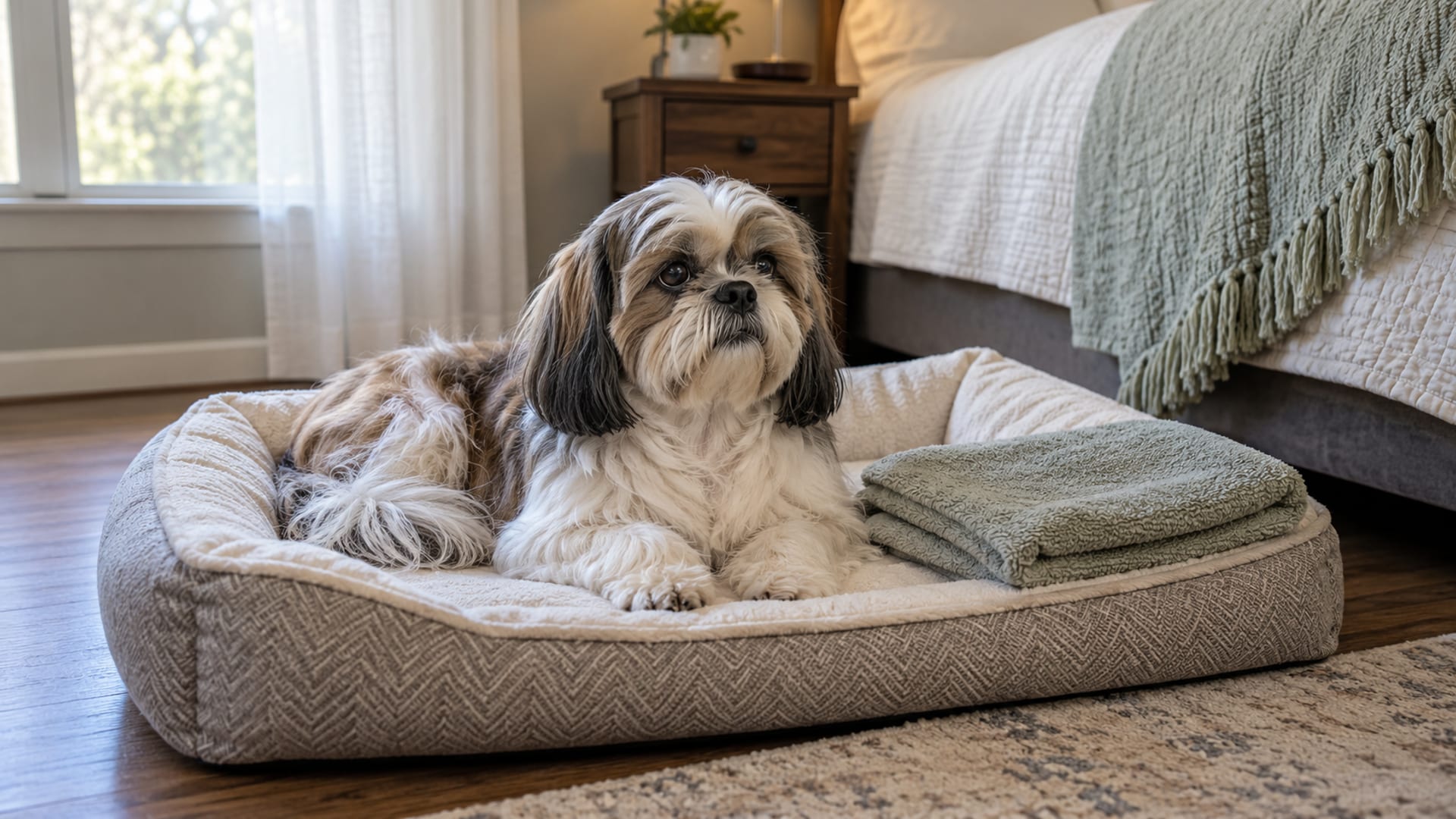
A dog diaper holds urine, heat discharge, marking and short-term accidents so your floors, bed and couch stay dry. It does not treat the reason a dog is leaking. If the leaking is new, getting worse, painful, bloody, cloudy, strong-smelling, or comes with more thirst or more peeing, call your vet.
For the fit, measure the waist, check where the tail opening sits, keep it snug without pinching, change it when it is wet or dirty, and give the skin a diaper-free break. The AKC's veterinary guidance on diapers backs this plan.
Key takeaways
Tap a card to bring it forward.
- A diaper contains leaks. It does not diagnose or treat what is causing them.
- New, worsening, painful, bloody, cloudy or strong-smelling urine, or more thirst and more urination, means a vet visit.
- Use a full diaper for a female dog or any mess at the rear. Use a male belly band only for a male dog's urine.
- Measure the waist, check the tail opening and keep the fit snug but not pinching.
- Change it when it is wet or dirty, wipe and fully dry the skin, and give diaper-free breaks.
- A diaper is never birth control, and it is never a reason to leave a chewing dog alone with it on.
When do dog diapers help, and what do they not treat?
I know a wet bed, a stained couch and a smell you cannot get rid of wear you down. A diaper can take much of that pressure off while you work out what is going on. It does the job of a towel that stays put. It does not do the job of a vet.
Diapers fit a handful of real situations:
- An older or spayed dog that leaks urine, especially while sleeping or relaxing.
- A female dog in heat, mainly for discharge and a cleaner house.
- A dog with limited mobility or one recovering from surgery, as long as your vet agrees the diaper will not rub the incision or injury.
- A male dog that marks indoors or leaks from excitement, usually with a belly band.
- Travel, hotel rooms, car rides and other short stretches where accidents are hard to manage.
- The days between noticing a problem and your vet appointment.
Three limits matter. A diaper is not a cure for incontinence, and it is not a substitute for care. It does not keep a female dog from getting pregnant, because a diaper is not contraception, and a male dog can get around or remove one, as the AKC explains. And it does not replace potty training. The dog still needs regular chances to go in the right place. Our potty training a puppy guide covers that schedule for puppies and adult dogs.
Why does new leaking or wet bedding need a vet visit first?
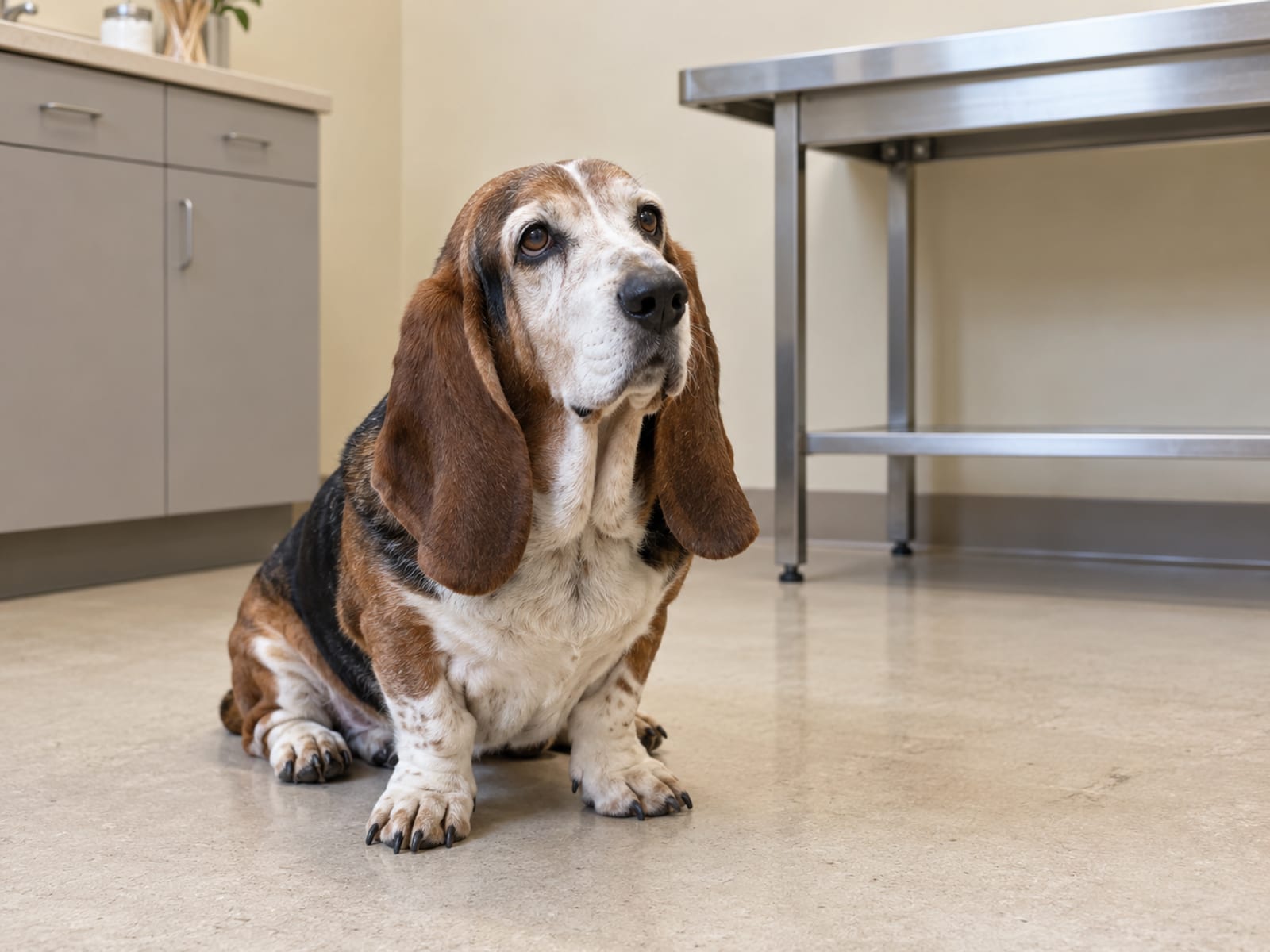
Urinary incontinence is a symptom, not a diagnosis. VCA Animal Hospitals describes it as pooling or spotting under a dog that is sleeping or relaxed, or dribbling while the dog walks. The Merck Veterinary Manual lists leaking, dribbling, abnormal urine flow and urine-related skin inflammation among the signs of bladder control disorders. The possible causes include a weak urethral sphincter, a urinary infection, a bladder or urethra problem, metabolic disease and nerve disease. A diaper cannot tell you which one you are dealing with.
Call your vet soon, or the same day, for any of these urinary signs, which the AAHA senior pet handout lists:
- Straining or discomfort when peeing.
- A change in how often your dog pees.
- A change in urine color or odor, or blood in the urine.
- Drinking much more water than usual, or peeing much more.
If your dog is trying to pee and nothing comes out, or shows severe pain, marked weakness or serious trouble after surgery, go to an emergency vet right away. Our emergency vets directory can help you find one nearby, and our vet directory lists regular clinics. If leaking is happening in an older dog, our senior dog care guide covers what else to watch, and our dog incontinence article goes deeper on causes, testing and treatment. This page sticks to containing the mess and caring for the skin.
Which type of dog diaper suits which situation?
The right product depends on who is wearing it and what needs to be contained. This is the short version:
Tap or hover a row to highlight it.
| Type | Best suited to | Limits |
|---|---|---|
| TypeDisposable full diaper | Best suited toTravel, short-term use, a female in heat, temporary leaking | LimitsOngoing cost and waste; must be changed and watched |
| TypeWashable full diaper | Best suited toDaily use, heat cycles, ongoing household management | LimitsYou need several spares and a laundry routine |
| TypeMale belly band | Best suited toA male dog's urine, marking or excitement peeing | LimitsDoes not cover the rear and is not for stool |
| TypeFull-coverage female diaper | Best suited toA female dog's leaking, heat discharge, some stool containment | LimitsFit varies with tail position and body shape |
| TypeAbsorbent liner or pad | Best suited toExtra absorbency inside a diaper or band that is made for it | LimitsMust not bunch, press or keep skin wet |
| TypeFloor pee pad | Best suited toDogs with diarrhea, dogs that cannot tolerate a diaper, rooms where floor protection works | LimitsDoes not protect the dog's skin or bedding |
A few notes on that table. A female dog, or any situation that involves stool or rear discharge, needs more coverage than a belly band gives. A belly band wraps the abdomen and covers the urine path of a male dog, and that is all it is built to do. A floor pee pad is a different product from a diaper, so if you see "pañales para el piso" or "empapadores" in a store, those are pads, not garments. Whatever you choose, it should cover the urine path without pressing tightly on the skin.
How do you measure your dog, and how do you size a diaper?
Do not size by breed or weight alone. Product charts differ, so measure and then check the chart on the package.
- Measure the waist where the instructions say to, generally around the belly in front of the hind legs or around the broadest part of the abdomen.
- Write the number down and match it to that maker's size chart (the size is called "talla" in Spanish).
- Check where the tail hole sits. The tail should pass through the opening without pulling the diaper sharply upward. A short, high-set, docked or heavily coated tail often makes this the hard part.
- Place the absorbent area over the urine path.
- Fasten both sides evenly.
Sizing and changing go together, since a diaper that fits well is easier to change at the right time. For how often to change, there is no single number that applies to every dog, diaper, urine volume or coat. Change it whenever it is wet or dirty, and look at the skin each time. A dog with heavy leaking or one who cannot move much may need checks every few hours, according to VCA's home care guidance for paralyzed pets, because urine and stool left on the skin cause sores.
Product directions are a starting point only. Hartz says one of its dog diapers is designed for six hours of protection and its male wraps for twelve, based on average urine amounts, and it adds that individual dogs may need more frequent changes. Treat a printed duration as a ceiling on a good day, not a promise.
How do you keep it on? Snug, not pinching, and when to add support
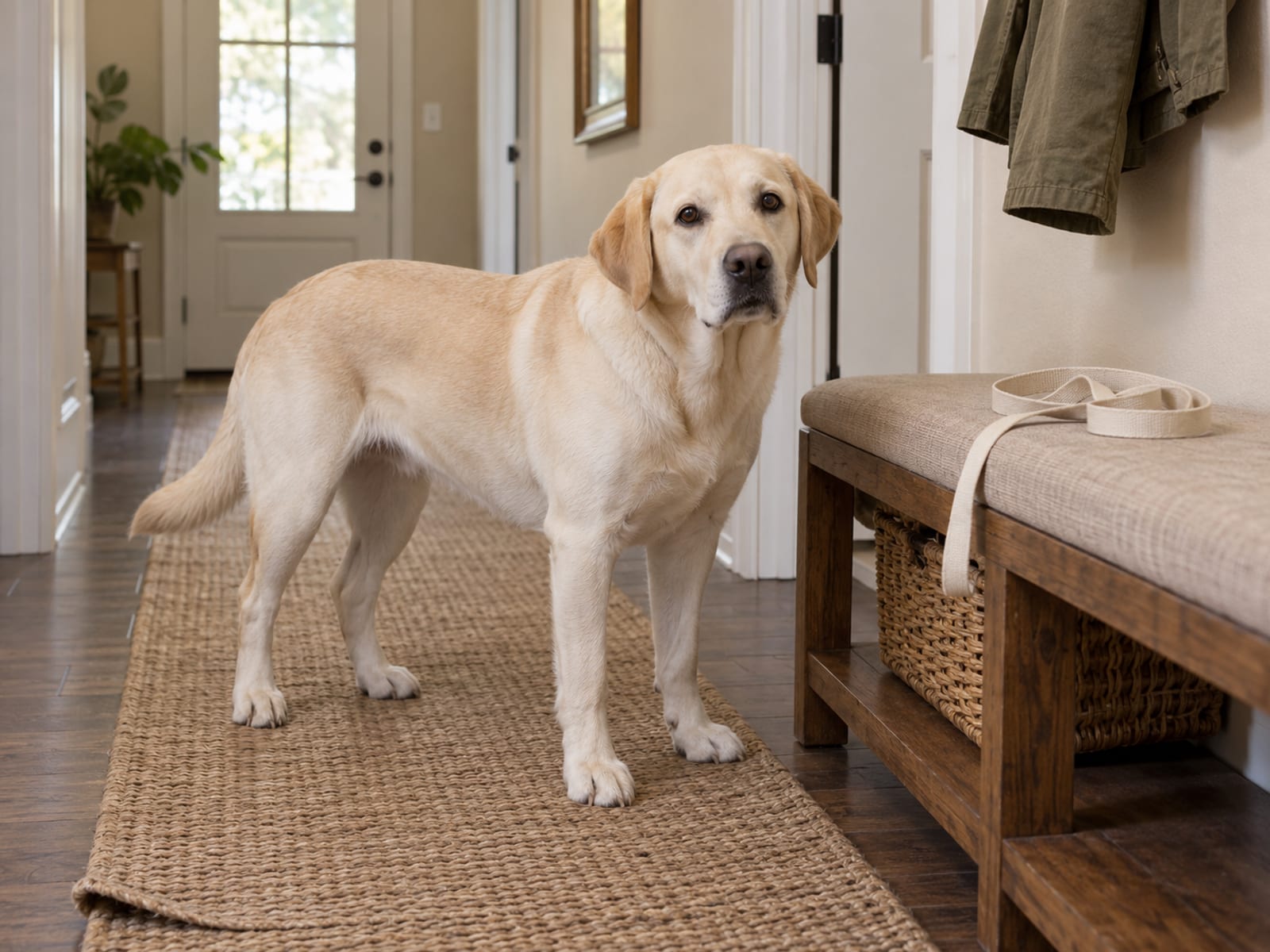
The AKC's veterinary guidance says you should be able to slide your fingers under the band comfortably. It also suggests erring toward slightly loose at first, because a diaper that is too tight can cause chafing, irritation and hair loss. So, start comfortable and adjust.
Try the fit with your dog standing next to you:
- Walk the dog around for a few minutes and watch whether the diaper shifts.
- Check again after your dog sits, lies down and pees.
- If it slips, go back over the size, the tail hole position, your dog's body shape, where the fasteners sit and how absorbent the diaper is.
Suspenders or a recovery onesie can help some dogs hold a diaper in place. Treat them only as retention aids that need supervision. They must not get in the way of breathing, moving, toileting or checking the skin.
If your dog does not like the diaper at first, introduce it slowly. Let your dog sniff it, put it on for a minute or two, and pair it with treats and praise. Our dog body language guide helps you read stress, fear and comfort so you can tell when to slow down. If a dog keeps chewing or tearing the diaper, do not leave your dog alone in it. The ASPCA Animal Poison Control warns that swallowed diaper material can cause a blockage in the gut, which is an emergency.
Can a dog wear a diaper overnight, poop in it, or go without it?
Overnight. Some products are marketed for longer wear. Still, there is no universal safe overnight interval. Overnight use may work for some dogs when the fit is right, you can monitor your dog, and you change the diaper first thing in the morning and check the skin. A diaper that was only "not visibly full" can still hold moisture against skin long enough to cause irritation.
Pooping. A full diaper may hold some stool, and a belly band will not. Either way, stool and diarrhea should not stay against the skin. Take the diaper off and clean your dog right away. With diarrhea, a diaper is a poor choice because the mess stays on the body, so the AKC advises another plan, such as a floor pad and more frequent cleanups.
Going outside. Take the diaper off before your dog goes out to pee or poop. A diaper does not replace outdoor toileting, and your dog should still get regular chances to go in the right spot.
Diaper-free breaks. Give regular time without a diaper so the skin can air out. Ask your vet how long and how often is right for your dog.
How do you prevent diaper rash and urine scald?
Urine against the skin can lead to urine scald, dermatitis, sores, and bacterial or yeast growth. Prevention comes down to a short routine at every change:
- Take the diaper off and look at the skin.
- Clean away urine or stool gently with a method that suits your dog.
- Dry the skin completely before the next diaper goes on.
- Avoid tight fits, rubbing edges and bunching.
- Wash reusable diapers according to their instructions.
- Ask your vet before putting any barrier cream on, especially if your dog might lick it or the skin is already damaged.
- Do not cover a surgical incision unless the vet who treated your dog says it is fine.
A rash alone does not prove a urinary infection. Still, keep watching for the urinary signs listed earlier, because they need a vet no matter how the skin looks.
When do skin signs mean a vet visit?
Call your vet if you see any of these:
- Redness that does not fade after a few changes and breaks.
- Swelling, raw patches, sores or bleeding.
- A bad odor or discharge.
- Pain when you touch the area.
- Licking or chewing at the skin that you cannot interrupt.
- Hair loss that is getting worse.
- Skin that stays wet even though you change the diaper often.
A vet answer in Petco's pet education section speaks to redness and moisture around the vulva during diaper use, which is a common worry for female dogs. A short phone call to your clinic is often worth it.
Can you use a baby diaper, and what do dog diapers cost?
A baby diaper can work for a short time if you cut or open a tail passage. The AKC describes this as a do-it-yourself option, but it also says a vet should evaluate incontinence before you lean on diapers to manage it. A baby diaper may leak, rub, shift or leave the wrong anatomy covered. If you use one for a day or two:
- Start with a clean, absorbent garment.
- Leave the tail and the elimination areas positioned correctly.
- Avoid sharp edges, exposed fasteners, adhesive on skin and a tight fit.
- Use it only while you are watching your dog.
- Take it off as soon as it is wet or dirty.
A dog-specific diaper gives you a more predictable tail opening and closure, so it is easier to judge whether it fits.
Prices change often, so treat these as dated snapshots from 2026 and not fixed prices:
Tap or hover a row to highlight it.
| Product type | Approximate price | Source |
|---|---|---|
| Product typeWashable male belly band, 3-pack | Approximate priceAbout $16.99 to $28.99, depending on product and size | SourceChewy listing |
| Product typeWashable 3-packs in one comparison | Approximate priceAbout $18.43 to $25.99 | SourceChewy comparison |
| Product typeDisposable, 32-count pack | Approximate priceAbout $17 to $25 | SourcePetistra, 2026 |
| Product typeMade-to-order washable, each | Approximate priceAbout $56.99 to $95.99 | SourcePetistra, 2026 |
Laundry, how often you replace them, shipping, taxes and the number of spares you need all change the real cost. Washable options need several spares so one is always clean. Disposables cost less up front and add up over weeks. Vet exam and testing costs vary by clinic, so ask yours for an estimate.
Questions people ask about dog diapers
Are dog diapers a good idea?
They are a good idea as a stopgap or a household tool, such as for an older dog that leaks, a female in heat, travel or recovery. They work best alongside a vet visit when the leaking is new, because a diaper hides the mess without fixing the cause.
Do dogs need diapers when they are in heat?
Many owners use them to keep discharge off the floor and furniture. An AKC heat-cycle article puts a heat at about three weeks, so plan for several diapers and regular skin checks. A diaper does not prevent mating, and it is not contraception.
Why won't my dog's diaper stay on?
Check the size first, then the tail hole position, the fastener placement and your dog's body shape. A diaper that is too big slides, and one that is too tight causes chafing. Suspenders or a onesie can help some dogs, with supervision.
What can I use instead of a dog diaper?
A floor pee pad protects the room, especially with diarrhea. A baby diaper with a tail opening works for a short time. None of these treat the cause, so a leaking dog still needs a vet.
Can a dog wear a diaper every day?
Some dogs do, especially with ongoing incontinence or limited mobility. Change it whenever it is wet or dirty, check and dry the skin each time, and give diaper-free breaks. Ask your vet what schedule suits your dog.
What should you do next?
Start with the vet if the leaking is new or changing. Then pick the type that matches your dog, measure the waist, and check the tail opening before you buy. Supervise the first wear, take it off for outdoor trips, change it when it is wet or dirty, and dry the skin every time. If you need a clinic, our vet directory is a good place to start, our trainer directory can help with house-training or marking once a medical cause is ruled out, and our groomer directory lists groomers who can trim the coat around the hindquarters.
If you board your dog or use daycare, ask about the facility's diaper policy ahead of time. You are doing a good job for your dog by keeping the skin healthy and getting the cause checked.
Sources
- American Animal Hospital Association: AAHA senior pet handout
- American Kennel Club: AKC describes this as a do-it-yourself option
- American Kennel Club: AKC's veterinary guidance on diapers
- Merck Veterinary Manual: Merck Veterinary Manual
- petco.com: Petco's pet education section
- petistra.com: Petistra, 2026
- VCA Animal Hospitals: VCA Animal Hospitals
- VCA Animal Hospitals: VCA's home care guidance for paralyzed pets