
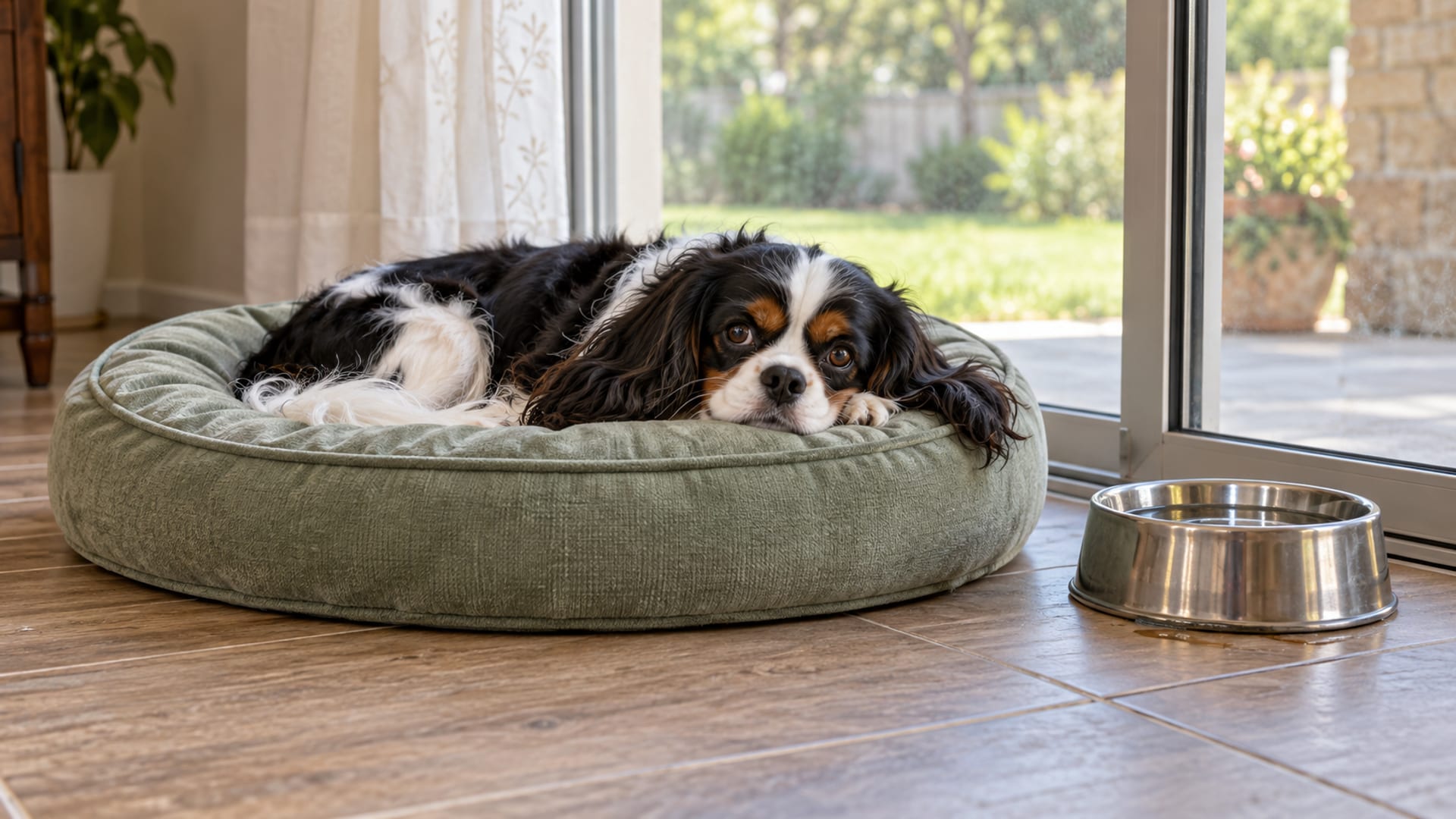
If your dog has blood in the stool, black or tarry stool, vomiting, weakness, pain, pale gums or signs of dehydration, or you think they swallowed something toxic or a foreign object, call your veterinarian or an emergency clinic now. For a possible poisoning, a poison-control service can help too. Call early for a puppy, a senior dog or a dog with a health condition. A bright, otherwise healthy adult dog with mild diarrhea can usually be watched for a short time with fresh water and bland feeding your vet supports. Don't give human antidiarrheal medicine unless your vet tells you to, and get care if it isn't improving within 48 to 72 hours.
Key takeaways
Tap a card to bring it forward.
- Blood, black or tarry stool, vomiting, weakness, pain or dehydration means call a veterinarian now.
- Puppies, seniors and dogs with a health condition should see a vet early, not after days of watching.
- A bright adult dog with mild diarrhea can be watched briefly with fresh water and vet-supported bland food.
- Skip Imodium, Pepto-Bismol and other human medicines unless your vet directs them.
- Mild diarrhea that isn't improving within 48 to 72 hours needs a veterinary visit.
- Save a fresh stool sample and keep your dog away from other dogs until you know the cause.
I'm Cal, and I'm not a veterinarian. What follows is what the veterinary sources say, put in the order you'll need it while you're standing over the mess and trying to decide what it means. There's no instant fix for diarrhea, so the useful question isn't how to stop it tonight. It's whether this is something to watch or something to call about.
Go now, call today, or watch at home: the signs that decide it
Start with your dog, not the stool. Is your dog bright, responsive, breathing normally and able to drink? Then look for the red flags. The Cornell University College of Veterinary Medicine advises veterinary care when a dog stops eating, becomes lethargic, has black or tarry stool, vomits, or has diarrhea that keeps going for 48 to 72 hours. VCA Animal Hospitals puts it plainly: if your pet is lethargic, too nauseated to drink, vomiting or has blood in the stool, don't try to handle it at home.
Call an emergency clinic or your veterinarian now for:
- Black, tarry stool, large amounts of blood, or severe bloody diarrhea.
- Repeated vomiting, retching that brings nothing up, or not keeping water down.
- Collapse, severe weakness, marked lethargy, pale gums, severe pain or a swollen belly.
- Suspected toxin or foreign-object ingestion.
- Severe dehydration or a dog getting worse quickly.
- A very young puppy with diarrhea, especially one that isn't fully vaccinated.
Book a vet visit soon for diarrhea lasting more than 48 to 72 hours, repeated episodes, a poor appetite that continues, mucus or streaks of blood, ongoing straining, diarrhea after travel, boarding or contact with sick animals, or any senior dog, dog with a chronic disease or dog on medication.
Watching briefly at home fits only one kind of dog: a bright, otherwise healthy adult with no blood or black stool, no vomiting, pain, weakness or dehydration, who is drinking and willing to eat, and whose diarrhea is mild and getting better.
Puppies and seniors sit in a different place. Puppies have less reserve and can slide into dehydration and low blood sugar quickly, as VCA notes for young puppies. The American Kennel Club says a puppy with diarrhea should be observed and the vet should be called. A puppy that isn't fully vaccinated should be kept away from other dogs and the vet called promptly, because parvovirus is a serious possibility, though diarrhea alone doesn't diagnose it. A playful puppy can still be seriously ill. Older dogs often carry kidney, liver, hormone or other conditions that make diarrhea more consequential, and Pet InfoRx says very young or elderly dogs need immediate veterinary attention after more than two episodes. For these dogs the advice shifts from "watch briefly" to "call early."
The same goes for dogs with diabetes, kidney or liver disease, inflammatory bowel disease, cancer, immune disease or regular medications. Dehydration puts extra strain on the kidneys, and medicines may interact or become unsafe. Size alone doesn't set a rule in the sources, but a large dog with a swollen belly or dry retching is an emergency at any size.
What blood, black stool, mucus, vomiting or a night of accidents changes
Each of these moves the decision, and not all in the same direction.
Black, tarry stool can mean digested blood from higher up in the gut. Don't assume it came from something your dog ate. Cornell and VCA both list it as a reason for prompt care.
Fresh red blood can come from irritation in the lower intestine, and a few streaks aren't the same as a toilet full of red. Even so, the veterinary sources still list blood as a reason to contact your vet. Streaks point toward booking a visit soon. Large amounts, or blood with any other warning sign, point toward calling now.
Mucus, along with straining, belongs in the "book soon" group rather than the emergency group, as long as your dog is otherwise bright.
Vomiting on top of diarrhea changes a lot. Your dog is now losing fluid from both ends, and fluid and electrolytes can drop quickly. Repeated vomiting, or vomiting that keeps water from staying down, is a call-now sign.
A night of repeated accidents tells you the diarrhea is frequent. Frequency on its own is a reason to book a visit, and it's also a reason to check hydration carefully in the morning. If your dog also ate garbage, a toy or anything that could be toxic, that changes the decision completely. The Merck Veterinary Manual notes that belly pain may point to a blockage that needs emergency treatment.
And if your dog has had diarrhea before and was fine, that doesn't mean this episode is the same. The cause can be different each time.
How to check your dog for dehydration, and where home checks fall short
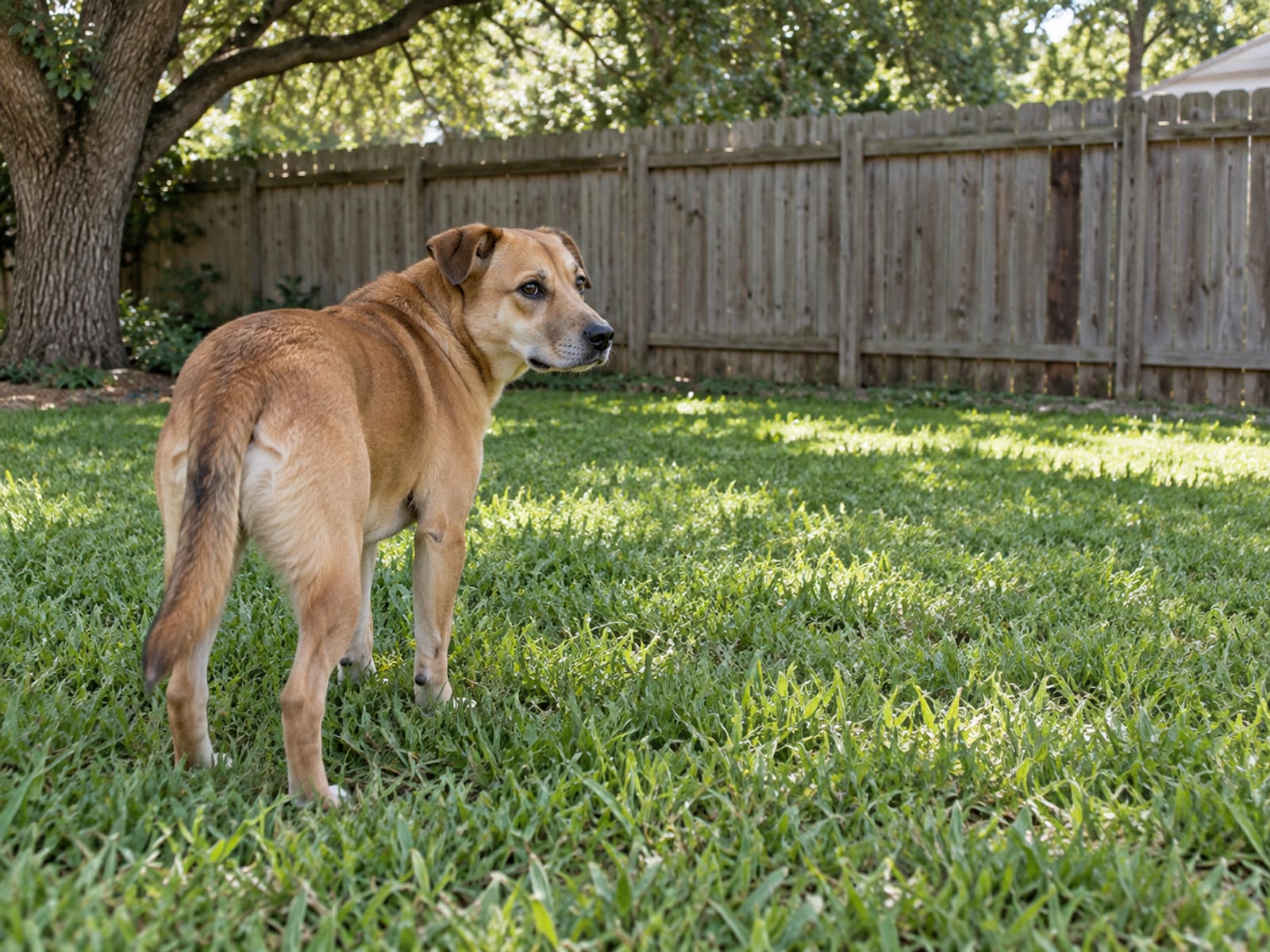
There are a few things you can look at. VCA's guide to caring for a sick dog names dry, sticky gums and a loss of skin elasticity as common signs. Touch your dog's gums: they should feel moist, not tacky. Gently lift the skin over the shoulders; in a well-hydrated dog it snaps back, and in a dehydrated dog it may return slowly. Also watch for less drinking, less peeing, weakness, lethargy and sunken-looking eyes. In puppies, VCA says tacky gums are the best of these home checks.
The honest limit is this: these are screening observations, not a way to measure dehydration. Skin elasticity varies with age, weight and skin conditions. Gums can feel dry from panting or mouth problems. A dog can be dehydrated and still pass the skin test, so a normal result shouldn't talk you out of a call when other signs are there. A vet may need an exam and bloodwork to know, and may need to give fluids.
Don't force water into a weak, vomiting or wobbly dog. Ask your vet how to get fluids in if your dog isn't drinking enough.
Water and food at home, according to the veterinary sources
Home care in the sources is limited to a bright, otherwise healthy adult dog that isn't vomiting, has no blood in the stool, is drinking, and has no important underlying illness. If that's your dog, this is what they describe.
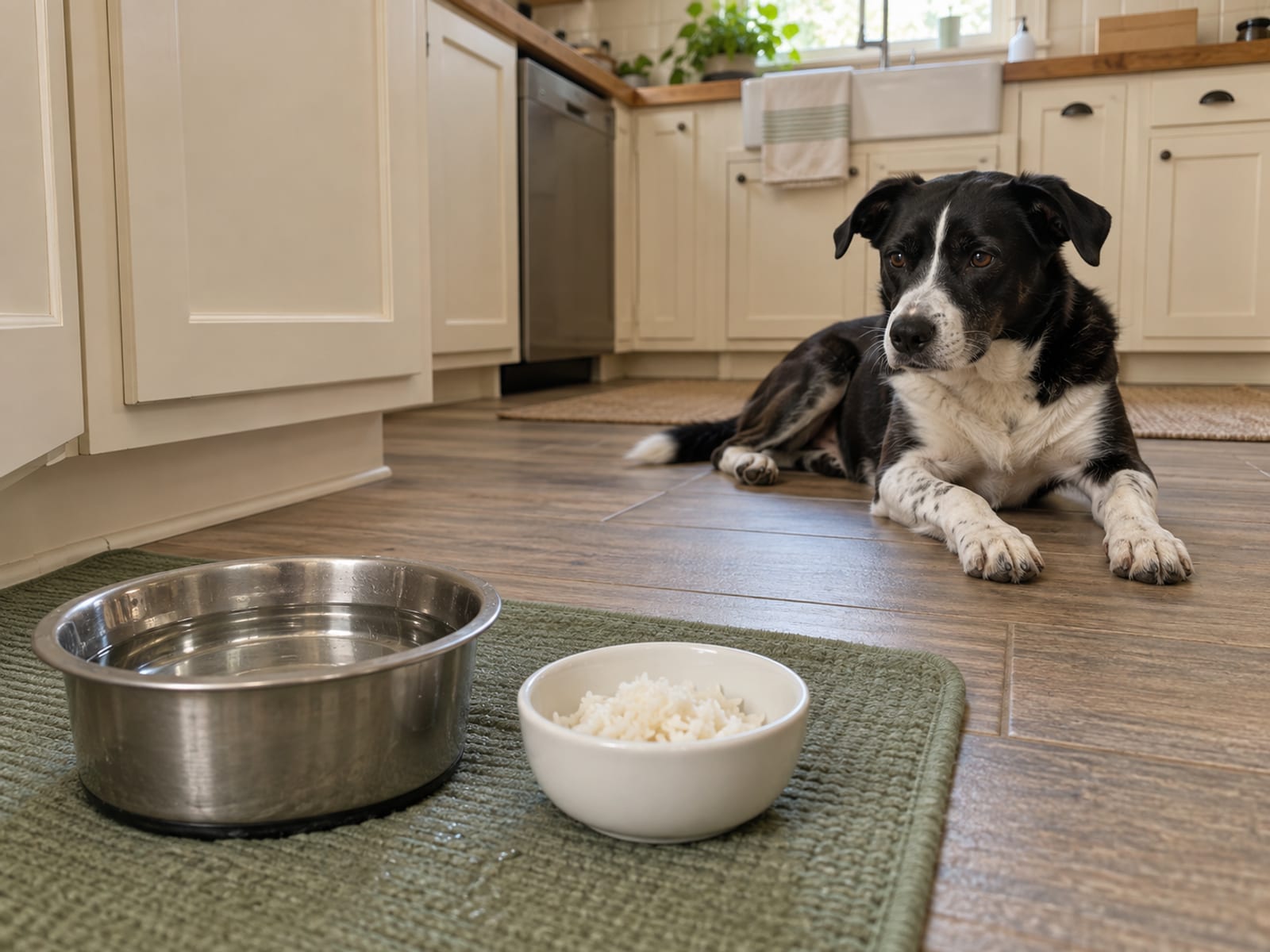
VCA's home care advice for diarrhea says to keep fresh, clean water available and feed small, frequent meals of a bland, easily digested food, such as plain cooked white rice with boiled, skinless chicken, unless your dog is allergic to or doesn't tolerate either one. A veterinary gastrointestinal diet from your vet can be used instead. Cornell adds fresh water, frequent trips outside and a bland diet.
Rice and chicken is a short-term bland meal, not a complete diet to keep feeding for weeks. Skip rich foods, fatty foods, treats and sudden food changes while the gut settles.
What about fasting? You'll see many clinic pages tell you to withhold food, and the sources here don't agree on it. VCA's Spanish-language page on diarrhea says a vet may recommend withholding food for a set time, or small amounts of a veterinary gastrointestinal diet, for healthy adult dogs. Other current guidance leans on small, frequent, easy meals. None of these sources gives one fasting time that fits every dog. So, if you're thinking about a food break, let your vet set it. Puppies, seniors, underweight dogs, pregnant dogs, diabetic dogs and dogs with other conditions should never go without food on a generic rule.
Pumpkin comes up constantly. VCA says small amounts of plain canned pumpkin, or pumpkin made for pets, may help some dogs because of its soluble fiber. That's "may help," not a treatment, and VCA gives no standard amount. Pumpkin pie filling is a different product and can contain ingredients that aren't suitable for dogs.
Probiotics come up just as often. Cornell and VCA say a veterinarian may recommend a veterinary probiotic, and VCA warns that product quality and effect vary. Human probiotics aren't automatically the same thing. Ask your vet which one, if any, and how much.
Medicines and home remedies to leave alone
This is the part that trips people up, because the products sit right there in the medicine cabinet. Don't give human antidiarrheal medicine unless a veterinarian specifically tells you to, and then use only the product and amount they give you.
VCA explains that Imodium (loperamide) slows the gut down, which can make things worse if your dog swallowed something harmful, has a blockage or has parasites that need to pass. Some dogs also carry a genetic difference that makes loperamide riskier for them. Pepto-Bismol and Kaopectate may contain bismuth subsalicylate, which VCA warns can cause toxicity at high doses. Cornell says both Pepto-Bismol and Imodium can harm certain dogs or interact badly with other medicines.
Leave these alone as well:
- Human pain relievers. VCA's page on NSAIDs describes a higher kidney risk when these drugs are used in dehydrated dogs.
- Leftover antibiotics, or another pet's medication.
- Forcing food or water.
Being sold over the counter doesn't make a product safe for your dog. That's why the answer to "what can I give my dog to stop diarrhea" is water, bland food if your vet agrees, and a phone call, not a pill.
How long is too long to wait
Most mild cases in healthy adult dogs settle on their own. Cornell says many cases of diarrhea in dogs and cats are mild and self-limiting. The limit is 48 to 72 hours. Cornell says to get veterinary care if it doesn't resolve in that time, and VCA says to contact your vet if there's no improvement within 2 to 3 days on bland feeding.
That window only applies while your dog stays bright, drinks and eats. Any red flag from the first section resets the clock to "now." For puppies, seniors and dogs with health conditions, the window is much shorter, and calling early is the right move. The CDC's Giardia guidance also says persistent diarrhea should prompt a call to the vet, because it can cause dehydration and other serious problems.
What to bring to the vet, the tests they may run and what they may cost
Bring a fresh stool sample. Cornell and VCA both say it helps, since fecal testing checks for parasites and infection. Write down, or be ready to say:
- When the diarrhea started and how often it's happening.
- What it looks like, including any blood, black color or mucus.
- Any vomiting, changes in appetite, drinking, peeing or energy.
- Recent food changes, garbage or trash access, and anything your dog might have swallowed.
- Travel, boarding or contact with other dogs.
- Current medications, possible toxin exposure and vaccination status.
The vet is looking for a cause, and the list is long. VCA and Cornell name sudden diet changes, garbage and table scraps, stress from travel or boarding, parasites such as Giardia, roundworms, hookworms, whipworms and coccidia, viral or bacterial infection, food intolerance, pancreatitis, inflammatory bowel disease, a blockage, toxins, and kidney, liver, hormone or other disease. Stress can cause diarrhea, but it doesn't rule out the rest.
Tests may include a physical exam and hydration check, a fecal flotation, a Giardia test, fecal cytology, bloodwork, a parvovirus test when it fits, bacterial or molecular testing, X-rays, ultrasound or endoscopy. The CDC notes a vet may need more than one stool sample, because Giardia isn't shed in every sample.
Cost is a real worry, so these are dated examples, not quotes. Great Pet Care's 2025 figures on dog diarrhea and its gastroenteritis cost table reported these U.S. ranges:
Tap or hover a row to highlight it.
| Item | Reported range |
|---|---|
| ItemVeterinary exam | Reported range$50 to $150 |
| ItemFecal parasite testing | Reported range$35 to $100 (a separate table lists $25 to $45) |
| ItemMedications and fluids | Reported range$50 to $150 |
| ItemInfectious or gastrointestinal testing | Reported rangefrom $100 |
| ItemBlood panel | Reported range$100 to $300 |
| ItemX-rays | Reported range$150 to $250 |
| ItemUltrasound | Reported range$300 to $600 |
| ItemHospitalization for severe diarrhea | Reported range$500 to $1,000 or more |
Prices vary by region, and emergency hospitals, extra tests, IV fluids, isolation or surgery can raise the total well past these numbers. If cost is holding you back, say so when you call; it's a fair question to ask before the visit.
How to protect your other dogs while you find out the cause
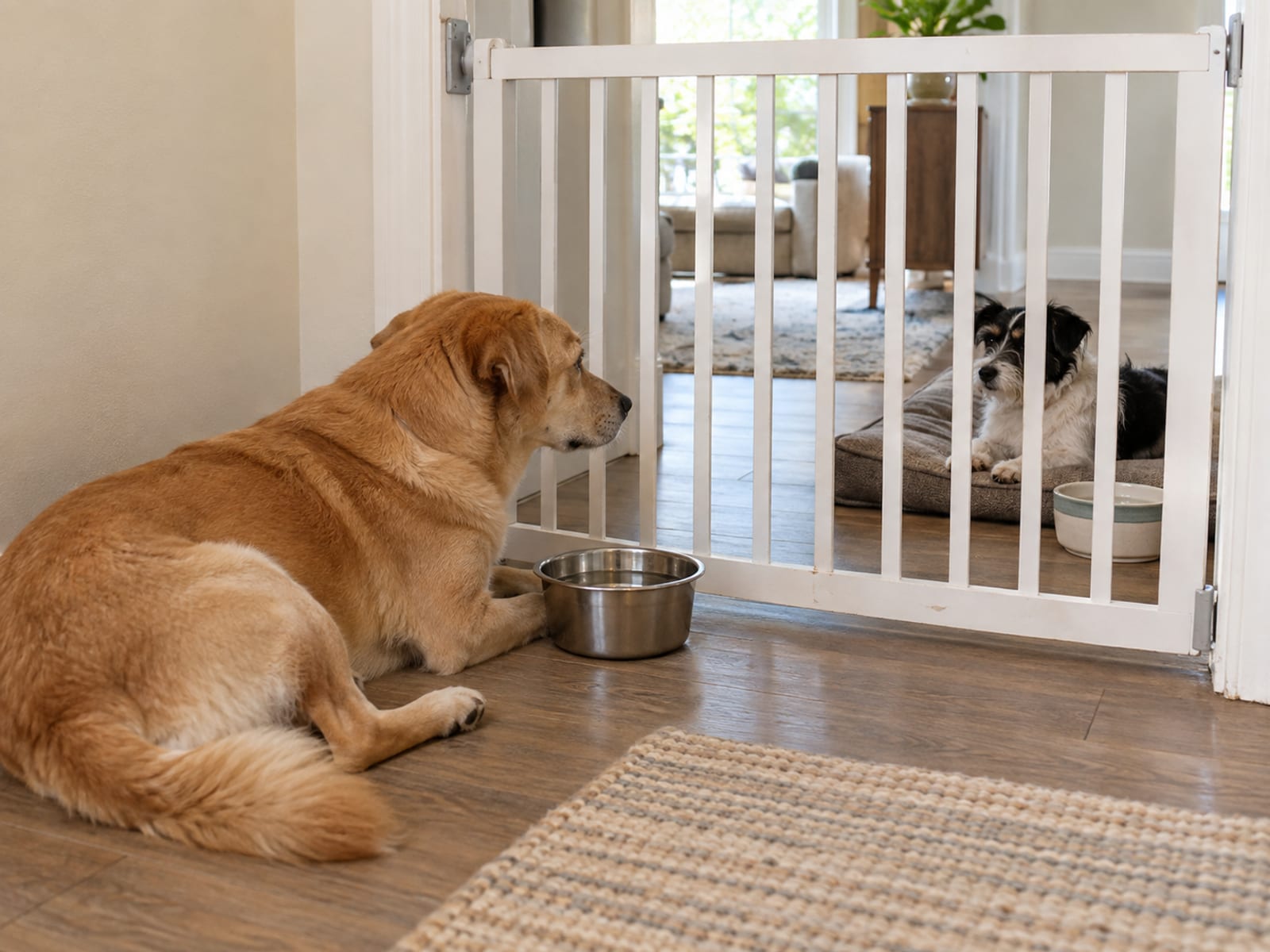
Until infection or parasites are ruled out, or your dog has recovered, keep them away from shared water bowls, dog parks and other dogs. A puppy that isn't fully vaccinated should be kept apart from other dogs right away, because of the parvovirus risk. If another dog in your home starts showing the same signs, tell your vet, since it can point toward something contagious. Because Giardia can be missed in a single sample, don't take one clean test as the final word if your vet wants to repeat it.
Questions owners ask about dog diarrhea
These are the questions that come up most, with short answers from the veterinary sources.
What can I give my dog to stop diarrhea?
There's no safe home medicine that stops it fast. Fresh water, and small bland meals or a veterinary gastrointestinal diet if your vet agrees, is what the sources support. Human antidiarrheals like Imodium or Pepto-Bismol should only be given if your vet directs it, at the amount they set.
When should I be worried about my dog's diarrhea?
Worry, and call, for blood or black stool, vomiting, lethargy, pain, dehydration, not eating, or possible toxin exposure. A puppy, a senior dog or a dog with a medical condition also warrants a call even if the diarrhea seems mild.
How long does diarrhea last in a dog?
Many mild cases clear up on their own within a couple of days. If it isn't improving within 48 to 72 hours, it's time for a vet visit, and recurring bouts may need diet changes, medication or testing to find the cause.
How do I settle my dog's stomach?
Offer fresh water, frequent trips outside and small portions of bland food your vet is comfortable with. Hold off on treats, fatty foods and new foods. Whether to pause food entirely is a call for your vet, since the sources disagree and some dogs shouldn't go without food.
What should I feed a dog with diarrhea?
VCA and Cornell describe plain cooked white rice with boiled, skinless chicken as one bland option, or a veterinary gastrointestinal diet. It's not right for dogs allergic to either ingredient and isn't meant as a long-term diet. Plain canned pumpkin may help some dogs, but pumpkin pie filling isn't the same thing.
Your next step
Look at your dog one more time. If you saw any red flag, or your dog is a puppy, a senior or has a health condition, call your regular veterinarian now, or an emergency clinic if it's after hours. If you suspect a toxin, call your vet or a poison-control service. If your adult dog is bright, drinking and eating, keep water out, stick to bland food your vet supports, save a stool sample and keep watching. If it isn't getting better in 48 to 72 hours, or anything changes for the worse, make the call. DogServ's directory can help you find a veterinarian or emergency clinic near you.
Sources
- American Kennel Club: American Kennel Club
- cdc.gov: CDC's Giardia guidance
- Cornell University College of Veterinary Medicine: Cornell University College of Veterinary Medicine
- greatpetcare.com: Great Pet Care's 2025 figures on dog diarrhea
- greatpetcare.com: its gastroenteritis cost table
- Merck Veterinary Manual: Merck Veterinary Manual
- preventivevet.com: Pet InfoRx
- VCA Animal Hospitals: VCA Animal Hospitals
- VCA Animal Hospitals: VCA notes for young puppies
- VCA Animal Hospitals: VCA's guide to caring for a sick dog
- VCA Animal Hospitals: VCA's home care advice for diarrhea
- VCA Animal Hospitals: VCA's page on NSAIDs
- VCA Animal Hospitals: VCA's Spanish-language page on diarrhea