
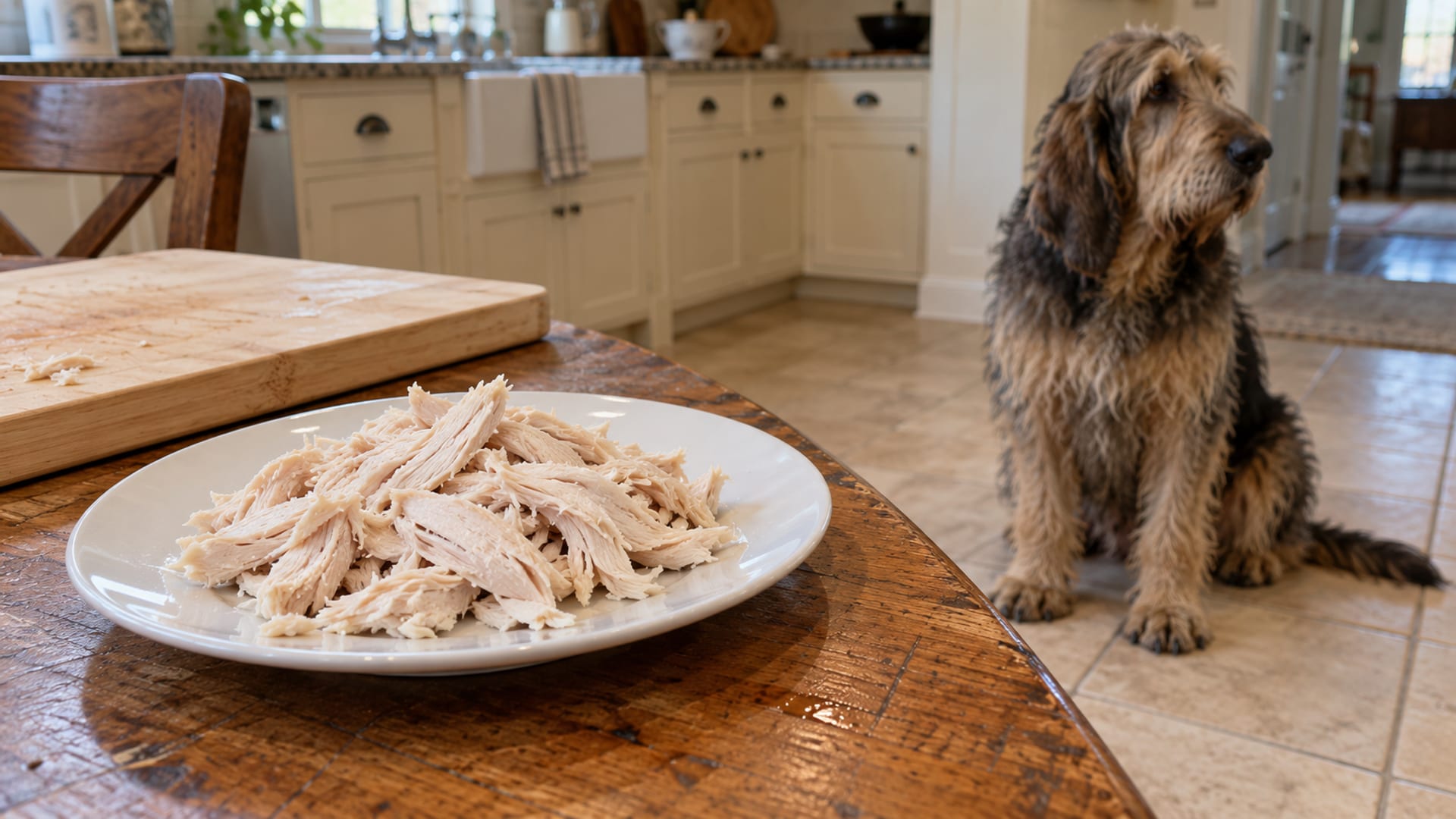
Yes. Plain, fully cooked, boneless chicken is generally fine for dogs in small amounts, and the things that change that answer are bones, raw meat, fatty skin and onion or garlic seasoning. If your dog already ate some, a few bites of plain cooked breast usually just call for watching your dog, while a swallowed bone or a greasy, seasoned leftover is a reason to phone your vet today.
Key takeaways
Tap a card to bring it forward.
- Small amounts of plain, fully cooked, boneless chicken are generally fine for dogs.
- Any swallowed chicken bone, cooked or raw, is worth a call to your vet, even if your dog looks normal.
- Raw chicken can carry Salmonella and Listeria, and the CDC does not recommend raw pet food.
- Skin, fried chicken and drippings are fatty, and onion, garlic and heavy salt on the meat bring their own risks.
- Serve chicken as an extra alongside a complete diet, cooked through, boneless, skinless and plain.
What to do if your dog already ate chicken
Go through these in order.
- Check for an emergency first. Choking, trouble breathing, collapse, repeated vomiting, severe belly pain, a swollen belly or blood in vomit or stool means an emergency vet visit now. Those signs can mean a bone is stuck or has caused an injury.
- Figure out what form it was. Cooked or raw, bones or no bones, skin on or off, and whether onion, garlic, a salty rub or a sauce was on it. Each carries a different risk.
- Estimate how much and when. A few scraps from a plate differ from a carcass pulled out of the trash, and your vet will also ask about your dog's size and health.
- If a bone went down, call your vet even if your dog seems fine. The AKC advises checking for immediate danger, contacting your vet for guidance and watching your dog closely. It also warns against inducing vomiting after a bone, since sharp fragments can do more damage coming back up. A blockage or tear can develop later.
- If it was raw chicken, watch closely. Call a vet if your dog gets sick, if it ate a large amount, or if the product was recalled or heavily seasoned. The signs to watch for are further down.
- Hold off on home treatment. Give no medicine, hydrogen peroxide or other remedy unless your vet specifically tells you to. A guessed treatment can add a second problem.
If it was plain, boneless, cooked chicken with no onion or garlic and your dog is acting like itself, there is no emergency step to take. Put the rest of the chicken out of reach and keep to the usual meals.
Which kinds of chicken are fine and which are not
Chicken reaches a dog in many forms, and each has its own answer.
Tap or hover a row to highlight it.
| Form | Answer | What changes it |
|---|---|---|
| FormPlain boiled, baked or grilled meat, boneless | AnswerFine in small amounts | What changes itKeep it unseasoned and treat it as an extra |
| FormRaw chicken | AnswerCaution | What changes itSalmonella and Listeria risk |
| FormCooked bones (wings, drumsticks, thighs, necks, carcass) | AnswerAvoid | What changes itBrittle and likely to splinter |
| FormRaw bones | AnswerAvoid | What changes itChoking, blockage, tooth damage and bacteria |
| FormSkin | AnswerCaution | What changes itHigh in fat and can upset the stomach |
| FormFried chicken, drippings, gravy | AnswerAvoid | What changes itFat, salt and seasoning |
| FormRotisserie, deli, canned, nuggets, seasoned | AnswerRead the label | What changes itSalt, onion, garlic, breading or extra fat |
| FormBroth or stock | AnswerPlain only | What changes itSodium, onion, garlic and stray bones |
| FormFreeze-dried or dehydrated raw | AnswerCaution | What changes itDrying lowers germ levels without killing them all |
| FormJerky | AnswerDepends on the product | What changes itCooking, salt, seasoning and recalls |
| FormLiver and other organs | AnswerSmall amounts | What changes itLarge repeated servings of liver can cause vitamin A toxicity |
Boiled, baked and grilled chicken are the easy ones when the meat is cooked through and plain. At a cookout, the marinade and the bone are the usual trouble, and the AKC lists chicken wings among common cookout hazards. Bones get their own page: Chicken bones.
With raw chicken, the concern is germs. The CDC says raw animal protein can contain Salmonella and Listeria and does not recommend raw pet food for dogs or cats. It adds that freezing, freeze-drying and dehydrating reduce germs without killing all of them. Our Raw chicken page covers this in detail.
Skin, fried chicken, drippings and gravy all come down to fat. High-fat foods can upset a dog's stomach, and the Merck Veterinary Manual lists high blood fats and other existing illness among the risk factors for pancreatitis, an inflamed pancreas that can become serious. Be most careful with a dog who has had it before.
Rotisserie chicken is plain meat underneath, but the skin may carry salt and seasoning, and the carcass is full of cooked bones. Pull a few pieces of white meat from the inside, check for bones and leave the rest. Seasoning matters because Onions and Garlic harm dogs on their own, whatever meat they are cooked with, and the ASPCA lists heavy salt as a separate hazard.
How much chicken to give and how to serve it
There is no set chicken portion by dog size, so keep it small enough to stay an extra on top of a complete, balanced diet. Plain chicken alone is not a complete diet unless a vet has built the plan around it.
The AKC's list of human foods for dogs and its advice on foods for an upset stomach point to the same preparation:
- Cook it all the way through. Heat kills the germs that make raw chicken a concern.
- Take out every bone. Small pieces hide easily in shredded meat.
- Remove the skin and trim the fat. That keeps the serving lean and easier on the stomach.
- Serve it plain. No salt, onion, garlic, sauce or spice.
- Cut or shred it into small pieces. Bite-sized pieces are easier to portion.
A little plain shredded breast mixed into the regular meal fits this, with less for a small dog. If your dog has had pancreatitis or another ongoing health problem, ask your vet first.
Signs to watch for over the next few days
The signs depend on what your dog ate, and there is no single timeline for chicken.
- After a bone: choking, gagging, coughing, trouble swallowing, vomiting, belly pain, bloating, low energy, not eating, constipation, straining or bloody stool. The AKC says some fragments pass in about 72 hours, though timing varies, and problems can start while swallowing or later.
- After raw chicken: vomiting, diarrhea, fever, dullness, poor appetite and dehydration. The FDA notes that some dogs carry and shed Salmonella or Listeria without looking sick, so wash hands and bowls well.
- After fatty or heavily seasoned chicken: vomiting, diarrhea, belly pain and low energy, which can point to pancreatitis.
- After something very salty: extra thirst and urination, vomiting, diarrhea, dullness, tremors or seizures, according to the ASPCA.
Call your vet right away for any of the emergency signs in the first step, marked tiredness or a dog who cannot pass stool. At worst, a bone can block the airway, tear the gut or cause a blockage needing surgery, and severe pancreatitis or a spreading infection can be fatal.
My dog ate chicken before and was fine
Plenty of dogs have grabbed a drumstick off a picnic plate and been perfectly fine. That really happened. It just does not set a rule for the next time or the next dog.
- The amount was different. A scrap may cause nothing, while a whole leftover dinner can.
- The form was different. Plain cooked meat, raw meat, a cooked bone and a salted, greasy skin are four different risks.
- The dog was different. A fragment that passes through a large dog can get stuck in a small one, and the CDC says puppies and dogs with weaker immune systems are more likely to get seriously sick from germs in raw food. The FDA adds that when adult dogs do get Salmonella illness, another infection or health problem is usually involved.
- Some problems come later. A bone piece can cause trouble days after it was swallowed, and a dog can carry germs without showing it.
- Luck plays a part. The same bone can pass through one dog and block another.
Chicken products and names that get mixed up
On a package, the label tells you more than the word "chicken" does.
Chicken meal and chicken by-product meal are rendered pet-food ingredients, which is a different thing from pieces of cooked chicken. Judge them by the whole dog food and its label.
Chicken flavor on a treat or a chew does not mean the product contains much chicken, or that it is safe for dogs. Read the ingredient list.
Chicken broth can be plain and unsalted, or a store-bought stock with onion, garlic and a lot of sodium. Only the plain kind, with no bones, suits a dog.
Chicken jerky can be a fully cooked treat or a raw or partly processed one. Check how it was made, what seasoning is in it and whether it has been recalled.
Nuggets and tenders are breaded, salted and fried, so treat them like fried chicken. Deli and canned chicken can carry added salt and seasoning; see Lunch meat.
Store-brand and warehouse-club rotisserie chickens vary by recipe, so check the ingredient label, and for any chicken treat or raw chicken dog food, look it up on the FDA recalls list before you open the bag.
If you are comparing proteins, Turkey follows much the same rules, and Chicken feet has its own page because of the small bones inside.
Check what you learned
Three quick questions on the key points.
Quick check
Questions about dogs and chicken
These come up once the first worry has passed.
Can puppies eat chicken?
Plain, cooked, boneless chicken in small pieces follows the same rules for a puppy. Raw chicken is the bigger concern, because the CDC names puppies among the pets most likely to get seriously sick from germs in raw food. Keep treats small so they do not crowd out the puppy food a growing dog needs.
Is raw chicken a risk to the people in my house too?
Yes. The CDC points out that germs from raw pet food can spread to people, and the risk is higher for anyone who is pregnant, under five, over 65 or has a weakened immune system. The FDA calls not feeding a raw diet the best way to prevent that.
Is chicken safe for cats as well?
The same cautions apply. The ASPCA says bones can injure or block the gut in both dogs and cats, and the CDC does not recommend raw pet food for either.
Can dogs eat chicken liver?
In small amounts, occasionally. Organ meat is richer than plain muscle meat, and feeding a lot of liver over time can lead to vitamin A toxicity, so it works best as a rare extra.
Sources
Checked September 25, 2026.
- Centers for Disease Control and Prevention, About Pet Food Safety
- American Kennel Club, Can Dogs Eat Chicken Bones?
- American Kennel Club, Hazardous Cookout Foods for Dogs
- American Kennel Club, Which Human Foods Can Dogs Eat and Which Are Dangerous?
- American Kennel Club, Best Foods to Soothe Your Dog's Upset Stomach
- ASPCA, People Foods to Avoid Feeding Your Pets
- Merck Veterinary Manual, Pancreatitis in Dogs and Cats
- U.S. Food and Drug Administration, FDA Cautions Pet Owners Not to Feed Performance Dog Raw Pet Food Due to Salmonella, Listeria monocytogenes
- U.S. Food and Drug Administration, Get the Facts about Salmonella
- U.S. Food and Drug Administration, Recalls and Withdrawals