
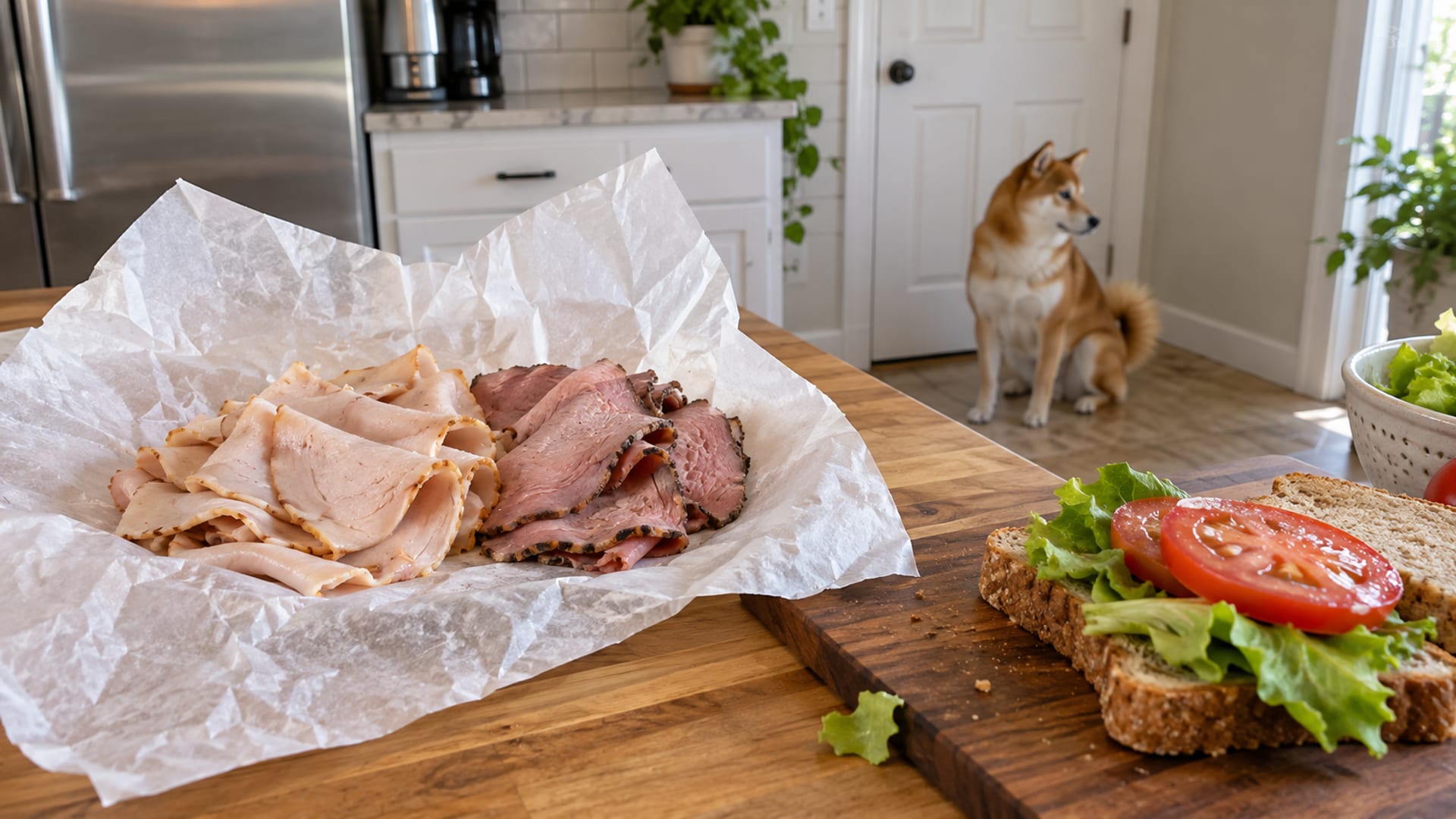
A slice now and then, yes, if it's plain. The American Kennel Club says a small piece of deli meat is all right for a dog but shouldn't become a habit, because most lunch meats are high in sodium and fat.
If your dog just lifted a slice of turkey off a sandwich plate, you can usually watch them at home. A whole package, a pile of salami or pepperoni, slices seasoned with onion or garlic, or a missing piece of plastic wrap is a reason to call your vet today.
Key takeaways
Tap a card to bring it forward.
- One plain slice of deli turkey, chicken, ham or roast beef rarely comes close to a harmful dose of salt for a healthy dog.
- Salt is the main worry with lunch meat, followed by fat and by seasonings such as onion and garlic powder.
- Deli meat can pick up *Listeria* after cooking, and raw meat can carry *Salmonella* and *E. coli*.
- Plastic film, casings, toothpicks and bones can choke a dog or block the gut.
- Small dogs, puppies and dogs with kidney disease or past pancreatitis call for a lower bar before you phone the vet.
Your dog got into the lunch meat: what to do first
- Find the package. Keep it, or take a photo of the ingredient list and the nutrition panel. Your vet will want the sodium figure and the seasonings.
- Work out how much is gone, and when. Two slices off a sandwich and half a family pack are very different events.
- Check for missing plastic, toothpicks or casing. Each of those can lodge in the throat or the gut, whatever the meat was.
- Set out fresh water. The Merck Veterinary Manual ties salt poisoning most closely to dogs that take in too much sodium when they can't drink enough.
- Call your vet or a pet poison line for a large or unknown amount, a small dog or puppy that ate more than a tiny bite, seasoned slices, packaging, or any sign of illness. The ASPCA asks owners to note how much their pet ate before they call.
Which lunch meats worry vets most
Tap or hover a row to highlight it.
| What your dog ate | How concerned to be | Why |
|---|---|---|
| What your dog ateA slice of plain deli turkey, chicken or roast beef | How concerned to beLow for a healthy dog | WhySalt and fat vary by brand, but one slice is a small dose |
| What your dog ateDeli ham, bologna or luncheon loaf | How concerned to beWatch; call if it was a lot | WhyOften saltier and fattier, with curing agents added |
| What your dog ateSalami, pepperoni, summer sausage or other dry sausage | How concerned to beCall if it was more than a bite | WhyDrying leaves the salt, fat and spice behind in every bite |
| What your dog ateSlices seasoned with onion or garlic | How concerned to beCall your vet | WhyOnion and garlic harm red blood cells on their own |
| What your dog ateRaw meat from the deli counter | How concerned to beKeep it away; call if your dog gets sick | WhyRaw animal protein can carry *Salmonella*, *Listeria* and *E. coli* |
| What your dog ateRecalled or spoiled lunch meat | How concerned to beCall your vet | WhyContamination is the concern, whatever the brand |
| What your dog ateBrine, juice or a seasoning packet | How concerned to beCall your vet | WhyThe salt is concentrated in the liquid or powder |
| What your dog atePlastic film, casing, toothpicks or bones | How concerned to beCall your vet | WhyChoking or a blockage |
| What your dog atePlant-based deli slices | How concerned to beRead the label | WhyMeat-free, but they can be salty or seasoned with onion and garlic |
Cooked lunch meat can still carry germs. The CDC explains that deli meats can pick up *Listeria* from slicers, counters, hands and other foods after they are cooked, and that dry and fermented sausages can be contaminated after processing as well. Its pet food safety guidance adds that raw animal protein can make dogs sick. In 2024 the CDC tracked a multistate *Listeria* outbreak linked to meats sliced at delis, and the AKC covered what that outbreak meant for dogs. If a pack in your fridge is on a recall list, don't share it.
Seasonings are a separate problem from the meat. The Merck Veterinary Manual explains that sulfur compounds in onion and garlic can break down a dog's red blood cells. Can dogs eat onions? and can dogs eat garlic? walk through that damage in detail.
Labels that say "low sodium" or "uncured" still call for a look at the ingredient list. The FDA counts deli meats among the foods that add sodium to a diet, and additives such as sodium nitrite carry sodium too.
How much lunch meat is too much for a dog?
Nobody can give you a slice count, because brands differ so much in salt, fat and seasoning. The published numbers are for salt itself.
Merck puts the first signs of salt poisoning in dogs at roughly 2 to 3 grams of salt per kilogram of body weight, with about 4 grams per kilogram as a dose that can kill. Pet Poison Helpline lists 1.5 grams per pound, close to 3.3 grams per kilogram, as toxic. A lunch meat label shows milligrams of sodium per serving, which is a smaller number than the salt it comes from, so let your vet do the arithmetic with the label in hand.
Three things push the same slices toward trouble:
- A smaller dog. The dose is measured per pound, so a Yorkie gets far more salt per pound from one slice than a Lab does.
- No water nearby. Merck names limited water as a major factor in salt poisoning.
- A saltier product. Dry sausage, cured meats, brine and seasoning packets carry more salt per bite than plain turkey.
Signs to watch for after lunch meat
The ASPCA lists these signs of too much salt: heavy thirst, peeing more, vomiting, diarrhea, low energy, tremors and seizures. It says they usually show up within about 12 hours, and dogs that recover often do so within 24 to 72 hours. Merck notes that vomiting can start within several hours and move on to weakness, diarrhea, muscle tremors and seizures.
Fat and germs follow their own timing. A fatty meal can bring vomiting, belly pain, diarrhea, tiredness or pancreatitis, and foodborne illness can show up as vomiting, diarrhea, fever or low energy on a timeline that varies by germ. A dog that looks fine an hour later is not yet in the clear.
Go to a vet now for stumbling, trembling, seizures, collapse, trouble breathing, repeated vomiting, or a dog that can't keep water down.
Call your vet today for vomiting or diarrhea that keeps going, a sore belly, or a dog that seems off after eating a large amount.
"My dog has eaten sandwich scraps for years without a problem"
Many dogs grow up on sandwich crusts and turkey scraps, and your dog's track record is real. It still doesn't carry over to every dog or every pack of cold cuts. The slices your dog ate may have been small for their size, or lower in salt than another brand. They may have been cooked and free of germs, with no onion, garlic or plastic. Your dog may have had water all day. A different dog is a different body: a small dog, a puppy, or a dog with kidney disease or a past bout of pancreatitis handles the same slice differently. Some problems, like an infection or pancreatitis, also take time to show. So, keep the scraps small and plain, and keep the whole package out of reach.
If you want to share a slice
The AKC's line is a small piece now and then, never a routine. If you share:
- Pick plain, fully cooked, lean meat, like turkey or chicken breast, with no onion, garlic or heavy seasoning.
- Tear off a small piece, and keep it small next to your dog's normal meal.
- Skip salami, pepperoni, pastrami, dry sausage and anything raw.
- Leave out the plastic, the toothpick and the bread.
Plain turkey or chicken you cooked yourself, with no salt or seasoning, is a better choice than anything sliced at the deli. Can dogs eat turkey? covers how to serve it.
Check what you learned
Quick check
Questions about dogs and lunch meat
Can my dog eat one slice of deli turkey?
Usually, yes. One plain slice is unlikely to cause salt poisoning in a healthy dog. Check the label for onion, garlic and heavy seasoning first, and keep it an occasional thing.
What if my dog ate a whole package of lunch meat?
Call your vet or a pet poison line, especially for a small dog. The risk depends on your dog's weight, the sodium on the label, the seasonings and whether the wrapper went down too. Have the package ready.
Can dogs eat salami, pepperoni or bologna?
These are poor choices. They tend to be saltier, fattier or more seasoned than plain sliced turkey. Can dogs eat pepperoni?, can dogs eat bologna? and can dogs eat sausage? cover each one.
Is low-sodium or uncured deli meat safe for dogs?
Lower sodium means less of the main hazard, but the product is still processed meat. Read the ingredient list for onion, garlic and other seasonings, and treat it like any other slice.
Can puppies eat lunch meat?
The same rules apply, with more care. A puppy is small, so one slice is a bigger dose of salt for their size, and vomiting or diarrhea can dry out a young dog faster.
What if the lunch meat had onion or garlic in it?
Treat the onion or garlic as its own exposure and call your vet, even if your dog seems fine. Have the ingredient list ready when you call.
Sources
Checked September 24, 2026.
- American Kennel Club, Which Human Foods Can Dogs Eat and Which Are Dangerous?
- American Kennel Club, Listeria and Dogs: What to Know About the 2024 Listeria Outbreak
- ASPCA Animal Poison Control Center, People Foods to Avoid Feeding Your Pets
- Centers for Disease Control and Prevention, How Listeria Spread: Deli Foods and Prepared Meats
- Centers for Disease Control and Prevention, About Pet Food Safety
- Centers for Disease Control and Prevention, Listeria Outbreak Linked to Meats Sliced at Delis
- Merck Veterinary Manual, Salt Toxicosis in Animals (updated September 2024)
- Merck Veterinary Manual, Garlic and Onion (Allium spp) Toxicosis in Animals
- Pet Poison Helpline, Should You Give Salt to Your Dog?
- U.S. Food and Drug Administration, Sodium in Your Diet