
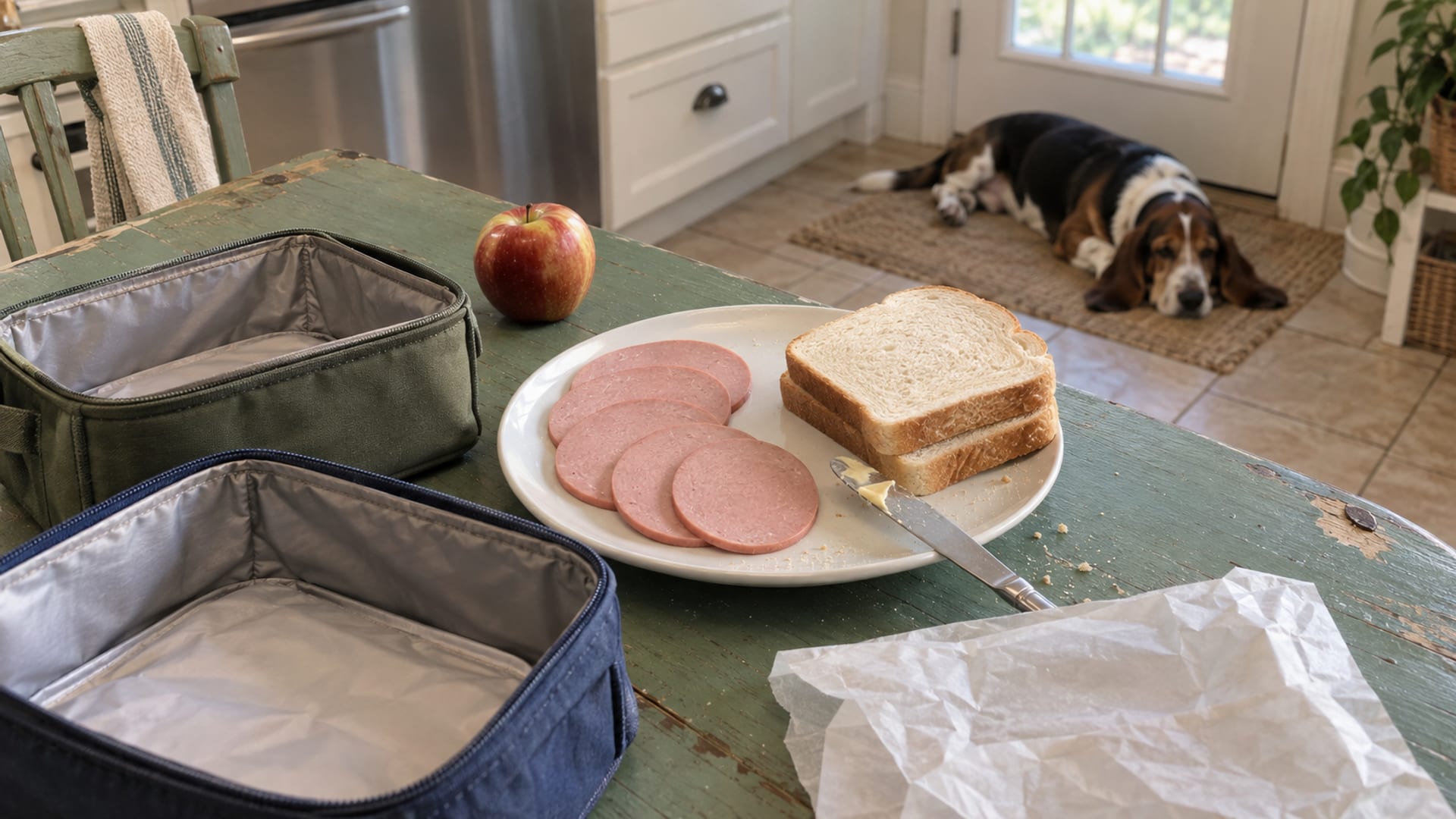
A bite, yes, but it makes a poor treat. A small amount of plain cooked bologna is unlikely to poison a healthy dog. The ASPCA warns that very salty foods can make pets sick, though, and bologna carries plenty of salt and fat.
If your dog grabbed the end of a sandwich, keep an eye on them and keep water close. If they ate several slices, got into the package, swallowed the plastic or clip, or the bologna was seasoned with onion or garlic, call your vet.
Key takeaways
Tap a card to bring it forward.
- A bite of plain cooked bologna is a low-level concern for most healthy dogs.
- Salt and fat are the main hazards in the meat itself; bologna holds no special poison of its own.
- A small dog gets far more salt and fat per pound from the same slice.
- A swallowed wrapper or metal clip can block the gut even when the meat was harmless.
- Miniature schnauzers, Yorkies, dachshunds and a few other breeds are more prone to pancreatitis after fatty food.
Your dog ate bologna: match it to the next step
Tap or hover a row to highlight it.
| What your dog got | Next step |
|---|---|
| What your dog gotOne bite or the end of a sandwich | Next stepWatch today and leave fresh water out. |
| What your dog gotTwo or three slices, big dog, no symptoms | Next stepWatch closely today; call if vomiting or diarrhea starts. |
| What your dog gotSeveral slices for a small dog, or a whole package | Next stepCall your vet now with the package and your dog's weight. |
| What your dog gotBologna with onion, garlic or a seasoned sauce | Next stepCall your vet; the seasoning is its own hazard. |
| What your dog gotThe plastic wrapper, casing or metal clip | Next stepCall your vet, even if your dog seems fine. |
| What your dog gotAny bologna, then trembling, weakness, seizures or collapse | Next stepGo to a vet right away. |
If you suspect your pet ate something harmful, the ASPCA's page Is It Ever Safe to Induce Vomiting? says to contact your vet or its poison control center right away. Before you call, find the package, read the sodium figure and the ingredients, and estimate how many slices are missing.
Turkey bologna, ring bologna and other versions
Bologna recipes vary a lot, so the label tells you more than the name does. USDA FoodData Central shows sodium and fat figures that change from one product to the next.
- Turkey or chicken bologna: a different recipe, but it can still be high in sodium and fat. Read the label the same way.
- Low-sodium or low-fat bologna: less of each hazard, and still processed meat that no vet source recommends as a treat.
- Ring bologna, Lebanon bologna and German bologna: named like the sliced kind, but the ingredients and salt levels can differ.
- Dried, smoked or cured bologna-style products: drying and curing can pack more salt into each bite.
- Raw or undercooked meat: the ASPCA notes that raw meat can carry *Salmonella* and *E. coli*.
- Plant-based bologna: meat-free, and it can still hold onion, garlic, a lot of sodium or other seasonings.
- Fried bologna: the frying fat adds to what was already there.
If a sandwich was involved, look at the rest of it. Onion and garlic can damage red blood cells when a dog eats enough, which can dogs eat onions? explains. Can dogs eat bread? and can dogs eat cheese? cover the rest of the lunchbox.
When bologna turns into a salt problem
The Merck Veterinary Manual reports that dogs can show signs of salt poisoning after about 2 to 3 grams of salt per kilogram of body weight, and that about 4 grams per kilogram can be fatal. Those are grams of salt, which you can't read off a bologna label, since labels list sodium. Give your vet the package and your dog's weight so they can judge the dose for the slices your dog actually ate.
Size changes everything here. Ten slices spread across a 70-pound dog is a much smaller dose per pound than three slices in a 12-pound dog. Water matters too: Merck notes that a dog with fresh water to drink is less likely to be poisoned by salt than one without.
Pancreatitis, and the dogs more likely to get it
Fat is the other half of the bologna problem. The Merck Veterinary Manual's guide for dog owners lists eating fatty or unusual food as a risk factor for pancreatitis, an inflamed pancreas that can range from mild to life-threatening.
Merck reports that pancreatitis is more common in miniature schnauzers, Yorkshire terriers, cocker spaniels, dachshunds, poodles and sled dogs, among others. That does not mean one slice will make those dogs sick. It does mean a lower bar for calling your vet if one of them raids the deli drawer. The same goes for any dog that has had pancreatitis before, or has diabetes, high blood fats or kidney disease.
Signs to watch in the hours and days after
From salt, usually within the first day. Thirst, peeing more, vomiting and diarrhea come first. The ASPCA says salt signs usually appear within 12 hours, and Merck says they can move on to weakness, muscle tremors and seizures.
From fat, sometimes later. Merck lists vomiting, diarrhea, loss of appetite, tiredness, weakness, belly pain and dehydration as signs of pancreatitis.
From a wrapper or clip. A swallowed piece of packaging may cause no sign at first, so call about it whether or not your dog looks unwell.
Tremors, seizures, collapse, trouble breathing, or a dog that can't stand needs a vet right away.
"Our dog always gets the end of the bologna"
Lots of families share the last bite, and lots of dogs take it with no trouble at all. That is real. What it proves is narrower than it feels. The end of a slice is a small amount. A big dog spreads it over a lot of body weight. The brand you buy may be lower in salt than another, your dog probably had water nearby, and the slice had no onion, garlic or plastic on it. A smaller dog, a dog prone to pancreatitis, or a dog that eats the whole package is a different case, and fat-related trouble can show up later than the first few hours. So, if the last bite is a family habit, keep it to one small bite of plain bologna, and keep the rest of the pack out of reach.
Check what you learned
Quick check
Questions about dogs and bologna
Can dogs eat a little bologna?
A little plain cooked bologna is usually a low-risk bite for a healthy dog. It still carries a lot of sodium and fat, so keep it rare and small.
What if my dog ate several slices of bologna?
Check the label and count what is missing. Call your vet or a pet poison line if it was a lot, if you are unsure, or if your dog is small, a puppy, or has a health problem.
Is turkey bologna better for dogs?
Only sometimes. Turkey bologna can be just as salty or fatty as the pork and beef kind, so the nutrition label decides it.
What if the bologna had onion or garlic?
Call your vet. Onion and garlic are separate hazards that can damage red blood cells, and your vet will want to know how much your dog ate. Can dogs eat garlic? has the details.
Can bologna give a dog pancreatitis?
It can play a part. Merck lists fatty food as a pancreatitis risk, especially in breeds prone to it and dogs that have had it before. A single bite is a much smaller risk than a package.
What signs mean a bologna snack is an emergency?
Repeated vomiting, severe diarrhea, a painful belly, weakness, tremors, seizures, collapse or trouble breathing all need a vet now.
Sources
Checked September 24, 2026.
- ASPCA Animal Poison Control Center, People Foods to Avoid Feeding Your Pets
- Merck Veterinary Manual, Salt Toxicosis in Animals (updated September 2024)
- ASPCA, Is It Ever Safe to Induce Vomiting?
- Merck Veterinary Manual, Pancreatitis and Other Disorders of the Pancreas in Dogs
- U.S. Department of Agriculture, FoodData Central