
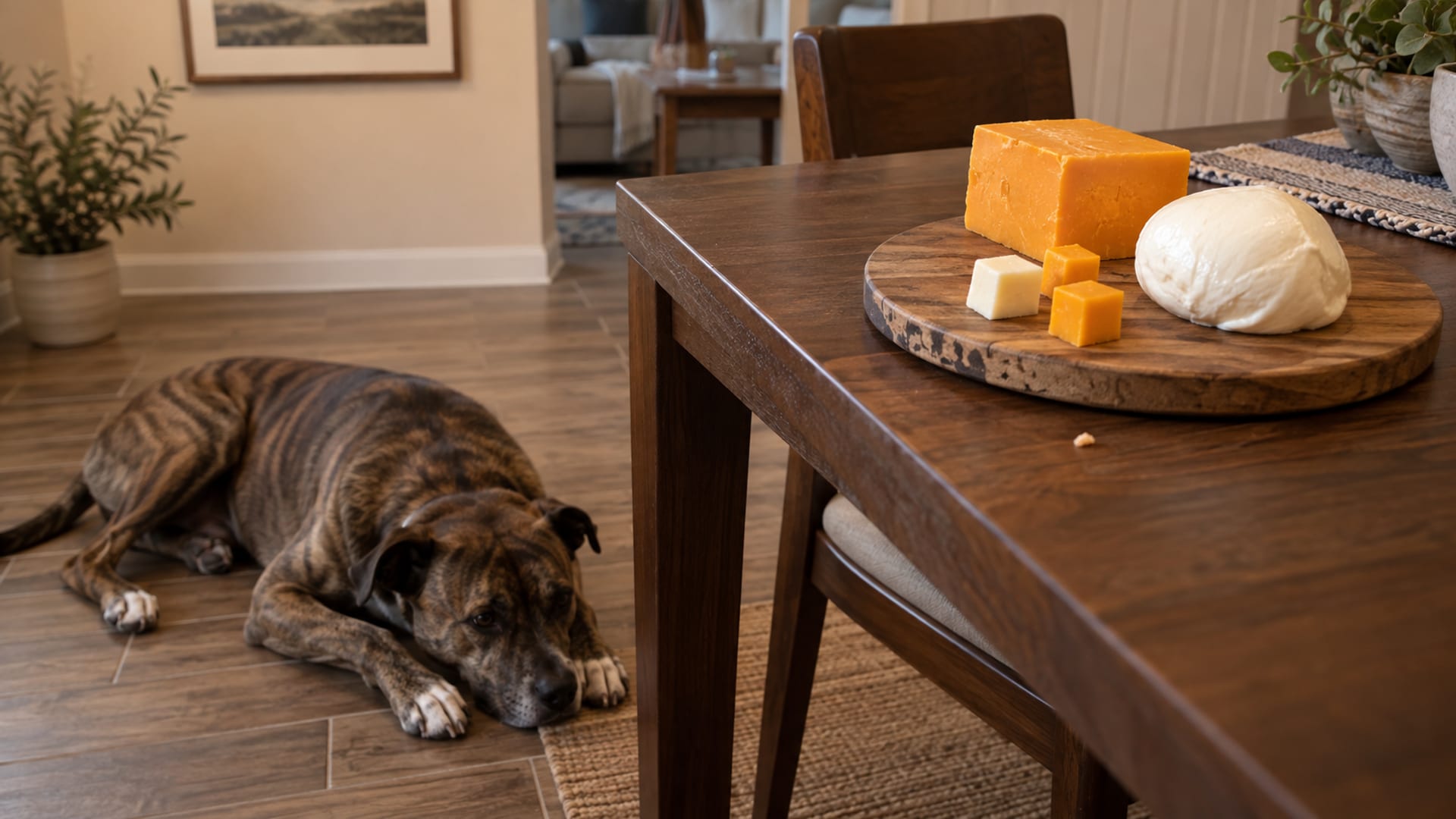
Yes, in small amounts, if your dog handles dairy. The AKC says plain cheese can be an occasional treat, with lower-fat kinds such as mozzarella, cottage cheese and soft goat cheese the better picks. Blue cheese and moldy cheese are the exception: the molds in them can make toxins that cause tremors and seizures in dogs, according to Young and others, 2003.
If your dog snatched a bit of cheddar and is acting normally, watch for an upset stomach and skip treats for the day. If it was blue cheese, moldy leftovers, a big block, or a cheesy dish with onion or garlic, call your vet or a poison line now.
Key takeaways
Tap a card to bring it forward.
- A small cube or a few shreds of plain cheese is a fine treat for most dogs that tolerate dairy.
- Lower-fat cheeses such as mozzarella and cottage cheese are the better choice.
- Some dogs cannot digest lactose well and get gas, diarrhea or vomiting from dairy.
- Blue cheese and moldy cheese can cause tremors and seizures. Call if your dog ate any.
- A lot of rich cheese at once can bring on pancreatitis in some dogs.
My dog ate cheese: what to do
Tap or hover a row to highlight it.
| What they ate | What to do |
|---|---|
| What they ateA small piece of plain cheese | What to doNothing more. Watch for gas or a loose stool. |
| What they ateA large amount, like a block or a whole bag of shreds | What to doCall your vet today, especially if your dog is small or has had pancreatitis. |
| What they ateBlue cheese, or any cheese with mold on it | What to doCall your vet or a poison line now, even if your dog seems fine. |
| What they ateCheese dip, sauce, pizza or a seasoned dish | What to doCheck for onion, garlic or chives. If any are in it, call now. |
| What they ateCheese with the wrapper, wax or rind | What to doWatch for vomiting, belly pain or straining, and call your vet if you see any. |
For anything on the "call now" rows, the ASPCA's guidance is not to wait even if your pet is acting normally. Pet Poison Helpline adds that you should not give home remedies. Keep the package so you can read the ingredients over the phone.
Go straight to an emergency vet for tremors, a seizure, collapse, trouble breathing or repeated vomiting.
Which cheeses are okay for dogs
Tap or hover a row to highlight it.
| Cheese | For dogs? | Why |
|---|---|---|
| CheeseMozzarella, cottage cheese, soft goat cheese | For dogs?Best choices, in small bits | WhyLower in fat, according to AKC; cottage cheese is also lower in lactose and salt |
| CheeseCheddar, Swiss, American slices | For dogs?A small piece now and then | WhyHigher in fat and calories |
| CheeseCream cheese, plain | For dogs?A dab at most | WhyHigh in fat |
| CheeseParmesan, feta and other salty cheeses | For dogs?Very little | WhySalt adds up when a dog eats a lot |
| CheeseBlue cheese: Roquefort, Stilton, Gorgonzola, Danish blue | For dogs?No | WhyMold can produce roquefortine C and penitrem A |
| CheeseAny cheese gone moldy | For dogs?No | WhySame mold toxins |
| CheeseCheese sauce, dip, powder, crackers | For dogs?Check the label | WhyOften onion, garlic, chives or a lot of salt |
| CheeseHimalayan-style hard cheese chews | For dogs?Pick the right size and supervise | WhyHard pieces can choke or block the gut |
The mold concern is well documented. Case reports describe dogs with vomiting, shaking, wobbly walking, a racing heart and seizures after eating moldy food, including moldy cream cheese, according to Young and others and Eriksen and others. The amount of toxin in any one cheese cannot be judged at home, which is why any blue or moldy cheese deserves a call.
How much cheese to give
The AKC suggests "a small cube or a few shreds" as an occasional treat. For training, cut that cube into tiny bits and count them as part of the day's treats.
Serve it plain, with no onion, garlic, chives or sauce. Try a small piece first to see whether dairy agrees with your dog. Merck explains that the enzyme that digests lactose declines after puppies are weaned, so some dogs become lactose intolerant.
Ask your vet before giving cheese if your dog:
- has had pancreatitis or is on a low-fat diet
- is overweight or has diabetes
- has food sensitivities or a touchy stomach
- has kidney disease or another condition that affects diet
Merck lists eating something rich or unusual (dietary indiscretion) and high blood fats among the risk factors for pancreatitis, and notes that Miniature Schnauzers and some other breeds are more prone to it.
Signs to watch for, and how soon
- Dairy upset: gas, loose stool, diarrhea, vomiting or a sore belly, usually after a bigger helping or in a dog that does not handle lactose.
- Pancreatitis: vomiting, belly pain, diarrhea, weakness, dehydration and not eating. Severe cases can be life-threatening, according to Merck, so these signs after a rich meal need a vet.
- Mold toxins from blue or moldy cheese: vomiting, tremors, stumbling, a fast heartbeat and seizures. In the reported cases, signs came on quickly. In one report, signs faded over 24 to 48 hours; in another, some dogs had nerve problems that lasted months, according to Young and others and Eriksen and others.
- A swallowed wrapper or hard chew: vomiting again and again, gagging, belly pain, tiredness or not passing stool.
"My dog eats cheese all the time and is fine"
Many dogs do, and your dog may be one of them. It is still not a rule for every dog or every cheese. A large dog getting a shred of mozzarella is taking in far less per pound than a small dog getting a slice of cheddar. Some dogs digest lactose better than others. Some dogs get pancreatitis after a rich meal and others never do, and a wedge of blue cheese carries a risk that plain cheddar does not. Signs can also show up hours after you stopped watching.
Pizza, mac and cheese, and other cheesy foods
- Pizza: fatty cheese plus garlic and onion in the sauce and crust. Can dogs eat onions? covers what those do.
- Macaroni and cheese: rich, often salty, and a known source of mold toxins when it has gone bad in the trash or fridge.
- Cheese dip, queso and cheese sauce: can contain onion, garlic, chives or hot spices.
- Cheese crackers and cheese puffs: salty, and the cheese flavoring may include onion or garlic powder.
- Cheese boards: check for grapes, raisins or nuts on the same board. Can dogs eat grapes? explains why grapes need a call.
- Cheese as a pill pocket: a small piece is usually fine. If your dog is on a low-fat diet, ask your vet for another option.
Check what you learned
Quick check
Questions about dogs and cheese
What cheeses are safe for dogs?
Plain, lower-fat cheeses are the best choices: mozzarella, cottage cheese and soft goat cheese, according to the AKC. Cheddar and Swiss are fine in a small piece. Avoid blue cheese, moldy cheese and anything seasoned with onion or garlic.
Can cheese give a dog diarrhea?
Yes. Lactose, fat, a big helping or a food sensitivity can all cause gas, loose stool, diarrhea or vomiting.
What happens if a dog eats blue cheese?
Blue cheese molds can make toxins that affect the nervous system. Signs include vomiting, tremors, stumbling, a fast heartbeat and seizures. Call your vet or a poison line even if your dog seems normal.
Can puppies eat cheese?
A tiny bit is okay for most puppies. Their stomachs upset easily, so give very little and cut it small.
Is string cheese or cottage cheese okay for dogs?
Plain cottage cheese is one of the better picks because it is lower in fat, lactose and salt. Plain string cheese is fine in small bits; check the label and tear it up.
Sources
Checked September 24, 2026.
- American Kennel Club, Can Dogs Eat Cheese?
- Merck Veterinary Manual, Pancreatitis in Dogs and Cats
- Merck Veterinary Manual, Malabsorption Syndromes in Small Animals
- ASPCA, What to Do if Your Pet Is Poisoned
- Pet Poison Helpline, Emergency Instructions for Pet Poisoning
- Young KL and others, Tremorgenic mycotoxin intoxication with penitrem A and roquefortine in two dogs, Journal of the American Veterinary Medical Association, 2003
- Eriksen GS and others, Poisoning of dogs with tremorgenic Penicillium toxins, Mycopathologia, 2010