
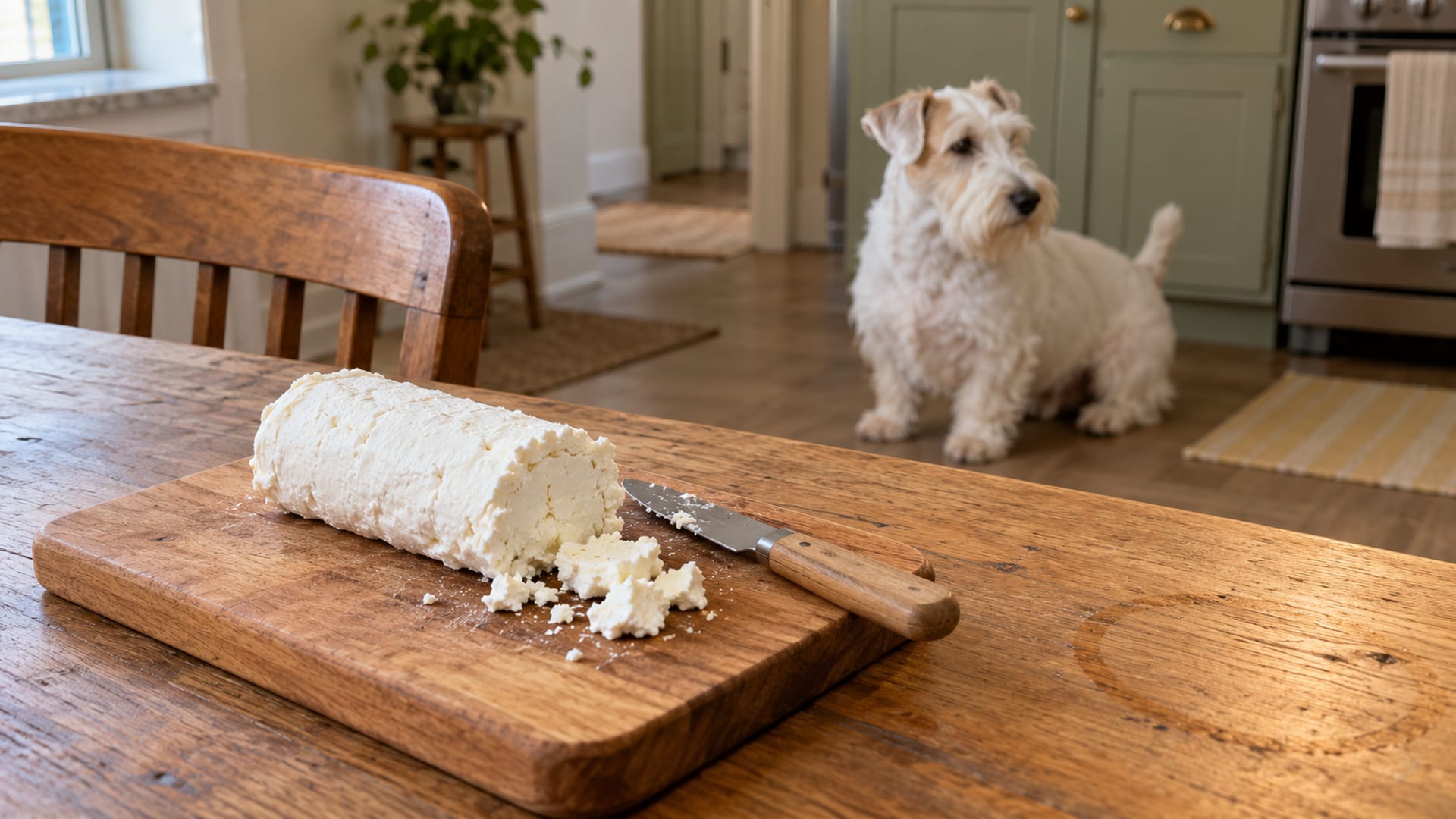
Yes, in a small amount. Plain goat cheese isn't a poison, and the AKC lists soft goat cheese among the better cheese choices for a healthy dog, while warning that too much cheese can lead to obesity or pancreatitis. The other concern is herbed or garlic goat cheese, which carries ingredients that harm dogs on their own.
If your dog just grabbed some, start with what kind it was. A few plain crumbles off a salad, in a dog that's acting normally, usually means watching at home over the next day. A herbed or garlic log, a big chunk of the board, or a dog that has had pancreatitis before calls for a phone call to your vet now.
Key takeaways
Tap a card to bring it forward.
- Plain goat cheese isn't toxic to dogs, and a small cube or a few crumbles is usually fine for a healthy dog.
- Goat cheese with garlic, onion or chives is a separate problem; call your vet if your dog ate any.
- A lot of any goat cheese can cause vomiting and diarrhea, and its fat can contribute to pancreatitis.
- Check the whole cheese board, since grapes, raisins, chocolate and nuts often sit right beside the cheese.
- Mild stomach upset can be watched at home; signs that are severe or last more than 12 hours need your vet.
What to do if your dog already ate goat cheese
Work through these in order; they take a minute and give your vet what they need.
- Read the label or think back to the recipe. The ASPCA groups garlic, onion and chives as Allium plants that can irritate a dog's gut and damage red blood cells. If any of them was in the log, spread or dip, call your vet or ASPCA Animal Poison Control now rather than waiting for signs.
- Check what else was on the board or plate. The ASPCA treats grapes, raisins, chocolate, alcohol and xylitol as their own exposures, so count what's missing and see the entries for grapes and raisins, chocolate and nuts if any of those went too.
- Guess how much and when. The ASPCA asks owners to note the amount eaten. "Half a small log" or "a spoonful of crumbles," plus the time and how many pounds your dog is, lets your vet judge the risk quickly.
- Think about your dog's health history. The Merck Veterinary Manual names dietary indiscretion, meaning a dog eating something outside its usual diet, as a common risk factor for pancreatitis. If your dog has had pancreatitis or eats a prescription diet, call even if it seems fine.
- Look for a missing rind or big hard piece. Rinds aren't toxic, but a large or hard piece swallowed whole can cause choking or block the gut, so call your vet.
- If it was plain and small, watch through the next day. Watching at home is reasonable for a dog acting normally. PetMD advises calling your vet if dairy-related signs are severe or last longer than 12 hours.
Which goat cheeses are lower risk and which are not
The form of goat cheese changes how much fat and salt your dog gets and whether anything harmful is mixed in.
Tap or hover a row to highlight it.
| Form | What matters for your dog |
|---|---|
| FormPlain soft or fresh chèvre, or plain crumbles | What matters for your dogThe lower-risk form. A small, occasional piece is fine for a healthy dog. |
| FormPlain aged or hard goat cheese | What matters for your dogNot toxic, but usually richer in fat, calories and salt. Use a smaller piece. |
| FormHerbed, garlic or chive logs | What matters for your dogAvoid. Garlic, onion and chives are toxic to dogs. |
| FormSpreads, whipped cheese and dips | What matters for your dogCheck every ingredient for onion, garlic, extra salt, chili or alcohol. |
| FormGoat cheese with honey or in desserts | What matters for your dogCheck the recipe for chocolate, raisins, xylitol or alcohol. |
| FormCooked goat cheese | What matters for your dogHeat doesn't remove the fat, salt or lactose. |
| FormRaw-milk goat cheese | What matters for your dogUnpasteurized dairy can carry harmful bacteria. |
| FormRind, dried chews and powders | What matters for your dogDenser and easy to overfeed; hard or large pieces can choke or block. |
Spreads and dips deserve the closest look, since the Allium family, salt, alcohol and xylitol all appear on the ASPCA's list of foods to avoid. Honey-drizzled goat cheese is judged by the cheese plus whatever came with it; the honey entry covers the sweet part. The USDA's FoodData Central shows fat, sodium and calories varying from product to product, so the label on your package is the better guide.
How to share plain goat cheese, and how much is too much
If you'd like to share, keep it plain and small. The AKC says a small cube or a few shreds is usually enough for a training reward, and the ASPCA's guide to foods you can share agrees that a small cube of cheese can be fine while too much may cause digestive upset.
- Use soft, plain goat cheese with nothing mixed in.
- Start with a very small piece and watch for gas, loose stool or vomiting over the next day.
- Keep it occasional. Cheese is a concentrated food, and the fat adds up fast for a small dog.
- Skip it for dogs with pancreatitis, obesity, diabetes, high triglycerides, food sensitivities or a prescription diet unless your vet approves that specific product. The AKC recommends asking your vet first for dogs with obesity or food sensitivities.
There's no set amount per pound that marks where plain goat cheese becomes a problem, so the useful question is how much your dog ate compared with its size. The same slice is a much bigger dose for a small terrier than for a large retriever. If your dog ate a lot, or you can't tell how much is gone, call your vet with your dog's size and your best guess at the amount.
Signs to watch for over the next day
Most trouble from plain goat cheese looks like a dairy upset. PetMD lists vomiting, diarrhea, gas, bloating, belly pain and a lower appetite in dogs that don't digest lactose well. Aged and processed cheeses can carry a lot of salt, which the ASPCA links with extra thirst and urination, vomiting and diarrhea, and in serious cases tremors and seizures.
Pancreatitis is the bigger worry after a large, fatty helping. The ASPCA's cookout safety page warns that fatty foods, cheese included, can contribute to it. Merck lists vomiting, diarrhea, tiredness, poor appetite and belly pain as signs, and severe cases can need a hospital stay. The timing can't be predicted and can come later than a simple upset stomach, so keep watching through the next day even if the first hours are quiet.
Tap or hover a row to highlight it.
| What you see | What to do |
|---|---|
| What you seeNothing, or mild gas or soft stool after a small plain piece | What to doWatch at home over the next day |
| What you seeSigns that are severe or last more than 12 hours | What to doCall your vet |
| What you seeRepeated vomiting, severe diarrhea, belly pain, marked tiredness or collapse | What to doCall your vet now |
| What you seeGarlic, onion, chives, grapes, raisins, chocolate or xylitol in what was eaten | What to doCall your vet or a poison line now, even with no signs |
My dog ate goat cheese before and was fine
That happens a lot, and it's real. It still isn't a rule for every dog, or even for the same dog next time.
The amount was probably different; a small cube may cause nothing, while a larger portion can go past what a stomach tolerates and add a real load of fat. The same piece is a bigger dose per pound for a small dog. A plain fresh crumble isn't the same as an aged wedge, a salty spread or a herbed log. Dogs differ in how well they digest lactose, and the AKC notes that dogs with severe lactose intolerance can react even to small amounts. Health changes over the years, too, and pancreatitis, diabetes or a new prescription diet shift the risk. Pancreatitis can also take longer to show than an ordinary upset stomach, so a quiet first evening doesn't settle it.
The last time went fine for that dog, with that amount, on that day. This time depends on what was in this cheese and how much of it is gone.
Goat cheese products and look-alikes
Chèvre is the French name for goat cheese, and in Spanish it's queso de cabra; all mean cheese made from goat milk. Some cheeses sold as goat cheese blend cow, sheep and goat milk, so read the label if your dog has a milk-protein sensitivity. Goat milk is its own product with a different lactose, fat and water profile.
Goat cheese salads, dips and dressings often hold onion, garlic, chives, grapes, raisins or nuts, and each needs its own look. Dried goat cheese chews sold as dog treats are a chew product, and the ASPCA's position on dog chews and treats warns about chews that are too small or break into pieces.
The Swiss cheese plant isn't food at all. It's Monstera deliciosa, a houseplant the ASPCA lists as toxic to dogs and cats because of insoluble calcium oxalates. For other cheeses on the board, see cheese, brie and cream cheese, and for the Allium family, garlic and onions.
Check what you learned
Three quick questions to pull the main points together.
Quick check
Questions about dogs and goat cheese
These cover the situations that come up most after the main question.
Can puppies eat goat cheese?
Puppies can have more sensitive stomachs than adult dogs, so dairy is more likely to give them diarrhea or gas. A single plain crumble is plenty if you try it, and checking with your vet first makes sense. A puppy that ate a lot needs the same call as an adult dog.
Can a dog with a history of pancreatitis have goat cheese?
Don't assume it's okay. The Merck Veterinary Manual notes that dogs being treated for pancreatitis are kept on a diet with less than 20 grams of fat per 1,000 calories, which leaves little room for a rich cheese. That figure is a treatment target, so ask the vet who manages your dog about any specific product.
Is raw-milk goat cheese riskier?
Unpasteurized dairy can carry bacteria that cause foodborne illness, according to the ASPCA's guidance on raw foods. Pasteurized, plain goat cheese is the better pick if you share at all.
What if my cat ate goat cheese too?
Plain goat cheese isn't listed as toxic to cats, but dairy can upset a cat's stomach as well. The garlic, onion and chives rules apply to cats too, so call your vet if the cheese was seasoned.
Sources
Checked September 25, 2026.
- American Kennel Club, Can Dogs Eat Cheese? Feeding Cheese to Your Dog
- ASPCA, People Foods to Avoid Feeding Your Pets
- ASPCA, Sharing is Caring: Foods You Can Safely Share with Your Pet
- ASPCA, Be On the Lookout at Your Cookout
- ASPCA, Animal Poison Control Center
- ASPCA, Swiss Cheese Plant
- ASPCA, Position Statement on Dog Chews/Treats
- Merck Veterinary Manual, Pancreatitis in Dogs and Cats
- PetMD, Can Dogs Drink Milk?
- USDA Agricultural Research Service, FoodData Central