
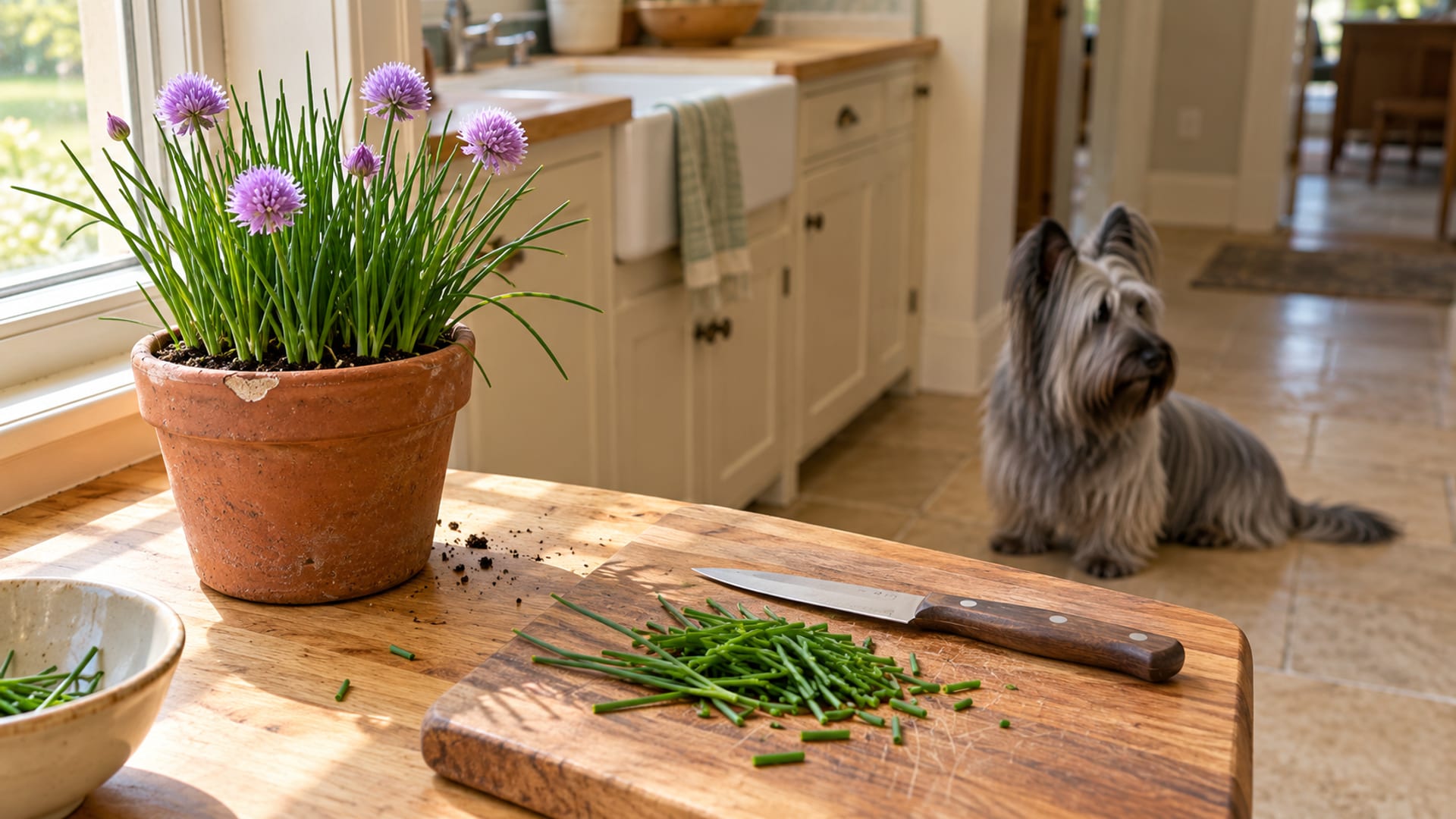
Chives are toxic to dogs, whether they are fresh from the garden, cooked into eggs, dried in a jar or ground into a seasoning. A small nibble may cause nothing, but no safe amount is known, so if your dog ate chives or a food made with them, call your vet or a pet poison line now, even if your dog looks completely normal.
Timing is the reason to call before anything shows. The Merck Veterinary Manual explains that chives belong to the Allium group with onion and garlic, and that the breakdown of red blood cells after eating an Allium typically happens 3 to 5 days later. A dog who is wagging and eating tonight can still get sick later in the week.
Key takeaways
Tap a card to bring it forward.
- Chives are an Allium, like onion, garlic and leeks, and they are toxic to dogs in every form.
- Cooking does not make chives safe, and dried chives, chive powder and seasoning blends pack more plant into each bite.
- Call your vet or a pet poison line after any known or suspected ingestion, even when your dog seems fine.
- Weakness, pale gums, fast breathing, dark urine and yellow gums or eyes can show up days later.
- Cats are even more sensitive to chives than dogs.
What to do if your dog just ate chives
Whether it was a mouthful from the herb bed or a lick of a chive-topped plate, work through these steps in order.
- Move whatever is left out of reach. Removing the plant, the dip or the plate keeps the amount from growing while you make the call.
- Work out what form it was. Fresh leaves, dried flakes, chive dip and seasoning packets are not equal, because the Merck Veterinary Manual names concentrated forms such as powders, dehydrated flakes and dry soup mixes as a common source of Allium poisoning.
- Estimate how much and when. A rough amount lets the person on the phone judge the risk for your dog's size, and the time tells your vet when delayed signs are most likely.
- Keep the package or recipe. A product labeled "chive" may also contain onion powder, garlic powder, shallot or leek, which changes how much Allium your dog actually swallowed.
- Call your vet or a pet poison line now. The ASPCA advises contacting poison control or your veterinarian as soon as possible, and Pet Poison Helpline says to call or seek immediate veterinary treatment, because blood cell damage can stay hidden for days.
- Mention your dog's breed and size. Pet Poison Helpline says Japanese breeds such as the Akita and Shiba Inu are more sensitive to Allium plants, and the same pinch is a bigger dose for a small dog.
- Follow the plan and keep watching. Merck describes veterinary care as early decontamination, monitoring and managing anemia, IV fluids, and oxygen or a blood transfusion when needed.
Fresh, cooked, dried or powdered: which forms cause trouble
Every part of the chive plant and every kitchen form of it belongs on the avoid list. The ASPCA lists common chives, *Allium schoenoprasum*, as toxic to dogs and names N-propyl disulfide as the toxic compound. Merck explains that the sulfur compounds in Allium plants damage red blood cells, which can lead to hemolytic anemia, where those cells break apart. The AKC says Allium vegetables harm dogs raw, cooked, fried or powdered.
Tap or hover a row to highlight it.
| Form | For dogs | Why it matters |
|---|---|---|
| FormFresh leaves and stems | For dogsAvoid | Why it mattersChewing releases sulfur compounds that harm red blood cells |
| FormChive flowers | For dogsAvoid | Why it mattersPart of the same Allium plant; no part is known to be safe |
| FormCooked chives in eggs, potatoes or soup | For dogsAvoid | Why it mattersMerck reports poisoning from cooked Allium products too |
| FormDried or dehydrated chives | For dogsAvoid | Why it mattersDrying concentrates the plant |
| FormChive powder, seasoning blends, soup mixes | For dogsAvoid | Why it mattersConcentrated, and often mixed with onion or garlic powder |
| FormChive dip, sour cream and chive, chive cream cheese | For dogsAvoid | Why it mattersChives plus, frequently, onion or garlic |
| FormChive oil, juice or extracts | For dogsAvoid | Why it mattersConcentrated, with no known safe amount |
If you were wondering about a sprinkle on your dog's dinner, the AKC says onions, garlic, leeks and chives should never be fed to dogs on purpose. For the dairy side of a dip or spread, see the Cream cheese entry; the chives and any onion or garlic in the tub are the reason to call.
How much chive is too much for a dog?
There is no amount of chives you can measure at home and call safe. The one published figure nearby is for a different plant: the Merck manual reports that 15 to 30 grams of raw onion per kilogram of body mass has produced signs of illness in dogs. That figure is for raw onion only and cannot serve as a chive dose or a safe limit.
What changes the level of concern, according to Merck and Pet Poison Helpline, is information you can give on the phone:
- The form. Dried chives, powders and seasoning blends carry more plant per bite than a few fresh leaves.
- The amount. A large or unknown amount is more worrying than one nibble.
- Your dog's size. The same amount is a bigger dose for a small dog.
- Repeat exposure. A dog who grazes the herb bed day after day, or gets chive-topped scraps often, is a bigger concern than a one-time taste.
- Breed and the individual dog. Akitas, Shiba Inus and other Japanese breeds are more sensitive.
For a pinch or a bowlful, the step is the same: call and give these details.
Signs to watch for over the next few days
Chive poisoning can come in two waves. The first is stomach upset, such as vomiting, diarrhea, drooling from nausea or turning down food, and it may happen early or not at all.
The second wave comes from the blood. The Merck manual says Heinz bodies, a marker of damage inside red blood cells, may increase within 24 hours, while noticeable anemia commonly appears several days after the chives were eaten. Merck and the ASPCA list these later signs:
- tiredness, weakness or stopping early on walks
- pale gums
- fast breathing or a racing heart
- yellow gums, skin or whites of the eyes
- dark, reddish or bloody urine
- collapse
Any one of them calls for immediate veterinary care, even if you were earlier told to watch at home. Merck notes that hemoglobin in the urine can injure the kidneys, and the worst outcome after a large or concentrated exposure is severe anemia, kidney injury, collapse and death. A simple home check helps. Lift your dog's lip in good light once or twice a day for the next week and compare the gum color with how it looked the evening of the chives, and note urine color on walks. A dog who seems fine on day one and slows down on day four fits exactly the pattern of these delayed signs.
My dog ate chives before and was fine
That happened, and plenty of owners have a story like it. It still does not make chives safe for your dog today, for specific reasons:
- The amount was probably different. Allium poisoning depends on how much a dog eats.
- The dog was a different size. The same amount is a very different dose for a small dog and a large one.
- The form was different. Merck points to dried and powdered products as more concerning than a little fresh plant.
- Signs can arrive late. A tired dog several days later is easy to miss or blame on something else.
- The earlier dog may have eaten less than it seemed. Or its signs were mild enough that nobody noticed.
So, a good outcome back then tells you about that dog on that day. For this dog and this amount, the call is still the right step.
Chive dips, garlic chives and other look-alikes
Chives turn up in more places than the herb pot, and several onion-family plants get called "chives." Treat all of these the same way:
- Garden chives and their flowers. The thin, hollow leaves and the round purple blossoms are the same toxic plant.
- Garlic chives. Also sold as Chinese chives or Chinese leek, they are a separate species, *Allium tuberosum*, according to the USDA, and still an Allium.
- Scallions and green onions. They look like chives and carry the same red blood cell concern, which the Onions entry covers.
- Wild onion and wild garlic. These names cover several Allium species, so treat an unknown oniony garden plant as a possible Allium until it is identified.
- Chive dips and spreads. Sour cream and chive or chive cream cheese often contain onion powder or Garlic too.
- Soup mixes, seasoning blends and leftovers. Loaded baked potatoes, omelets, soups and dressings can hold chives along with onion, shallot or Leeks.
Keeping chives away from pets comes down to the garden and the counter. The ASPCA names chives among summer garden plants that can harm pets, and the AKC lists chives with garlic and leeks as yard plants that can damage red blood cells. Fence the herb bed or move the pot out of reach, pick up trimmings, and keep the compost bin closed. Indoors, clear chive-topped plates promptly and keep party dips and cookout sides off low tables.
If a cat shares your home, take the same care. Merck says cats are the most sensitive species to Allium poisoning, ahead of dogs, and the ASPCA lists chives as toxic to cats, so a cat chewing the windowsill chive pot needs the same call.
Check what you learned
Three quick questions on the points that matter most.
Quick check
Questions about dogs and chives
These come up once the first call is made.
Are garlic chives more dangerous than regular chives?
Garlic chives are a different plant, but both are Alliums and neither has a known safe amount. The advice is the same: call your vet or a pet poison line and say which kind your dog ate.
My dog only licked chive dip off a chip. Do I still need to call?
A lick is usually a very small amount, but dips often contain onion or garlic powder along with chives. A quick call with the ingredient list and your dog's size lets a professional judge the risk instead of you having to guess.
Can small amounts add up if my dog nibbles the plant every day?
Repeated exposure is one of the factors that raise concern with Allium plants, alongside amount, form and size. Tell your vet how long it has been going on, and block access to the plant.
My puppy ate chives. Is that different?
Size matters for puppies too, because the same amount is a larger dose for a small body, so call with your puppy's size and your best guess at the amount.
Sources
Checked September 25, 2026.
- ASPCA, Toxic and Non-toxic Plants: Chives
- ASPCA, Our Top Three Summer Garden Safety Tips
- Merck Veterinary Manual, Garlic and Onion (Allium spp) Toxicosis in Animals
- Pet Poison Helpline, Chives Is Toxic To Dogs
- American Kennel Club, Hazardous Cookout Foods for Dogs
- American Kennel Club, Fruits and Vegetables Dogs Can or Can't Eat
- American Kennel Club, Yard Safety: Keeping Your Dog Safe Outside
- USDA, Allium tuberosum