

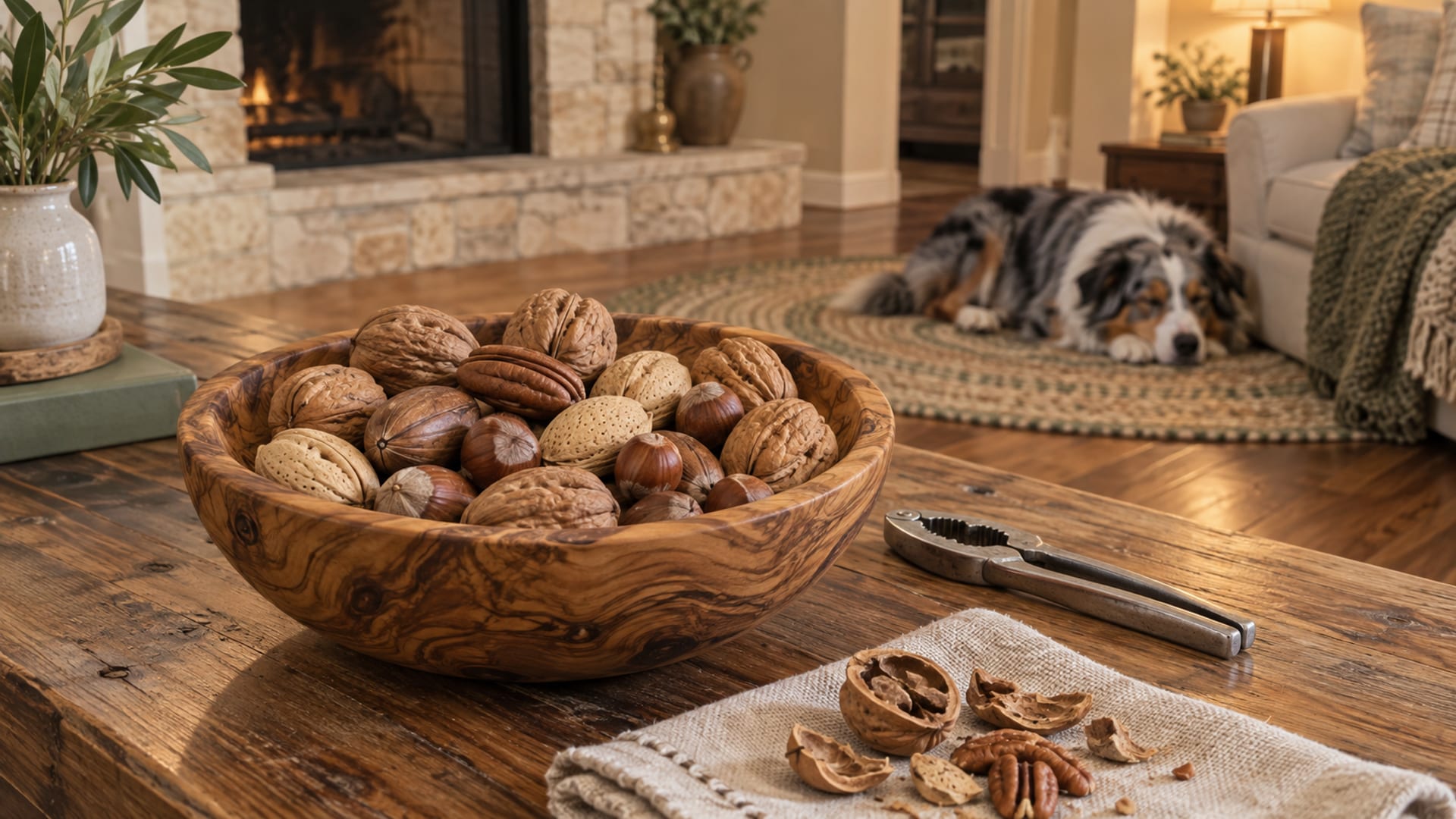
It depends on which nut. Macadamia nuts are toxic to dogs, according to the Merck Veterinary Manual, and moldy walnuts and other moldy nuts can cause tremors and seizures. Most other plain nuts are not poisonous, but they are rich in fat, and whole nuts and shells can choke a dog or block the gut.
If your dog just got into nuts, first find out exactly what they were. Macadamias, moldy or fallen nuts, black walnuts, a mixed bag, or anything salted, seasoned or chocolate-covered is a reason to call your vet or a poison line now. One or two plain peanuts or cashews in a healthy dog usually just means watching for an upset stomach.
Key takeaways
Tap a card to bring it forward.
- Macadamia nuts are toxic to dogs; weakness, wobbly back legs and tremors can start within 12 hours.
- Moldy nuts, including old or fallen walnuts, can carry toxins that cause tremors and seizures.
- Plain peanuts, cashews, almonds and English walnuts are not poisonous but are fatty and easy to choke on.
- Mixed nuts and trail mix may hide macadamias, raisins, chocolate or xylitol.
- If you do not know which nut it was, treat it as a macadamia and call.
My dog ate nuts: what to do now
- Take the bag, bowl or fallen nuts away and check whether your dog is gagging or struggling to breathe. If so, go to a vet now.
- Work out which nut, and what else was in it. Keep the package. Look for macadamias, raisins, chocolate, xylitol, onion or garlic seasoning, and heavy salt.
- Estimate how many, and when. Have your dog's weight ready.
- Call your vet or a poison line for any macadamia, any moldy or fallen nut, black walnuts, shells, a large amount, or a mix you cannot sort out. The ASPCA advises contacting your vet or its poison control center right away if a dog eats macadamia nuts.
- Watch closely for the next three days, even after a call that ends in "keep an eye on it." After macadamias, the ASPCA says pancreatitis can occasionally follow, with vomiting, belly pain or a poor appetite showing up within three days.
Go straight to a vet if your dog is shaking nonstop, feels very hot or cannot walk. The ASPCA names those three signs after macadamias as reasons for hospital care.
Which nuts are the problem
Tap or hover a row to highlight it.
| Nut | How concerned to be | Main reason |
|---|---|---|
| NutMacadamia (Australian or Queensland nut) | How concerned to beHigh: call now | Main reasonToxic to dogs; affects nerves and muscles |
| NutAny moldy nut, or fallen nuts from the yard | How concerned to beHigh: call now | Main reasonMold toxins can cause tremors and seizures |
| NutBlack walnut | How concerned to beHigh: call | Main reasonHard shells and possible mold; a different tree from English walnuts |
| NutEnglish walnut (the grocery kind) | How concerned to beLow to moderate | Main reasonNot toxic, but fatty and a choking risk; mold is the big worry |
| NutPecan | How concerned to beModerate | Main reasonHigh in fat and oil; can carry mold |
| NutAlmond | How concerned to beModerate | Main reasonNot toxic, but whole almonds can lodge in the throat |
| NutPistachio, hazelnut, pine nut | How concerned to beLow to moderate | Main reasonNot poisonous in plain form; fat and choking are the concerns |
| NutPeanut or cashew, plain and unsalted | How concerned to beLow | Main reasonFine in very small amounts, per the AKC |
| NutSalted, seasoned, candied or chocolate-covered nuts | How concerned to beModerate to high | Main reasonSalt, onion or garlic, sugar, chocolate or xylitol |
| NutNut shells | How concerned to beModerate | Main reasonChoking and blockage, and shells can hold mold |
The American Kennel Club says most nuts are high in fat, which can lead to weight gain and pancreas problems, and that plain, unsalted peanuts and cashews are fine only in very small amounts. On almonds, the AKC warns that a nut swallowed without enough chewing can block the esophagus or even tear the windpipe. The ASPCA groups almonds, pecans and walnuts together as nuts with a lot of oil and fat.
For single nuts, DogServ has fuller pages: can dogs eat almonds?, can dogs eat cashews?, can dogs eat peanuts? and can dogs eat pistachios?.
How many macadamia nuts are a concern
Macadamias are the one nut with published numbers. Merck reports signs in dogs after about 2.4 grams of macadamia per kilogram of body weight. Pet Poison Helpline gives a higher figure, about 2 grams per 2 pounds (around 4.4 grams per kilogram).
Tap or hover a row to highlight it.
| Dog's weight | Merck (2.4 g per kg) | Pet Poison Helpline (about 4.4 g per kg) |
|---|---|---|
| Dog's weight11 lb (5 kg) | Merck (2.4 g per kg)about 12 g | Pet Poison Helpline (about 4.4 g per kg)about 22 g |
| Dog's weight22 lb (10 kg) | Merck (2.4 g per kg)about 24 g | Pet Poison Helpline (about 4.4 g per kg)about 44 g |
| Dog's weight44 lb (20 kg) | Merck (2.4 g per kg)about 48 g | Pet Poison Helpline (about 4.4 g per kg)about 88 g |
| Dog's weight66 lb (30 kg) | Merck (2.4 g per kg)about 72 g | Pet Poison Helpline (about 4.4 g per kg)about 132 g |
Use the lower number. These are amounts at which dogs have become sick, and a dog can react to less, so being under them is not a reason to skip the call. Weigh what is left in the bag if you can, or bring it with you.
No other nut has a toxic dose to go by. With moldy nuts, the amount of toxin varies from one nut to the next, so a single bad nut can matter more than a handful of good ones. Fat has no dependable number either, though a dog that has had pancreatitis or needs a low-fat diet is at more risk from any fatty snack.
Signs to watch for, and how soon
Tap or hover a row to highlight it.
| Problem | What you may see | When |
|---|---|---|
| ProblemMacadamia | What you may seeWeakness, especially in the back legs, wobbling, vomiting, tremors, fever, dullness | WhenUsually within 12 hours; most dogs recover in 12 to 48 hours (Merck) |
| ProblemMoldy nuts (mold toxins) | What you may seeSudden tremors, wobbling, seizures | WhenCan come on fast |
| ProblemToo much fat | What you may seeVomiting, diarrhea, belly pain, not eating, low energy | WhenVaries; after macadamias the ASPCA says to watch for three days |
| ProblemChoking or blockage | What you may seeGagging, trouble breathing, repeated vomiting, straining | WhenRight away for choking; later for a blockage |
| ProblemSalted or seasoned nuts | What you may seeThirst, vomiting, diarrhea, tremors with a lot of salt | WhenWithin hours |
Moldy walnuts deserve their own warning. A case report in Mycopathologia traced a dog's poisoning to penitrem A, a mold toxin found in moldy walnuts, and a 2024 report described 54 dogs poisoned by mold toxins after eating walnuts. Most went home recovered, but tremors and seizures from these toxins are an emergency. Mold is not always visible, so a fresh-looking nut from under a tree can still carry it.
"My dog eats a few nuts all the time and is fine"
That may well be true for your dog. A few plain peanuts in a big, healthy dog is a small amount of fat and no toxin at all. It just does not tell you much about the next exposure. A macadamia is a different nut from a peanut. The same handful is a much bigger dose for a small dog, whose airway and gut are also easier to block. Mold toxins are spread unevenly, so one bad walnut can cause trouble where the last twenty did not. After macadamias, pancreatitis signs can take up to three days to appear. And mild signs, like one soft stool or a lazy afternoon, are easy to miss. Pet Poison Helpline notes that the amount, the animal's size and other factors all change how a pet reacts.
Nut butters, trail mix, nut milk and other nut foods
- Peanut butter and other nut butters: plain, unsweetened and xylitol-free is the only kind to consider, and only a small lick because it is fatty. Some "sugar-free" nut butters contain xylitol, which is a poisoning emergency.
- Trail mix and mixed nuts: often include macadamias, raisins and chocolate together. Can dogs eat grapes? and can dogs eat chocolate? explain those two.
- Cookies, brownies and granola with nuts: check for chocolate, raisins, macadamias and xylitol.
- Nut milks: a processed drink, and the ingredients decide the risk. Skip any with xylitol, chocolate or a lot of sugar.
- Seasoned nuts: onion and garlic seasoning is toxic to dogs; see can dogs eat onions?.
- Nuts from the yard: fallen walnuts, black walnuts and acorns can be moldy even when they look clean. Rake them up where your dog plays.
Macadamia poisoning has been reported only in dogs, according to Merck, but chocolate, xylitol, salt and mold can harm cats too.
Check what you learned
Quick check
Questions about dogs and nuts
Which nuts can dogs not eat?
Macadamia nuts are the clear no, because they are toxic to dogs. Also keep dogs away from black walnuts, any moldy or fallen nuts, and salted, seasoned, candied or chocolate-covered nuts.
What happens if a dog eats a macadamia nut?
Signs usually start within 12 hours and can include weakness in the back legs, vomiting, wobbling, tremors and fever. Merck says most dogs recover within 12 to 48 hours, but call your vet as soon as you know.
Can dogs eat almonds, cashews or peanuts?
Plain, unsalted cashews and peanuts are fine for most dogs in very small amounts, according to the AKC. Almonds are not toxic, but they can get stuck in a dog's throat, so they are best skipped.
My dog ate one walnut. Is that okay?
One or two English walnuts are unlikely to make a dog sick, according to the AKC. Watch for choking or an upset stomach. If the walnut was moldy, from the yard, or a black walnut, call your vet.
Can dogs eat pistachios?
Plain, shelled pistachios are not poisonous, but they are fatty and the shells are a choking and blockage risk. Skip salted or flavored ones.
Can puppies eat nuts?
Better not. Puppies are small, so a whole nut or shell is more likely to choke them or cause a blockage, and the same amount of fat is a bigger dose.
Sources
Checked September 24, 2026.
- Merck Veterinary Manual, Macadamia Nut Toxicosis in Dogs (revised September 2024)
- ASPCA, Animal Poison Control Alert: Macadamia Nuts are Toxic to Dogs
- ASPCA Animal Poison Control Center, People Foods to Avoid Feeding Your Pets
- Pet Poison Helpline, Are Macadamia Nuts Bad for Dogs? and Macadamia Nuts
- American Kennel Club, Can Dogs Eat Nuts?
- American Kennel Club, Can Dogs Eat Acorns and Other Tree Nuts?
- American Kennel Club, Can Dogs Eat Walnuts?
- Richard JL, Bacchetti P and Arp LH, Moldy walnut toxicosis in a dog, caused by the mycotoxin, penitrem A, Mycopathologia, 1981
- Mycotoxin intoxication in 54 dogs after ingestion of walnuts, 2024