

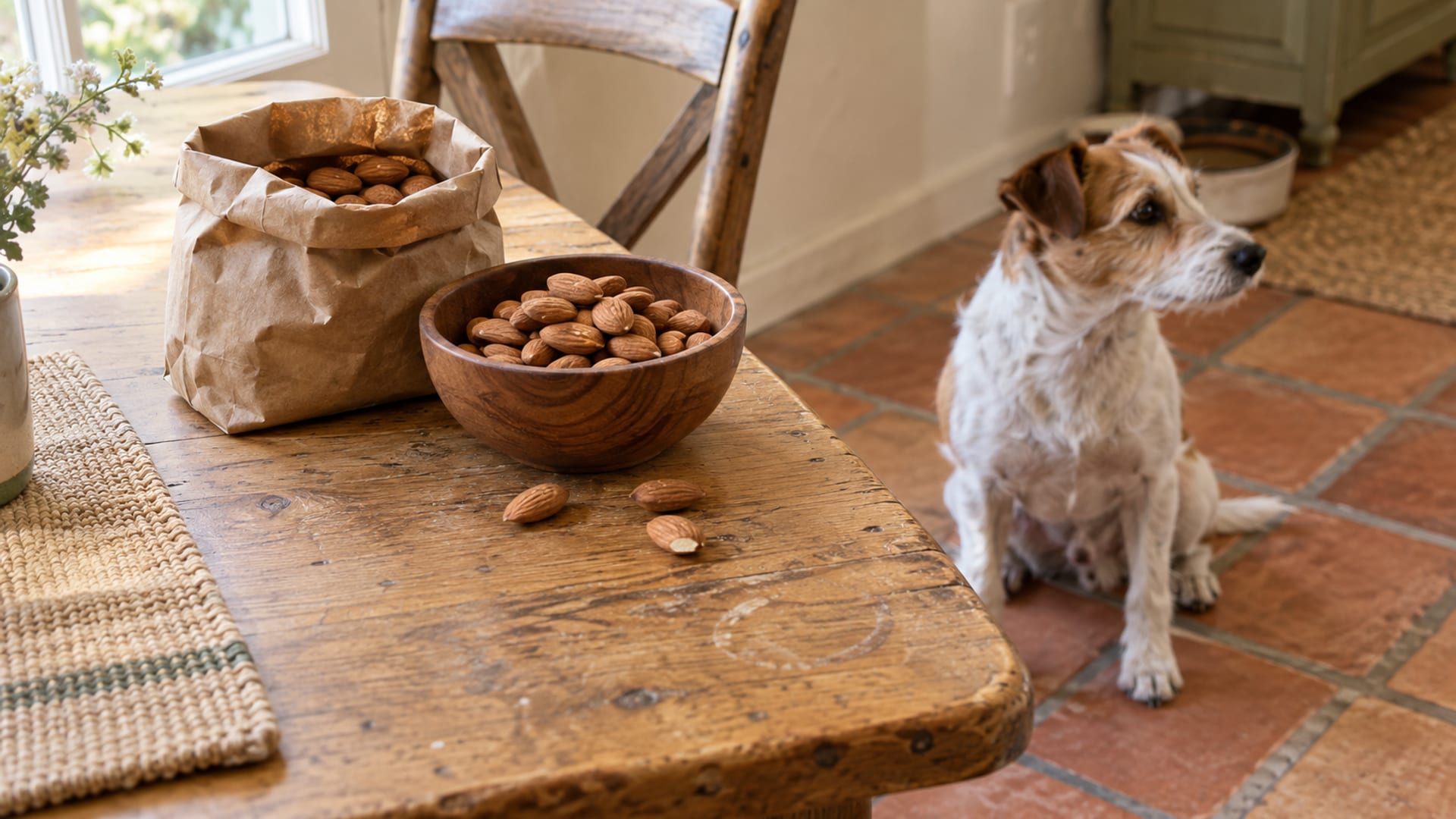
It is better not to share them. The ordinary sweet almonds sold in US grocery stores are not toxic to pets, the ASPCA says, but they can upset the stomach and may lead to pancreatitis. The AKC's answer is no, because a whole almond can choke a dog or get stuck on the way down. Bitter almonds are more serious: the ASPCA says they contain a compound that releases cyanide.
If your dog snatched one or two plain almonds and is acting normally, keep a close eye on them. The AKC says one or two may not cause a major problem, and that a dog who ate more than a few should get a call to the vet.
Key takeaways
Tap a card to bring it forward.
- Plain sweet almonds are not toxic to dogs, and they still make a poor treat.
- A whole almond can choke a dog or block the gut, and small dogs are most at risk.
- Almonds are fatty, so a big helping can upset the stomach or lead to pancreatitis.
- Bitter almonds and almond tree leaves, hulls and stems can release cyanide. Call right away.
- Salted, seasoned, chocolate-coated and sugar-free almond foods bring their own dangers.
My dog ate almonds: what to do now
Tap or hover a row to highlight it.
| What they ate | What to do |
|---|---|
| What they ateOne or two plain almonds, dog acting normal | What to doWatch for gagging, coughing, vomiting or belly pain. The AKC says to watch for signs of a blockage. |
| What they ateMore than a few almonds | What to doCall your vet or an emergency vet for advice, as the AKC recommends. |
| What they ateSalted, smoked or seasoned almonds | What to doCall your vet. Salt adds its own risk, and seasonings can contain onion or garlic. |
| What they ateChocolate-covered almonds, or almond butter or almond milk that might contain xylitol | What to doCall your vet or a poison line now, with the package in hand. |
| What they ateBitter almonds, or almond shells, hulls, leaves or twigs | What to doCall your vet or a poison line now. |
| What they ateAn almond product you cannot identify | What to doCall, and read out the ingredient list if you have it. |
For anything that might be poisonous, the ASPCA's advice is to call its poison control center or your vet right away. Have your dog's weight, what they ate, roughly how many, and when.
Get emergency help now if your dog is choking, struggling to breathe, swallowing over and over, or cannot keep food or water down. The same goes for weakness, collapse, tremors or seizures.
Sweet almonds, bitter almonds and the rest of the tree
The almonds in most kitchens are sweet almonds, from the tree *Prunus dulcis*. Bitter almonds are a different type. They can contain amygdalin, which breaks down into cyanide, according to the ASPCA. Merck lists almond trees among the *Prunus* plants whose plant material can cause cyanide poisoning in animals.
Tap or hover a row to highlight it.
| Form | Okay for dogs? | Why |
|---|---|---|
| FormPlain sweet almond, raw or roasted | Okay for dogs?Better not | WhyNot toxic, but a choking and blockage risk, and fatty |
| FormSalted, smoked or seasoned almonds | Okay for dogs?No | WhySalt, and seasonings that may include onion or garlic |
| FormBitter almonds | Okay for dogs?No | WhyCan release cyanide |
| FormAlmond flour | Okay for dogs?Only as a minor ingredient | WhyLess of a choking risk, still high in fat; check the rest of the recipe |
| FormAlmond butter | Okay for dogs?Check the label | WhyCan contain xylitol, salt, sugar or chocolate |
| FormAlmond milk | Okay for dogs?Check the label | WhyCan contain xylitol, chocolate, caffeine, sugar or salt |
| FormAlmond extract | Okay for dogs?No | WhyMay contain alcohol |
| FormShells, hulls, leaves, stems | Okay for dogs?No | WhyCan release cyanide (Merck) |
Why a whole almond causes trouble
The AKC's main worry is the shape. An almond that is not chewed well can block the esophagus, or even tear the windpipe. A whole almond is big compared with a small dog's throat and gut, so the risk goes up as the dog gets smaller.
The second worry is fat. The ASPCA notes that nuts, almonds included, are high in oils and fats, which can cause vomiting and diarrhea and possibly pancreatitis. Pancreatitis can show up later as vomiting that keeps coming back, diarrhea, belly pain, tiredness and a dog that will not eat.
Then there is what the almond came with. The ASPCA warns that a lot of salt can cause heavy thirst, vomiting, diarrhea, tremors and seizures, and can be fatal in large amounts. Xylitol in sugar-free foods is dangerous to dogs too.
How much is too much?
There is no almond dose by body weight to go by. The AKC draws the line in practical terms: one or two plain almonds usually mean watching your dog, and more than a few mean calling your vet. For a small dog, a dog that has had pancreatitis, or a dog that is overweight, call sooner.
Almonds are not a treat to hand out on purpose. The AKC recommends against nuts as regular dog treats in general, because of the fat and the choking risk. And never offer bitter, salted, seasoned, chocolate-coated or sugar-free almond products.
Signs to watch for, and when
- Right away: gagging, coughing, swallowing again and again, trouble breathing, or obvious distress. That points to an almond caught in the throat.
- Once the almonds are being digested: vomiting, diarrhea, gas, a sore belly, low appetite or tiredness.
- Later: vomiting that will not stop, belly pain and refusing food can mean pancreatitis or a blockage further down.
For bitter almonds or almond tree parts, do not wait for any of these. Call as soon as you know.
"My dog has eaten almonds before and was fine"
That is easy to believe. Plain sweet almonds are not poisonous, and plenty of dogs have crunched a dropped almond and gone on with their day. It still is not a rule you can count on for every dog or every time.
It likely came down to a small number of almonds for that dog's size, chewed well, with no salt, seasoning or shells. A bigger handful, a smaller dog, a dog with a touchy pancreas, or a bag of flavored or bitter almonds changes the picture. Trouble can also start after the fact: a blockage or pancreatitis may not show right away, so a dog who seemed fine at the time was not always in the clear.
Almond milk, almond butter and other nuts
- Almond milk: the drink itself varies by brand. Check for xylitol, chocolate, caffeine, added sugar and salt before letting your dog near a spill.
- Almond butter: plain, unsalted almond butter is not a known dog poison, but it is fatty. Some nut butters contain xylitol, so read the label every time.
- Trail mix: almonds are the least of it. Raisins can cause kidney failure, and chocolate is toxic. See can dogs eat grapes? if the mix had raisins.
- Macadamia nuts: a separate nut that causes a recognized poisoning in dogs, so do not mix them up with almonds, according to Pet Poison Helpline.
- Apricot, peach, cherry and plum pits: related to almonds and able to release cyanide too. They are pits from fruit and carry a different risk from a store-bought almond.
- "Almond flavor": a label that says almond flavor does not tell you the product contains real almond or is safe for a dog.
Check what you learned
Quick check
Questions about dogs and almonds
Can a dog eat one almond?
One plain sweet almond is unlikely to poison a dog. Watch for choking, vomiting or belly pain, and call your vet if anything seems off. For a very small dog, call anyway.
What nut is toxic to dogs?
Macadamia nuts are the best-known one; they cause a specific poisoning in dogs. Bitter almonds are also toxic because of cyanide. Plain sweet almonds are not poisonous but still carry choking and fat risks.
Why can dogs eat some nuts but not almonds?
Plain sweet almonds are not toxic either. The problem is their size, hardness and fat. The AKC advises against using nuts as regular treats because of those same risks.
Can almonds cause pancreatitis in dogs?
They can contribute to it. Almonds are high in fat, and the ASPCA lists pancreatitis as a possible result of fatty nuts. Dogs that have had pancreatitis before are at more risk.
What if my dog ate salted almonds?
Call your vet, especially if it was a lot or your dog is small. Salt in large amounts can cause vomiting, diarrhea, tremors and seizures, and seasoning blends may include onion or garlic. Can dogs eat onions? covers what those do.
Sources
Checked September 24, 2026.
- ASPCA Animal Poison Control Center, Internet Myths and Rumors: Pet Toxin Edition
- ASPCA, People Foods to Avoid Feeding Your Pets
- American Kennel Club, Can Dogs Eat Almonds? Are Almonds Bad for Dogs?
- American Kennel Club, Can Dogs Eat Nuts?
- Merck Veterinary Manual, Cyanide Poisoning in Animals
- Pet Poison Helpline, Poison Pantry