
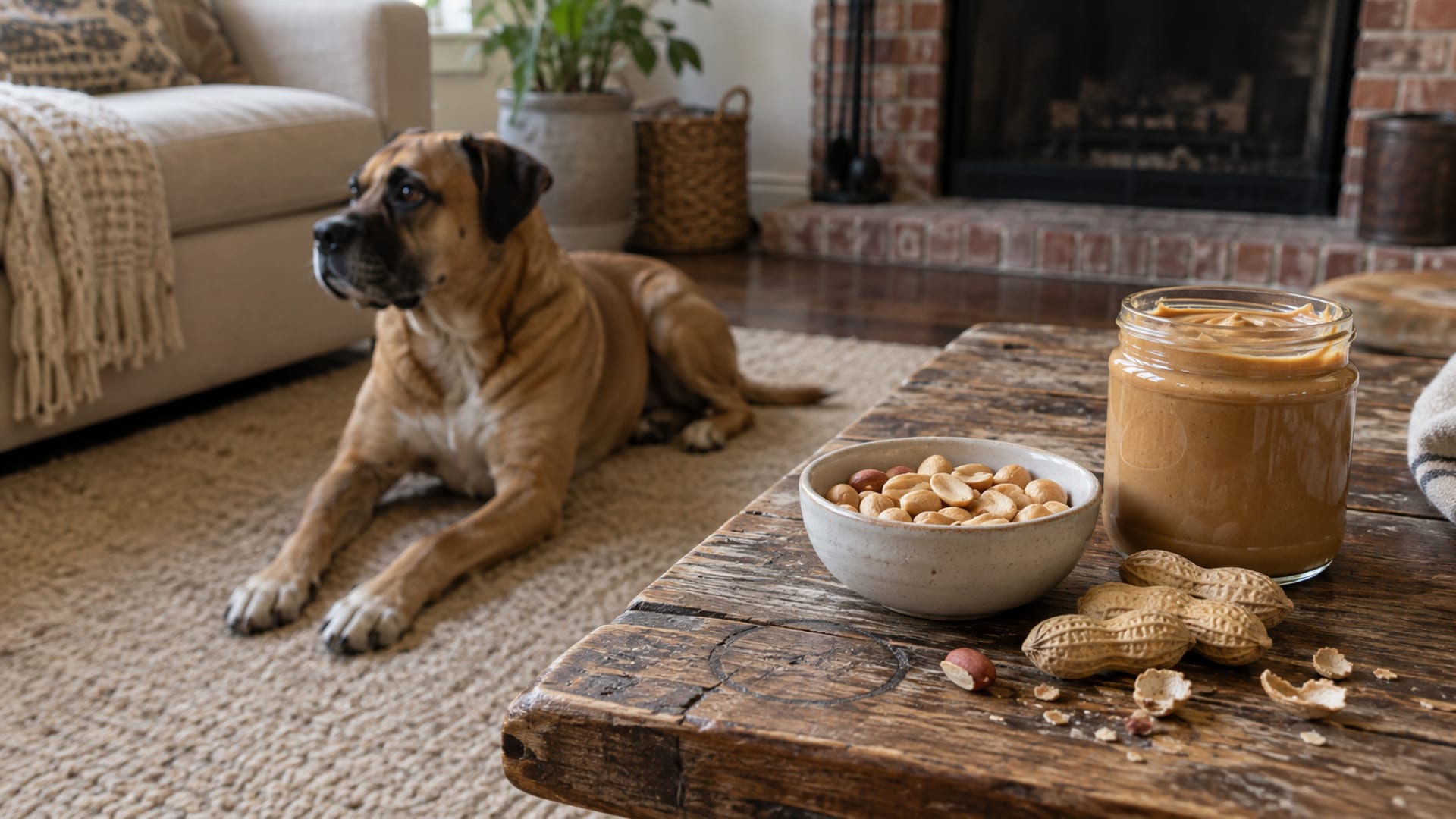
Yes, a few. The AKC says plain peanuts, raw or dry-roasted, unsalted and out of the shell, are fine for most dogs as an occasional treat. Peanuts are rich in fat, though, and salted snack peanuts, shells, moldy nuts and some peanut butters each bring a separate problem.
If your dog grabbed a few plain peanuts, keep an eye out for vomiting or diarrhea over the next day. If they got into peanut butter that is sugar-free or lists xylitol, call your vet or a poison line right away.
Key takeaways
Tap a card to bring it forward.
- A few plain, shelled, unsalted peanuts are fine for most healthy dogs now and then.
- Peanuts are high in fat, which can cause vomiting, diarrhea or pancreatitis.
- Salted, honey-roasted and spicy peanuts are best kept for people.
- Shells can choke a dog or block the gut, especially in small dogs.
- Peanut butter with xylitol, also sold as birch sugar, is an emergency.
My dog ate peanuts: what to do
Tap or hover a row to highlight it.
| What they ate | What to do |
|---|---|
| What they ateA few plain peanuts | What to doNothing beyond watching for an upset stomach |
| What they ateA bowlful of salted or flavored peanuts | What to doCall your vet, especially for a small dog. Watch for thirst, vomiting, diarrhea or shaking. |
| What they atePeanuts in the shell, or a pile of shells | What to doCall your vet if your dog is small, or if vomiting, belly pain, not eating or straining starts |
| What they atePeanut butter that is sugar-free, keto or lists xylitol or birch sugar | What to doCall now, even if your dog seems fine |
| What they ateChocolate-covered peanuts or peanut candy | What to doCall now; the chocolate is the concern |
| What they ateMoldy or spoiled peanuts | What to doCall your vet |
For xylitol, the FDA's advice is plain: "call your vet, emergency clinic, or animal poison control center right away". Have the jar or the ingredient list in hand when you call, along with how much your dog ate and what they weigh.
Which peanuts and peanut products are okay
Tap or hover a row to highlight it.
| Form | Okay for dogs? | What to know |
|---|---|---|
| FormPlain raw peanuts, shelled | Okay for dogs?Yes, a few | What to knowAKC lists them as fine in moderation |
| FormDry-roasted, unsalted, shelled | Okay for dogs?Yes, a few | What to knowSame as raw |
| FormSalted peanuts | Okay for dogs?Better not | What to knowToo much salt can make a dog seriously ill |
| FormHoney-roasted, candied, barbecue or chili peanuts | Okay for dogs?No | What to knowSugar, salt, oil and spices |
| FormShells, or peanuts still in the shell | Okay for dogs?No | What to knowA choking and blockage risk |
| FormPeanut butter, unsalted with no xylitol | Okay for dogs?Yes, a little | What to knowRead the label every time, since recipes change |
| FormSugar-free, keto or "diabetic" peanut butter | Okay for dogs?Check first | What to knowMay contain xylitol, also called birch sugar or wood sugar |
| FormPowdered peanut butter | Okay for dogs?Depends on the label | What to knowCheck for salt, sugar, flavorings and xylitol |
| FormMoldy, rancid or spoiled peanuts | Okay for dogs?No | What to knowMold on peanuts can produce aflatoxins, which damage the liver |
Sources: AKC, ASPCA, FDA, AKC on food poisoning.
How many peanuts is too many
The AKC suggests "a few peanuts" and not every day. There is no chart by weight, so give a small dog fewer, and break them up if your dog tends to gulp. The AKC also says treats should make up no more than 10% of a dog's diet.
Fat is what limits the amount. The ASPCA warns that nuts are high in oils and fats that can cause vomiting, diarrhea and possibly pancreatitis. If your dog has had pancreatitis, is overweight, has diabetes or a sensitive stomach, ask your vet before sharing peanuts or peanut butter.
Using peanut butter to hide a pill is fine with the right jar. Use a small dab, and check the label of each new jar for xylitol.
Signs to watch for, and when
- Too much fat: vomiting, diarrhea, a sore belly or not eating. A dog with pancreatitis can become quite sick and needs a vet, according to the Merck.
- Too much salt: heavy thirst and peeing, vomiting, diarrhea, dullness, tremors and, in severe cases, seizures (ASPCA).
- Xylitol: vomiting, then weakness, wobbling, collapse or seizures from low blood sugar. The FDA says signs can start within 10 to 60 minutes, and liver damage may show up 12 to 24 hours later.
- A stuck shell: repeated vomiting, belly pain, tiredness, not eating, or straining without passing stool, according to the AKC.
- Moldy peanuts: not eating, tiredness, vomiting, diarrhea, and yellow gums or eyes (AKC).
Any of these is a reason to call your vet.
"My dog eats peanuts all the time and never has a problem"
That can be true. Plain peanuts have no known poison for dogs, and a big dog eating a few now and then may never show a thing. What happened with your dog still does not carry over to every dog or every bag. A small dog gets far more fat and salt for its size from the same handful. Snack peanuts vary in salt and oil. A dog with a history of pancreatitis can react to a fat load another dog shrugs off. A jar that changed its recipe can add xylitol without you noticing, and its worst effects can come a day later. Keep the portion small and read the label.
Other nuts, peanut candy and look-alikes
- Tree nuts: peanuts are legumes, and what holds for them does not carry over to macadamia nuts, walnuts, pecans, almonds, pistachios or acorns. Each has its own risks, so check before sharing, according to the AKC.
- Trail mix: often contains raisins, which can cause kidney failure. Can dogs eat grapes? explains what to do.
- Peanut candy and chocolate peanuts: the chocolate and sugar outweigh the peanut.
- Japanese peanuts and other coated snack peanuts: processed snacks with salt, oil and flavorings. Keep them for people.
- Peanut butter cookies and bars: check for chocolate, xylitol and raisins.
- Peanut oil: very high in fat. Skip it as a treat.
Check what you learned
Quick check
Questions about dogs and peanuts
What nuts can dogs not eat?
Peanuts are the easy case. Macadamia nuts, walnuts, pecans, almonds, pistachios and acorns each carry their own risks, so look each one up before sharing. Any nut that is moldy, salted, candied or covered in chocolate is off the list.
Can dogs eat peanut butter?
Yes, a small amount, if it has no xylitol and little or no salt. Check the ingredient list on every jar.
Can dogs eat salted peanuts?
Not as a regular treat. Salt adds up fast, and a bowlful brings too much salt and fat at once, especially for a small dog.
What if my dog ate peanut shells?
Call your vet if your dog is small or swallowed a lot of shells, and watch for vomiting, belly pain, not eating or straining. Shells can cause choking or a blockage.
Can puppies eat peanuts?
The same plain, shelled peanuts apply, in smaller pieces and smaller amounts. Keep shells out of reach, since puppies tend to swallow what they find.
Are peanuts bad for cats?
Plain peanuts are not known to poison cats, but the same fat, salt, shell and mold concerns apply. The FDA notes that xylitol seems less dangerous to cats, and a cat that ate a xylitol product still needs a call to the vet.
Sources
Checked September 24, 2026.
- American Kennel Club, Can Dogs Eat Peanuts?
- American Kennel Club, Can Dogs Eat Peanut Butter?
- American Kennel Club, Intestinal Blockage in Dogs
- American Kennel Club, Can Dogs Eat Acorns and Other Tree Nuts?
- American Kennel Club, Food Poisoning in Dogs
- ASPCA, People Foods to Avoid Feeding Your Pets
- U.S. Food and Drug Administration, Paws Off Xylitol; It's Dangerous for Dogs
- U.S. Food and Drug Administration, Paws Off! Xylitol is Toxic to Dogs
- Merck Veterinary Manual, Pancreatitis in Dogs and Cats