

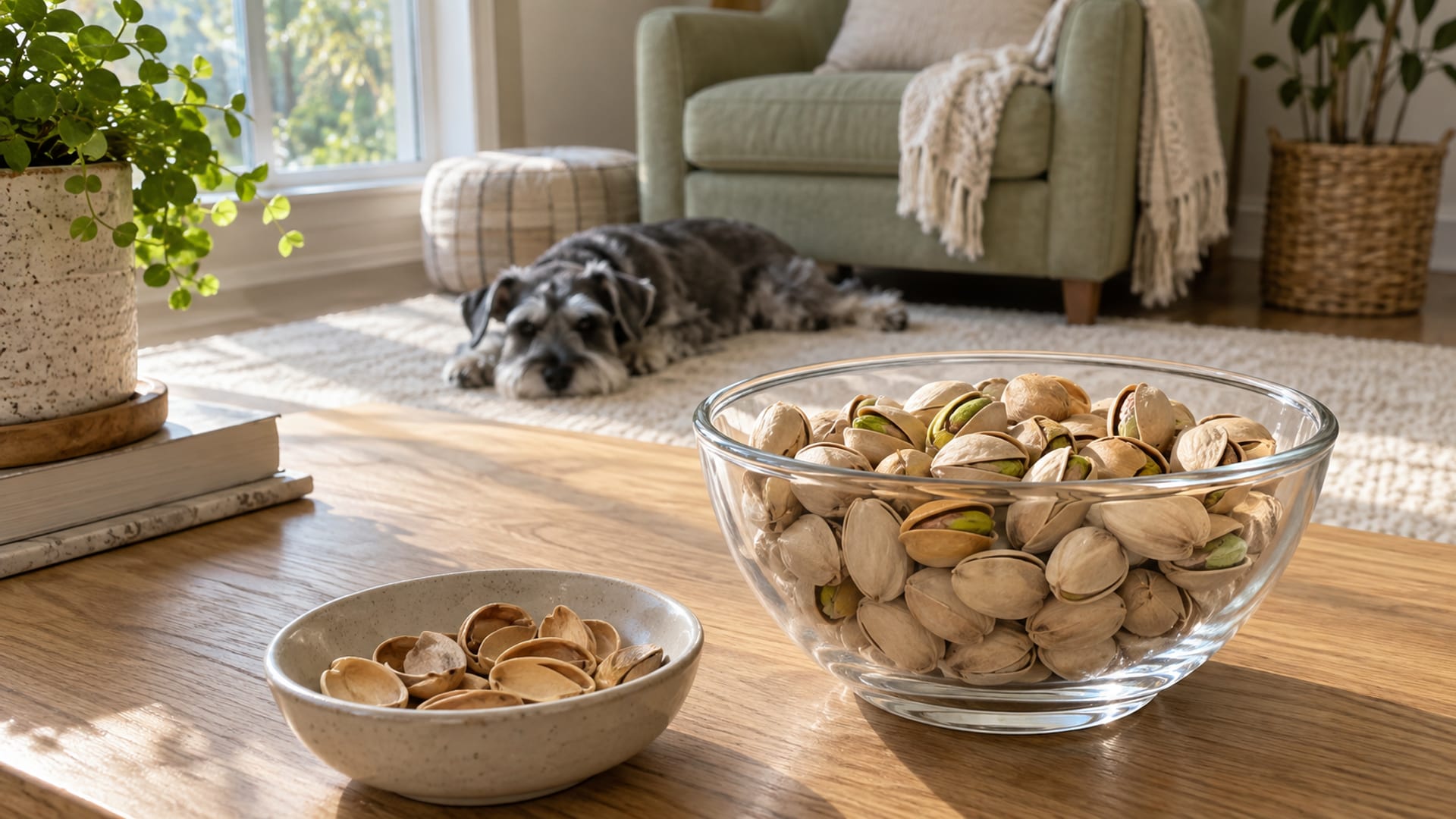
It is better not to share them. Pistachios are "not in themselves toxic to dogs," according to the American Kennel Club, which still advises keeping them away from dogs because they are high in fat and salt and can cause stomach upset or choking. The shells are the bigger worry, since they can lodge in a dog's throat.
If your dog snapped up one or two plain, shelled pistachios, keep an eye on them today; that is usually all it takes. If they cracked into a bag with shells, ate a big handful, got into salted or seasoned nuts, or licked up pistachio ice cream or baklava, call your vet or a pet poison line and have the package in hand.
Key takeaways
Tap a card to bring it forward.
- A plain, shelled pistachio is not poisonous to dogs. It is still a poor treat.
- Shells can choke a dog or get stuck in the throat or gut. Treat swallowed shells as a reason to call.
- Pistachios are fatty and usually salted, and a big fatty snack can upset the stomach.
- Moldy pistachios are a separate risk: some molds make aflatoxin, which can damage the liver.
- Pistachio desserts and spreads can hide chocolate, xylitol or alcohol. Read the label.
Your dog ate pistachios: sorting out what happened
Start by moving the bag or bowl out of reach and checking your dog's mouth for shell pieces. Then work out what they got into.
Tap or hover a row to highlight it.
| What they ate | What to do |
|---|---|
| What they ateOne or two plain, shelled kernels | What to doWatch today for vomiting, loose stool or a sore belly. |
| What they ateA handful or more, or any amount in a small dog | What to doCall your vet for advice. Have your dog's weight and a rough count. |
| What they ateShells, whole or in pieces | What to doCall your vet. Watch for gagging, retching or trouble swallowing. |
| What they ateSalted, chili, garlic or barbecue pistachios | What to doCall. Tell them the seasoning from the label. |
| What they ateNuts that looked moldy, shriveled or off | What to doCall your vet or a poison line and keep the bag. |
| What they atePistachio ice cream, pudding, cookies, baklava or spread | What to doRead the ingredients for chocolate, xylitol, raisins or alcohol, then call. |
The ASPCA's poisoning advice fits here: get your pet away from the food, gather the packaging so you know what and how much, and reach a vet or poison control before you try anything at home. It also says not to wait for signs when a pet may have eaten something harmful, because some effects are delayed.
Head to a clinic now if your dog is choking, struggling to breathe, collapses or has a seizure.
Shelled, salted, roasted: which pistachios matter most
Tap or hover a row to highlight it.
| Form | For dogs | Why |
|---|---|---|
| FormPlain kernel, raw or dry-roasted, no salt | For dogsNot toxic, still not recommended | WhyHigh in fat; large amounts upset the stomach (AKC) |
| FormSalted kernels | For dogsSkip | WhyMore sodium on top of the fat |
| FormShells | For dogsNever | WhyCan lodge in the throat or block the gut |
| FormSeasoned (chili, garlic, barbecue) | For dogsSkip | WhyThe seasoning adds its own problems |
| FormMoldy or spoiled nuts | For dogsNever | WhyMay carry aflatoxin from mold |
| FormPistachio butter, paste, flour | For dogsCheck the label | WhyFat, sugar, salt, and sometimes xylitol or chocolate |
| FormIce cream, pudding, cookies, baklava | For dogsSkip | WhySugar, fat, and possible chocolate, xylitol or alcohol |
| FormPistachio oil | For dogsSkip | WhyConcentrated fat |
The FDA names pistachios among the foods prone to aflatoxins, poisons made by certain *Aspergillus* molds, and says a large aflatoxin exposure can cause liver failure in people. Pistachios sold in the US are tested for aflatoxin under a joint FDA and USDA agreement, so an ordinary bag and a moldy bag found at the back of the pantry are two different exposures.
How many pistachios is too many?
Nobody publishes a pistachio count for dogs, and the AKC's advice is to skip them. If one ends up in your dog anyway, the least risky version is a single plain, unsalted, shelled kernel with nothing on it.
What raises the stakes is fat. The Merck Veterinary Manual lists dietary indiscretion, meaning a dog eating something rich or unusual, as a common suspected trigger for pancreatitis, though most cases have no clear cause. A bowl of pistachios is exactly that kind of meal. Take more care with:
- Small dogs. The same handful is a far bigger dose for a Yorkie than for a Labrador, and a shell is a bigger obstacle in a narrow throat.
- Dogs who have had pancreatitis, or who carry high blood fats. Merck names high triglycerides as a risk factor.
- Breeds Merck lists as more prone to pancreatitis: Miniature Schnauzers, Yorkshire Terriers, Cocker Spaniels, Dachshunds, Poodles and sled dogs.
- Dogs with diabetes or on a low-fat prescription diet. Ask your vet before sharing any nut.
Signs to watch for over the next few days
Stomach trouble from a nut binge usually looks like vomiting, diarrhea, not wanting to eat, a tender belly or low energy. Merck lists vomiting, loss of appetite, weakness, belly pain, dehydration and diarrhea as signs of pancreatitis, which can show up later than a simple upset stomach.
A stuck shell tends to show up as gagging, pawing at the mouth or trouble swallowing right away, or later as repeated vomiting, belly pain and no stool. Call your vet if you see any of them.
"My dog steals pistachios all the time and never gets sick"
Some dogs really do raid the snack bowl for years without a problem, and that can be true of yours. It just does not predict the next raid. What your dog got last time may have been a few shelled kernels from a fresh bag; next time it could be a whole bag with the shells, a salted batch, or nuts that sat in a damp cupboard. The same amount lands harder on a small dog. Dogs also differ in how prone they are to pancreatitis, and the ASPCA points out that some effects take time to appear. Keep the snack bowl up high, and empty the shell dish before it becomes a chew toy.
Pistachio ice cream, baklava and other look-alikes
- Pistachio ice cream and gelato: sugar and dairy fat, and some flavors or mix-ins include chocolate. Can dogs eat ice cream? covers the dairy side.
- Baklava: high in sugar and fat, and recipes vary. Too rich for a dog.
- Pistachio pudding and "pistachio salad": may contain dairy, sugar, marshmallows, fruit and other nuts.
- Pistachio butter and cream spreads: check for xylitol, chocolate, sugar and salt before assuming it is like plain nuts.
- Pistachio milk and flavored drinks: may contain little pistachio and plenty of sugar, sweetener or caffeine.
- "Pistachio-flavored" anything: the flavor may come from flavoring, not nuts. Judge the full ingredient list.
- Mixed nuts: the bowl may also hold other nuts. Our entries on almonds, cashews and peanuts cover those.
Check what you learned
Quick check
Questions about dogs and pistachios
How many pistachios can a dog eat?
There is no safe count to go by. The AKC recommends not feeding them at all. One plain, shelled kernel is unlikely to cause trouble in a healthy medium or large dog; a handful, salted nuts or shells call for a word with your vet.
What should I do if my dog ate a pistachio?
For a single plain kernel, keep watch for vomiting or diarrhea over the next day. If it was in the shell, salted, one of many, or part of a dessert, call your vet with the package.
Which nuts can dogs not eat?
The Pet Poison Helpline food guide puts pistachios on its list of nuts to avoid, and the AKC's page on tree nuts warns about choking, stomach upset and mold across the group. Check the entry for the specific nut, since the answer changes from one to the next.
Can pistachios give a dog pancreatitis?
They can contribute. Merck ties pancreatitis to dogs eating rich or unusual food, especially dogs already at risk, but it does not name pistachios as a direct cause.
Are pistachio shells dangerous for dogs?
Yes. The AKC says shells can lodge in the throat, and a swallowed piece can get stuck further down. Call your vet if your dog swallowed shells.
Can cats eat pistachios?
Cats face the same shell, fat, salt and mold problems. Keep them out of reach of both pets.
Sources
Checked September 24, 2026.
- American Kennel Club, Can Dogs Eat Pistachios?
- American Kennel Club, Can Dogs Eat Acorns and Other Tree Nuts?
- ASPCA, What to Do if Your Pet Is Poisoned
- US Food and Drug Administration, Mycotoxins
- US Food and Drug Administration, MOU 225-26-004 with USDA Agricultural Marketing Service
- Merck Veterinary Manual, Pancreatitis in Dogs and Cats
- Pet Poison Helpline, Toxic and Hazardous Food Guide for Pets