
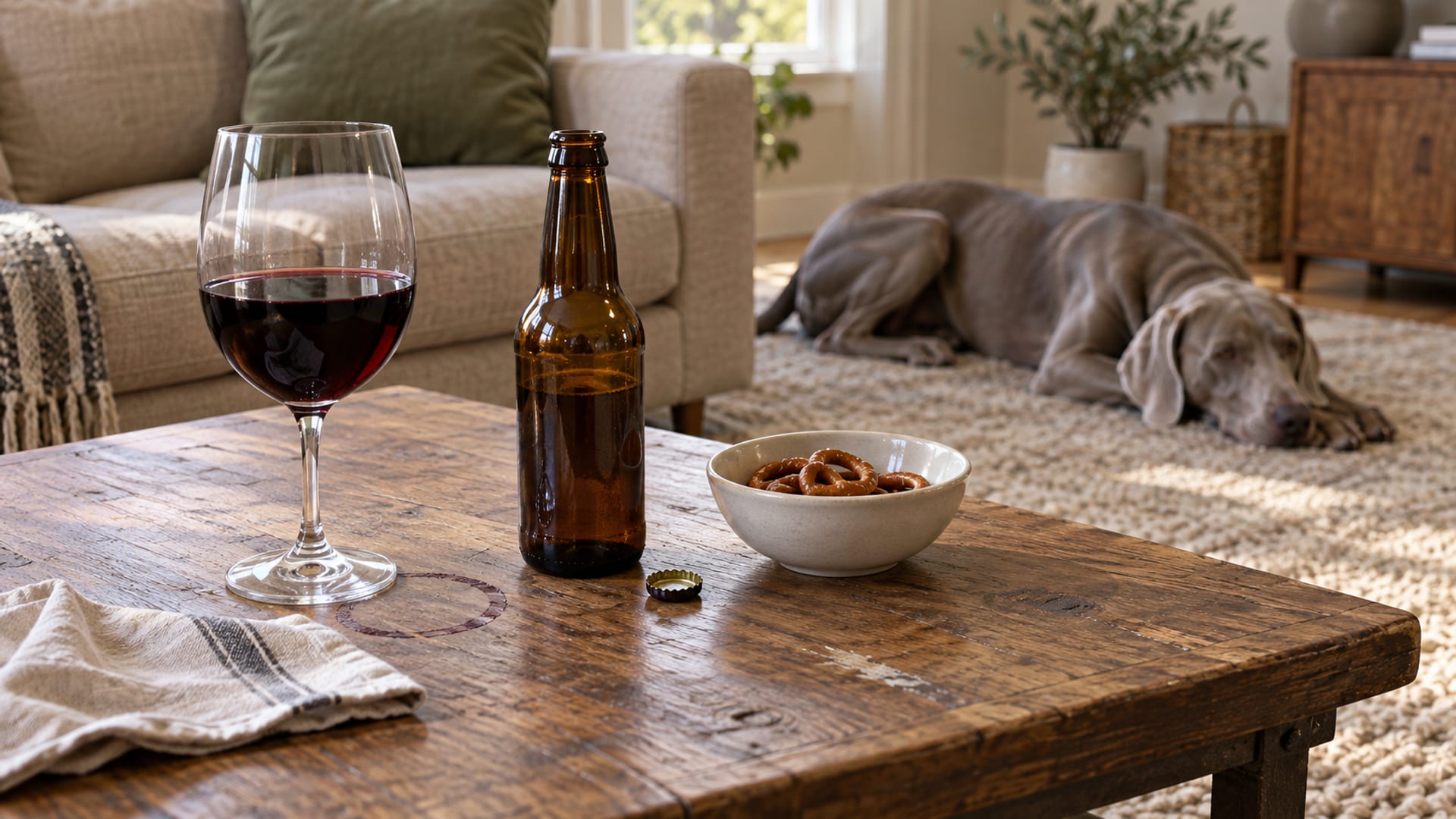
No. Dogs should never be given alcohol in any form. If your dog drank beer, wine, liquor or a cocktail, or ate rum cake, liquor-filled candy or raw bread dough, call your vet, an emergency vet or a pet poison line now, even if your dog seems completely normal. Go in right away if you see stumbling, vomiting, weakness, heavy sleepiness or slow breathing.
The ingredient that does the harm is ethanol, the alcohol in drinks. The Merck Veterinary Manual describes it depressing a dog's nervous system quickly, which can bring on drunkenness, low blood sugar, low body temperature and slowed breathing, and in severe cases seizures, coma and death. How bad it gets depends on the drink's strength, the amount and your dog's size, and the person on the phone can judge that before your dog shows anything.
Key takeaways
Tap a card to bring it forward.
- Never give a dog beer, wine, liquor, cocktails or any food made with alcohol, even a sip.
- After any known drink or bite, call your vet or a pet poison line now, with the product, its strength, the amount, the time and your dog's weight in hand.
- Signs often start within 30 to 60 minutes, and small, young and toy dogs are at more risk from the same amount.
- Raw yeast dough makes alcohol inside the stomach, so it counts as an alcohol exposure too.
- Rubbing alcohol, hand sanitizer, windshield-washer fluid and antifreeze are different poisons with their own emergencies.
What to do right now if your dog drank alcohol
Work through these in order. Each one gives the vet or poison specialist something they will ask for.
- Move your dog away and keep what is left. Keep the glass, can, bottle or dessert out of reach but don't throw it out, because the label or recipe shows how strong it was.
- Figure out what it was and how strong. The American Kennel Club notes that hard liquor usually packs more ethanol per sip than beer, so read out the percentage on the label.
- Estimate how much and when. A few licks from a nearly empty glass is a different call from a full drink, and the time shows the vet how far along your dog is.
- Know your dog's weight. The same pour means a bigger dose for a smaller body, which is why the AKC flags toy breeds as more at risk from a smaller amount.
- Call now, before any signs. Pet Poison Helpline advises contacting your vet or their line immediately after a pet drinks alcohol, and says to seek treatment right away if your pet shows signs.
- Stay with your dog and skip home remedies. Keep your dog in sight, and give no food, medicine or online remedy unless the vet tells you to.
At the clinic, care may include watching and supporting breathing and correcting low blood sugar or body temperature, according to Merck. I would much rather you make a call that turns out unneeded than wait on a dog that keeps getting quieter.
Which drinks and foods carry alcohol
Almost anything made with beer, wine or spirits can carry ethanol. These are the forms people run into most.
Tap or hover a row to highlight it.
| Form | What makes it a problem | What to do |
|---|---|---|
| FormBeer, cider, hard seltzer | What makes it a problemEthanol, usually less per ounce than liquor | What to doCall your vet or a poison line |
| FormWine, champagne | What makes it a problemEthanol, at the strength printed on the label | What to doCall your vet or a poison line |
| FormVodka, whiskey, rum, tequila, gin, bourbon | What makes it a problemMore ethanol per ounce than beer | What to doCall now |
| FormCocktails, mixed drinks, spiked eggnog | What makes it a problemEthanol plus mixers that may add their own hazards | What to doCall now, with the recipe |
| FormRum cake, liquor-filled chocolate | What makes it a problemLeftover ethanol, often with chocolate, raisins or fat | What to doCall now |
| FormRaw yeast dough | What makes it a problemYeast keeps producing ethanol and gas in the stomach | What to doCall now |
| FormNon-alcoholic beer | What makes it a problemMay still hold some ethanol, plus hops, grapes, caffeine or xylitol | What to doRead the label, then call |
| FormDog beer | What makes it a problemSold as an alcohol-free pet drink | What to doRead its own ingredient list |
Raw bread and pizza dough are easy to overlook. Pet Poison Helpline explains that the yeast keeps fermenting in the warm stomach, producing both ethanol and carbon dioxide, so a dog can end up drunk and bloated from a lump of rising dough. Finished, cooled bread is a different item.
Cooking can lower the alcohol in a dish, but how much stays depends on the recipe, heat and time, so treat anything soaked in or glazed with liquor as a real exposure. Our beer entry covers beer on its own.
How much alcohol is too much for a dog
There is no amount of alcohol that is safe to give a dog. The figures below describe serious or lethal doses, and signs can show up well below them.
Tap or hover a row to highlight it.
| Substance | Published figure for dogs | Source | What it means |
|---|---|---|---|
| SubstanceEthanol (drinking alcohol) | Published figure for dogs5.5 to 7.9 g of pure ethanol per kg is a lethal range | SourceAKC | What it meansA lethal range, with illness possible far below it |
| SubstanceIsopropanol (rubbing alcohol) | Published figure for dogs0.5 mL per kg or more can cause serious signs | SourceMerck | What it meansAbout twice as toxic as ethanol |
| SubstanceMethanol (some washer fluids) | Published figure for dogs4 to 8 mL per kg is a lethal range | SourceMerck | What it meansNotable signs possible at lower doses |
Those ethanol numbers are for pure alcohol, and every drink is diluted to a different strength, which is why the call matters more than any math at home.
Size matters most. A toy breed that finishes a glass gets a far bigger dose per pound than a large dog, and the AKC says a smaller amount is more dangerous for toy breeds. Pet Poison Helpline adds that young animals are especially prone to low blood sugar and low body temperature after alcohol.
Health counts too. In a review for Today's Veterinary Practice, veterinary toxicologist Tina Wismer, writing with the ASPCA Animal Poison Control Center, notes a more guarded outlook for dogs with existing disease, vomit in the lungs or other swallowed material. Because ethanol can drop blood sugar, a dog with diabetes deserves an especially fast call.
Signs to watch for over the next few hours
Alcohol moves fast. Merck says signs generally begin within 30 to 60 minutes, and Pet Poison Helpline reports they can appear within minutes. Blood levels commonly peak around 1.5 to 2 hours after drinking, so a dog that looks okay soon after drinking can still get worse.
Early signs include vomiting, drooling, diarrhea, disorientation and a dog that seems drunk or unusually tired. A dog that feels cold or can't be roused is in serious trouble. Go to a vet now for any of these:
- stumbling, wobbling or falling over
- vomiting, especially with sleepiness
- heavy sleepiness or trouble rousing
- weakness or collapse
- slow, shallow or strange breathing
- tremors or seizures
A very sleepy dog needs to be seen, never left to sleep it off alone. A groggy dog that vomits can breathe some of it into its lungs, a complication Wismer says makes recovery harder.
My dog drank beer before and was fine
That may well be true, and I believe you. A dog can lap up a little spilled beer and show nothing afterward. It just isn't a rule you can count on for the next time or a different dog, for specific reasons.
- The amount was probably small. A lick from a nearly empty can is far less than a swallowed drink.
- The dog's size changes the dose. The same splash that did nothing to a big dog is a much bigger dose for a small one.
- Strength varies. Light beer, wine, liquor and rum cake deliver very different amounts of ethanol.
- The form matters. A baked dessert may hold less alcohol than a liquor-soaked one, and raw dough keeps producing it after it is eaten.
- Every dog is different. Age, health and individual response change how a dog handles the same exposure.
- Early signs are easy to miss. Signs usually come quickly, and a dog that slept it off in another room may have had symptoms nobody saw.
The dog in your story was real, and so was the outcome. One good result still doesn't make any amount safe, and the phone call costs a few minutes.
Products that get confused with drinking alcohol
The word "alcohol" covers several chemicals, some more dangerous than anything in a glass. Check the label for the active ingredient before you call.
- Rubbing alcohol (isopropyl alcohol). Found in rubbing alcohol, some hand sanitizers and some flea sprays. Merck rates it about twice as toxic as ethanol.
- Hand sanitizer. It relies on alcohol, sometimes isopropyl alcohol, and Pet Poison Helpline lists sanitizer among common household exposures.
- Windshield-washer fluid. Some contain methanol, a separate poison with its own toxic byproducts.
- Antifreeze (ethylene glycol). A dog on antifreeze can look drunk at first, but Merck explains that it attacks the kidneys and needs its own emergency treatment, so say "antifreeze" clearly on the phone.
- Mouthwash and liquid medicines. Wismer lists both among household alcohol sources.
- Fermented or rotting fruit. Fallen fruit that has started to ferment can carry alcohol too, according to Wismer.
Drinks bring other ingredients along too. Sangria may hold grapes and raisins, desserts may carry chocolate, and coffee liqueurs add caffeine, covered in our coffee entry. Mention every ingredient you know about.
Prevention mostly comes down to height and habit. Drinks left on coffee tables and porch steps at a party sit right at nose level. Pick up glasses as guests leave, let dough rise out of reach, and store sanitizer, mouthwash and washer fluid behind a closed door.
Check what you learned
Three quick questions to lock in the parts that matter most tonight.
Quick check
Questions about dogs and alcohol
These come up after the first call, once things have calmed down a little.
How long does alcohol poisoning last in a dog?
Most dogs in the ASPCA review recovered within 12 to 24 hours with proper care, according to Wismer. Dogs with larger doses or complications can take longer. Your vet will tell you what to watch for once you are home.
Is dog beer safe to give my dog?
The AKC describes dog beer as an alcohol-free drink usually made from water or broth with vegetables, fruit, grains or herbs. It is a different product from human beer, including the non-alcoholic kind. Read the ingredient list like you would for any treat.
Can alcohol get into my dog through the skin?
It can. Merck reports poisoning from alcohol-based flea sprays absorbed through the skin, and splashes can irritate the eyes. If your dog was soaked in spray or sanitizer, call just as you would for a drink.
Can my dog have one sip of beer at a cookout?
Please don't offer it. The AKC notes that a tiny accidental lick may not make a dog sick, but no amount is safe to share on purpose. Cats are susceptible too, according to Merck, so keep drinks away from every pet.
Sources
Checked September 25, 2026.
- Merck Veterinary Manual, Toxicoses From Alcohols in Animals
- Pet Poison Helpline, Alcohol Is Toxic To Pets
- Pet Poison Helpline, Alcohol Poisoning in Pets
- Pet Poison Helpline, Avoid Alcohol Exposures for Your Pet
- American Kennel Club, Can Dogs Drink Alcohol? Can Dogs Have Beer or Dog Beer?
- Today's Veterinary Practice, Ethanol Toxicosis: A Review