
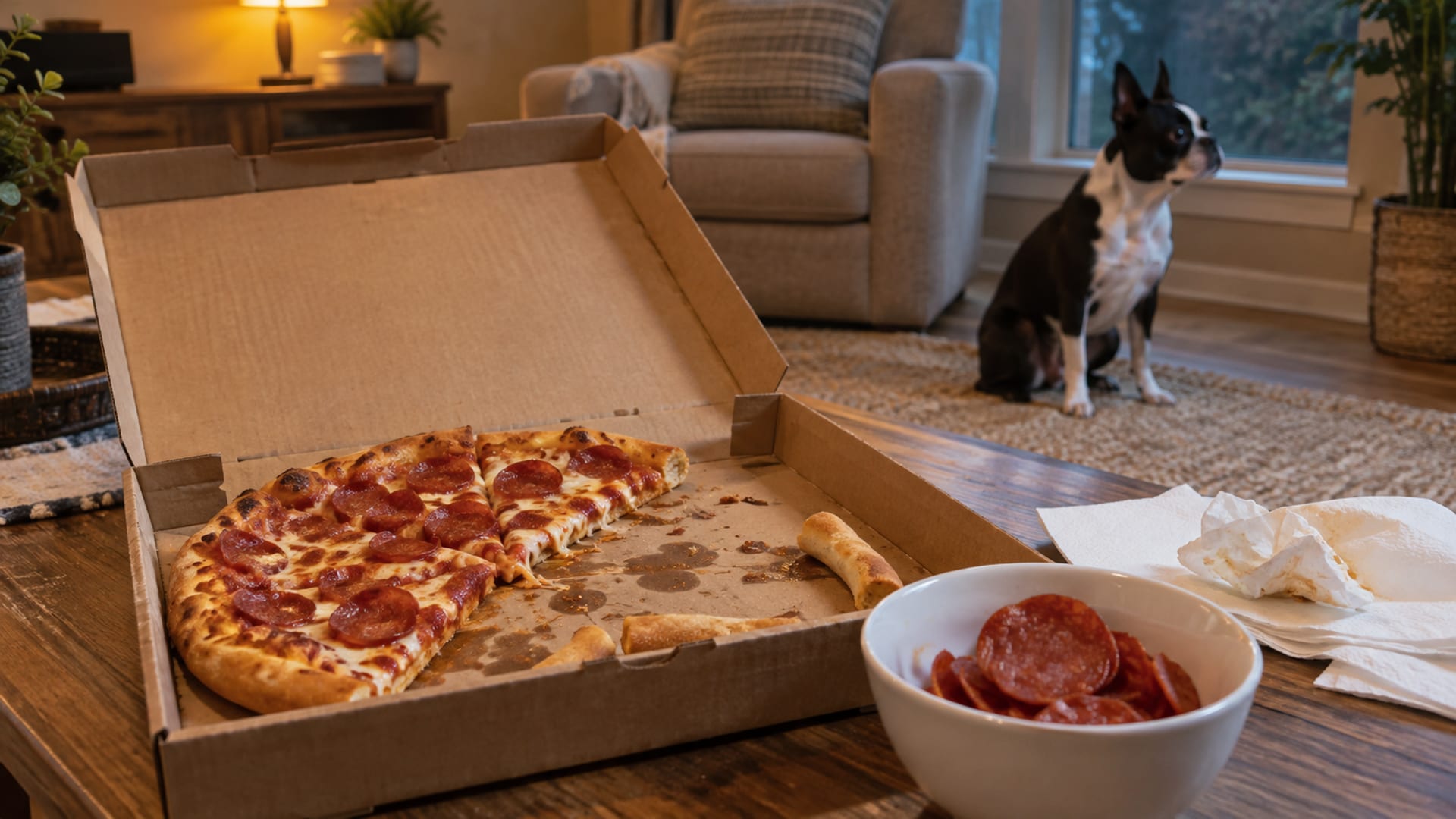
One slice rarely does serious harm, but pepperoni doesn't belong on your dog's treat list. The American Kennel Club advises against feeding it because it is high in fat and salt, it is heavily spiced, and some brands contain onion or garlic.
If your dog snagged a slice off the pizza and seems fine, watch them for the rest of the day. If they cleaned out a bag of pepperoni, ate a pepperoni stick whole, or you can't tell how much is gone, call your vet now rather than waiting for symptoms.
Key takeaways
Tap a card to bring it forward.
- A single slice of pepperoni is unlikely to seriously hurt a healthy, medium or large dog.
- Pepperoni combines fat, salt and seasoning, and any of the three can upset a dog's stomach.
- Pancreatitis is the main worry with fatty foods, especially in older, overweight or pancreatitis-prone dogs.
- Pepperoni made with onion or garlic adds a separate risk to red blood cells.
- Turkey pepperoni and pepperoni pizza carry the same concerns, and pizza adds more fat and salt.
My dog ate pepperoni: the first few minutes
- Move the rest out of reach, including the box, the bag and any grease.
- Keep the package and note the product, how much is missing, the time and your dog's weight.
- Check the ingredients for onion, garlic or garlic powder.
- Call your vet or a pet poison line if your dog ate more than a small bite, you don't know how much, your dog is small, or they have had pancreatitis, kidney disease or another diet-sensitive condition.
- Call even if your dog looks normal. The ASPCA advises owners not to wait for signs to get worse after a pet eats something potentially harmful.
If your dog is choking, struggling to breathe, having a seizure or not responding, the ASPCA's emergency care guidance is to go straight to the nearest veterinary hospital.
Slices, sticks, pizza and turkey pepperoni compared
Tap or hover a row to highlight it.
| What your dog ate | How concerned to be | Why |
|---|---|---|
| What your dog ateOne or two slices of plain pepperoni | How concerned to beLow for a healthy, mid-sized dog | WhyFatty and salty, but a small amount |
| What your dog ateA handful of slices or a whole bag | How concerned to beCall your vet | WhyThe fat and salt add up quickly |
| What your dog atePepperoni pizza | How concerned to beCall if it was more than a bite | WhyCheese, crust, oil and sometimes garlic pile on more fat and salt |
| What your dog ateA whole pepperoni stick or hard, dry pepperoni | How concerned to beWatch for choking; call if it went down whole | WhyDry pieces are dense and can lodge in the throat or gut |
| What your dog atePepperoni grease or drippings | How concerned to beCall if your dog lapped up a lot | WhyGrease is a pancreatitis concern |
| What your dog ateTurkey or chicken pepperoni | How concerned to beSame as regular | WhyStill cured, seasoned and often salty and fatty |
| What your dog atePlant-based pepperoni | How concerned to beRead the label | WhyMeat-free, but sodium, fat and garlic vary |
| What your dog atePepperoni with onion or garlic listed | How concerned to beCall your vet | WhyOnion and garlic can damage red blood cells |
Cooking pepperoni on a pizza does not take out the fat, salt or seasoning. Drying it into a stick or a hard log concentrates those ingredients by weight, so each bite carries more.
Why the fat in pepperoni worries vets
The ASPCA lists fatty foods as a cause of pancreatitis in pets, and its barbecue safety guide names vomiting, stomach pain and depression as the signs. The Merck Veterinary Manual treats a history of eating something unusual, paired with vomiting and belly pain, as a pointer toward pancreatitis.
Some dogs are more prone to it. Pet Poison Helpline notes that older and overweight dogs are more likely to develop pancreatitis after fatty food, though any dog can. Miniature schnauzers are known to be predisposed to high blood fats and pancreatitis, according to a review in the Journal of Veterinary Internal Medicine.
The link between one fatty snack and pancreatitis is not simple. A 2025 review in the Journal of the American Veterinary Medical Association found the evidence tying dietary fat to naturally occurring pancreatitis limited, and pancreatitis has many possible causes. So, one slice is unlikely to cause it, yet a susceptible dog can still get sick after a small amount.
Salt and seasoning in pepperoni
Salt poisoning takes a lot of salt. The Merck Veterinary Manual puts the first signs in dogs at roughly 2 to 3 grams of salt per kilogram of body weight, with about 4 grams per kilogram able to kill. Those figures are for salt, and they can't be turned into a number of pepperoni slices, because brands vary. What they do show is why size matters: a 10-pound dog reaches trouble on far less pepperoni than a 70-pound dog. Keep fresh water out, since a dog without water handles salt worse.
Seasonings vary by brand. Paprika and chili mainly irritate the stomach, while onion and garlic can harm red blood cells when a dog eats enough. Can dogs eat garlic? and can dogs eat onions? explain that damage.
Signs to watch after pepperoni, early and late
Tap or hover a row to highlight it.
| When | What you may see | What to do |
|---|---|---|
| WhenRight away | What you may seeGagging, coughing, pawing at the mouth, trouble breathing | What to doA piece may be stuck. Go to a vet now. |
| WhenWithin several hours | What you may seeVomiting, diarrhea, thirst, peeing more | What to doCall your vet if it keeps going or your dog is small. |
| WhenHours after a large amount | What you may seeWeakness, stumbling, tremors, seizures | What to doPossible salt poisoning. Go to a vet now. |
| WhenLater on | What you may seeRepeated vomiting, a painful belly, low energy, not eating | What to doPossible pancreatitis. Call your vet. |
Merck notes that vomiting from too much salt tends to start within several hours. Signs of pancreatitis can come later than a simple upset stomach, so a dog that ate a lot and looked fine at first still needs watching afterward.
"My dog grabs pepperoni off the pizza every Friday"
That may have gone fine for years, and it's a real experience. It doesn't make pepperoni safe for every dog, or for your dog every time. A slice or two is a small amount for a big dog, and a much larger one for a small dog. Brands differ in fat, salt and garlic, and a slice off a greasy pizza carries more than a slice from the bag. Dogs differ, too: an older or heavier dog is more prone to pancreatitis, and its signs can appear later. So, if Friday pizza is a ritual, keep your dog's share to something plainer and keep the box closed.
A better treat to share on pizza night
The AKC suggests plain meat, cooked without oil, butter or seasoning, in a small portion, as a far better option than pepperoni. The ASPCA's treat guidance suggests keeping all snacks and people food to no more than 5 percent of your dog's daily calories. A few pieces of plain cooked chicken or plain cooked pork fit that easily.
Pepperoni, pepperoncini and bell peppers
The names get mixed up. Pepperoni is a cured sausage, usually pork, beef or both, seasoned with paprika and chili. Pepperoncini are mild pickled peppers often served with pizza. A fresh bell pepper is a vegetable with a very different risk profile, covered in can dogs eat bell peppers?
Check what you learned
Quick check
Questions about dogs and pepperoni
My dog ate one slice of pepperoni. Is it an emergency?
Usually not, for a healthy dog. Watch for vomiting, diarrhea, belly pain, low energy or unusual thirst. Call your vet if you aren't sure how much was eaten or your dog has health problems.
Is turkey pepperoni safe for dogs?
It carries the same concerns. Turkey pepperoni can still be high in sodium, fat and seasoning, so it makes a poor treat too.
Can pepperoni cause pancreatitis in dogs?
It can contribute. Fatty table scraps are a recognized risk, especially for older, overweight or pancreatitis-prone dogs, though one fatty snack does not predict who will get sick.
What if my dog ate pepperoni pizza?
Treat it as pepperoni plus extra fat and salt from the cheese, crust and oil. Check the toppings for onion or garlic, and call your vet for more than a bite or for a small dog.
What if the pepperoni had garlic or onion in it?
Call your vet or a pet poison line with the package. How much garlic or onion your dog took in depends on the product and the amount.
Can puppies eat pepperoni?
Skip it. Puppies are small, so a slice is a bigger dose of fat and salt for them, and vomiting or diarrhea can leave a puppy dehydrated.
Sources
Checked September 24, 2026.
- American Kennel Club, Can Dogs Eat Pepperoni?
- ASPCA, My Pet Ate Something! When Should I Seek Help?
- ASPCA, Emergency Care for Your Pet
- ASPCA, What BBQ Staples are Dangerous to My Pet?
- ASPCA, Sharing is Caring: Foods You Can Safely Share with Your Pet
- Merck Veterinary Manual, Pancreatitis in Dogs and Cats
- Merck Veterinary Manual, Salt Toxicosis in Animals (updated September 2024)
- Pet Poison Helpline, Kitchen Toxins To Pets
- Cridge and others, Journal of Veterinary Internal Medicine, New insights into the etiology, risk factors, and pathogenesis of pancreatitis in dogs
- Yamka and others, Journal of the American Veterinary Medical Association, High fat, high risk? Evaluating the strength of evidence linking dietary fat and pancreatitis in dogs