

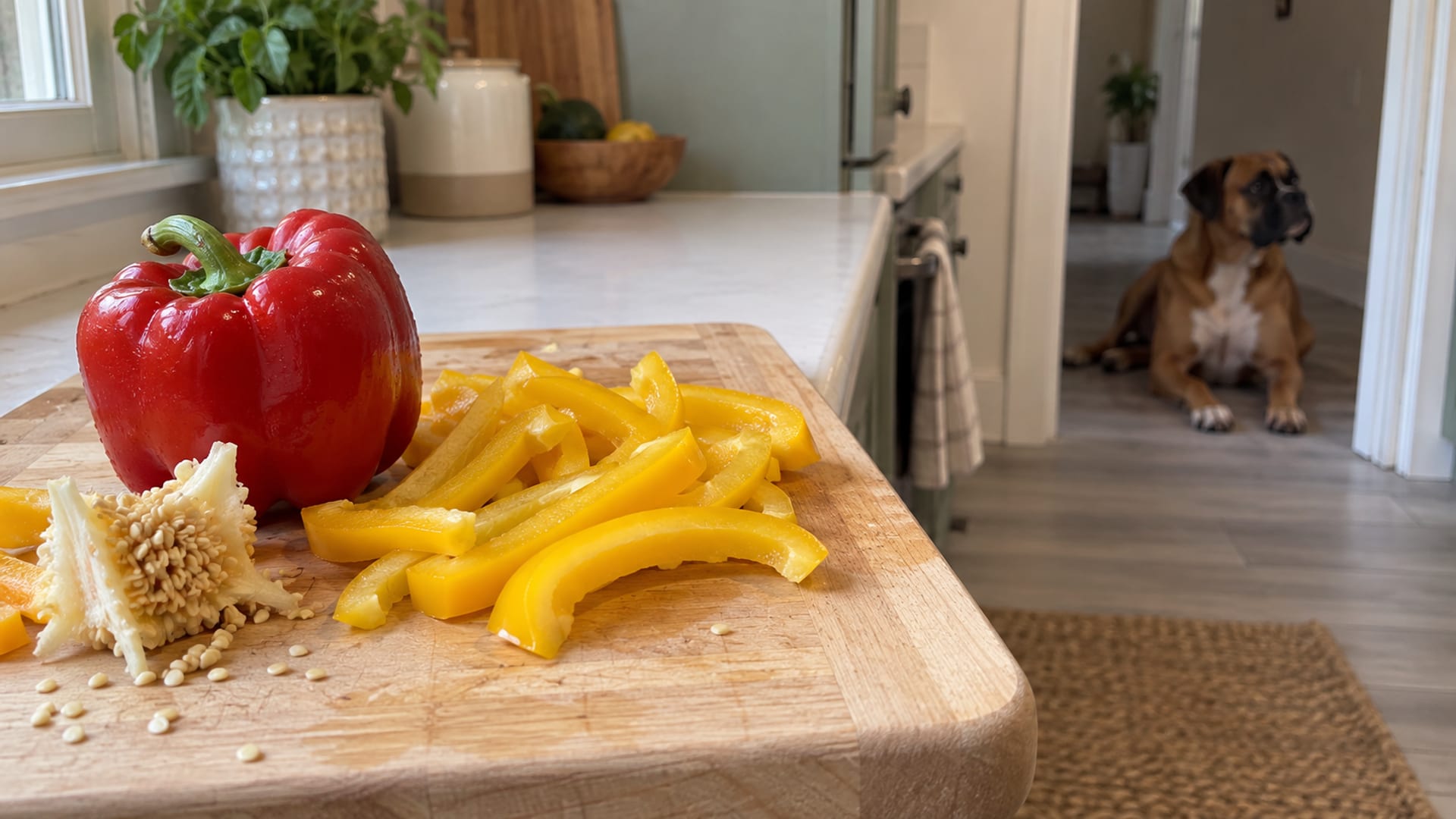
Yes. Bell peppers are not toxic to dogs, according to the AKC, and a few small pieces of plain red, green, yellow or orange pepper make a fine snack. Take out the stem and seeds first and serve it with nothing added.
If your dog ate a strip of bell pepper, all you need to do is watch for an upset stomach. If it was a hot pepper, a leaf or plant from the garden, an ornamental pepper, or a dish cooked with onion and garlic, the next section tells you when to call.
Key takeaways
Tap a card to bring it forward.
- Plain, ripe bell pepper of any color is safe for most dogs in small amounts.
- Remove the stem and seeds, and cut it small. Steaming or pureeing makes the skin easier to digest.
- A small dog gets less than a quarter of a pepper at a time; a large dog less than half.
- Hot peppers, pepper plant leaves and ornamental peppers are different; they can irritate the gut or be toxic.
- Stuffed peppers, fajitas and salsa usually bring onion, garlic, salt or spice.
Your dog already ate bell pepper: what to do now
Tap or hover a row to highlight it.
| What they ate | What to do |
|---|---|
| What they ateA few pieces of plain bell pepper | What to doNothing. Watch for gas or a loose stool. |
| What they ateMost of a pepper, or several | What to doVomiting or diarrhea may follow. Call your vet if it keeps going. |
| What they ateStem, seeds or a large chunk | What to doWatch for gagging or an upset stomach. Call if your dog chokes or keeps vomiting. |
| What they ateA hot pepper, chili powder or cayenne | What to doCall your vet, especially after a large amount or if your dog is vomiting or seems in pain. |
| What they ateLeaves or plant from the garden, or an ornamental pepper | What to doCall your vet or a pet poison line now. |
| What they ateStuffed peppers, fajitas, salsa or pickled peppers | What to doCheck for onion, garlic, salt, fat or xylitol. Any of those means call now. |
The ASPCA asks you to contact your vet or its poison control center whenever you suspect your pet ate something toxic, and warns that some poisons act late. Before you call, gather the product or plant, how much was eaten, when, and your dog's weight and any health problems.
Call right away for choking, trouble breathing, collapse, seizures, repeated vomiting or heavy diarrhea.
Colors, seeds, cooked and dried: which forms are fine
Tap or hover a row to highlight it.
| Form | Okay? | Why |
|---|---|---|
| FormRaw ripe pepper, any color | Okay?Yes, in small pieces | WhyThe AKC calls it not toxic |
| FormPlain cooked, steamed or pureed | Okay?Yes | WhySofter skin is easier to chew and digest |
| FormSeeds and inner membrane | Okay?Remove them | WhyThe AKC suggests removing them to prevent indigestion |
| FormStem | Okay?Remove it | WhyTough and hard to digest |
| FormLeaves and plant stems | Okay?No | WhyMerck lists solanine and scopoletin in the foliage |
| FormDried pepper or pepper powder | Okay?Use caution | WhyStronger by weight, and products can add salt, onion, garlic or hot pepper |
| FormPaprika | Okay?Check what kind | WhyCan be sweet or hot, or part of a spice blend |
| FormHot peppers of any kind | Okay?No | WhyCapsaicin irritates the mouth and gut |
| FormOrnamental pepper (Jerusalem cherry) | Okay?No | WhyA different plant, toxic to dogs (ASPCA) |
Color does not change the answer. The AKC says all bell pepper colors carry vitamins and nutrients, and every color still needs a small portion.
The Merck Veterinary Manual groups the pepper plant with plants that irritate the gut. It links the plant to vomiting and diarrhea, notes the leaves contain solanine and scopoletin, and says deadly poisoning is not likely.
How much bell pepper to give, and how to prepare it
The AKC, quoting veterinarian Carly Fox, suggests less than a quarter of a pepper at a time for a small dog and less than half for a large dog. That is a serving guide, and less is fine.
- Wash the pepper and cut out the stem and seeds.
- Slice it into strips or small pieces your dog can chew.
- Steam or puree it if your dog struggles with the skin.
- Serve it plain: no salt, oil, onion, garlic or spice.
- Start with a piece or two, since a new vegetable can upset some stomachs.
Treats of every kind should stay small next to your dog's real meals. The Pet Poison Helpline suggests keeping them to 5 to 10 percent of daily calories. If your dog has pancreatitis, diabetes or kidney disease, ask your vet before adding a new vegetable; seasoned and oily pepper dishes are the bigger worry there.
Signs to watch for after too much pepper
Too much plain bell pepper can bring gas, vomiting, diarrhea or a sore belly. The AKC names upset stomach, vomiting and diarrhea as the result of large portions. Most dogs settle once the food passes. Call your vet if the vomiting or diarrhea is heavy or keeps going, since a dog can get dehydrated.
A hot pepper is a different problem, because capsaicin irritates the mouth as well as the stomach and gut. An ornamental pepper can be more serious: the ASPCA lists stomach upset, possible ulcers in the gut, seizures, depression, slowed breathing and shock.
"My dog grabs peppers off the cutting board and is always fine"
Plenty of dogs do, and plain bell pepper is a low-risk food, so that may well be the whole story for your dog. It still is not a rule for every pepper or every dog:
- How much. The Pet Poison Helpline notes that the amount eaten changes how a dog reacts to nightshade-family plants.
- Dog size. A whole pepper is a lot more for a small terrier than for a mastiff.
- Which pepper. A sweet bell pepper, a jalapeño and a garden pepper plant are three different answers.
- What was on it. Pepper from a fajita pan carries onion, garlic, oil and salt.
- The dog. Allergies and a sensitive gut vary from dog to dog.
- Timing. The ASPCA notes that some poisons act late, so a dog that looks fine at first has not always cleared a risky plant.
Plain pepper, seeded and cut small, keeps the habit a safe one.
Hot peppers, stuffed peppers, paprika and look-alikes
- Jalapeño, chili, cayenne, habanero: hot peppers contain capsaicin, which irritates the gut. Keep them away from dogs.
- Pepper plants and leaves: avoid. The Pet Poison Helpline's page on tomatoes and nightshades says ripe bell peppers are generally fine but the foliage and hot peppers are not. Tomatoes have their own answer: can dogs eat tomatoes?
- Ornamental pepper, Jerusalem cherry, winter cherry: a different plant, toxic to dogs. Call if your dog chewed one.
- Stuffed peppers, fajitas and restaurant dishes: often cooked with onion and garlic. See can dogs eat onions? and can dogs eat garlic?.
- Salsa, pickled and jarred peppers: salt, vinegar, oil and often onion or garlic.
- Black pepper and peppercorns: a different plant altogether; the bell pepper answer does not cover them.
- Pepper spray and capsaicin extract: concentrated capsaicin, not food. Call your vet if your dog got into either.
Check what you learned
Quick check
Questions about dogs and bell peppers
Can dogs eat raw bell peppers?
Yes, in small pieces, if the pepper is plain, ripe and sweet. Take out the stem and seeds first.
Can dogs eat cooked bell peppers?
Yes, if they are plain. Steamed or pureed pepper is easier to digest. Skip anything cooked with salt, oil, onion or garlic.
Are red, green, yellow and orange bell peppers all safe?
Yes. The AKC says all colors are non-toxic and carry vitamins and nutrients. The same small portions apply to each.
Can dogs eat bell pepper seeds?
Take them out. The AKC suggests removing the seeds and stem to help prevent indigestion.
What if my dog ate a hot pepper?
Hot peppers contain capsaicin, which can irritate the mouth and gut. Call your vet if your dog ate a lot, is vomiting, has diarrhea or seems in pain.
Is ornamental pepper the same as bell pepper?
No. Ornamental pepper, also called Jerusalem cherry, is a different plant, and the ASPCA lists it as toxic to dogs because of solanine. Call your vet if your dog chewed one.
Sources
Checked September 24, 2026.
- American Kennel Club, Can Dogs Eat Bell Peppers?
- ASPCA, What to Do if Your Pet Is Poisoned
- ASPCA Animal Poison Control Center, Ornamental Pepper
- Merck Veterinary Manual, Houseplants and Ornamentals Toxic to Animals
- Pet Poison Helpline, Are Tomatoes Poisonous to Dogs?
- Pet Poison Helpline, Nightshade Is Toxic To Dogs
- Pet Poison Helpline, Friendly Fall Foods