
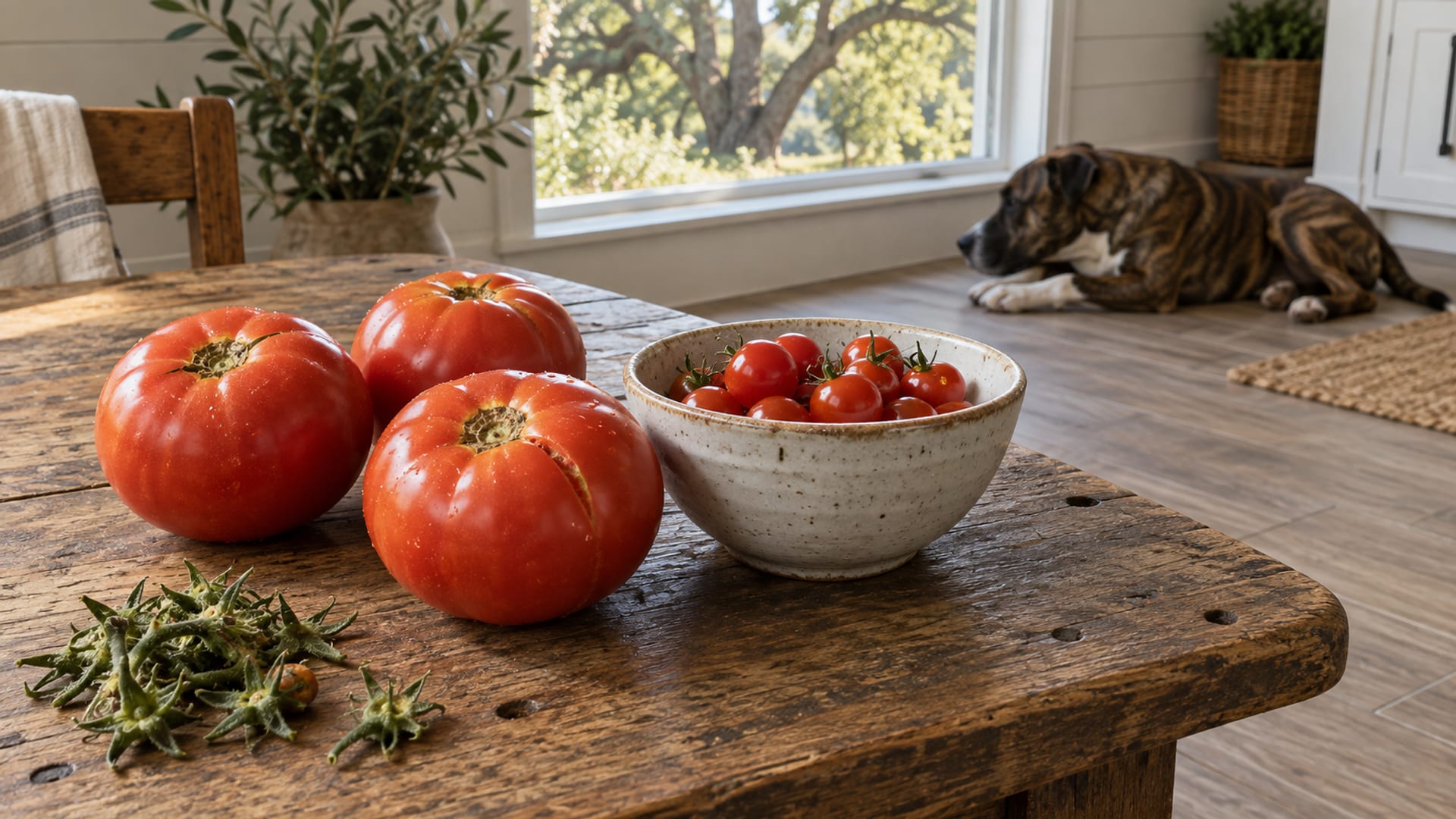
Yes, as long as it is ripe. A few bites of plain, fully ripe red tomato are fine for most dogs, and the ASPCA lists ripe tomato fruit as non-toxic while listing the tomato plant itself as toxic to dogs. The green parts are where the trouble is: leaves, stems, vines, flowers and unripe green fruit carry solanine and tomatine, which can make a dog sick.
If your dog snatched a slice of red tomato off the cutting board, there is nothing to do. If they chewed on the plant, ate green tomatoes, or licked up a sauce made with onion or garlic, the table right below tells you what to do.
Key takeaways
Tap a card to bring it forward.
- Plain, fully ripe red tomato is a fine occasional bite for most dogs.
- Leaves, stems, vines, flowers and green tomatoes contain solanine and tomatine. Keep dogs out of the tomato bed.
- A dog that ate plant parts or green fruit should be checked by a phone call to your vet or a poison line.
- There is no published safe amount by body weight, so your dog's size and how much they ate guide the call.
- Pasta sauce, ketchup, salsa and soup often carry onion, garlic, salt or sugar.
My dog ate tomatoes: what to do next
Tap or hover a row to highlight it.
| What they ate | Your next step |
|---|---|
| What they ateA bite or two of ripe red tomato | Your next stepNothing. A lot at once may bring a loose stool. |
| What they ateA whole ripe tomato or a handful of cherry tomatoes | Your next stepWatch for vomiting or diarrhea. Call your vet if signs appear or if a small dog ate a lot. |
| What they ateGreen tomatoes, leaves, stems, vines or flowers | Your next stepCall your vet or a poison line now, even if your dog seems fine. |
| What they atePasta sauce, pizza, salsa, ketchup or soup | Your next stepRead the label or recipe. Onion or garlic in it means call now. |
Pet Poison Helpline says the amount eaten and the size of the dog both change how risky a tomato plant exposure is. Before you call, work out your dog's weight, which part of the plant they ate, roughly how much, and what time it happened.
Go to a vet right away if your dog is stumbling, trembling, having a seizure, collapsing or struggling to breathe.
Ripe fruit, green fruit and the plant
Tap or hover a row to highlight it.
| Part or form | Okay for dogs? | What to know |
|---|---|---|
| Part or formRipe red flesh, raw | Okay for dogs?Yes, a little | What to knowThe ASPCA lists ripe fruit as non-toxic |
| Part or formRipe flesh, cooked with nothing added | Okay for dogs?Yes, a little | What to knowCooking does not change the ripe-fruit answer |
| Part or formSkin and seeds of a ripe tomato | Okay for dogs?Yes | What to knowThey are part of the ripe fruit |
| Part or formGreen or unripe fruit | Okay for dogs?No | What to knowTomatine levels are higher before the fruit ripens |
| Part or formLeaves, stems, vines and flowers | Okay for dogs?No | What to knowThe ASPCA lists the tomato plant as toxic to dogs |
| Part or formSauce, ketchup, salsa and soup | Okay for dogs?Usually no | What to knowOnion, garlic, salt and sugar are common add-ins |
The ASPCA's vegetable garden guide explains that tomatine is concentrated in young fruit and the green parts of the plant, and that levels drop as the tomato ripens. That is why a red tomato and a green one get different answers.
Color can fool you, though. Some tomato varieties stay green when they are fully ripe, and a half-red tomato can still have green shoulders. If you are not sure what your dog ate was ripe, handle it the way you would a green one and call.
How much ripe tomato to give, and how to serve it
The AKC describes ripe tomato as an occasional treat in small amounts and suggests taking off the green parts and dicing the flesh. In practice:
- Pick a fully red tomato and wash it.
- Pull off the stem and the little green cap, and cut out any green patches.
- Dice it small. Cut cherry and grape tomatoes in halves or quarters so they are not swallowed whole.
- Serve it plain, with no salt, oil or dressing.
- Give a small dog a few pieces and a large dog a few more.
Tomato is a snack. If your dog is on a prescription diet, ask your vet before adding anything to the bowl.
Signs to watch for after green tomatoes or the plant
After a larger exposure, Pet Poison Helpline and the ASPCA list drooling, loss of appetite, vomiting, diarrhea, tiredness, weakness, dilated pupils, a slow heart rate, stumbling, confusion, tremors and seizures.
An ASPCA Animal Poison Control Center brief on garden plants notes that tomatine is poorly absorbed from the gut, so whole-body poisoning is rare, and that how sick a dog gets depends on how much it ate. Stomach upset is the most likely result. Keep your dog close for the rest of the day after a plant exposure, and call at the first of the signs above.
"My dog raids the tomato bed every summer"
Plenty of dogs pick ripe tomatoes off the vine year after year and never show a sign, and that is true for your dog. It is still a poor guide for the next dog, or the next time. A dog that eats red fruit is getting far less tomatine than one that chews through a green vine. A large dog can handle an amount that would upset a small one. Tomatine is poorly absorbed, which is part of why so many garden raids end with nothing, but how much a plant carries and how a dog reacts both vary. A small fence or a raised bed around the tomatoes is the simple fix.
Pasta sauce, ketchup and other tomato foods
- Pasta and pizza sauce: usually cooked with onion and garlic. Can dogs eat onions? covers what to do if your dog licked a plate.
- Ketchup: salt and sugar, and some brands add onion or garlic powder. Check the label.
- Salsa and pico de gallo: raw onion, garlic and chili are standard.
- Tomato soup: often salty, and some recipes use onion or cream.
- Tomato paste, sun-dried tomatoes and tomato powder: concentrated and usually seasoned. Skip them.
- Tomatillos: a different plant with a papery husk. The tomato answer does not carry over.
- Potatoes, eggplant and peppers: relatives in the nightshade family with their own compounds and risks. Deadly nightshade is a separate wild plant and far more dangerous.
Check what you learned
Quick check
Questions about dogs and tomatoes
Can dogs have a cherry tomato?
Yes, if it is fully ripe and plain. Cut it into halves or quarters first so a small dog cannot swallow it whole, and keep your dog away from the green vine it grew on.
Can dogs eat tomatoes with the skin on?
Yes. The skin and seeds are part of the ripe fruit and are fine. What matters is that the tomato is red all the way through and that the stem and green cap are gone.
Are tomato leaves and stems poisonous to dogs?
Yes. The ASPCA lists the tomato plant as toxic to dogs because of solanine. Leaves, stems, vines, flowers and green fruit all count. If your dog chewed on them, call your vet or a poison line.
Can dogs eat tomato sauce?
Most tomato sauce is a poor choice. Jarred and homemade sauces usually include onion, garlic, salt and sugar, and onion and garlic are toxic to dogs. A plain sauce made from nothing but ripe tomatoes is a different story, but it is rare.
Are tomato plants dangerous for cats too?
Yes. The ASPCA lists the tomato plant as toxic to cats as well as dogs, with the same split: ripe fruit is non-toxic, the green plant is the risk.
Sources
Checked September 24, 2026.
- ASPCA Animal Poison Control Center, Tomato Plant
- ASPCA, Pets and Produce: Top Tips on Vegetable Garden Safety
- ASPCA Animal Poison Control Center (Malinda E. Wallis), Potentially Toxic Garden Plants
- Pet Poison Helpline, Tomato Is Toxic To Dogs
- American Kennel Club, Can Dogs Eat Tomatoes?