
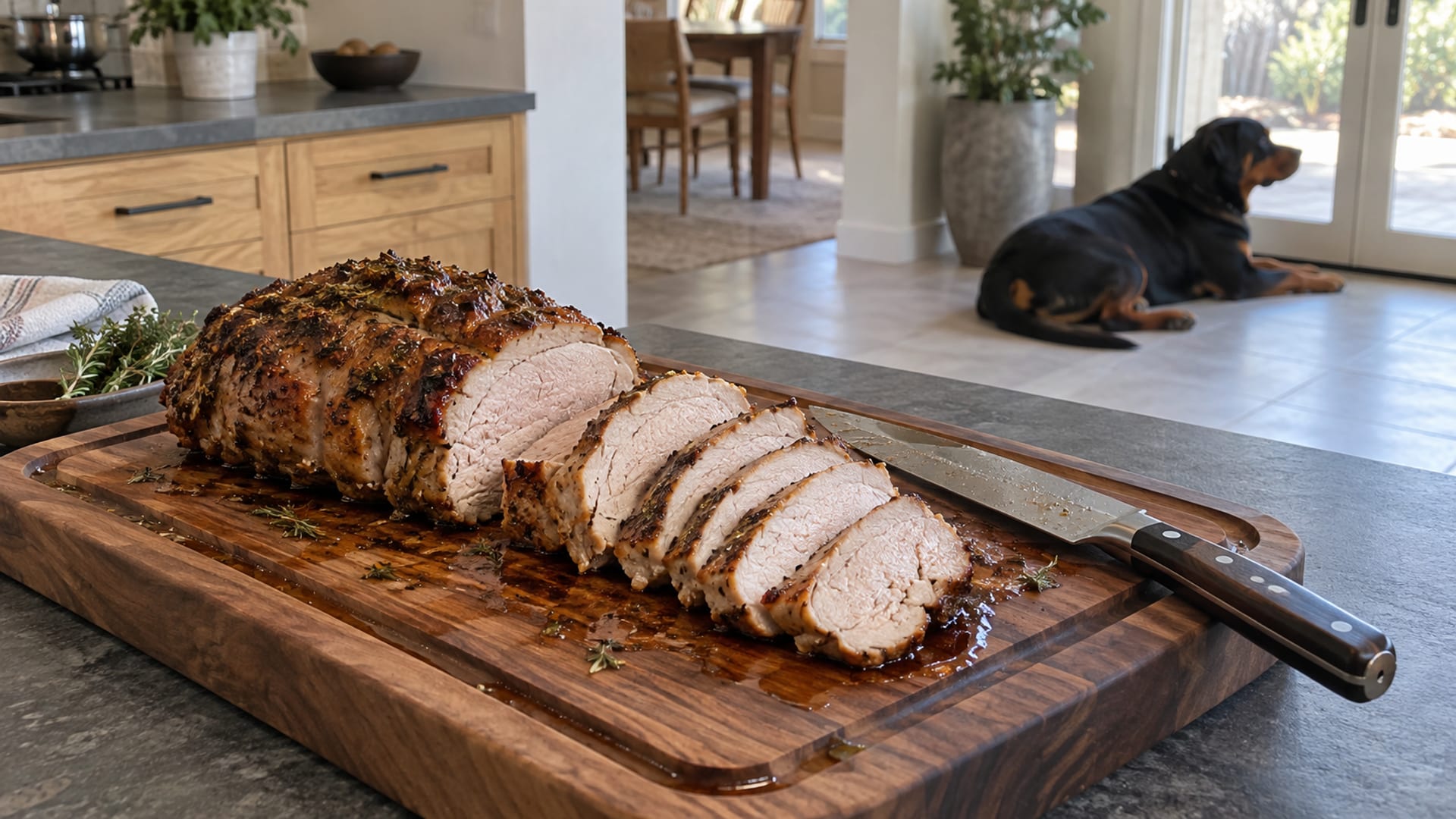
Yes, a little plain pork is fine. The ASPCA says small amounts of lean, cooked pork with no bones and no seasoning are okay for dogs. The trouble comes from the other forms: raw or undercooked pork, bones, fatty trimmings, cured meats like bacon and sausage, and dishes made with onion or garlic.
If your dog ate a bite of plain cooked pork chop or roast, you can relax and watch them for the rest of the day. If they got raw pork, a bone, a pan of drippings, a pile of bacon, or leftovers with a seasoning rub or sauce, call your vet and tell them what it was, how much, and when.
Key takeaways
Tap a card to bring it forward.
- Lean, fully cooked, boneless, unseasoned pork is fine as a small extra.
- Raw or undercooked pork can carry the *Trichinella* parasite and germs such as *Salmonella* and *Listeria*.
- Pork bones, cooked or raw, can choke a dog or injure and block the gut.
- Fat, skin and drippings can upset the stomach and may bring on pancreatitis.
- Bacon, ham, sausage, pulled pork and rubs add salt, fat, onion or garlic.
If your dog already ate pork
The form matters far more than the amount of meat.
Tap or hover a row to highlight it.
| What they got | What to do |
|---|---|
| What they gotA bite or two of plain, cooked, lean pork | What to doKeep an eye on them today. Nothing else needed. |
| What they gotRaw or pink pork, or raw pork dog treats | What to doCall your vet. Say where the meat came from and how it was stored. |
| What they gotA pork chop bone, rib bone or roast bone | What to doCall your vet now, even if your dog is acting normal. |
| What they gotFat trimmings, crackling, skin or drippings | What to doCall your vet today, especially for a small dog or one with a history of pancreatitis. |
| What they gotBacon, ham, sausage, hot dogs or pork rinds | What to doCall if it was more than a nibble. Have the package. |
| What they gotPulled pork, barbecue or anything with a rub or gravy | What to doCheck for onion, garlic or nutmeg, then call. |
The ASPCA's list of foods to avoid asks you to note how much your pet ate and contact your veterinarian or poison control. Before you pick up the phone, find the label or recipe and your dog's weight.
Go to an emergency clinic right away for choking, gagging that will not stop, trouble breathing, repeated vomiting, a swollen or painful belly, bloody stool, tremors, seizures or collapse.
Which kinds of pork are fine, and which to skip
Tap or hover a row to highlight it.
| Form | For dogs | Why |
|---|---|---|
| FormLean cooked pork, fat trimmed, no seasoning | For dogsYes, a small amount | WhyASPCA and AKC both allow it |
| FormRaw or undercooked pork | For dogsNo | Why*Trichinella* and foodborne bacteria |
| FormFreeze-dried or dehydrated raw pork | For dogsNo | WhyStill raw; drying does not kill every germ (CDC) |
| FormPork fat, skin, belly, crackling, grease | For dogsNo | WhyFat can trigger stomach upset or pancreatitis |
| FormBacon, ham, sausage, lunch meat | For dogsNot as treats | WhyHigh in salt and fat |
| FormPulled pork, barbecue, pernil with seasoning | For dogsSkip | WhySauces and rubs can hold onion, garlic and salt |
| FormChop, rib or roast bones | For dogsNever | WhyCan splinter, choke, pierce or block the gut |
| FormPork broth | For dogsOnly plain, low-salt, no onion or garlic | WhyStore broth often has them |
| FormPork in a complete dog food | For dogsFollow the label | WhyA formulated food, judged as a whole |
The Merck Veterinary Manual says pork in North America should be treated as possibly carrying *Trichinella spiralis* unless it is labeled ready to eat, and recommends cooking it thoroughly. The CDC does not recommend raw pet food or raw treats at all, because of germs like *Salmonella* and *Listeria*, and notes that freezing, freeze-drying and dehydrating reduce germs without getting rid of all of them. Puppies and dogs with weaker immune systems are the most likely to get sick.
How much pork, and how to cook it for your dog
The AKC suggests small portions of plain pork with the extra fat trimmed off, and that is the rule to follow: a few small pieces, now and then, on top of regular dog food and never in place of it.
To cook it safely, use the USDA's safe temperatures:
- Chops, loin and roasts: 145°F (62.8°C), then a three-minute rest.
- Ground pork: 160°F (71.1°C).
Cook it plain. Pull your dog's share out before any salt, butter, rub, sauce or gravy goes on, take out every bone, and cut the meat into pieces your dog can manage.
Some dogs should skip pork. Merck says a low-fat diet is crucial for dogs with pancreatitis, so ask your vet first if your dog has had it, or has diabetes or high blood fats. The AKC's pork guide also notes that some dogs react to certain meats, so start with a small piece.
Signs to watch for, by what your dog ate
- After fatty pork: vomiting, diarrhea, belly pain, weakness and not wanting to eat. The Merck Veterinary Manual's pancreatitis page warns that severe pancreatitis can be fatal, so call rather than wait it out.
- After raw or undercooked pork: Merck lists upset stomach, vomiting, diarrhea, fever, tiredness, and sore, stiff muscles for *Trichinella*, though many infected animals never show clear signs.
- After salty pork like bacon or ham: heavy thirst and peeing, vomiting, diarrhea, and in serious cases tremors and seizures.
- After a bone: choking and gagging right away, or later vomiting, belly pain, not eating, straining or bloody stool.
- After pork cooked with onion or garlic: an upset stomach first, and red blood cell damage that can show up days later. Can dogs eat garlic? explains the delay.
"Our dog always gets the pork chop scraps and has never been sick"
Plenty of dogs get a bite of the family's dinner for years and do fine, and that can be exactly what happened with yours. It does not carry over to every piece of pork or every dog. A lean bite is a small exposure; a slab of fat or a bone left on the plate is a different one. Two dogs eating the same scrap get very different doses if one weighs 10 pounds and the other 90. One piece of raw pork is clean and the next may not be. Pancreatitis and a blockage can take time to show, and Merck notes that *Trichinella* infections often go unnoticed. Keep sharing the lean bite if your dog does well with it, and scrape bones and fat into a covered bin.
Bacon, ham, pork rinds and other pork products
- Bacon: fatty and salty. A crumb is unlikely to matter; a stolen plateful calls for a vet call.
- Ham: cured and salty, sometimes glazed. Can dogs eat ham? covers ham bones and salt.
- Sausage, chorizo and hot dogs: high in fat and salt, and often seasoned with onion, garlic and spices.
- Pork rinds and chicharrones: fried or dried pig skin, high in fat and salt. They are not the same as lean pork.
- Pulled pork and barbecue: sauces and rubs often contain onion and garlic. Can dogs eat onions? explains why that matters.
- Pork rib bones: the bone is the hazard even when the meat is cooked.
- Wild boar: wildlife can carry *Trichinella*, so treat it like raw pork unless it is thoroughly cooked.
- Pork in dog food or treats: a complete commercial food is formulated and labeled for dogs. Raw pork treats still carry raw-meat risks.
Check what you learned
Quick check
Questions about dogs and pork
What three meats should dogs avoid?
For pork, the three to keep away from your dog are raw or undercooked pork, cured and processed pork such as bacon, ham and sausage, and anything still on the bone. The AKC's pork guide warns against all three.
Which is better for dogs, beef or pork?
Either works as a small, plain, cooked extra. The AKC's article on dog food myths says pork has a little over one-third the fat of beef, so lean pork is not an unusually fatty choice. Whichever you pick, choose a lean cut and cook it plain.
What is the healthiest meat to give a dog?
No one meat wins for every dog. Whatever you share, the safest version is lean, fully cooked, boneless and plain, and it should stay a small addition to a complete dog food. If your dog is on a special diet or has food allergies, ask your vet which proteins fit.
Can dogs eat cooked pork?
Yes, if it is lean, cooked through, boneless and unseasoned, in a small amount. Trim the fat first.
Can dogs eat raw pork?
No. Raw or undercooked pork can carry *Trichinella* and harmful bacteria. If your dog already ate some, call your vet.
Is pork bad for cats too?
Cats face the same raw-meat germs, and the CDC advises against raw food for cats as well. Onion and garlic are an even bigger concern for cats, according to the ASPCA.
Sources
Checked September 24, 2026.
- ASPCA, Sharing is Caring: Foods You Can Safely Share with Your Pet
- ASPCA, People Foods to Avoid Feeding Your Pets
- American Kennel Club, Can Dogs Eat Pork?
- American Kennel Club, People Foods Dogs Can and Can't Eat
- American Kennel Club, The 8 Biggest Dog Food Myths
- Centers for Disease Control and Prevention, About Pet Food Safety
- Merck Veterinary Manual, Trichinellosis (Trichinosis) in Dogs
- Merck Veterinary Manual, Pancreatitis in Dogs and Cats
- USDA Food Safety and Inspection Service, Safe Minimum Internal Temperature Chart