
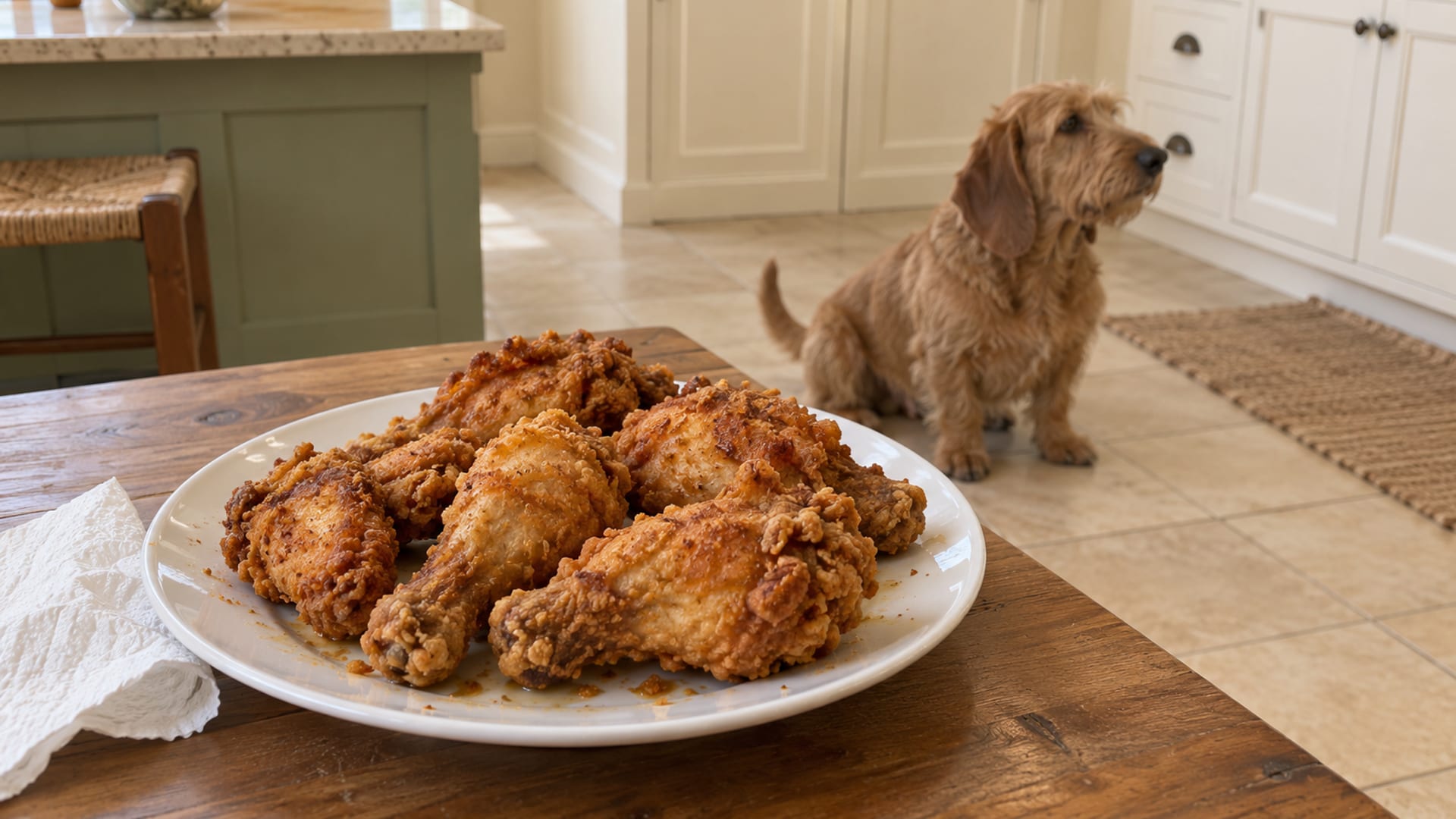
Fried chicken is best kept off your dog's plate. The oil, skin, batter, salt and seasoning can upset the stomach or set off pancreatitis, and cooked bones can splinter, although a small boneless bite is far less concerning than a big helping or a piece with the bone still in it.
If your dog already got into it, stop any more from going down, find out whether bones were swallowed and check the box or recipe for onion or garlic. Those answers, together with how much was eaten and how big your dog is, decide whether this calls for a phone call tonight or a few days of close watching.
Key takeaways
Tap a card to bring it forward.
- Fried chicken isn't a good food for dogs; the fat in the oil, skin and batter can cause vomiting, diarrhea or pancreatitis.
- Cooked chicken bones can splinter and cause choking, a blockage or an injury inside the gut, so call your vet if any bones went down.
- Onion or garlic powder in the coating can damage red blood cells, and those signs can take several days to show.
- One small boneless bite in a healthy dog usually means watching at home for at least four days rather than a rush to the clinic.
- For sharing, a little plain, skinless, boneless cooked chicken is the lower-risk choice.
What to do right now if your dog ate fried chicken
Each step either lowers the risk or gathers what your vet will ask first.
- Get the rest out of reach. Pick up the plate, the takeout box and any bones in the trash, so no more fat or bone goes down.
- Count the pieces and the bones. Compare how many wings, drumsticks or thighs were there with how many bones are left. The AKC recommends prompt veterinary advice after a dog eats cooked chicken bones, so a missing bone changes what you do next.
- Check the coating for onion and garlic. Look at the package label, the restaurant's ingredient list or your own recipe for onion powder, garlic powder or garlic salt. The Merck Veterinary Manual notes that dried and powdered onion and garlic are concentrated forms that can poison dogs.
- Note the amount, the time and your dog's weight. No single amount of fried chicken is known to be safe or dangerous for every dog, so a vet or poison line will judge the risk from these details.
- Skip home treatment. Hold off on hydrogen peroxide, human medicine and home remedies unless a vet or poison-control professional directs it, since they decide what treatment your dog needs.
- Call now for bones, a large or unknown amount, onion or garlic, past pancreatitis or any signs. If it was one small boneless bite and your dog is acting normally, watch closely for four days, because Pet Poison Helpline says signs after a fatty meal can show up one to four days later.
Which parts of fried chicken cause the trouble
The meat under the coating is the mildest part. The skin, batter, grease and bones carry most of the risk, and the seasoning adds its own.
Tap or hover a row to highlight it.
| Part or form | Main concern | What to do |
|---|---|---|
| Part or formSkin, batter and breading | Main concernHigh fat, salt and seasoning; vomiting, diarrhea or pancreatitis | What to doKeep it away from your dog |
| Part or formGrease, drippings and gravy | Main concernConcentrated fat and salt | What to doKeep it away and wipe up spills |
| Part or formBones in wings, drumsticks and thighs | Main concernSplinters that can cause choking, mouth or throat injury, blockage or a torn intestine | What to doCall your vet if any were swallowed |
| Part or formOnion or garlic seasoning | Main concernDamage to red blood cells that leads to anemia | What to doCall your vet or a poison line |
| Part or formBoneless fried meat | Main concernLess risk than skin or bone, but still carries oil and seasoning | What to doNot a treat to offer |
| Part or formPlain, skinless, boneless cooked chicken | Main concernLow in fat when cooked plain | What to doA safer choice in small amounts |
The fat is the most common problem. Pet Poison Helpline explains that fatty table foods aren't usually poisonous in themselves, yet they can cause anything from a mild stomach upset to severe, sometimes fatal pancreatitis. Pancreatitis is inflammation of the pancreas, the organ that helps digest fat, and the Merck Veterinary Manual lists dietary indiscretion, a dog eating something it shouldn't, as a common risk factor.
The AKC explains that cooking leaves bones brittle, so they can split into sharp pieces that choke a dog, block the intestine or injure the gut. Our entry on chicken bones covers the bone by itself.
Onion, garlic, chives and leeks contain sulfur compounds that break down red blood cells, a condition vets call Heinz body hemolytic anemia, according to the Merck Veterinary Manual, which also reports that garlic is three to five times more toxic than onion. Pet Poison Helpline has described poultry seasonings with onion and garlic powder injuring a dog's red blood cells. The entries on garlic and onions cover both.
A plain bite instead, and how much fried chicken is a concern
If you'd like to share chicken with your dog, set the fried piece aside and cook a little chicken breast plainly: fully cooked, with no skin, bones, oil, salt, onion, garlic or other seasoning. VCA Animal Hospitals names cooked, skinless chicken breast as a low-fat topper and advises keeping treats and toppers under 10% of daily calories. For a small dog, that works out to a few small pieces, not a full serving.
On the risky side, no single amount of fried chicken counts as too much. It depends on your dog's size, the fat eaten, any bones, the coating and any history of pancreatitis or other illness. The same drumstick is a much bigger dose for a small dog than for a large one.
Tap or hover a row to highlight it.
| Ingredient or measure | Figure | Source |
|---|---|---|
| Ingredient or measureRaw onion | Figure15 to 30 g per kg of body weight has caused signs in dogs | SourceMerck Veterinary Manual |
| Ingredient or measureGarlic | FigureThree to five times more toxic than onion | SourceMerck Veterinary Manual |
| Ingredient or measureTreats and toppers, plain chicken included | FigureNo more than 10% of daily calories | SourceVCA Animal Hospitals |
The onion figure is for raw onion. Powdered onion and garlic are more concentrated, so that number can't tell you a seasoned coating was harmless. Where the table has no figure for what happened, call your vet or a poison line with your dog's weight, what was eaten, roughly how much, whether bones were involved and when it happened.
Signs to watch for over the next four days
Each risk runs on its own clock.
Fat and pancreatitis. Watch for vomiting, diarrhea, belly pain, a poor appetite and lethargy. Pet Poison Helpline says these can be delayed one to four days after a fatty meal. A mild stomach upset may settle sooner, but pancreatitis can need a hospital stay and can turn severe.
Bones. Gagging, choking, drooling, trouble swallowing, vomiting, straining to pass stool or blood in the stool can point to a bone that is stuck or has injured the gut. The worst outcomes the AKC describes are a blocked or torn intestine.
Onion or garlic. The Merck Veterinary Manual says changes in the blood can start within 24 hours, while visible signs of anemia may take several days. Those signs include weakness, pale or yellow gums, dark urine and collapse.
Call your vet right away for choking, trouble breathing, repeated vomiting, severe diarrhea, belly pain, marked lethargy, weakness, collapse, pale or yellow gums, dark urine, bloody stool, straining or a dog that can't keep water down.
Some dogs deserve a lower threshold for calling. According to the Merck Veterinary Manual, pancreatitis shows up more often in Miniature Schnauzers, Yorkshire Terriers, Cocker Spaniels, Dachshunds, Poodles and sled dogs. A past bout of pancreatitis, high blood fats, Cushing's disease (hyperadrenocorticism) or diabetes also raises the concern.
My dog ate fried chicken before and was fine
That happens, and when it did, your dog really was fine. It just doesn't work as a rule, because the next piece and the next dog can be quite different.
Last time, your dog may have eaten a small amount for its size, or mostly boneless meat instead of skin, batter and bones. The recipe may have had little or no onion or garlic. Dogs also differ, and one that shrugged off a meal can react to the next. The Merck Veterinary Manual notes that some dogs get a mild form of pancreatitis with vague signs that are easy to miss, and fatty-meal signs can arrive one to four days later, after the meal is long forgotten.
A different amount, piece or coating can lead to a different result, so the questions in the action list matter more than what happened before.
Wings, tenders, takeout and other look-alikes
Each form shifts the risk a little.
- Wings, drumsticks and thighs usually hold cooked bones and carry more skin and fat than breast meat.
- Tenders, strips, nuggets, popcorn chicken and boneless wings have no bones, but they can carry more coating, more salt and sometimes onion or garlic powder.
- Restaurant, fast food and takeout chicken varies by kitchen, so the name on the box doesn't tell you the risk; check the ingredient list when you can.
- Grease, drippings and gravy are mostly fat and salt, much like bacon grease.
- Chicken broth and stock can contain onion, garlic, a lot of sodium or fat, so they aren't the same as plain chicken.
- Garlic salt carries the same garlic concern as garlic powder, plus added sodium.
- Undercooked chicken can carry Salmonella, Listeria and other germs. The FDA notes that dogs can shed Salmonella without looking sick, and the entry on raw chicken covers that risk in full.
- Chicken-flavored dog treats and dog food are formulated for dogs and aren't comparable to fried chicken made for people.
Check what you learned
Three questions on what matters most next time.
Quick check
Questions about dogs and fried chicken
These come up once the first scare has passed.
Is spicy fried chicken worse for my dog?
Spices and heavily seasoned breading can irritate the stomach and intestines on top of the fat. Many spicy coatings also include onion or garlic powder, so check the ingredients and call your vet if either is listed.
Can fried chicken hurt my cat too?
Yes. The Merck Veterinary Manual names cats as the species most sensitive to onion and garlic poisoning, ahead of dogs, and cats can also develop pancreatitis from fatty foods. Keep plates and scraps away from every pet in the house.
Why do these accidents seem to happen at cookouts and holidays?
Pet Poison Helpline warns about fatty foods, drippings and bones during Thanksgiving, and it gives similar cookout and holiday tips for summer gatherings. A lidded trash can and a word to guests prevent most of it.
My dog seemed fine the next morning. Can I stop watching?
Keep watching for the full four days. Fatty-meal signs can appear up to four days later, and anemia from onion or garlic can take several days to show, so a normal morning doesn't close the window.
Sources
Checked September 25, 2026.
- Pet Poison Helpline, Is table food poisonous for dogs?
- Pet Poison Helpline, Counter-Surfing Pooch Poisoned by Poultry Seasonings
- Pet Poison Helpline, Thanksgiving Pet Safety Tips
- Pet Poison Helpline, Quick Tips to Keep Pets Safe
- Merck Veterinary Manual, Pancreatitis in Dogs and Cats
- Merck Veterinary Manual, Pancreatitis and Other Disorders of the Pancreas in Dogs
- Merck Veterinary Manual, Garlic and Onion (Allium spp) Toxicosis in Animals
- AKC, Can Dogs Eat Bones? Be Careful Before Giving Your Pup a Bone
- AKC, What to Do if Your Dog Ate Chicken Bones
- VCA Animal Hospitals, Nutrition and Pancreatic Disease in Dogs
- FDA, Get the Facts! Raw Pet Food Diets can be Dangerous to You and Your Pet