
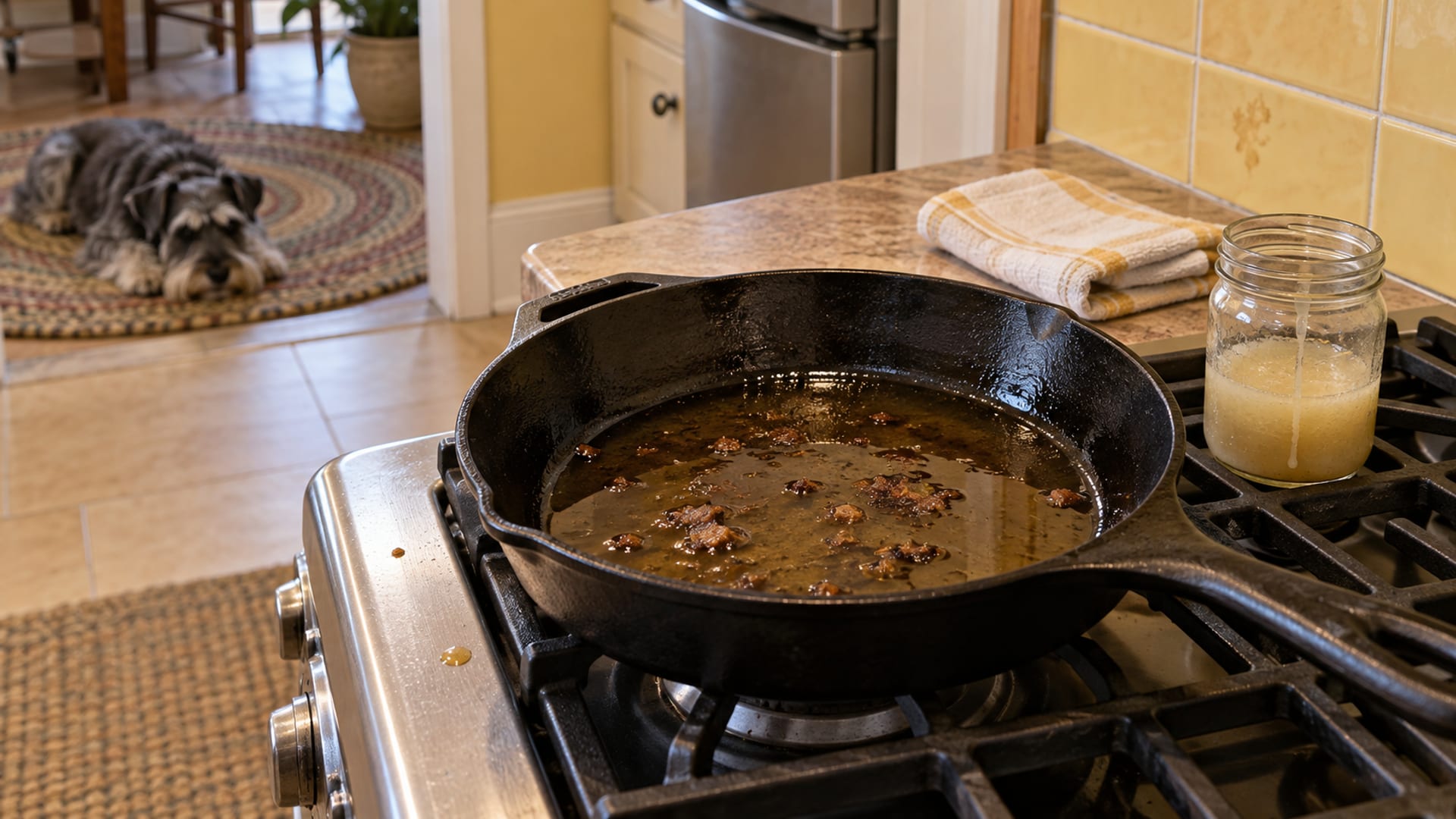
Bacon grease is best kept away from dogs. Pet Poison Helpline explains that grease and meat drippings are not usually a true poison, but that much fat can bring on stomach upset or pancreatitis, and severe pancreatitis can be fatal.
If your dog just licked the skillet or tipped over the drippings jar, figure out roughly how much is gone and note the time. A lick off a cooled plate in a healthy, good-sized dog is usually a watch-and-wait moment. More than a taste, an amount you cannot guess, or a small dog are all reasons to call your vet today.
Key takeaways
Tap a card to bring it forward.
- The problem with bacon grease is the amount of fat packed into it. It can upset the stomach and may trigger pancreatitis.
- Trouble can start 1 to 4 days after a fatty meal, so a dog that seems fine tonight still needs watching.
- Call your vet after a large or unknown amount, grease with onion or garlic cooked in, or any grease for a dog that has had pancreatitis.
- Skip home remedies. Oil, butter or more grease can make things worse.
- No vet source gives a safe serving, so leave bacon grease out of the food bowl.
My dog ate bacon grease: first steps
- Put the pan, jar or can out of reach and check how much is missing.
- Write down the details: what your dog ate, about how much, what time, and your dog's weight. Note anything that was cooked in the grease, such as onions or garlic.
- Call your vet or a pet poison line if your dog is small, has had pancreatitis before, ate a large or unknown amount, or ate grease mixed with other food.
- Hold off on home treatment. Pet Poison Helpline warns that giving oil, butter or grease can add to vomiting, diarrhea, dehydration and pancreatitis risk, and advises checking with a vet before trying anything at home.
- Keep an eye on your dog for several days, because fat-related signs can be slow to show.
If the grease could have touched a drain cleaner, degreaser or other chemical, treat that as its own problem and call your vet or a poison line right away.
Which kinds of bacon fat raise the most concern
Tap or hover a row to highlight it.
| What your dog got into | How concerned to be | Why |
|---|---|---|
| What your dog got intoA lick of cooled grease from a plate | How concerned to beLow for most healthy dogs; watch for a few days | WhyA small amount of fat for the dog's size |
| What your dog got intoSeveral spoonfuls, or the drippings jar | How concerned to beCall your vet | WhyConcentrated fat is the main pancreatitis worry |
| What your dog got intoRaw bacon fat trimmings | How concerned to beAvoid; call if it was a lot | WhyStill fat, and raw pork can carry germs and parasites |
| What your dog got intoGrease with onion, garlic or chives cooked in | How concerned to beCall your vet | WhyThose ingredients can damage red blood cells |
| What your dog got intoBacon bits or bacon powder | How concerned to beRead the label | WhyCould be real bacon, soy bits, or a seasoned blend with salt, onion or garlic |
| What your dog got intoBacon-flavored dog treats | How concerned to beCheck the ingredient list | WhyA finished treat is a different product from pure grease |
| What your dog got intoTurkey bacon or plant-based bacon drippings | How concerned to beRead the label | WhyFat and ingredients change from product to product |
| What your dog got intoGrease that touched cleaners or chemicals | How concerned to beCall right away | WhyA chemical exposure on top of the fat |
Cooking, drying or powdering bacon fat leaves the fat in place, so none of those steps makes it safer. The bacon strips bring salt as well: the American Kennel Club notes that bacon is rich in fat and salt and that large amounts can lead to pancreatitis. Can dogs eat bacon? covers the strips themselves.
Onion, garlic, chives, leeks and shallots are a separate danger because they harm red blood cells. If the grease came from a pan of fried onions, can dogs eat onions? and can dogs eat garlic? explain what to watch for.
How much bacon grease is too much?
Vets have no spoonful count that divides safe from dangerous for bacon grease. What moves the risk is how much fat went down compared with your dog's size, and your dog's own health.
The same spoonful is a far bigger dose for a Chihuahua than for a Labrador. The Merck Veterinary Manual names Miniature Schnauzers as prone to pancreatitis and lists large amounts of table scraps among its suspected triggers. Pet Poison Helpline adds that older and overweight dogs are more likely to develop it, and both sources mention breeds such as Miniature Poodles, Cocker Spaniels, Yorkshire Terriers and Dachshunds.
Dogs that have had pancreatitis, dogs with high blood fats, and dogs with diabetes tied to the pancreas need their own vet's advice before any fatty food. For dogs in kidney failure, the AKC lists bacon and other cured meats among high-sodium foods to avoid. In practice, anything more than a lick, or an amount you are unsure of, is worth a phone call.
Signs to watch in the days after the grease
Tap or hover a row to highlight it.
| When | What you may see | What to do |
|---|---|---|
| WhenWithin the first day | What you may seeNausea, drooling, vomiting, loose stool | What to doCall your vet if it repeats or your dog seems unwell |
| When1 to 4 days later | What you may seeVomiting, belly pain, not eating, low energy | What to doPossible pancreatitis; call your vet |
| WhenAny time | What you may seeA hunched "praying" stance, weakness, collapse, blood in vomit or stool, trouble breathing, signs of dehydration | What to doSee a vet now |
Pet Poison Helpline reports that signs after a fatty meal commonly begin 1 to 4 days later. Merck lists vomiting, belly pain, dehydration, weakness, diarrhea and loss of appetite as common signs of severe pancreatitis, which can lead to organ failure. A mild upset may pass on its own, but pancreatitis can need a hospital stay, which is why the calendar matters as much as the first evening.
"My dog has licked the bacon pan for years"
That can be true, and plenty of dogs get a pan to clean now and then without trouble. A few licks spread over a big dog's body weight is a small amount of fat, and nothing else was in the grease. Dogs also differ: Merck notes that most pancreatitis cases have no cause anyone can point to, and a 2025 review in the Journal of the American Veterinary Medical Association found the evidence linking dietary fat to pancreatitis in dogs is limited and tangled up with other causes.
That explains why one dog shrugs it off. It does not make the next pan safe. The dog that licked skillets at three may be older and heavier now, which raises the risk. A smaller dog in the same house gets a bigger dose from the same pan. Signs can start days later and be mild enough to miss. So, if pan-licking has become a habit, the easiest fix is to let the grease cool and throw it out where your dog cannot reach it.
Grease on dog food, bacon bits and other look-alikes
Some people pour a little bacon fat over kibble for flavor. No vet source gives a serving size for that, and the safer choice is to leave it off.
- Lard and pork fat carry the same fat concern, usually without bacon's curing salt.
- Bacon flavoring or extract may hold little fat but can contain salt, smoke flavor, onion or garlic.
- Drippings in gravy or stuffing add onion, garlic and salt to the fat.
- Holiday and cookout leftovers are when most dogs find grease. Pet Poison Helpline's Thanksgiving advice lists bacon, fatty drippings, gravy and butter among foods that can cause pancreatitis.
Check what you learned
Quick check
Questions about dogs and bacon grease
Can dogs have a little bacon grease?
It is better not to give any on purpose. A lick may cause no signs at all, but there is no known safe amount, and concentrated fat can upset the stomach or trigger pancreatitis.
My dog ate bacon grease but seems fine. Is that okay?
Not yet. Signs can take 1 to 4 days to appear after a fatty meal. Watch closely, and call your vet or a poison line about the amount and your dog's health.
Is bacon grease poisonous to dogs?
Usually not in the way xylitol or a toxic plant is. The risk comes from the fat itself, which can cause stomach upset or pancreatitis.
Can bacon grease give a dog pancreatitis?
It can. Pet Poison Helpline lists grease and fatty table food as possible causes, and Merck names large amounts of table scraps as a suspected risk factor. Not every exposure leads to pancreatitis.
What can I give my dog after eating bacon grease?
Nothing without your vet's say-so. Home remedies, oil, butter, salt and medicines can all make things worse. Call your vet or a poison line for instructions.
Sources
Checked September 24, 2026.
- Pet Poison Helpline, Is table food poisonous for dogs?
- Pet Poison Helpline, Pet Poison First Aid Misconceptions
- Pet Poison Helpline, Kitchen Toxins to Pets
- Pet Poison Helpline, Thanksgiving Pet Safety Tips
- Merck Veterinary Manual, Pancreatitis and Other Disorders of the Pancreas in Dogs
- American Kennel Club, Can Dogs Eat Pork?
- American Kennel Club, Renal Dysplasia in Dogs
- Journal of the American Veterinary Medical Association, High fat, high risk? Evaluating the strength of evidence linking dietary fat and pancreatitis in dogs (2025)