
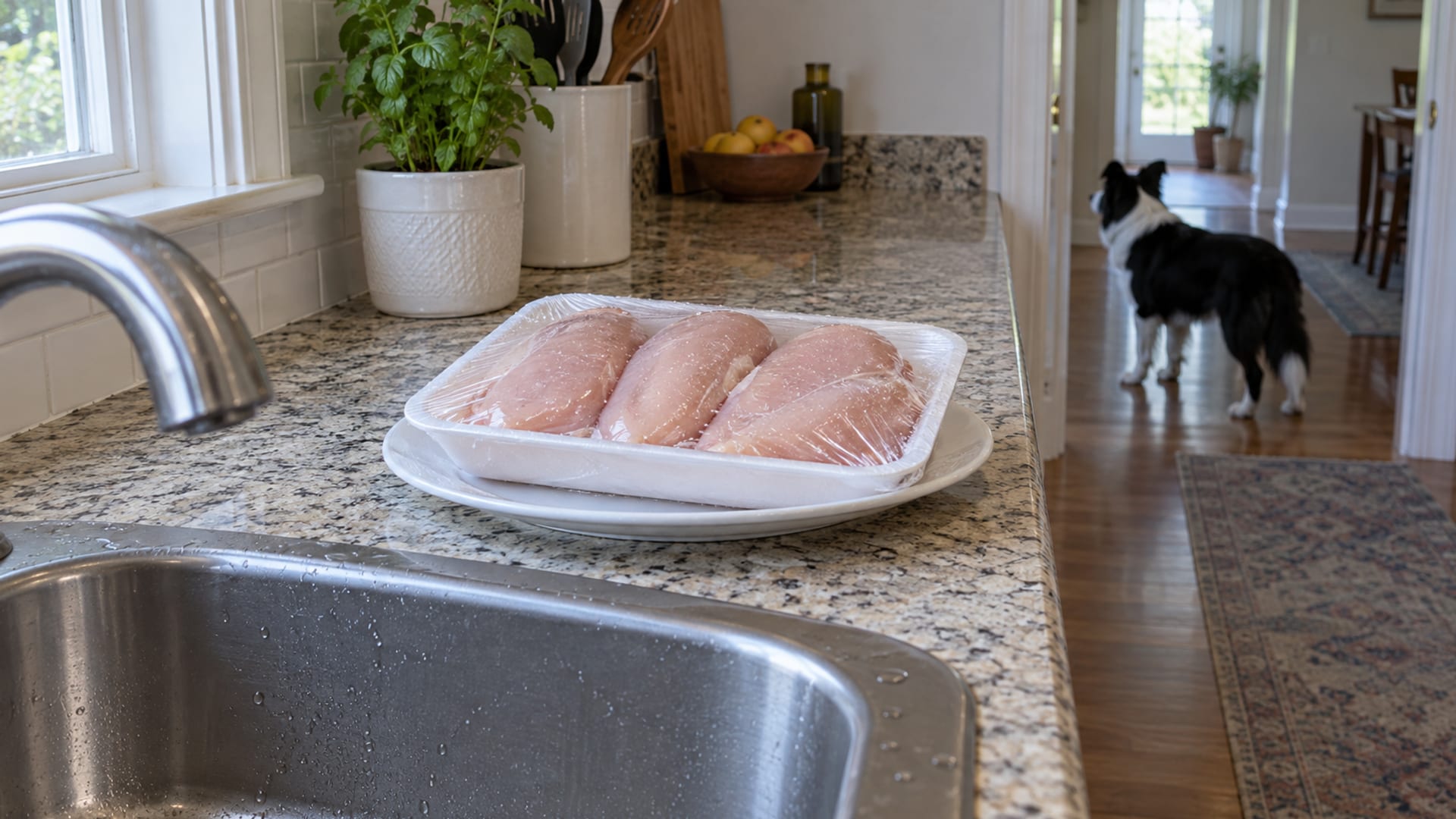
Raw chicken is a risky food for dogs. The CDC does not recommend feeding raw pet food or treats, because raw meat can carry Salmonella and Listeria. Raw chicken bones add a second problem: they can choke a dog or get stuck on the way down.
If your dog just stole a piece of raw chicken off the counter, check first whether any bone went with it. A boneless bite usually means watching your dog for the next few days. A bone, a puppy, or a dog who is already sick means calling your vet today.
Key takeaways
Tap a card to bring it forward.
- Raw chicken can carry Salmonella, Listeria and other germs.
- A dog can look healthy and still shed those germs in its poop and saliva.
- Raw bones can choke, crack teeth, block the gut or tear it.
- Freezing, freeze-drying and dehydrating do not reliably make raw chicken safe.
- Plain, fully cooked, boneless chicken is the lower-risk way to share.
My dog ate raw chicken: what to do now
- Take away what is left and see what part it was: boneless meat, skin, a wing, a neck, a drumstick or a carcass.
- Check for bones. If your dog swallowed raw bone, call your vet. Our page on chicken bones covers what happens next.
- Call your vet today for a puppy, a senior dog, a pregnant dog, or one with a weak immune system or a serious illness. Also call if your dog ate a lot, or if the chicken was a recalled raw pet food.
- Check the seasoning. Chicken marinated with onion or garlic brings its own risk, so have the recipe or label ready.
- Clean up. Wash your hands, the counter, the floor and your dog's bowl. Germs from raw chicken can spread to people and other pets.
For a healthy adult dog who ate a small boneless piece, watching at home is reasonable. Call your vet if any of the signs below show up.
Why raw chicken is a concern
The concern here is germs. Merck Veterinary Manual links raw meat diets with dogs shedding Salmonella, and names poultry as a source. When the FDA tested pet food, 15 of 196 raw samples had Salmonella and 32 of 196 had Listeria.
Not every piece of raw chicken carries enough germs to make a dog sick. The risk depends on how contaminated that chicken was, how much your dog ate, and the dog. Merck says illness from Salmonella is more likely in puppies, in dogs that are already sick or run down, and after a large dose of bacteria. The FDA adds that very young, very old, pregnant and immune-weakened animals face the most serious Listeria disease.
There is no published safe amount of raw chicken for a dog, and no published toxic dose either, because the risk comes from what is on the meat.
Raw chicken, part by part
Tap or hover a row to highlight it.
| Form | Risk | What to know |
|---|---|---|
| FormRaw boneless meat | RiskGerms | What to knowSalmonella, Listeria, Campylobacter |
| FormRaw skin | RiskGerms, plus fat | What to knowFatty skin is a concern for dogs with pancreatitis |
| FormRaw organs (liver, kidney) | RiskGerms | What to knowThe CDC treats them as raw animal protein |
| FormRaw wings, necks, drumsticks, carcass | RiskGerms, plus bone | What to knowChoking, broken teeth, blockage, tears in the gut |
| FormFrozen raw chicken | RiskGerms | What to knowFreezing does not reliably kill them |
| FormFreeze-dried or dehydrated raw | RiskGerms | What to knowStill counted as raw pet food by the CDC |
| FormPlain, fully cooked, boneless chicken | RiskLower | What to knowSkip onion, garlic, salt and heavy seasoning |
| FormCooked chicken bones | RiskBone | What to knowCan splinter; never a good idea |
The AKC warns that bones can injure the mouth and throat, block the gut and cause painful constipation, and that raw meaty bones may also carry Salmonella.
Signs to watch for in the days after
Germ-related signs do not show up at a set time. They can take a while to start after the meal, so keep watching for several days:
- vomiting
- diarrhea, especially if bloody
- fever, tiredness or weakness
- not eating
- a painful belly
- not keeping water down
Bone-related trouble looks different: choking or gagging, coughing after swallowing, trouble breathing, a sore mouth, straining to pass stool, or vomiting that keeps coming. Any of those means a call to your vet right away.
Severe Salmonella illness can spread through the body, according to Merck, and is a real emergency. Early vet care matters more for puppies and fragile dogs.
"My dog ate raw chicken and was fine"
That happens, and it may happen again. Plenty of healthy adult dogs eat a piece of raw chicken and show nothing. Several things explain it: that piece may have carried few germs, your dog may have eaten a small amount, and a healthy adult handles germs better than a puppy. It does not make the next piece safe. The germ load changes from one package to the next, and a puppy or an older dog may not fare the same way. There is also a catch for your family: the FDA and Merck both note that dogs can carry and shed Salmonella or Listeria while looking completely well. So, after a raw chicken episode, wash up after handling your dog's poop and bowls, even if your dog seems fine.
Raw diets, freeze-dried treats and chicken jerky
- Raw pet food and toppers: the CDC does not recommend them for dogs or cats. If raw food is your dog's main diet, the CDC says to talk with your vet or a veterinary nutritionist.
- Freeze-dried and dehydrated raw treats: the CDC puts these in the raw pet food group, and the FDA says Salmonella can turn up in freeze-dried food too.
- Chicken jerky: a different product from raw chicken. Its safety depends on how it was made, and "dried" on a label does not always mean cooked.
- Chicken broth and seasoned chicken: read the label for onion, garlic and salt.
- Raw eggs carry a similar Salmonella question; see can dogs eat eggs?
A study in the Canadian Veterinary Journal looked at Salmonella in dogs fed raw chicken diets. If your dog eats a raw diet, handle it like raw chicken for your own dinner: thaw it in the fridge, keep it apart from other food, clean every surface, and throw out anything left at room temperature.
Check what you learned
Quick check
Questions about dogs and raw chicken
Can dogs eat raw chicken meat without bones?
Taking out the bone removes the choking and blockage risk. The germ risk stays, so the CDC still does not recommend it.
What if my dog ate a small piece of raw chicken?
Watch for vomiting, diarrhea, bloody stool, tiredness, belly pain or fever over the next few days. Call your vet if any appear, or right away for a puppy or a dog with health problems.
Are raw chicken bones safe for dogs?
They carry real risks. Raw bones can choke a dog, break teeth, block the gut or injure it, and they can carry Salmonella.
Is freeze-dried raw chicken safe?
The CDC groups freeze-dried and dehydrated raw products with raw pet food. Drying does not prove the germs are gone.
Is cooked chicken better for dogs?
Yes. Plain, fully cooked, boneless chicken carries much lower germ risk. Keep cooked bones away, since they can splinter.
Sources
Checked September 24, 2026.
- Centers for Disease Control and Prevention, About Pet Food Safety
- U.S. Food and Drug Administration, Get the Facts! Raw Pet Food Diets
- U.S. Food and Drug Administration, FDA Cautions Pet Owners Not to Feed Performance Dog Raw Pet Food
- U.S. Food and Drug Administration, Think Food Safety and Be Salmonella Safe
- Merck Veterinary Manual, Salmonellosis in Animals
- American Kennel Club, Can Dogs Eat Bones?
- Joffe and Schlesinger, Canadian Veterinary Journal, Preliminary assessment of the risk of Salmonella infection in dogs fed raw chicken diets