

Pancreatitis in Dogs: Signs, When It Is an Emergency, Treatment and Cost
By Cal Hewitt · Published , updated
Health
If your dog has vomited more than once, cannot keep water down, is hunched over, is crying out when you touch the belly, or has gone weak or limp, call an emergency vet now and start driving while you talk to them. Pancreatitis is inflammation of the pancreas, and it can become a painful, life-threatening illness. I can tell you what it looks like and what vets do about it, but only a veterinarian can confirm it, so a dog with these signs needs to be seen today.
Key takeaways
Tap a card to bring it forward.
- Repeated vomiting, a hunched or painful belly, marked weakness, collapse, trouble breathing, or not keeping water down means urgent veterinary care.
- Signs alone cannot confirm pancreatitis; vets combine the exam, bloodwork, a pancreas-specific lipase test such as Spec cPL, and sometimes an ultrasound.
- Treatment is supportive: fluids, pain control, anti-nausea medicine and nutrition, in the hospital or, for mild cases, at home under the vet's direction.
- Published US cost estimates run from about $300 to $800 for mild outpatient care to $2,500 to $5,000 for a severe hospital stay.
- Afterward, vets commonly use a complete low-fat diet and work on weight, food access and any underlying illness.
Is this an emergency, or can it wait for the vet today?
Go to an emergency clinic now if your dog collapses or cannot stand, is severely weak, keeps vomiting or cannot keep water down, seems to be in obvious severe belly pain, has a swollen belly along with retching or weakness, or is having trouble breathing. AAHA and the Merck Veterinary Manual both treat these as reasons for immediate care. Call the clinic while you get ready to leave, so they can prepare for you.
Call your regular vet today, and go to an emergency clinic if they are closed, for repeated vomiting, a dog who won't eat and seems flat and tired, a belly that hurts, a hunched posture, diarrhea with weakness or dehydration, fever, or a dog who seems very depressed. If your dog ate something fatty and then got sick, that is worth telling the vet, but a fatty meal does not prove pancreatitis. Vomiting has many causes, and the same signs can mean a blockage or bloat. For that reason, a swollen belly with retching should always be treated as an emergency; my page on bloat in dogs explains why. For general vomiting questions, see dog vomiting.
Please don't try home experiments while you wait to see if it passes. Skipping the vet with these signs is where dogs get into trouble.
What is pancreatitis, and what raises the risk?
The pancreas is a small organ near the stomach that makes digestive enzymes and hormones that help regulate blood sugar. Pancreatitis is inflammation of that organ. Acute pancreatitis comes on suddenly and can range from a mild illness to a severe one with life-threatening complications. Chronic pancreatitis is ongoing or repeated inflammation that can cause permanent damage, and its signs can be subtle.
Vets point to several risk factors, according to Merck and AAHA:
- High-fat meals, greasy leftovers, garbage and other dietary indiscretion.
- Obesity and altered fat metabolism, including high triglycerides and high calcium in the blood.
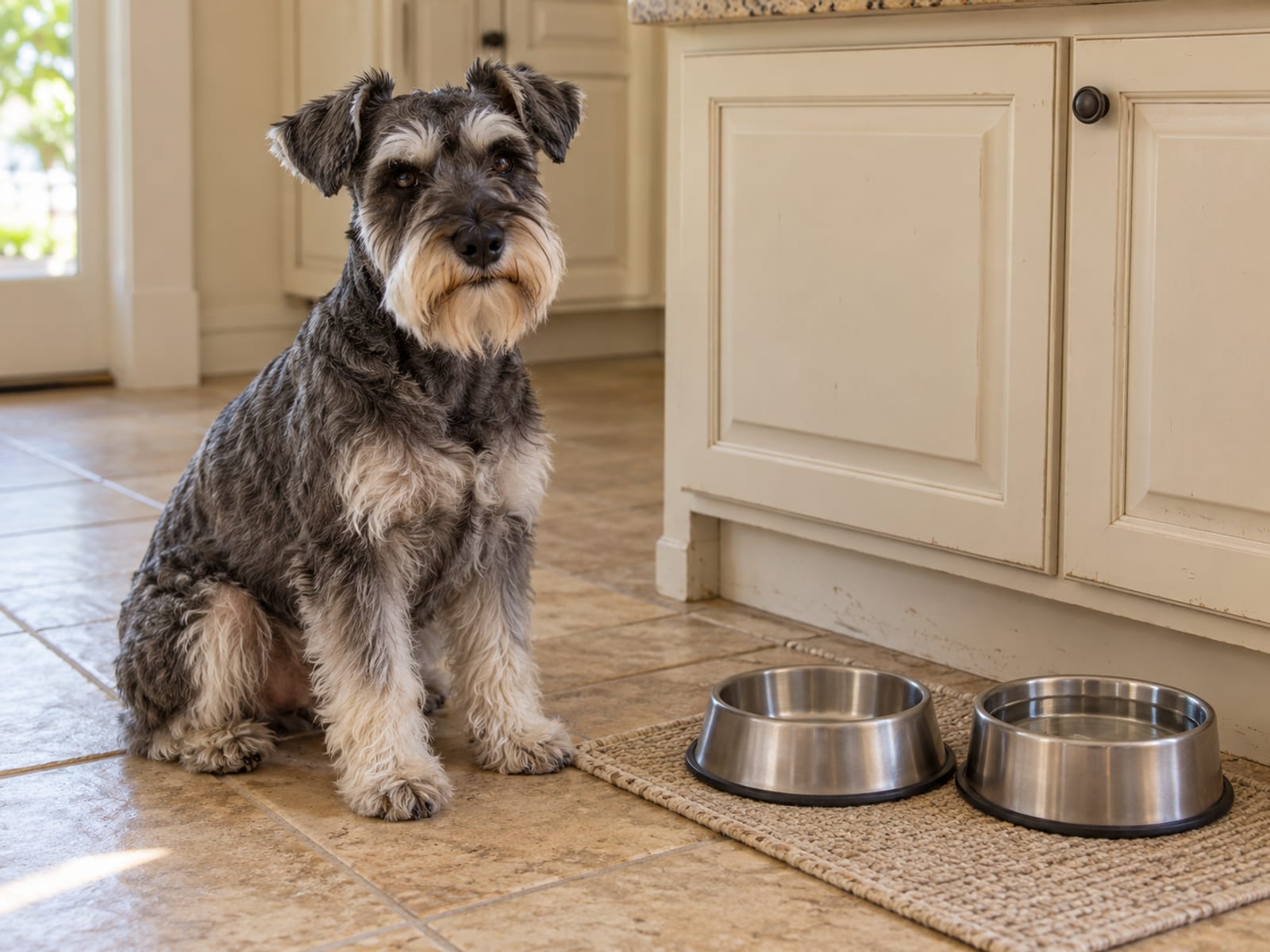
- Breed: miniature schnauzers, Yorkshire terriers and dachshunds have higher risk.
- Some medications, including certain corticosteroids, antibiotics and seizure medicines.
- Abdominal trauma, surgery or anesthesia.
- Other illnesses, including diabetes, liver and gallbladder disease, and chronic inflammatory bowel disease.
Many dogs have no identifiable cause at all. A fatty meal is a recognized risk factor, but in any one dog it is not proof of what happened, and a high-risk breed is not a diagnosis either.
What signs should I watch for, and why can't they confirm it?
The common signs are vomiting, loss of appetite, tiredness, belly pain, diarrhea, dehydration and fever. Some dogs have a swollen belly or trouble breathing. Belly pain often shows up as the "prayer position," with the chest low, front legs stretched forward and the rear end up in the air, or as a dog who is restless, can't get comfortable, or flinches when you touch the abdomen.
Every one of those signs also fits other problems, including obstruction, bloat, poisoning and simple stomach upset. That is why nobody, including me, can call it pancreatitis from the couch. If diarrhea is part of what you are seeing, dog diarrhea covers the general side of it, but diarrhea alone does not point to the pancreas.
How does the vet confirm pancreatitis?
Your vet puts together the history, the physical exam, and test results. Merck describes diagnosis as a combination of clinical findings, imaging and pancreas-specific lipase testing, and says no single test should be read alone.
- Bloodwork (CBC and chemistry panel): can show inflammation, dehydration, electrolyte changes or effects on other organs, but the results are not specific to the pancreas.
- SNAP cPL: a rapid screening test. A negative result makes pancreatitis less likely. A positive result is read alongside the exam and may be followed by a quantitative test.
- Spec cPL: a quantitative pancreatic lipase test. The Texas A&M Gastrointestinal Laboratory explains that pancreas-specific tests like this are preferable to nonspecific total lipase tests.
- Abdominal ultrasound: may show an enlarged or changed pancreas, fluid around it, or changes in nearby fat. A normal or unclear ultrasound does not rule the disease out, because what it shows depends on how severe the disease is, timing, the equipment and the person doing the scan.
- X-rays: they do not diagnose pancreatitis, but they can help rule out a blockage or other belly problems.
Not every dog needs every test. Ask your vet which ones will change the treatment.
How is pancreatitis treated?
Treatment is supportive, and the vet adjusts it to how sick your dog is. According to Merck and AAHA, it can include:
- IV fluids for dehydration and ongoing losses.
- Pain medicine chosen by the vet.
- Anti-nausea medicine.
- Nutrition, usually by mouth as soon as the dog can tolerate it. Merck recommends holding food only when vomiting cannot be controlled, so long fasting is no longer routine.
- Monitoring of electrolytes, kidney function, blood sugar and other organs.
- Treatment of any underlying disease or risk factor.
- Antibiotics only when there is a specific reason for them.
Merck also reports that fuzapladib sodium has conditional FDA approval for the clinical signs of acute pancreatitis in dogs. Ask your vet whether it fits your dog.
Dogs with repeated vomiting, dehydration, significant pain, complications, or who cannot eat and drink usually stay in the hospital. Milder cases can sometimes be managed at home under the vet's direction. Use the medicines and amounts your vet prescribes, and never give a person's pain reliever or anti-nausea pill on your own.
How long is recovery, and what are the odds?
Recovery depends on how severe the case is and whether complications develop. A mild case may improve over several days. A severe one can mean several hospital days and a longer stretch to get eating normally again. One ASPCA case involved three nights and four days of hospital treatment, but that is one dog, not a schedule.
Study numbers can sound frightening, so here is what they measured and what they cannot tell you:
- Fabrès and colleagues, 2019, *Journal of Veterinary Internal Medicine*: 169 dogs with acute pancreatitis. Thirty-day case fatality was 33% in the 138-dog training group and 35% in the 31-dog validation group. Many of the deaths involved euthanasia, and the study looked back at records, so it is not a survival rate for every dog.
- Ohlund and colleagues, 2020, *Acta Veterinaria Scandinavica*: 71 dogs at a referral hospital. Nineteen died within two days (26.8%) and 27 died before discharge (38%). Referral hospitals see the sickest dogs, so these numbers lean high for the average case.
Tap or hover a row to highlight it.
| Study | Dogs | Result | Limit |
|---|---|---|---|
| StudyFabrès et al., 2019 | Dogs169 | Result30-day fatality 33% (training) and 35% (validation) | LimitRetrospective; includes euthanasia |
| StudyOhlund et al., 2020 | Dogs71 | Result38% died before discharge | LimitReferral hospital; retrospective |
Your own dog's outlook is a question for the vet treating them, who can see the bloodwork and how your dog is responding.

What might treatment cost?
Costs vary by region, clinic and time of day, and emergency care costs more than a daytime visit. These are dated estimates, not quotes.
Tap or hover a row to highlight it.
| Care or service | Estimate | Source and date |
|---|---|---|
| Care or serviceMild outpatient care | Estimate$300 to $800 | Source and dateVetCostGuide, June 2026 |
| Care or serviceModerate hospitalization, 1 to 2 nights | Estimate$800 to $2,500 | Source and dateVetCostGuide, June 2026 |
| Care or serviceSevere hospitalization, 3 to 5 nights | Estimate$2,500 to $5,000 | Source and dateVetCostGuide, June 2026 |
| Care or serviceComplicated referral cases | Estimate$5,000 to $10,000 or more | Source and dateVetCostGuide, June 2026 |
| Care or serviceInternal medicine stay, 1 to 2 days, with emergency diagnostics | Estimate$1,000 to $3,000 | Source and dateUniversity of Illinois teaching hospital, September 2025 |
| Care or serviceICU stay, 3 to 5 days, with emergency diagnostics | Estimate$3,000 to $5,000 | Source and dateUniversity of Illinois teaching hospital, September 2025 |
| Care or serviceSpec cPL test | Estimate$80 to $150 | Source and dateVetCostGuide, June 2026 |
| Care or serviceCBC and chemistry panel | Estimate$150 to $300 | Source and dateVetCostGuide, June 2026 |
| Care or serviceFull abdominal ultrasound | Estimate$408 | Source and dateUniversity of Illinois teaching hospital, September 2025 |
The VetCostGuide figures are consumer estimates, and the University of Illinois figures come from one teaching hospital. Ask for an itemized estimate, and ask what would cause it to change.
What should my dog eat afterward, and what about treats?
Follow the diet your vet gives you. VCA Hospitals says a complete, balanced, low-fat veterinary diet is usually the best first option, and Merck describes a canine target of less than 20 grams of fat per 1,000 calories. Your vet may start with small, frequent meals once your dog can keep food down.
Some dogs do not need the special diet forever if the cause was not diet-related, so the length of time is a decision for your vet. When you change foods, VCA suggests a seven-to-ten-day transition to spare the stomach.
Treats count. Add them into the daily diet and ask your vet which ones are low in fat. Skip grease, bacon fat, fried food and fatty scraps. My pages on bacon, ham and fried chicken explain why those foods carry risk, and the ASPCA warns that even small amounts of grease or greasy leftovers can make some pets sick. If you want to cook for a dog long term, a veterinary nutritionist should design the recipe so it is complete and balanced. A home recipe is not a treatment for pancreatitis.
How can I lower the chance it comes back?
Pancreatitis can return, and a low-fat diet does not guarantee it won't. What you can do:
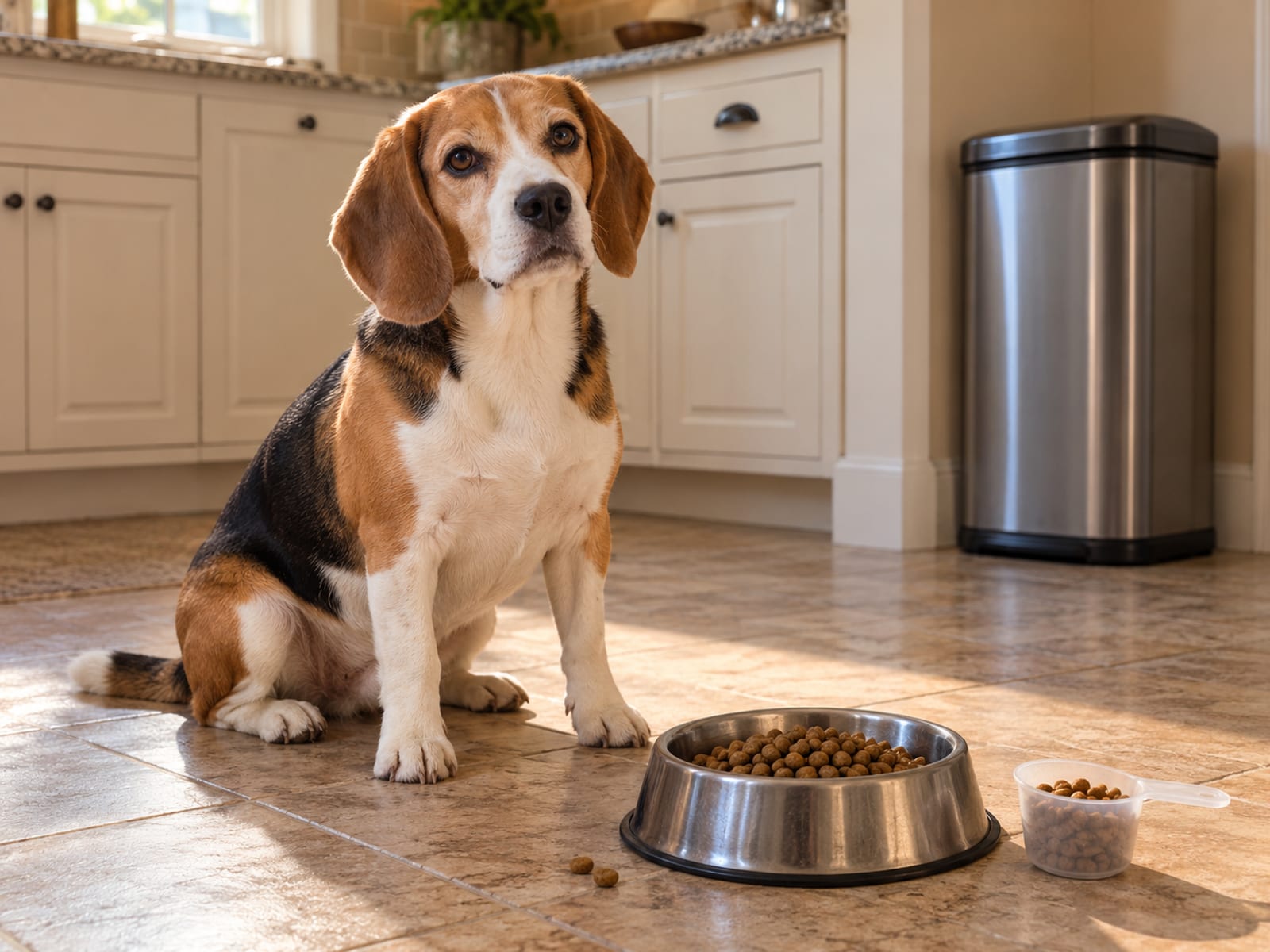
- Keep your dog at a healthy weight.
- Keep the diet consistent, and keep fatty scraps and garbage out of reach, including at cookouts and holidays. Tell anyone who feeds or watches your dog not to share table food, and tell them which signs mean an emergency.
- Ask your vet about high triglycerides, high calcium, and any medicine that may play a part.
- Have other illnesses managed, especially diabetes. Pancreatic disease can be linked with diabetes, and diabetes in dogs covers that side.
- Ask whether repeat testing or a recheck makes sense for your dog.
Questions owners ask about pancreatitis in dogs
Quick answers to common questions about pancreatitis in dogs.
What foods trigger pancreatitis in dogs?
High-fat foods such as grease, fried food, bacon, ham and fatty scraps are recognized risk factors. Many cases have no single identifiable cause, though, so a fatty meal never proves pancreatitis on its own.
What is the life expectancy of a dog with pancreatitis?
It depends on how severe the episode is, complications, and other illnesses. Mild cases often recover with treatment, while severe cases are dangerous, and the study numbers above come from sick, hospitalized dogs. Your vet can give you a realistic outlook for your dog.
What could be mistaken for pancreatitis in dogs?
Vomiting and belly pain also occur with intestinal blockage, bloat and other stomach and intestinal problems. Only an exam and testing can tell them apart, and that is why a hunched, vomiting dog needs a vet.
What is the typical diet for dogs with pancreatitis?
A complete, low-fat veterinary diet, usually fed in small meals and introduced as your vet directs. Long-term needs vary from dog to dog.
Your next step
If your dog is showing any emergency sign, call an emergency vet now. If your dog is stable but was sick after something fatty, call your regular vet today and describe what happened and when. Once you have a diagnosis, ask your vet for a written feeding plan and an itemized cost estimate, and keep the fatty scraps out of reach.
Sources
- American Animal Hospital Association: AAHA
- answers.illinois.edu: University of Illinois
- ASPCA: ASPCA
- Merck Veterinary Manual: Merck Veterinary Manual
- onlinelibrary.wiley.com: 169 dogs with acute pancreatitis
- PubMed: 71 dogs at a referral hospital
- Texas A&M College of Veterinary Medicine: Texas A&M Gastrointestinal Laboratory
- VCA Animal Hospitals: VCA Hospitals
- vetcostguide.com: VetCostGuide