
Bloat in Dogs (GDV): The Signs, What to Do Right Now and How to Lower the Risk
By Cal Hewitt · Published , updated
Health
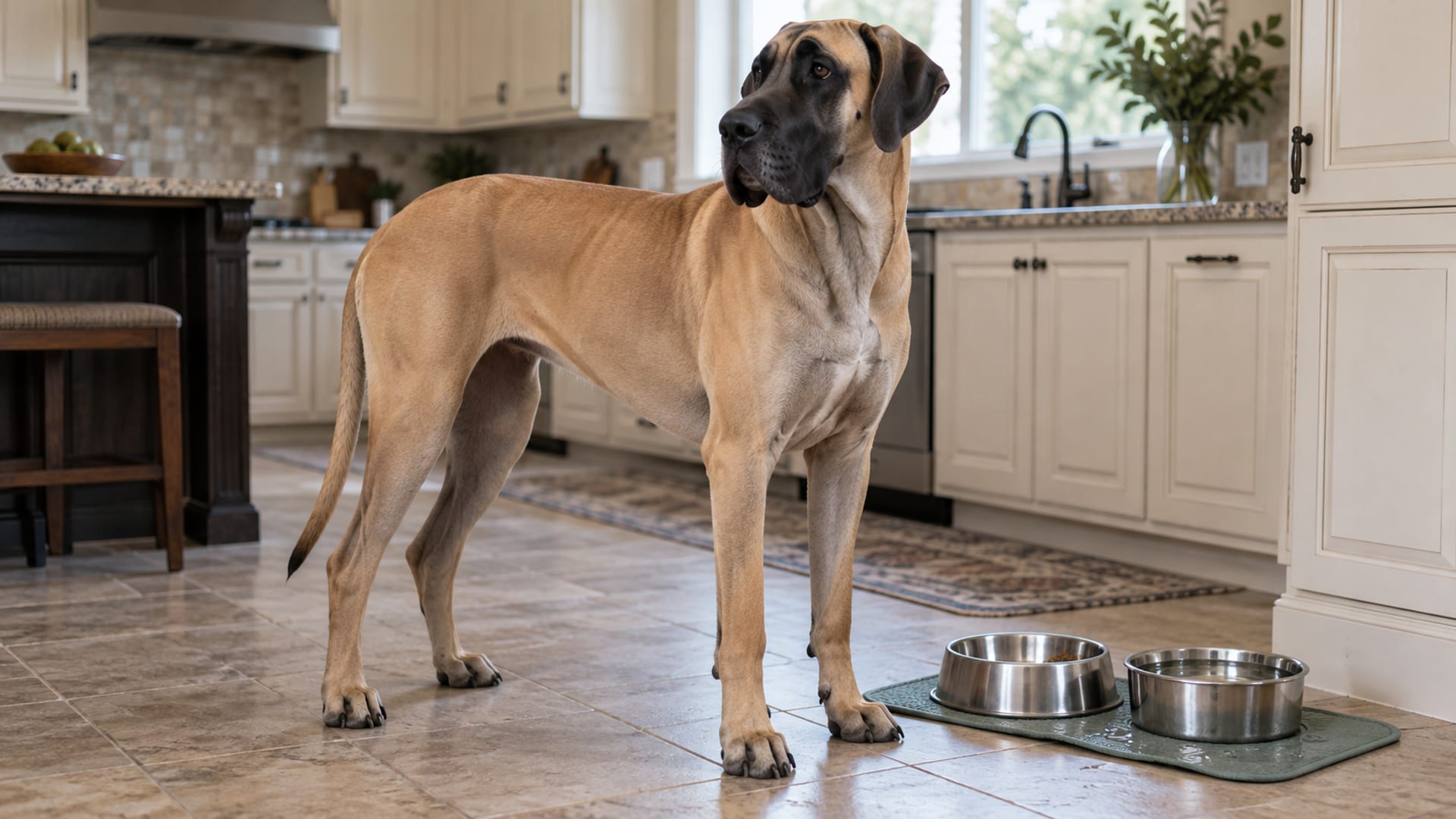
If your dog keeps trying to vomit and nothing comes up, has a swollen or tight belly, is drooling, pacing, panting, weak, has pale gums, or collapses, call the nearest emergency vet and leave now. Tell them on the phone that you think it is bloat, then drive. Do not wait to see if it passes, and do not give Gas-X, food, water or any home remedy.
These can be signs of gastric dilatation-volvulus (GDV), where the stomach fills with gas and twists. It can kill a dog within hours, and nobody can tell simple bloat from a twisted stomach at home; a vet needs X-rays. Everything else on this page can wait until your dog is in the car.
If your dog is fine right now and you are reading because you own a big, deep-chested dog, the rest of this page covers the warning signs to learn by heart, which dogs are most at risk, and preventive surgery to ask your vet about.
Key takeaways
Tap a card to bring it forward.
- Dry retching, a swollen or tight belly, drooling, restlessness, panting, weakness or pale gums: emergency vet now.
- The belly may not look swollen early, especially in a big dog. Retching plus distress is enough to go.
- There is no effective home treatment for GDV (AAHA). Do not give simethicone (Gas-X), food, water or medicine.
- Large and giant dogs with deep, narrow chests are most at risk, but any dog can be affected.
- A preventive gastropexy stops the stomach from twisting. It does not stop it from filling with gas.
- Save the number and address of your nearest 24-hour emergency vet today.
Signs of bloat in dogs: go now if you see these
Any one of these, especially in a large or deep-chested dog, means an emergency vet now, according to the AAHA and the VCA:
- Trying to vomit again and again with little or nothing coming up
- A belly that is suddenly swollen, tight or painful
- Heavy drooling
- Pacing, restlessness, or not being able to settle or lie down
- Panting or trouble breathing
- Looking back at the belly, or standing stretched out with the front end down
- Weakness, pale gums, collapse, or not being able to stand
The belly may not look swollen early on, particularly in a big dog, so do not wait for it. And even if you think it may be "only gas," go. The VCA says a physical exam cannot tell simple stomach swelling from GDV, and the AAHA says the condition cannot resolve on its own.
If your dog has done something similar before and seemed fine afterward, that does not make this episode safe. The AAHA notes that early signs can look like a milder stomach upset, and any suspicion, especially in an at-risk breed, needs a vet right away.
What to do right now, on the way to the vet
- Call the clinic and leave. Phone your regular vet or the nearest 24-hour emergency hospital and say something like: "I think my dog has bloat. He is a 7-year-old Great Dane, about 140 pounds, and has been dry retching for 20 minutes. We are leaving now." The call lets the team get ready. It should not hold up your departure.
- Go to the closest capable emergency hospital, even if your favorite clinic is farther away or closed.
- Move your dog gently. If your dog is weak or has collapsed, slide a blanket or a firm board under them and get someone to help you lift. Do not make them walk.
- Bring a second adult if you can, so one person drives and the other calls ahead or navigates.
- Grab your dog's medicine list or records only if they are right at hand. Do not stop to look for them.
Do not:
- Give food, water, medicine, antacids, simethicone (Gas-X), oils, baking soda or herbal remedies. The VCA's simethicone guidance says not to use it in a dog suspected of severe bloat or GDV.
- Try to make your dog vomit, pass a tube down the throat, or put a needle in the belly.
- Press on or massage the belly, or walk your dog to "work out the gas."
- Wait for a daytime appointment, or keep searching online.
If you are unsure whether your dog ate something toxic instead, call the ASPCA Animal Poison Control Center at (888) 426-4435 or the Pet Poison Helpline at (855) 764-7661 from the car. A retching dog with a swollen or painful belly still needs the emergency vet either way.
Why every minute counts with GDV
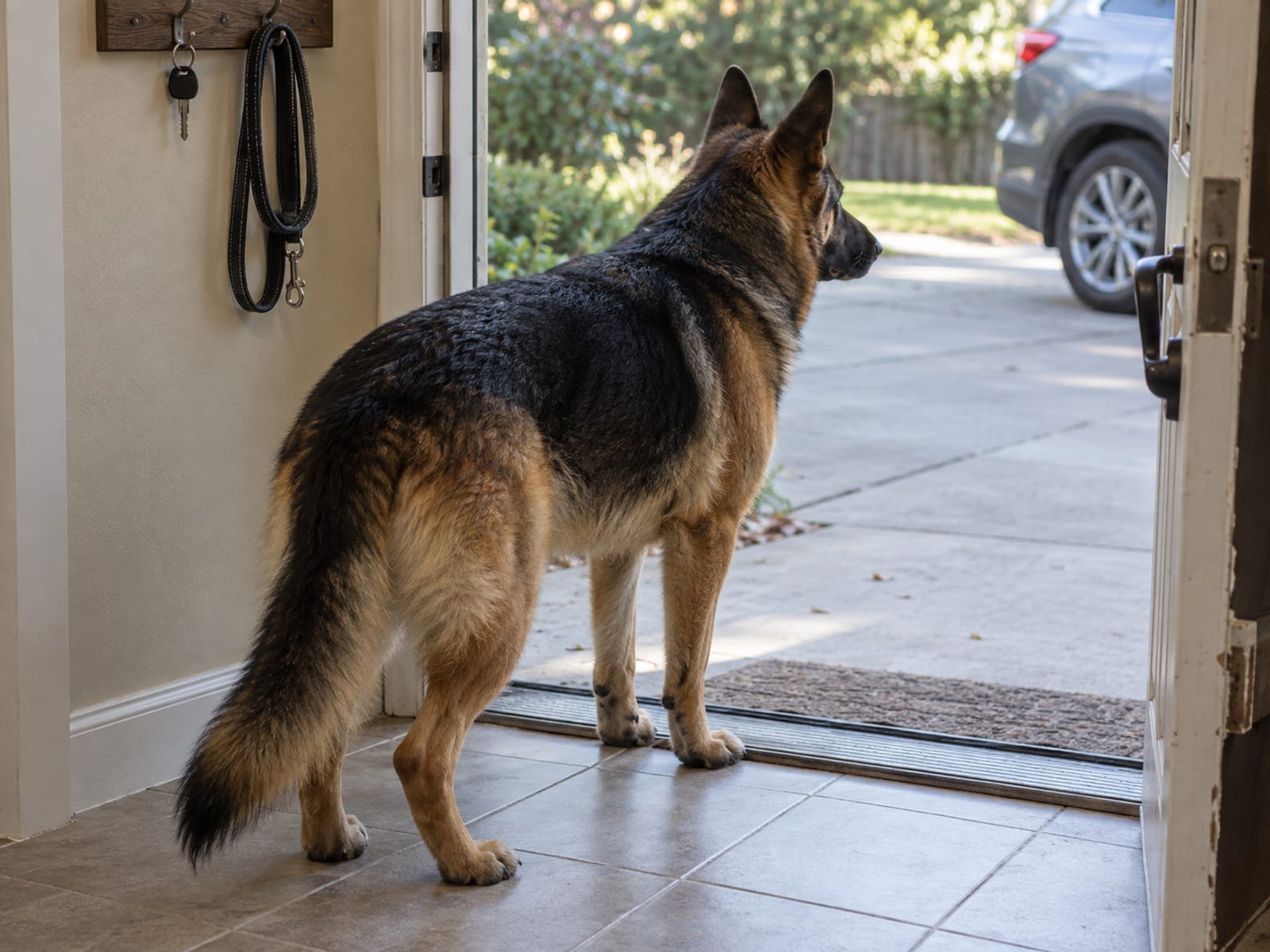
"Bloat" is used loosely. In gastric dilatation, the stomach swells with gas, fluid or food. In GDV, the swollen stomach also rotates. The twist traps the gas, blocks blood flowing back to the heart, can cut off blood to the stomach and spleen, and can lead to shock, heart rhythm problems, organ damage and death, according to the Merck Veterinary Manual.
How fast it moves:
- The VCA says a dog needs veterinary attention "within minutes to a few hours" to be saved.
- The AKC says an untreated dog may go into shock within one or two hours.
- The American College of Veterinary Surgeons reports that more dogs die when signs have lasted more than six hours. It shows the cost of delay. It does not give you six hours to wait.
Many dogs survive with fast treatment. Cornell reports survival over 80% with medical and surgical care. Merck reports about 20% of treated dogs die, and the ACVS gives a figure of around 15%. These come from different groups of dogs, and none of them predicts how one dog will do. What they share is the point: the sooner your dog is treated, the better the odds.
What usually happens at the emergency hospital
Arrival
Triage and a physical exam right away. Expect the team to move fast.
Stabilizing
IV fluids and treatment for shock, and relieving the gas pressure in the stomach.
X-rays
Images show whether the stomach has twisted, which a physical exam cannot tell.
Surgery, if it is GDV
Urgent surgery once your dog is stable enough. Ask the team for a written estimate.
Which dogs are at risk of bloat
Tap or hover a row to highlight it.
| Risk factor | What the source says |
|---|---|
| Risk factorLarge or giant size with a deep, narrow chest | What the source saysThe strongest, most repeated risk profile (Merck) |
| Risk factorBreed | What the source saysGreat Dane, German Shepherd, Saint Bernard, Weimaraner, Irish and Gordon Setter, Standard Poodle, Doberman Pinscher, Basset Hound are commonly named |
| Risk factorA parent, sibling or littermate who had GDV | What the source saysLinked to higher risk (Merck; Glickman et al., 2000) |
| Risk factorGetting older | What the source saysRisk rises with age (Merck; Glickman et al., 2000) |
| Risk factorEating fast | What the source saysLinked to higher risk (Glickman et al., 2000) |
| Risk factorOne large meal a day | What the source saysListed as a risk factor (Cornell) |
| Risk factorBody weight over 100 pounds | What the source saysAbout a 20% lifetime risk of bloat, according to the VCA |
| Risk factorPast spleen removal | What the source saysLinked to higher risk (Merck) |
In a 2000 study in the Journal of the American Veterinary Medical Association that followed large and giant breed dogs, 6% developed GDV during the study. Merck calls GDV multifactorial and says its cause is not fully known. Small dogs can get it too, and the VCA notes that simple stomach swelling without a twist sometimes happens in older small dogs. A dog's breed or size can raise your guard. The signs are what send you to the vet.
Lowering the risk: meals, bowls and exercise
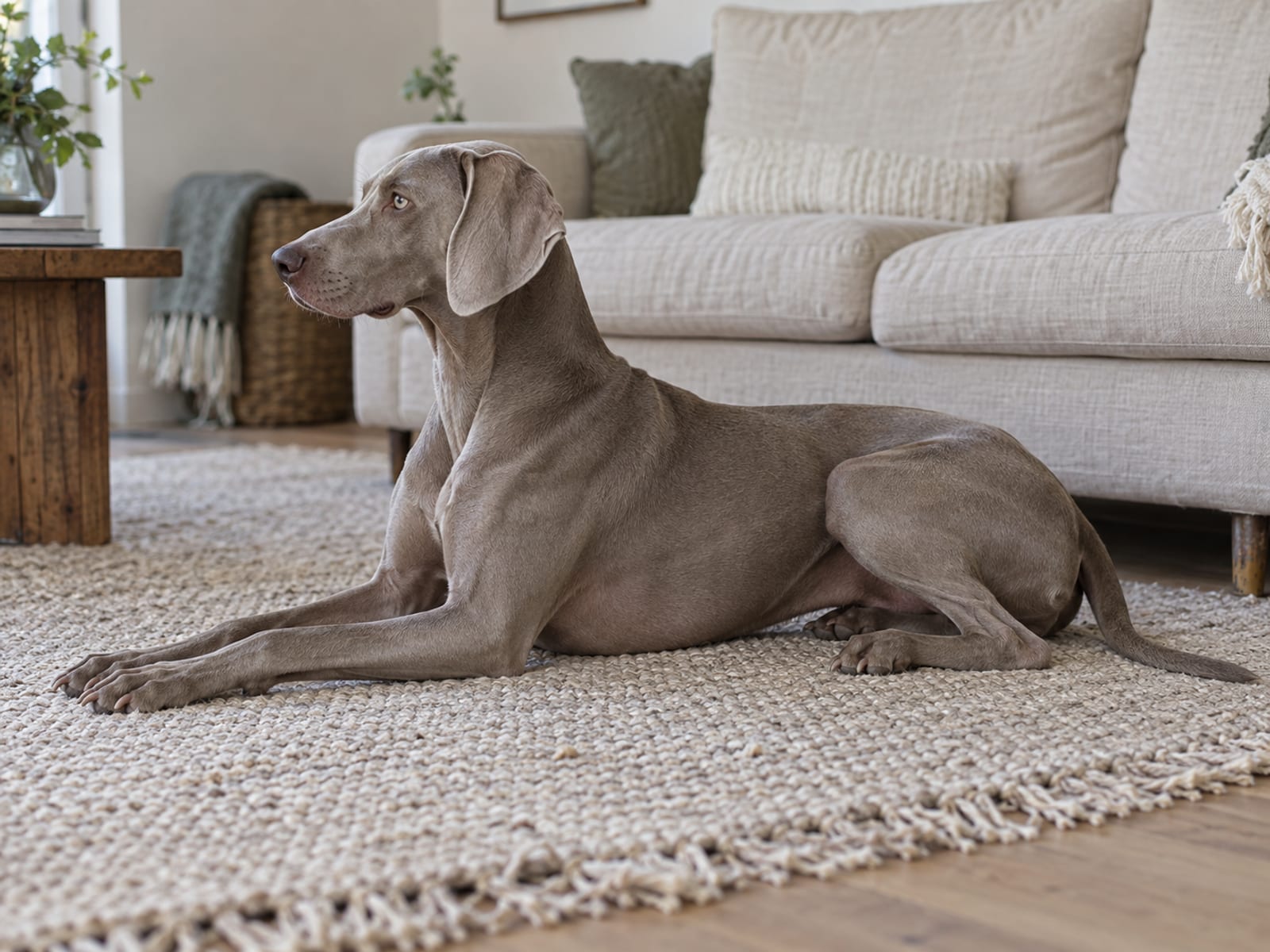
These steps come from veterinary guidance. They can lower risk in some dogs, and none of them guarantees prevention.
- Split food into two or more smaller meals and avoid one big meal a day. Cornell recommends this.
- Talk to your vet about a raised bowl. In the 2000 study, raised bowls were linked to more GDV cases in large and giant breeds, and Cornell advises avoiding them. The study shows a link. It does not prove that a bowl causes GDV.
- Keep things calm around meals. Cornell advises limiting activity after meals, and the VCA says exercise after a large meal "may" raise risk. Studies have not agreed on this, so there is no proven waiting time. Ask your vet what routine suits your dog.
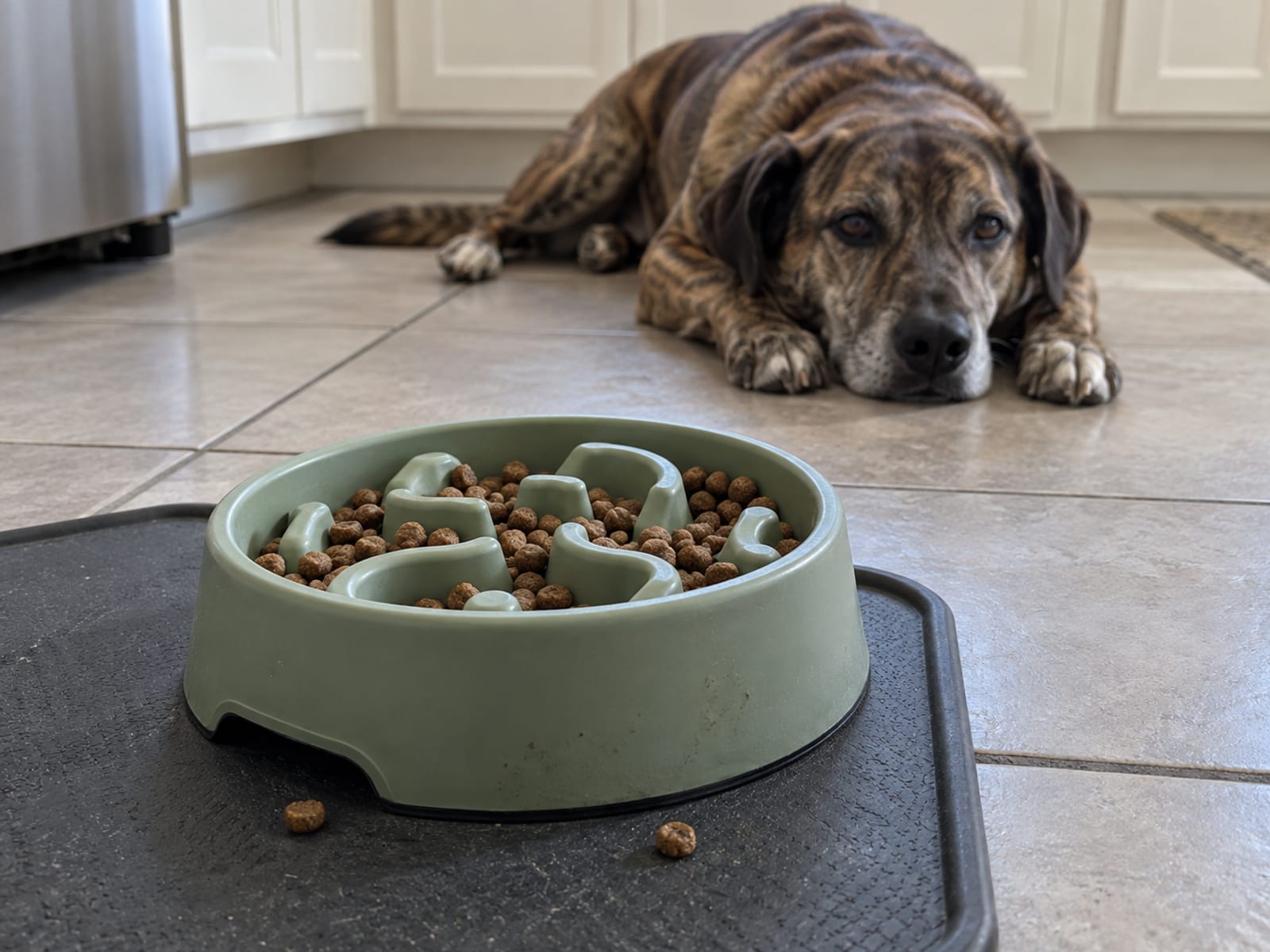
- Slow down a fast eater in a way your vet agrees with, since fast eating is a named risk factor. If stress at mealtimes makes your dog gulp, a trainer can help with the stress itself.
- Plan ahead. Save the address and number of the nearest 24-hour emergency vet in your phone, and know the route.
Preventive gastropexy: surgery to stop the stomach twisting
A gastropexy attaches part of the stomach to the inside of the belly wall so it cannot twist. It is often done while a high-risk dog is already under anesthesia for a spay or neuter, and it can be done by open surgery or with a laparoscope.
It prevents the twist. It does not stop the stomach from filling with gas, so a dog who has had a gastropexy and shows bloat signs still needs a vet urgently.
The ACVS and Merck say many veterinary surgeons recommend it for at-risk breeds and for dogs with a close relative who had GDV. The AAHA calls it the most effective preventive measure for high-risk breeds and recommends deciding with your own vet. The decision weighs your dog's breed and build, family history, age, any other planned surgery and anesthesia risk.
The results are encouraging. A 2013 study found no later GDV in dogs who had the surgery, though some dogs still had stomach swelling without a twist. A 2014 follow-up study of 40 dogs followed for at least two years also found no GDV. A 2023 study of 766 preventive gastropexies reported problems at the surgery site in 0.4% of dogs. These look back at past cases, so they describe outcomes rather than promise one.
Cost. Prices vary a lot by location, dog size, technique, anesthesia and whether it is combined with another surgery. PetMD (updated March 31, 2025) says the gastropexy part is usually several hundred dollars, with laparoscopic methods often costing more. Emergency GDV surgery costs far more; one Seattle-area clinic, Holly Veterinary Clinic, listed $5,000 for it when checked on Sept. 25, 2026. Ask your hospital for a written estimate.
Mistakes to avoid
- Waiting for the belly to swell. Dry retching plus distress is enough.
- Deciding it is "only gas." Only X-rays show whether the stomach has twisted.
- Giving Gas-X or another home remedy. There is no effective home treatment, and it costs time.
- Walking your dog to see if it helps. Keep them still and get in the car.
- Driving past a closer emergency hospital to reach your usual clinic.
- Assuming a small or young dog cannot get it. Risk is highest in big, deep-chested dogs, but any dog can be affected.
- Believing a gastropexy prevents every kind of bloat. It prevents the twist. The stomach can still swell.
- Waiting for a crisis to find an emergency vet. Save the number today.
Check what you learned
Quick check: bloat in dogs
Questions about bloat in dogs
Can I tell bloat from GDV at home?
No. Simple stomach swelling and GDV can look the same on a physical exam, and X-rays are needed to see the twist, according to the VCA. Treat any suspicious signs as an emergency.
How fast does bloat kill a dog?
It can be fast. The VCA says a dog needs care within minutes to a few hours, and the AKC says an untreated dog may go into shock within one or two hours. Go now.
Can a dog survive GDV?
Yes, many do with fast emergency care. Cornell reports survival over 80% with treatment, while Merck reports about 20% of treated dogs die. No figure predicts one dog's outcome.
Can I give my dog Gas-X for bloat?
No. The VCA says not to use simethicone when severe bloat or GDV is suspected. Call an emergency vet and go.
Does a gastropexy stop every kind of bloat?
No. It is meant to keep the stomach from twisting, not from filling with gas. A dog with a gastropexy and bloat signs still needs a vet promptly.
Are raised food bowls safe for a dog at risk of bloat?
A 2000 study linked raised bowls to higher GDV risk in large and giant breeds, and Cornell advises avoiding them. It is not proven that the bowl causes GDV. Ask your vet about your dog's setup.
How long after eating can my dog exercise?
There is no proven rule. Cornell advises limiting activity after meals and the VCA says exercise after a large meal may raise risk, but studies disagree. Ask your vet for a routine that suits your dog.
Should my dog have a preventive gastropexy?
Ask your vet, especially if you have a large, deep-chested breed or a dog whose close relative had GDV. Many veterinary surgeons recommend it for at-risk dogs, and the right choice depends on your dog.
Make your emergency plan today
Look up the nearest 24-hour emergency vet now, save the number and address in your phone, and tell everyone who looks after your dog what the signs of bloat are. If you need a vet near you, start with the DogServ directory. If you own a large, deep-chested dog, ask your vet about gastropexy at your next visit, and for a broader look at when a symptom means emergency, call today or wait, read signs of a healthy dog.
Sources
- American Animal Hospital Association: AAHA
- American College of Veterinary Surgeons: American College of Veterinary Surgeons
- American Kennel Club: AKC
- Cornell University College of Veterinary Medicine: Cornell
- doi.org: Journal of the American Veterinary Medical Association
- Holly Veterinary Clinic: Holly Veterinary Clinic
- Merck Veterinary Manual: Merck Veterinary Manual
- PetMD: PetMD
- PubMed: 2013 study
- PubMed Central: 2014 follow-up study
- PubMed Central: 2023 study
- VCA Animal Hospitals: simethicone guidance
- VCA Animal Hospitals: VCA